


 By Anna
A sloped commercial sidewalk, driveway or yard looks manageable under fresh snow, but the surface beneath, the edges and the machine's own documentation decide whether the route is workable. Before crews start, someone has to check the route and confirm the exact snow blower's limits.
Snow blower slope safety starts with two separate checks: a documented assessment of the route's grade, ice, edges and visibility, and the current manual for the exact machine and attachment. Neither check substitutes for the other, and a summer mower slope rating does not approve a winter snow-removal route.
Snow blower slope safety: Map the route, slope and hidden surface

The first job is not to start the machine; it is to describe the route well enough that a supervisor, operator and client share the same picture. Snow hides the things that most affect control: cross-slope, drainage channels, curbs, steps, expansion joints, manhole covers, gravel edges and patches of ice. A route that looks like one continuous ramp may actually be several surfaces with different grip.
Walk or view the route before work, and record what can be observed rather than what is assumed. Where a grade measurement is needed, use a consistent method and state the unit, because degrees and percent grade are not interchangeable. Keep the measurement tied to the specific segment and conditions observed; a figure recorded on a dry day is not automatically valid after freezing rain.
Record grade, ice, edges, visibility and limits to observation
A practical route record can be a simple sheet that the crew updates each event. The point is not paperwork for its own sake but a shared basis for deciding where to work, where to stop and who to call.
| Route record item | What to capture | Why it matters for a sloped route |
|---|---|---|
| Segment and direction | Start/end points, uphill/downhill/cross-slope direction | The same slope behaves differently depending on travel direction |
| Grade and unit | Measured or estimated value, method, unit (degrees or percent) | Prevents mixing units or copying a figure from another site |
| Surface under snow | Paving, gravel, grass, metal covers, steps, curbs | Hidden edges and loose material affect control and clearance |
| Ice and hardpack | Location, extent, whether visible or suspected | Ice is a separate hazard from snow depth |
| Boundaries | Drop-offs, walls, fences, roads, pedestrian routes | Defines exclusion zones and where discharge must not go |
| Visibility | Lighting, blind corners, traffic, blowing snow | Affects the operator's view and other people's view of the machine |
| Observation limits | Areas that could not be seen or measured | Flags conditions that need escalation, not guesswork |
CCOHS guidance on snow throwers treats the work as a set of hazards to be managed, including the surface and the surrounding area, rather than a single machine setting (CCOHS). That framing is useful for sloped routes: the route is part of the hazard picture, and a snow removal sloped route safety plan should name the segments that were checked and the ones that were not.
Compare how two named manuals express slope restrictions

Manufacturers do not all write slope guidance the same way. Two named walk-behind examples in the supplied references show the difference: one uses a model-specific numeric limit, the other uses a qualitative warning about steep slopes. Neither is a Super Mowers specification, and neither should be copied onto a different machine.
Honda HSM1336i has a model-specific numeric limit; Toro 39922T uses a qualitative steep-slope warning
The Honda HSM1336i manual supplied in the references expresses slope guidance for that model in numeric terms. The Toro 39922T manual supplied in the references warns about steep-slope conditions in qualitative language rather than a single number. The practical lesson is about reading style, not about borrowing a figure.
| Documentation style | Example in supplied references | What the reader should do |
|---|---|---|
| Model-specific numeric limit | Honda HSM1336i manual | Confirm the exact model, manual revision and the conditions the figure applies to before relying on it |
| Qualitative steep-slope warning | Toro 39922T manual | Confirm what the manual defines as steep, and what the required action is for the site |
| No supplied slope statement | Super Mowers snow equipment | Treat slope capability as unconfirmed; ask for the current manual and model-specific information |
A numeric limit in one manual is not a universal safe angle. It belongs to that model, that configuration and the conditions described in that document. A qualitative warning is not vaguer in a way that permits more; it still requires the operator to judge the site against the manufacturer's description. In both cases, the current manual for the exact machine is the reference, and local rules or site policies may be stricter.
This is why a snow thrower slope manual should be read as a document tied to one machine, not as a general rule of thumb. A crew that works across several properties may handle several manuals in a season, and each one has to be matched to the unit on the route that day.
Check the exact machine and attachment documentation
Application review
Discuss your mowing application.
Share the working condition, target market, product family and project scope.
Slope guidance is written for a machine as configured. An attachment, a different chute, a modified handle, a replacement tyre or a non-standard part can change what the manual covers. Before a sloped route is assigned, confirm the full identity of the equipment: model, serial or revision where available, attachments fitted, and the manual revision that matches.
A mower rating or another manufacturer's limit does not approve a snow setup
A summer mower's slope rating describes that mower in its documented configuration. It does not transfer to a snow blower, to a snow blower attachment, or to a winter route with ice and hidden edges. The same logic applies across brands: a figure from one manufacturer's manual does not approve another manufacturer's machine.
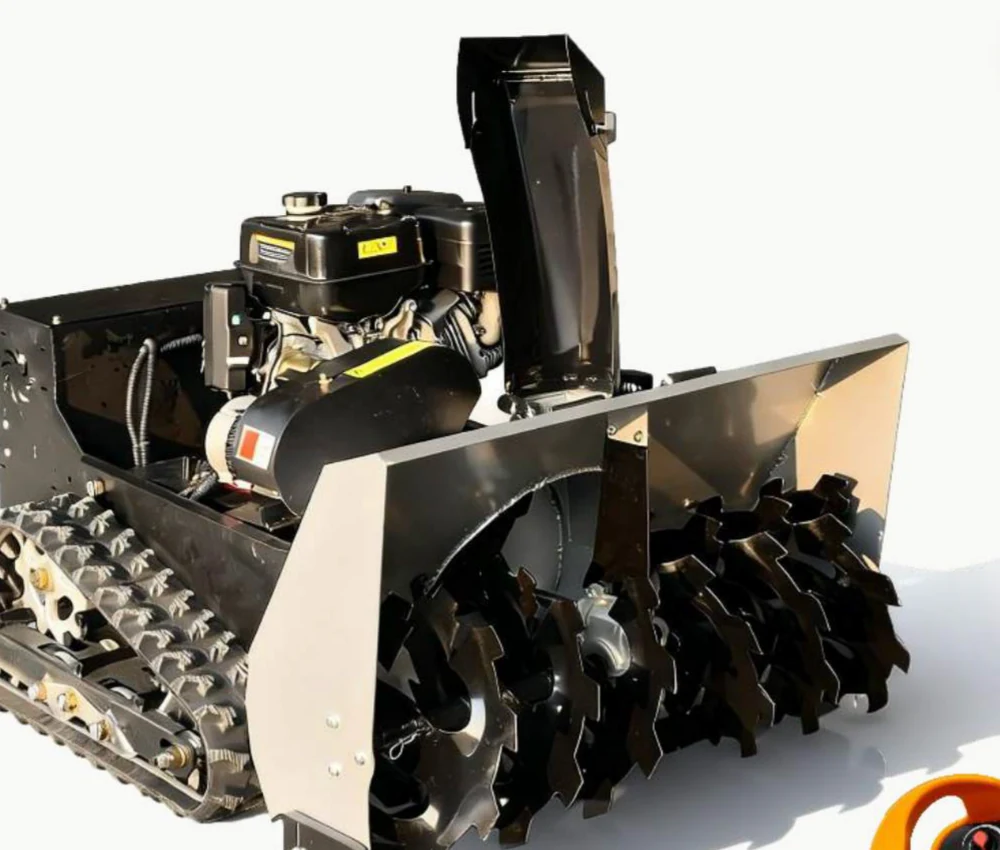
This matters for readers who manage mixed fleets. A file may contain a slope figure from a mower, a figure from a different snow blower, and a verbal instruction from a former operator. None of those is a substitute for the current documentation of the machine on the route today. The supplied Super Mowers product catalogue lists remote-control snow equipment, but this article has no supplied evidence of a Super Mowers snow model's slope or ice capability, so no such limit is stated here. Readers should request the current manual and model-specific information for the exact unit.
| Document to confirm | Why it matters | Where to check |
|---|---|---|
| Current operator's manual for the exact model | Contains the manufacturer's slope and operating guidance | Machine documentation or the manufacturer's manual source |
| Attachment instructions | Attachments may have their own limits | Attachment manual or supplier |
| Manual revision and date | Guidance can change between revisions | Manual cover and revision page |
| Site rules and client requirements | May be stricter than the manual | Contract, permit or site safety plan |
| Training and authorisation record | Confirms who may operate the equipment | Employer records |
Escalate unresolved conditions before deciding whether to work

Some conditions cannot be resolved at the route. If the surface under the snow cannot be assessed, if ice is suspected on a slope, if the route's grade is unknown, or if the manual does not clearly cover the configuration, the decision belongs with a supervisor, the client or the equipment supplier, not with an operator improvising.
A simple escalation path helps. The operator records the condition and stops at the affected segment. The supervisor checks the manual and site requirements, and decides whether to reroute, treat the surface, use different equipment or postpone. The client is informed where access or service levels are affected. The record of the decision is kept with the route file so the next event starts from known information.
Public guidance on snow blower safety consistently emphasises preparation and awareness of conditions rather than a single machine setting (OPEI; Beacon Mutual; Troy-Bilt). For sloped routes, that means the stop decision is part of the plan, not a failure of it. For related reading on equipment choice and route planning, see the Super Mowers pages on remote-control snow blowers versus robotic snow blowers, remote-control mower slope ratings and snow blowers versus snow plows for commercial sidewalks.
FAQ
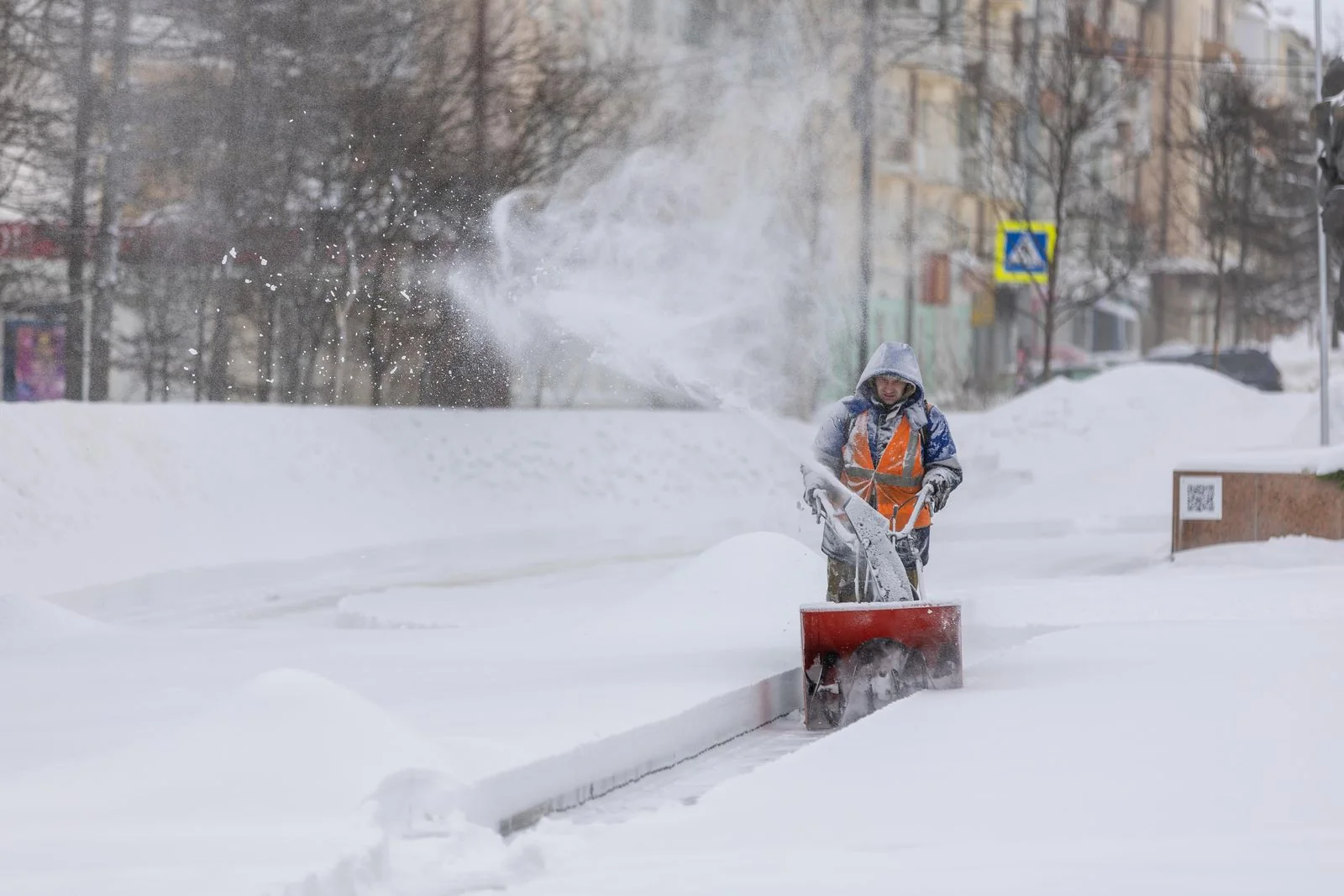
Can a mower slope rating be reused for its snow blower? No. A mower slope rating describes that mower in its documented configuration. A snow blower, or a snow blower attachment, needs its own current documentation. The supplied references do not establish that any mower rating transfers to a snow setup.
Does a tracked snow machine eliminate slip risk? No supplied evidence supports that claim. Tracked machines may be described in marketing terms, but slip risk depends on the surface, ice, grade, load and operating conditions. The current manual and a route assessment remain necessary, and no track type removes the need to check the site.
What if the route surface under snow cannot be assessed? Treat it as an unresolved condition. Record what could not be seen, stop at the affected segment and escalate to a supervisor or client. Do not assume the surface is suitable because a previous event went well or because another machine used the route.
Conclusion

Check the route and the exact machine's current manual before any sloped snow removal. Where grade, ice, edges or documentation are unclear, stop and escalate rather than borrow another machine's limit.