


 By Anna
A dealer handover or a crew briefing often includes one sentence about what happens if the radio link drops. Trainers need to know whether that sentence covers travel only, or the engine and cutter as well. With remote control mower signal loss, the answer depends on the exact model and manual version, not on the shape of the stop button.
Signal loss does not automatically mean the blade stops. In the named Paddock SPRC1005 manual, page 18 says loss of signal stops travel but does not stop the engine, and page 16 describes the blades as directly connected to the engine. Read together, those pages indicate the blade may keep turning, but that is an inference, not a stated test result.
Remote control mower signal loss: Separate movement, engine and cutter response

The first step in any signal-loss briefing is to stop treating the machine as one switch. A remote control mower has at least three outputs that matter to a trainer: the drive or travel function, the engine or power source, and the cutting mechanism. A manual may describe a failsafe response for one of these and say nothing, or something different, about the others.
That distinction matters because the practical consequences differ. A machine that stops travelling but keeps its engine running is not in the same state as a machine that shuts down its engine and disengages the cutter clutch. The first may leave a running power source and, depending on the drive arrangement, a rotating cutting assembly. The second removes engine power and separates the cutter drive. Neither state should be described to a crew as "the mower shuts off" without qualification.
For training leads, the useful habit is to build a three-row checklist for every model in the fleet: travel response, engine response, cutter response. Each row should be filled from the model's own documentation, with the manual title, revision and page noted. If a row cannot be filled, it is unknown, and unknown is a question for the supplier rather than a gap to be filled by assumption.
Dealers preparing a handover face the same issue in a different form. A buyer may ask a simple yes-or-no question about signal loss. The honest answer is model-specific, and the delivery team should be able to point to the exact page that supports whatever it says. That is more useful than a confident general answer that later turns out to describe a different machine.
Identify each function the manual actually describes
Manuals often use different wording for each function. One page may describe a radio link and a travel stop. Another may describe the engine, the blade engagement, or a clutch. A trainer reading quickly can merge these into a single "stop" and lose the distinction that matters.
A practical reading method is to mark every sentence that contains a response word — stop, shut down, disengage, interrupt, hold, brake — and then ask which component that sentence is attached to. Sentences about the transmitter, the receiver, the drive motors, the engine and the cutter are separate facts until the manual connects them.
This is also why the appearance of the machine is a poor guide. A large red stop button, a familiar control layout, or a similar-looking chassis does not tell you what the control system does when the radio link drops. Those are different triggers, and the same machine can respond differently to each. The only reliable source is the documentation for that model, at that revision.
Read the Paddock SPRC1005 manual
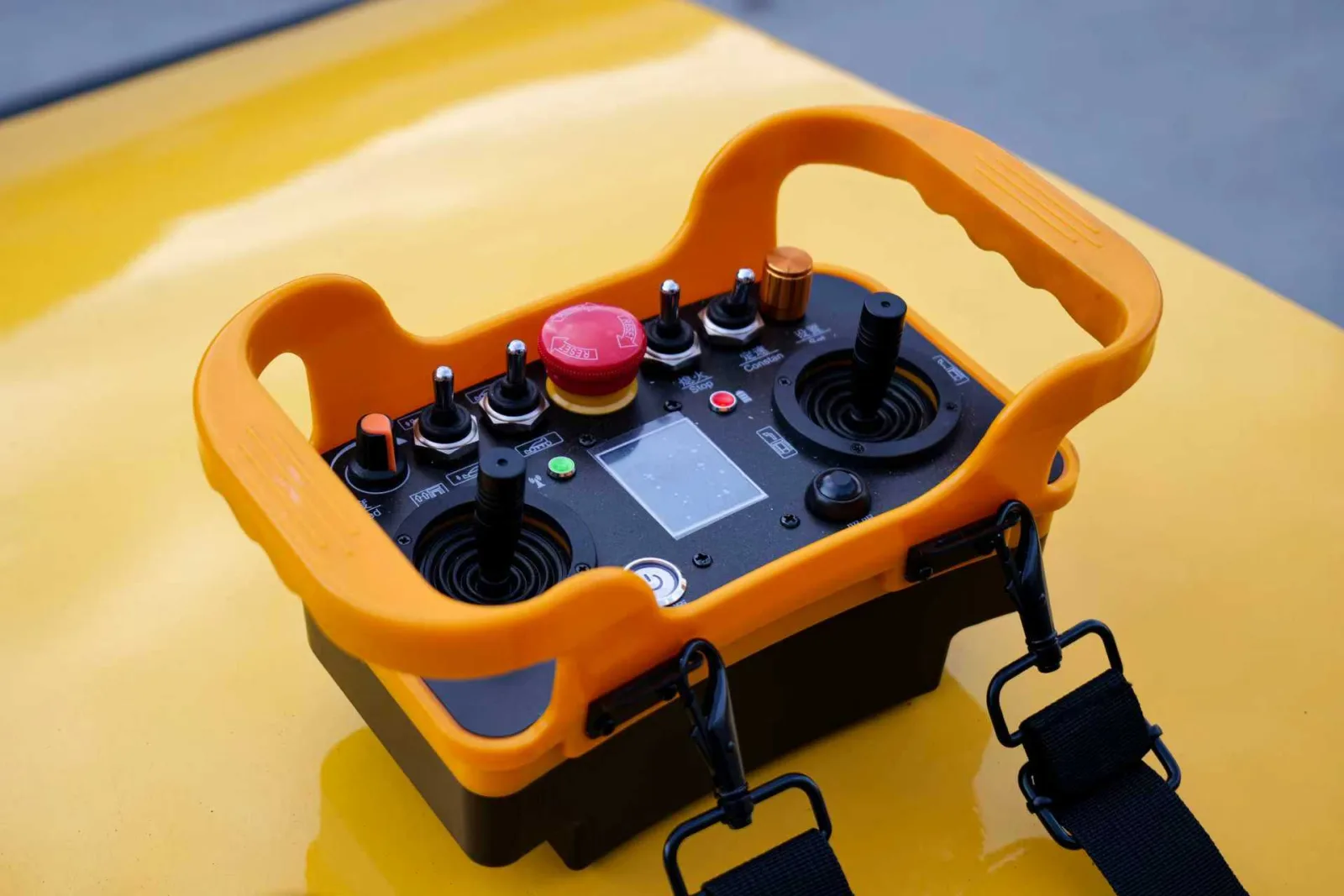
The Paddock SPRC1005 Operation and Maintenance Manual V1 is a useful worked example because it separates the two facts a trainer needs, on two different pages. Page 18 addresses loss of signal and states that travel stops while the engine does not stop automatically. Page 16 describes the blade arrangement as directly connected to the engine.
Those are two separate statements from the same document. The first is a stated failsafe behaviour for travel and engine. The second is a description of the mechanical arrangement of the cutter. Neither page, on its own, tells a reader what the blade does after signal loss.
Read page 16 together with page 18
The combined reading is where the practical question sits. If the manual says the engine does not stop automatically on signal loss, and the blades are directly connected to the engine, then a reader may reasonably infer that the blades could continue to turn while the machine is no longer responding to travel commands. That inference is worth stating clearly, and it is equally important to label it as an inference.
The manual excerpt supplied for this article does not present a test result showing blade motion after signal loss. It does not give a measured run-down time, a stopping distance, or a blade-stop confirmation. So the correct training statement is conditional: for this model, per these pages, travel stops and the engine is not automatically stopped, and because the blades are described as directly connected to the engine, blade rotation after signal loss should not be assumed to have ended. Confirmation belongs with the supplier.
This is exactly the kind of gap that a delivery team should not paper over. A crew that has been told "the blades stop" and then sees a machine whose engine is still running after a link drop has been given a false mental model. A crew told "travel stops, the engine may keep running, and the blade connection means you should not assume the cutter has stopped" has a model that matches the document and a clear reason to keep their distance.
| Response element | What the Paddock SPRC1005 manual states | Status for training use |
|---|---|---|
| Travel after signal loss | Page 18: travel stops | Stated in the manual |
| Engine after signal loss | Page 18: engine does not stop automatically | Stated in the manual |
| Blade drive arrangement | Page 16: blades directly connected to the engine | Stated in the manual |
| Blade motion after signal loss | Not stated as a measured outcome | Inference from pages 16 and 18; confirm with supplier |
| Blade run-down time or stopping distance | Not provided in the supplied excerpt | Unknown; do not estimate |
Separate loss of signal from emergency-stop activation
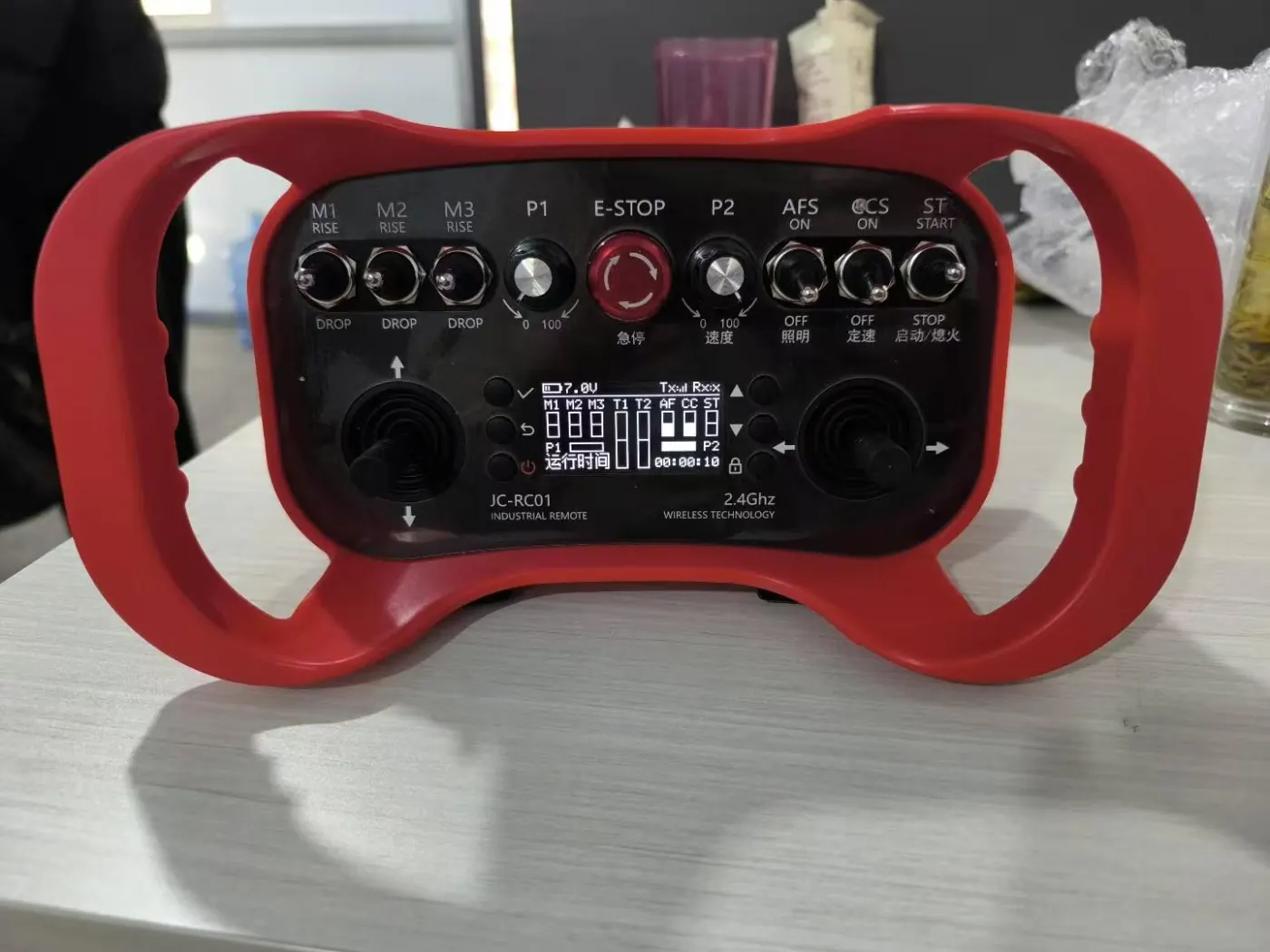
Signal loss and a deliberate emergency stop are different events with different triggers, and there is no reason to expect them to produce identical machine behaviour. A radio link drop is an unplanned loss of communication. Pressing an emergency-stop control is a deliberate action by a person. A manual may describe both, and it may describe them differently.
The Spider 2SGS operation manual, dated 01-01-2019 in its file name, illustrates the contrast. Page 22 of that document states that loss of signal triggers an emergency stop, with the engine stopping and the cutter clutch disengaged. That is a different described outcome from the Paddock example, where the engine is not automatically stopped on signal loss.
Application review
Discuss your mowing application.
Share the working condition, target market, product family and project scope.
Both are legitimate manual statements for their own machines. Put side by side, they demonstrate why a fleet trainer cannot carry one model's response into another model's briefing. The same reader question — "does the blade stop?" — receives a different documented answer depending on which manual is open.
Avoid assuming the same stop sequence
A stop sequence is a chain: trigger, then each output in order. The trigger may be a lost radio link, a pressed emergency-stop control, a released transmitter enable, or something else. The outputs may include drive, engine and cutter, and the order and completeness of those outputs is a property of the specific control system.
When a manual says a signal loss "triggers an emergency stop", read carefully for what that phrase includes. In the Spider 2SGS description, the phrase is followed by specific outputs: engine stop and cutter clutch disengagement. That is useful because it names the components. A phrase like "the machine stops" without named components is much weaker evidence for a training checklist.
For handover teams, the practical rule is to record the trigger and the outputs separately in the delivery notes. "Signal loss: travel stop confirmed; engine response per manual page; cutter response per manual page; emergency-stop button: separate sequence per manual page." This format makes clear where the evidence is strong and where a question remains open.
| Trigger | Paddock SPRC1005 (per supplied pages) | Spider 2SGS (per supplied page 22) |
|---|---|---|
| Loss of radio signal | Travel stops; engine not automatically stopped | Emergency stop triggered; engine stops; cutter clutch disengaged |
| Blade arrangement relevant to the outcome | Blades described as directly connected to the engine (page 16) | Cutter clutch disengagement named in the signal-loss response |
| Training implication | Do not assume the cutter has stopped | Response names engine and cutter outputs |
Neither column should be read as a statement about Super Mowers equipment. They are named examples from two manufacturers' documents, used here to show how much the documented response can vary.
Escalate unknown behavior to the supplier

When a model's documentation does not answer the three-part question, the correct next step is a written question to the supplier or manufacturer, not an experiment in the yard. The question should be specific: what happens to travel, to the engine, and to the cutter when the radio link is lost, and where is that stated in the manual for this model and revision?
A good enquiry also asks about the version. Manuals are revised, and a response that applied to an earlier revision may not describe the machine in front of the trainee. Recording the manual title, revision code and date alongside the answer keeps the handover record usable later.
For dealers, this is a delivery-quality issue as much as a safety one. A buyer who receives a clear, page-referenced answer knows what the machine does and what it does not do. A buyer who receives a vague assurance may later discover the difference in the least convenient way. The supplier is the right party to confirm behaviour that the supplied documents leave open.
Do not conduct an improvised test
It can be tempting to "just check" what happens by switching off the transmitter while the machine is running. This article does not recommend that, and the supplied evidence does not support any test procedure. A signal-loss event is not a controlled demonstration: the machine's response is exactly the thing in question, and a person standing near a mower whose cutter state is unknown is exposed to the consequence of that unknown.
The same caution applies to interlocks and protective devices. Do not modify, bypass or disable a link-loss response, an emergency stop, a clutch control or any other protective arrangement in order to observe behaviour. Do not reach into, stand beside or approach the cutting deck of a machine whose cutter state has not been confirmed. If confirmation is needed, it comes from the manufacturer's documentation or a competent person acting under the manufacturer's instructions, not from an improvised field experiment.
There is also a documentation discipline here. If a trainer cannot answer the three-part question for a model, the correct entry in the training record is "unconfirmed — supplier enquiry raised", with a date. That is a stronger record than a guess, and it gives the next person a clear starting point.
Frequently asked questions

Does radio loss always shut down the engine?
No. The two named manuals in this article describe different outcomes. The Paddock SPRC1005 manual states on page 18 that loss of signal stops travel but does not stop the engine automatically. The Spider 2SGS manual states on page 22 that loss of signal triggers an emergency stop with the engine stopping. Because these differ, "always" is not a safe word; the answer belongs to the specific model's manual.
Does stopped travel prove that blades have stopped?
No. Stopped travel is evidence about the drive function only. In the Paddock SPRC1005 case, the manual separately describes the blades as directly connected to the engine, and the engine is not automatically stopped on signal loss. That combination means blade rotation should not be assumed to have ended. The manual excerpt supplied here does not give a measured blade-stop outcome, so confirmation should come from the supplier.
Can this manual establish another model's response?
No. A manual describes the machine it was written for, at the revision it covers. The Paddock and Spider examples in this article differ precisely because they are different machines with different control arrangements. Using one manufacturer's page to answer a question about another model would replace evidence with assumption. For any other model, read that model's own documentation or ask the supplier.
Conclusion

Signal loss is not one event with one outcome. Check travel, engine and cutter separately against the exact model's manual, label inferences as inferences, and send open questions to the supplier before the handover. For remote control mower options, see the Super Mowers remote control mower range.