


 Di Anna
La consegna da parte di un concessionario o un briefing dell'equipaggio spesso include una frase su cosa succede se il collegamento radio cade. I formatori devono sapere se quella frase copre solo il movimento, oppure anche il motore e il dispositivo di taglio. Con la perdita di segnale del rasaerba a controllo remoto, la risposta dipende dal modello esatto e dalla versione del manuale, non dalla forma del pulsante di arresto.
La perdita di segnale non significa automaticamente che la lama si fermi. Nel manuale Paddock SPRC1005 citato, pagina 18 afferma che la perdita di segnale arresta il movimento ma non arresta il motore, e pagina 16 descrive le lame come direttamente collegate al motore. Lette insieme, quelle pagine indicano che la lama potrebbe continuare a girare, ma si tratta di un'inferenza, non di un risultato di prova dichiarato.
Perdita di segnale del rasaerba a controllo remoto: separare la risposta del movimento, del motore e del dispositivo di taglio

Il primo passo in qualsiasi briefing sulla perdita di segnale è smettere di trattare la macchina come un unico interruttore. Un rasaerba a controllo remoto ha almeno tre uscite che contano per un formatore: la funzione di trasmissione o movimento, il motore o fonte di alimentazione, e il meccanismo di taglio. Un manuale può descrivere una risposta di sicurezza per una di queste e non dire nulla, o dire qualcosa di diverso, sulle altre.
That distinction matters because the practical consequences differ. A machine that stops travelling but keeps its engine running is not in the same state as a machine that shuts down its engine and disengages the cutter clutch. The first may leave a running power source and, depending on the drive arrangement, a rotating cutting assembly. The second removes engine power and separates the cutter drive. Neither state should be described to a crew as "the mower shuts off" without qualification.
For training leads, the useful habit is to build a three-row checklist for every model in the fleet: travel response, engine response, cutter response. Each row should be filled from the model's own documentation, with the manual title, revision and page noted. If a row cannot be filled, it is unknown, and unknown is a question for the supplier rather than a gap to be filled by assumption.
I concessionari che preparano una consegna affrontano lo stesso problema in una forma diversa. Un acquirente può porre una semplice domanda sì-o-no sulla perdita di segnale. La risposta onesta è specifica per il modello, e il team di consegna dovrebbe essere in grado di indicare la pagina esatta che supporta quanto afferma. Questo è più utile di una risposta generale sicura che in seguito si rivela descrivere una macchina diversa.
Identificare ogni funzione che il manuale descrive effettivamente
Manuals often use different wording for each function. One page may describe a radio link and a travel stop. Another may describe the engine, the blade engagement, or a clutch. A trainer reading quickly can merge these into a single "stop" and lose the distinction that matters.
Un metodo di lettura pratico consiste nel contrassegnare ogni frase che contiene una parola di risposta — arresto, spegnimento, disinnesto, interruzione, mantenimento, frenata — e poi chiedersi a quale componente è collegata quella frase. Le frasi sul trasmettitore, sul ricevitore, sui motori di azionamento, sul motore e sul gruppo di taglio sono fatti separati finché il manuale non li collega.
Questo è anche il motivo per cui l'aspetto della macchina è una guida scarsa. Un grande pulsante rosso di arresto, un layout dei comandi familiare o un telaio dall'aspetto simile non ti dicono cosa fa il sistema di controllo quando il collegamento radio cade. Quelli sono trigger diversi, e la stessa macchina può rispondere in modo diverso a ciascuno. L'unica fonte affidabile è la documentazione per quel modello, a quella revisione.
Leggi il manuale Paddock SPRC1005
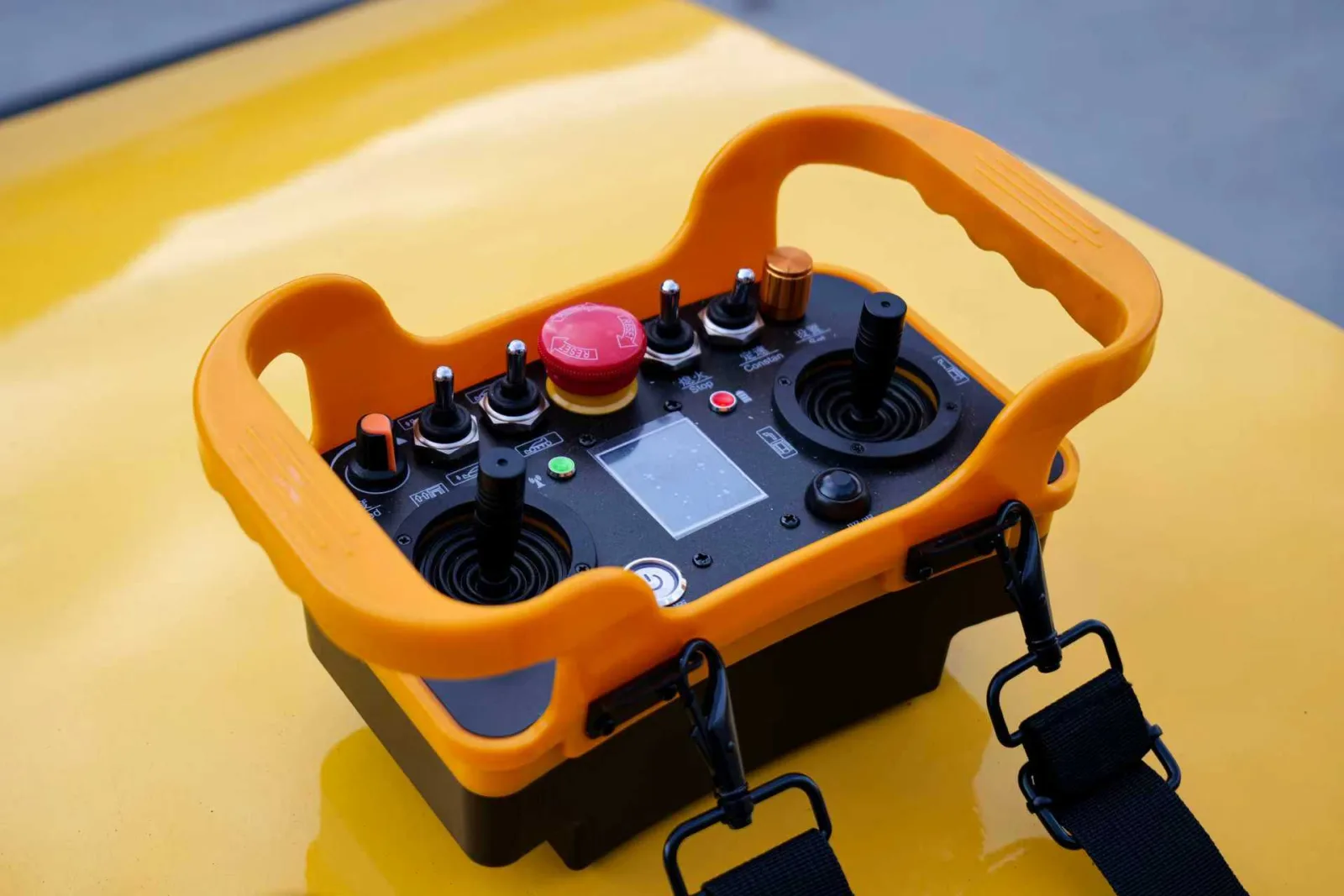
Il Paddock SPRC1005 Operation and Maintenance Manual V1 è un utile esempio pratico perché separa i due fatti di cui un formatore ha bisogno, su due pagine diverse. Pagina 18 affronta la perdita di segnale e afferma che la traslazione si arresta mentre il motore non si arresta automaticamente. Pagina 16 descrive il gruppo lama come direttamente collegato al motore.
Those are two separate statements from the same document. The first is a stated failsafe behaviour for travel and engine. The second is a description of the mechanical arrangement of the cutter. Neither page, on its own, tells a reader what the blade does after signal loss.
Read page 16 together with page 18
The combined reading is where the practical question sits. If the manual says the engine does not stop automatically on signal loss, and the blades are directly connected to the engine, then a reader may reasonably infer that the blades could continue to turn while the machine is no longer responding to travel commands. That inference is worth stating clearly, and it is equally important to label it as an inference.
The manual excerpt supplied for this article does not present a test result showing blade motion after signal loss. It does not give a measured run-down time, a stopping distance, or a blade-stop confirmation. So the correct training statement is conditional: for this model, per these pages, travel stops and the engine is not automatically stopped, and because the blades are described as directly connected to the engine, blade rotation after signal loss should not be assumed to have ended. Confirmation belongs with the supplier.
This is exactly the kind of gap that a delivery team should not paper over. A crew that has been told "the blades stop" and then sees a machine whose engine is still running after a link drop has been given a false mental model. A crew told "travel stops, the engine may keep running, and the blade connection means you should not assume the cutter has stopped" has a model that matches the document and a clear reason to keep their distance.
| Response element | What the Paddock SPRC1005 manual states | Status for training use |
|---|---|---|
| Travel after signal loss | Page 18: travel stops | Stated in the manual |
| Engine after signal loss | Page 18: engine does not stop automatically | Stated in the manual |
| Blade drive arrangement | Page 16: blades directly connected to the engine | Stated in the manual |
| Blade motion after signal loss | Not stated as a measured outcome | Inference from pages 16 and 18; confirm with supplier |
| Blade run-down time or stopping distance | Not provided in the supplied excerpt | Unknown; do not estimate |
Separate loss of signal from emergency-stop activation
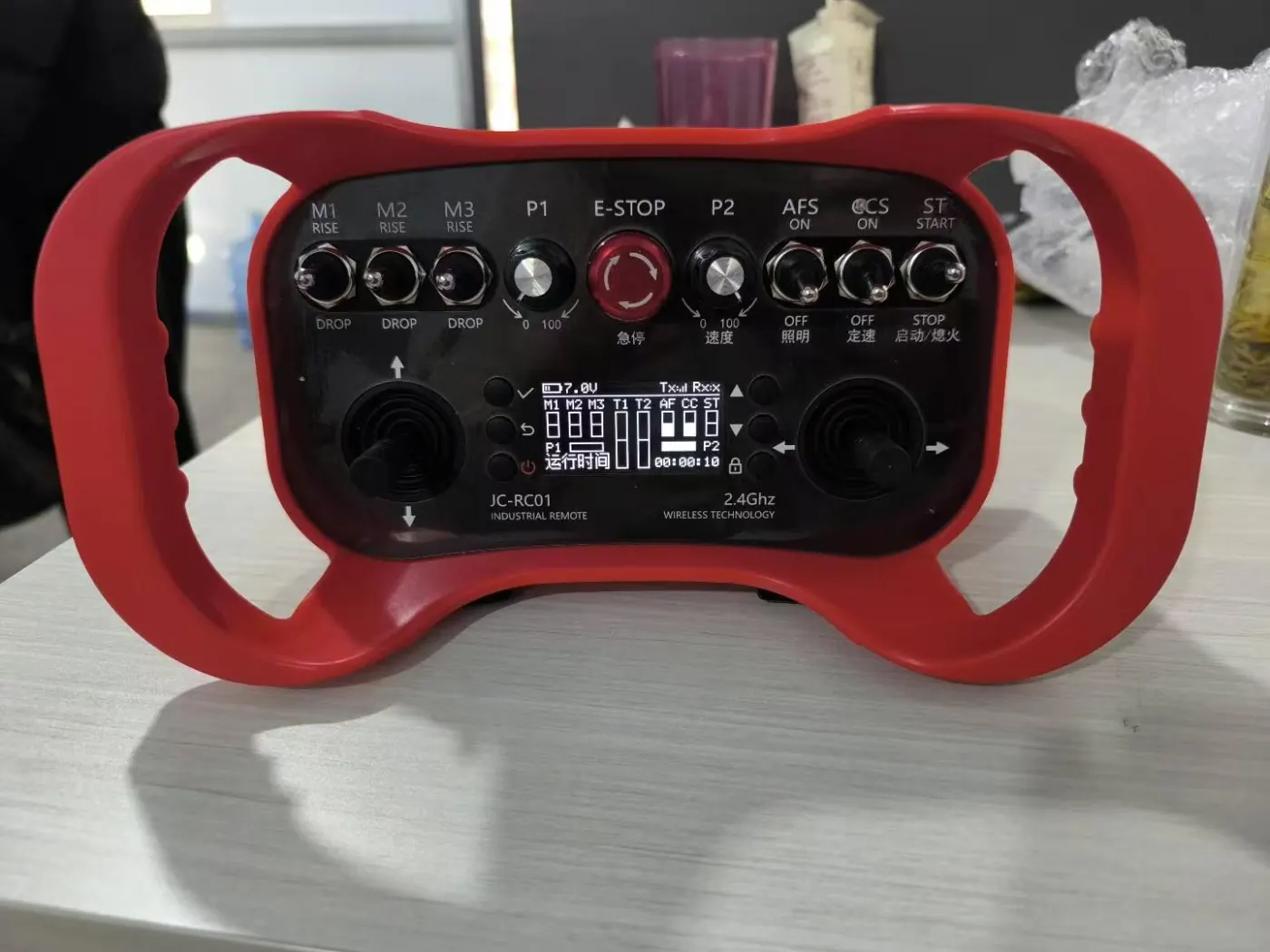
Signal loss and a deliberate emergency stop are different events with different triggers, and there is no reason to expect them to produce identical machine behaviour. A radio link drop is an unplanned loss of communication. Pressing an emergency-stop control is a deliberate action by a person. A manual may describe both, and it may describe them differently.
Il Spider 2SGS operation manual, dated 01-01-2019 in its file name, illustrates the contrast. Page 22 of that document states that loss of signal triggers an emergency stop, with the engine stopping and the cutter clutch disengaged. That is a different described outcome from the Paddock example, where the engine is not automatically stopped on signal loss.
Revisione dell'applicazione
Discutere della propria applicazione di taglio.
Condividere le condizioni di lavoro, il mercato di riferimento, la famiglia di prodotti e l'ambito del progetto.
Both are legitimate manual statements for their own machines. Put side by side, they demonstrate why a fleet trainer cannot carry one model's response into another model's briefing. The same reader question — "does the blade stop?" — receives a different documented answer depending on which manual is open.
Avoid assuming the same stop sequence
A stop sequence is a chain: trigger, then each output in order. The trigger may be a lost radio link, a pressed emergency-stop control, a released transmitter enable, or something else. The outputs may include drive, engine and cutter, and the order and completeness of those outputs is a property of the specific control system.
When a manual says a signal loss "triggers an emergency stop", read carefully for what that phrase includes. In the Spider 2SGS description, the phrase is followed by specific outputs: engine stop and cutter clutch disengagement. That is useful because it names the components. A phrase like "the machine stops" without named components is much weaker evidence for a training checklist.
For handover teams, the practical rule is to record the trigger and the outputs separately in the delivery notes. "Signal loss: travel stop confirmed; engine response per manual page; cutter response per manual page; emergency-stop button: separate sequence per manual page." This format makes clear where the evidence is strong and where a question remains open.
| Attivazione | Paddock SPRC1005 (secondo le pagine fornite) | Spider 2SGS (secondo la pagina 22 fornita) |
|---|---|---|
| Perdita del segnale radio | La traslazione si arresta; il motore non si arresta automaticamente | Arresto di emergenza attivato; il motore si arresta; frizione della lama disinserita |
| Disposizione delle lame rilevante per l'esito | Lame descritte come direttamente collegate al motore (pagina 16) | Disinserimento della frizione della lama indicato nella risposta alla perdita di segnale |
| Implicazione per la formazione | Non dare per scontato che la lama si sia fermata | La risposta indica le uscite del motore e della lama |
Neither column should be read as a statement about Super Mowers equipment. They are named examples from two manufacturers' documents, used here to show how much the documented response can vary.
Inoltrare i comportamenti sconosciuti al fornitore

When a model's documentation does not answer the three-part question, the correct next step is a written question to the supplier or manufacturer, not an experiment in the yard. The question should be specific: what happens to travel, to the engine, and to the cutter when the radio link is lost, and where is that stated in the manual for this model and revision?
Una buona richiesta di informazioni riguarda anche la versione. I manuali vengono revisionati, e una risposta valida per una revisione precedente potrebbe non descrivere la macchina davanti all'allievo. Registrare il titolo del manuale, il codice di revisione e la data insieme alla risposta mantiene utilizzabile in seguito il verbale di consegna.
Per i rivenditori, questa è una questione di qualità della consegna tanto quanto di sicurezza. Un acquirente che riceve una risposta chiara, con riferimento alle pagine, sa cosa fa la macchina e cosa non fa. Un acquirente che riceve un'assicurazione vaga potrebbe in seguito scoprire la differenza nel modo meno conveniente. Il fornitore è la parte giusta per confermare un comportamento che i documenti forniti lasciano aperto.
Non eseguire un test improvvisato
It can be tempting to "just check" what happens by switching off the transmitter while the machine is running. This article does not recommend that, and the supplied evidence does not support any test procedure. A signal-loss event is not a controlled demonstration: the machine's response is exactly the thing in question, and a person standing near a mower whose cutter state is unknown is exposed to the consequence of that unknown.
The same caution applies to interlocks and protective devices. Do not modify, bypass or disable a link-loss response, an emergency stop, a clutch control or any other protective arrangement in order to observe behaviour. Do not reach into, stand beside or approach the cutting deck of a machine whose cutter state has not been confirmed. If confirmation is needed, it comes from the manufacturer's documentation or a competent person acting under the manufacturer's instructions, not from an improvised field experiment.
There is also a documentation discipline here. If a trainer cannot answer the three-part question for a model, the correct entry in the training record is "unconfirmed — supplier enquiry raised", with a date. That is a stronger record than a guess, and it gives the next person a clear starting point.
Domande frequenti

La perdita del segnale radio spegne sempre il motore?
No. The two named manuals in this article describe different outcomes. The Paddock SPRC1005 manual states on page 18 that loss of signal stops travel but does not stop the engine automatically. The Spider 2SGS manual states on page 22 that loss of signal triggers an emergency stop with the engine stopping. Because these differ, "always" is not a safe word; the answer belongs to the specific model's manual.
La traslazione arrestata dimostra che le lame si sono fermate?
No. La traslazione arrestata è una prova relativa solo alla funzione di azionamento. Nel caso del Paddock SPRC1005, il manuale descrive separatamente le lame come direttamente collegate al motore, e il motore non viene arrestato automaticamente in caso di perdita di segnale. Tale combinazione significa che non si deve presumere che la rotazione delle lame sia terminata. L'estratto del manuale fornito qui non fornisce un esito misurato dell'arresto delle lame, quindi la conferma dovrebbe provenire dal fornitore.
Can this manual establish another model's response?
No. A manual describes the machine it was written for, at the revision it covers. The Paddock and Spider examples in this article differ precisely because they are different machines with different control arrangements. Using one manufacturer's page to answer a question about another model would replace evidence with assumption. For any other model, read that model's own documentation or ask the supplier.
Conclusione

Signal loss is not one event with one outcome. Check travel, engine and cutter separately against the exact model's manual, label inferences as inferences, and send open questions to the supplier before the handover. For remote control mower options, see the gamma di rasaerba radiocomandati Super Mowers.