


 By Anna
A dealer preparing a remote-control mower for handover often meets two different tilt-related claims: one about the machine body, another about the operator handset. They are not interchangeable, and the wording around them is often thinner than buyers expect.
Treat machine-body tilt detection and operator-handset tilt detection as separate systems until the manufacturer's own documents for that exact model and revision say otherwise. Record what the source states about the trigger and each output, and list everything it leaves unstated as an open question for the manufacturer.
That discipline matters most at delivery and training, when a sales phrase can quietly become an operating rule. This article compares two named manufacturer descriptions, shows how to read them without merging their claims, and sets out a handover record that keeps known statements apart from unknowns.
Remote control mower tilt sensor: Identify what is being monitored
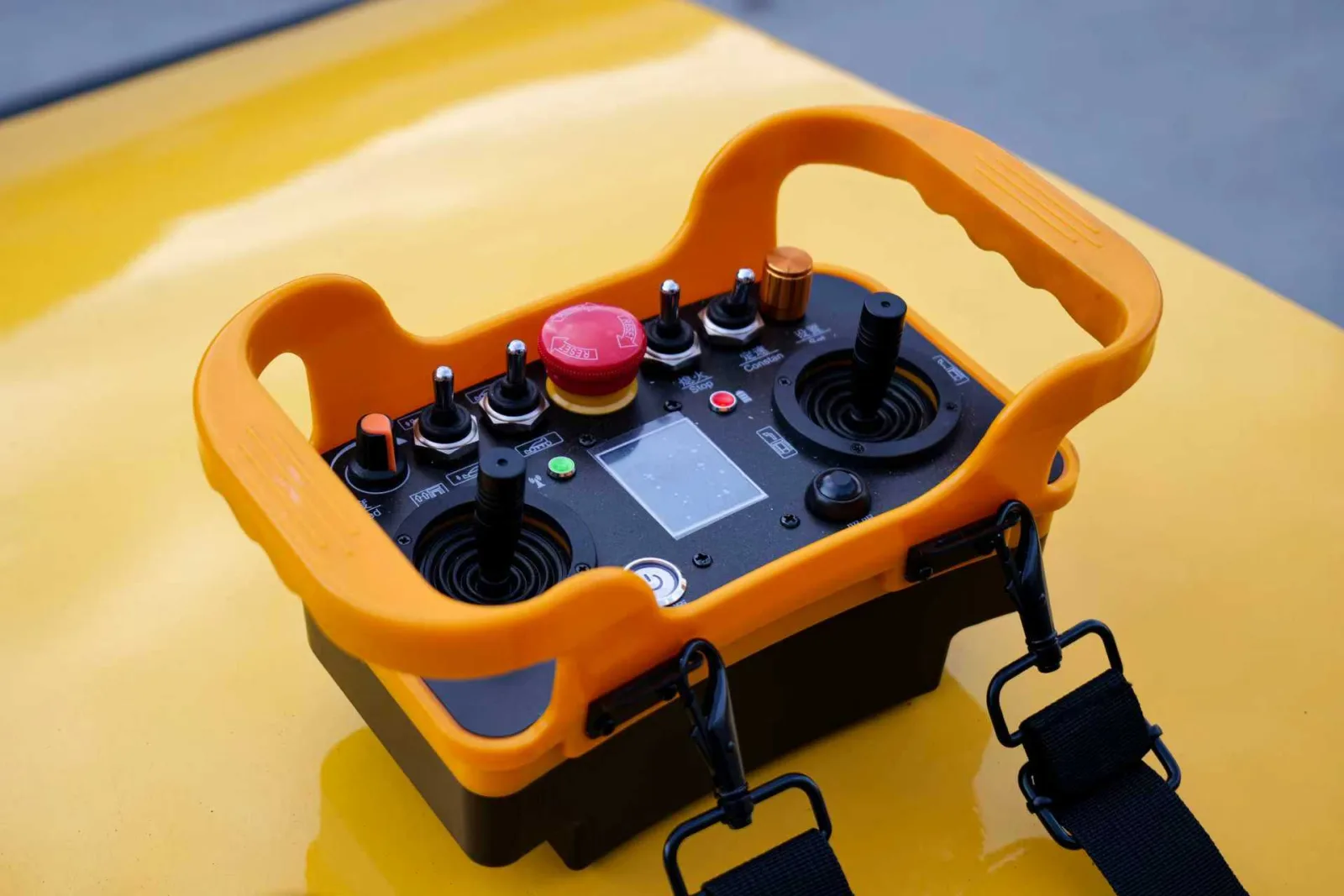
The first question is not "does this mower have a tilt sensor?" but "what is the sensor attached to, and what does the manufacturer say it responds to?" A sensor inside or on the machine chassis is monitoring the mower's own attitude. A sensor in or on the operator handset is monitoring something about the person holding the controller. Those are different inputs, and a tilt-related response in one does not establish the other.
Dealers and fleet trainers should also resist the assumption that a sensor's physical location is standard across the category. Remote-control mowers differ in control architecture, and the supplied sources describe only their own products. Nothing in the available material supports a claim that every remote mower carries a body tilt sensor, or that handset tilt sensing is a common baseline feature. Where a brochure is silent, the honest entry in a handover record is "not stated in the supplied document — confirm with manufacturer."
Separate mower-body tilt from operator-handset orientation
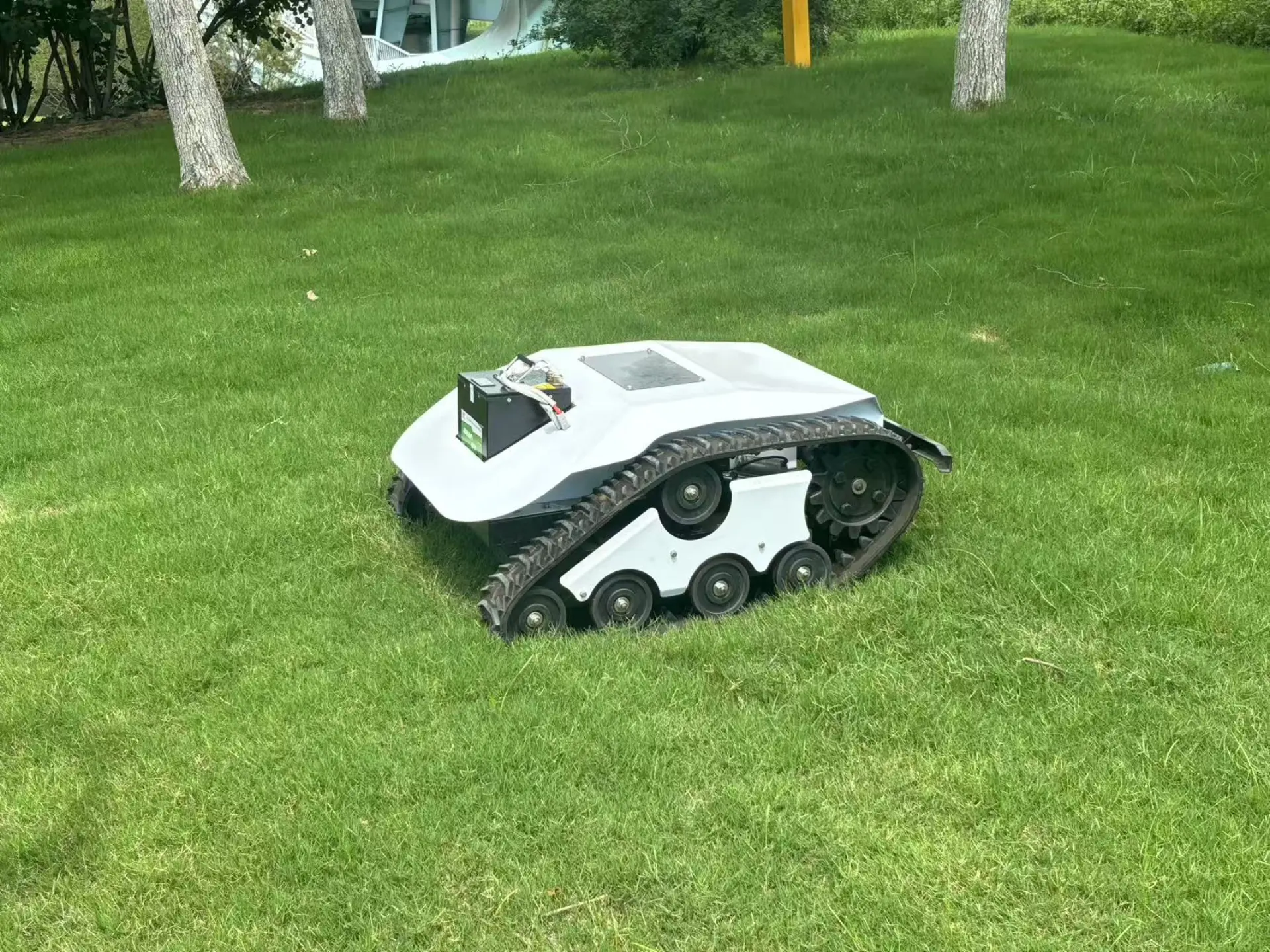
Machine-body tilt detection is about the mower's own orientation in the work area. It is a chassis-level question: how the machine is sitting relative to the ground, and what the manufacturer says happens when that condition is met. Operator-handset orientation is a different question entirely. It concerns the controller the person is holding, and in the Ferris material described below it is framed as an operator safety feature rather than a machine-attitude feature.
Keeping these apart protects the dealer in three practical ways. It prevents a training claim that the mower will react to a handset movement when the documentation only describes chassis detection. It prevents the reverse error, telling an operator that dropping the handset has no effect when a manufacturer has described an operator-fall response. And it keeps the delivery conversation anchored to a document the customer can read, rather than to a remembered demonstration.
A useful habit is to write the monitoring object in the first column of any comparison note, before writing anything about the response. Once "what is monitored" is fixed, the rest of the record has a place to sit.
Read two named manufacturer descriptions

The supplied sources give two concrete examples, each describing its own product. They are useful precisely because they are not written to the same template. One describes machine-body detection with listed effects; the other lists an operator safety tilt sensor among remote-control features, with a separate news item describing an operator-fall standby state.
| Source | Monitoring object as described | Where the sensing is described | Response the source states | What the supplied text does not establish |
|---|---|---|---|---|
| Mowrator S1 safety page (source) | Machine-body tilt, detected internally | Inside the mower body | Stops movement and blade operation | Exact variant covered, angle definition, engine state, reset behaviour, threshold versus approved working slope |
| Ferris FRC7 product page (source) | Operator safety tilt sensor | Listed among remote-control features | Not itemised in the supplied description | Trigger condition, and the state of travel, engine and cutting deck |
| Ferris FRC7 news item (source) | Operator fall detection | Not specified in the supplied text | Enters standby | Whether this is the same mechanism as the listed sensor; which outputs are affected in standby |
This table is a reading aid, not a specification sheet. Each row records only what the supplied description says, and the final column is deliberately a list of questions rather than answers.
Mowrator S1 describes machine-body detection and listed effects
The Mowrator S1 safety page describes tilt detection located inside the machine body, with the stated effects of stopping movement and stopping the blade. For a delivery record, that is a machine-attitude claim with two named outputs. It is worth noting what the same description does not do: it does not, in the supplied text, set out the engine state, the reset method, or a definition of the angle that triggers the response.
The page also covers more than one S1 variant, according to the task's own evidence notes. That matters for dealers because a safety statement tied to one configuration should not be copied onto another configuration's handover sheet without confirmation. The angle definition is a separate open point: a trigger value and an approved working slope are not the same kind of number, and the supplied material does not establish that they are.
Ferris FRC7 lists an operator safety tilt sensor on the remote
The Ferris FRC7 product page lists an operator safety tilt sensor among the features of the remote control. That places the sensing on the handset side of the comparison, and it is described as an operator safety feature. The supplied product description does not itemise the trigger condition or the resulting machine state.
A separate Ferris news item states that operator fall detection puts the machine into standby. The two Ferris texts do not establish that the fall response and the listed operator safety tilt sensor are the same mechanism, and the supplied material does not break down engine, blade and travel outputs for either. A dealer should therefore record them as two statements from the same manufacturer, with the relationship marked "unconfirmed," rather than merging them into one feature description.
Separate a trigger from the documented output
A trigger is the condition the manufacturer says the system responds to. An output is what the manufacturer says the machine then does. These belong in separate columns, because a document can name one without naming the other. The Ferris product listing is an example of a named sensor with an unstated output in the supplied text; the Mowrator page is an example of named outputs with an unstated trigger definition.
Application review
Discuss your mowing application.
Share the working condition, target market, product family and project scope.
Two shortcuts cause most of the confusion at handover. The first is treating a tilt threshold as the approved mowing slope. A threshold describes when a protective response is designed to act; an approved working slope is an operating limit. The supplied sources do not establish that these coincide, and a dealer should not present one as the other. The second shortcut is reading "standby" as full isolation of all power. Standby is a named state in the Ferris news item, but the supplied text does not say that the engine, the cutting deck and the travel drive are all disabled in that state. Dealers should quote the word the manufacturer used and leave the rest as a question.
Record travel, engine and cutting-deck statements separately
Breaking the response into outputs makes gaps visible. Use three columns — travel, engine, cutting deck — and enter only what the source states.
| Output | Mowrator S1 (supplied description) | Ferris FRC7 (supplied descriptions) |
|---|---|---|
| Travel / movement | Stated: movement stops | Not itemised |
| Cutting deck / blade | Stated: blade operation stops | Not itemised |
| Engine | Not stated | Not itemised |
| Overall state wording | Not applicable | "Standby" after operator fall detection |
| Reset or recovery | Not stated | Not stated |
Where a cell reads "not itemised" or "not stated," the correct handover action is to ask the manufacturer or check the machine's own manual for that model and revision. It is not to fill the gap from a similar model, a demonstration, or a general assumption about how such systems usually behave. This article does not describe how to test, adjust, bypass, reset or repair any tilt-related function; those actions belong to the manufacturer's instructions and the site's written rules.
Prepare a model-specific documentation handover

A handover record is only as good as its identifiers. Before any tilt-related statement goes into a training pack, pin down the model, the variant, the document revision and the date the document was read. Manufacturer pages change, and a safety description that applied to one configuration may not describe another. The record should also name the source document so a later reader can check it rather than trust a summary.
Structure the record so that confirmed statements and open questions sit side by side. Confirmed statements are quoted or closely paraphrased from the manufacturer's own text, with the monitoring object and the named outputs. Open questions are written as questions, not as blanks to be guessed. A trainer who can say "the manufacturer states movement and blade stop; the engine state is not stated in this document and we are confirming it" is giving the operator more reliable information than one who fills the gap from memory.
Log the model, variant, revision and unanswered questions
A workable template for a dealer's delivery file looks like this:
| Field | What to enter | Example of a weak entry to avoid |
|---|---|---|
| Model and variant | Full model designation as printed on the machine and documents | "The S1" with no variant |
| Document and revision | Title, revision or date, and where it was obtained | "Manufacturer website" |
| Monitoring object | Machine body, handset, or both, as stated | "Tilt sensor fitted" |
| Trigger as described | The manufacturer's wording, or "not stated" | A guessed angle or percentage |
| Travel output | Stated effect, or "not stated" | "Cuts out" |
| Engine output | Stated effect, or "not stated" | "Everything stops" |
| Cutting-deck output | Stated effect, or "not stated" | "Blades off, probably" |
| Open questions | Named questions with an owner and a due date | Blank |
Two further points belong in the file. First, the record should state clearly that a tilt response is not a substitute for the site's own risk assessment, exclusion arrangements and operating rules. Second, it should note that this article's comparison covers only the supplied manufacturer descriptions and does not establish what any Super Mowers model is fitted with. Super Mowers operates in remote-control mowing equipment, but configuration claims for a specific machine must come from that machine's own documentation.
Dealers comparing remote-control safety arrangements more broadly may also find the site's discussion of emergency stop buttons on machine and handset useful, because it follows the same principle of separating the machine-side control from the handset-side control. It does not, however, explain automatic tilt detection, and the two topics should not be merged in a training pack.
FAQ

Does every remote mower have a body tilt sensor? No such general claim is supported by the supplied material. The sources describe individual products, and a feature listed for one model does not establish that another model, or the category as a whole, carries the same sensing. Check the exact model's documentation.
Is an operator tilt sensor the same as mower-body detection? No. They monitor different objects: the handset held by the operator versus the mower's own body. The Ferris FRC7 listing places an operator safety tilt sensor on the remote, while the Mowrator S1 description places tilt detection inside the machine body. Treat them as separate until a manufacturer states otherwise for a specific model.
Is a tilt trigger the approved mowing slope? Not on the evidence supplied. A trigger is the condition a protective response is designed to act on; an approved working slope is an operating limit. The supplied descriptions do not establish that the two values coincide, so neither should be presented as the other at handover.
Conclusion

Machine-body tilt and handset tilt are different monitoring objects with different documentation gaps. Record each model's stated trigger and outputs, mark the rest as open questions, and confirm with the manufacturer before training.
Video: FRC7 Tilt sensor
