 By Anna
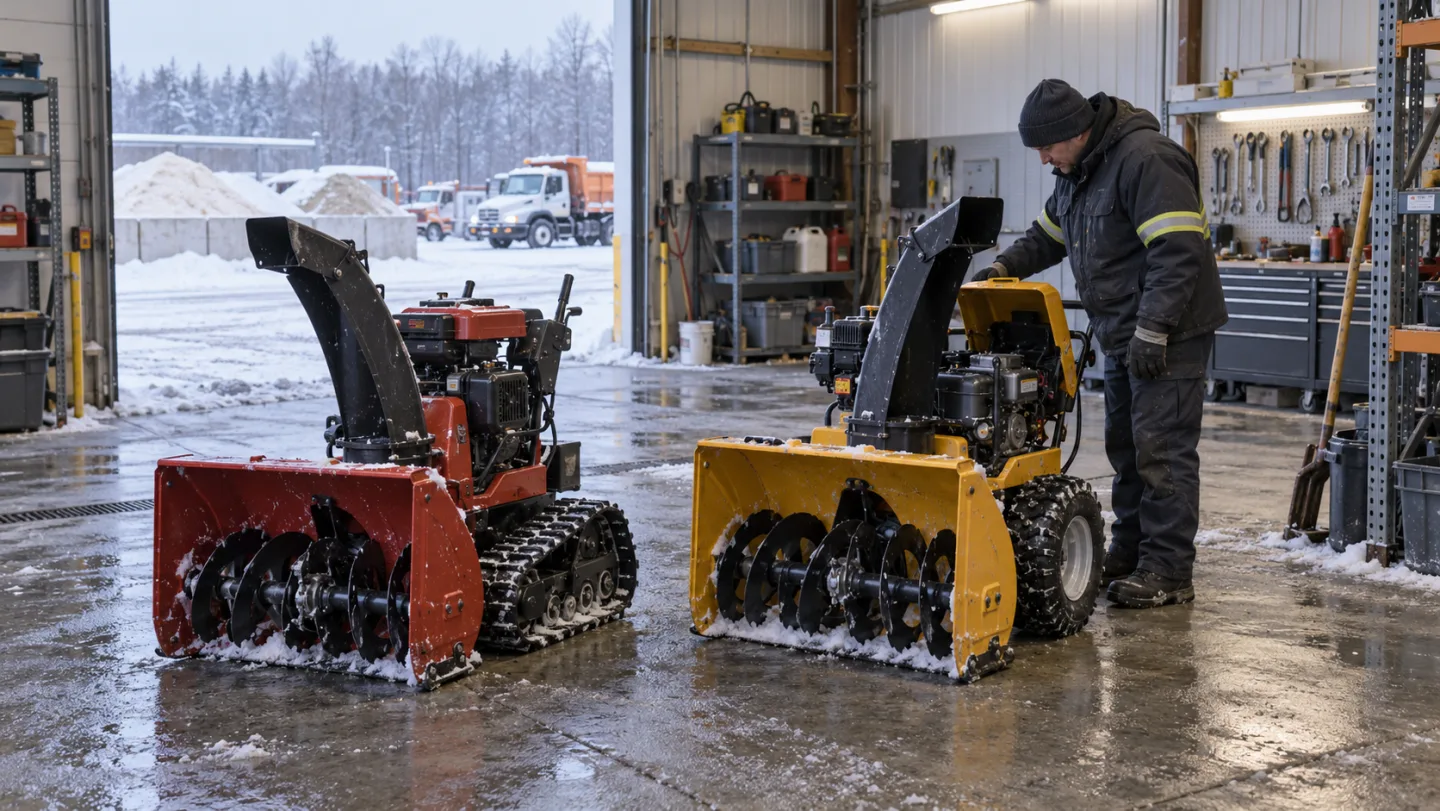
Remote control snow blower vs robotic snow blower: the key difference is who directs the clearing job. With an operator-driven remote control snow blower, a person actively commands the machine from a transmitter. With a robotic snow blower, a configured system may navigate and clear an approved route with less continuous steering input. Some models also provide both autonomous clearing and manual remote control, so the two labels are not always mutually exclusive.
For property managers, snow contractors, and equipment distributors, the buying decision should start with control mode, worksite conditions, supervision requirements, and documented stop behavior—not a marketing label alone. This guide compares those questions without claiming universal clearing speeds, throw distances, slope limits, or unattended-operation permissions.
Remote control snow blower vs robotic snow blower: the quick answer
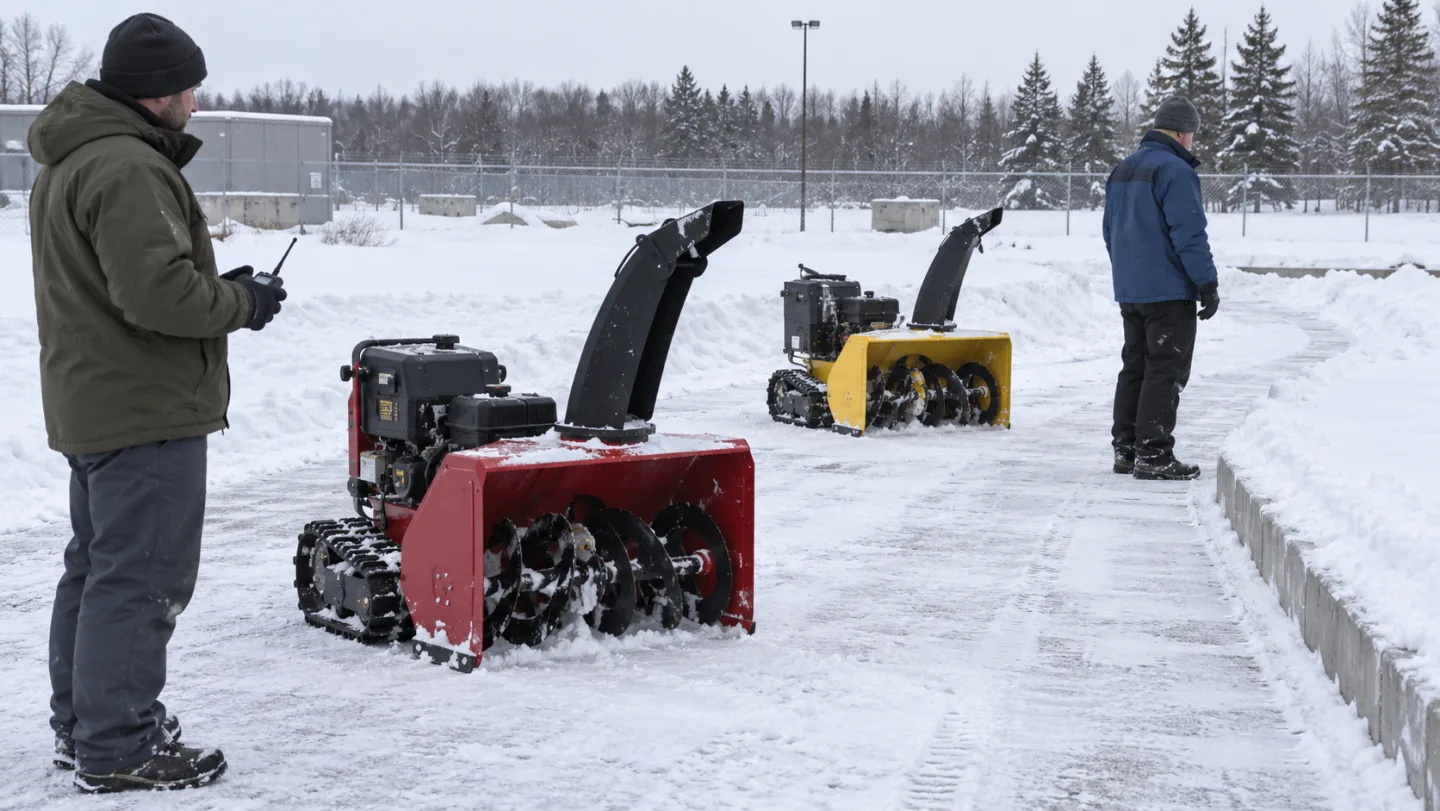
Operator-driven remote control: the operator provides driving commands while the machine clears snow. The exact controller may also manage the auger, attachment lift, chute rotation, or deflector—but buyers must verify those functions for each model. A remotely driven machine does not automatically follow a programmed clearing route.
Robotic or autonomous clearing: the equipment uses a configured navigation and work-area system to perform supported clearing tasks. A person still has responsibilities for setup, site restrictions, supervision, and intervention under the manufacturer’s instructions. Autonomous operation does not automatically mean the machine may be left unattended in every setting.
Both modes: a machine may support planned automatic clearing and a separate manual-control mode for positioning or spot work. Ask whether the manual mode actually operates the snow-clearing attachment or only moves the carrier.
As a real example of combined functions, Yarbo’s robotic snow blower information describes mapped automatic clearing and remote app control. Those are features of its documented configurations, not evidence that every robotic snow blower has the same controls or installation requirements.
First, confirm what “remote” means on a snow blower

Three different product features can be advertised as “remote control.” They should never be treated as interchangeable:
- Remote chute control: a conventional walk-behind operator adjusts discharge direction or angle through a control near the handle. The machine is not remotely driven. For example, Ariens lists a Path-Pro model with a remote chute; that feature does not make it an autonomous robot.
- Remote machine operation: a person uses a separate radio transmitter or approved interface to command travel and supported snow-removal functions.
- Remote app management: a connected device may start, pause, schedule, monitor, manually steer, or change clearing settings, depending on the model. Having an app does not by itself prove autonomous navigation or manual snow blowing.
Do not identify control mode from tracks, wheels, a joystick icon, a smartphone image, or the word “robotic.” Request the exact model name and its operating-mode section. Also keep snow blowers, which move snow through an auger or other throwing mechanism, separate from snow plows, which push snow with a blade. A modular carrier may offer either attachment, but the resulting work scope and specifications differ.
Operator-controlled snow blowers: who makes each decision?
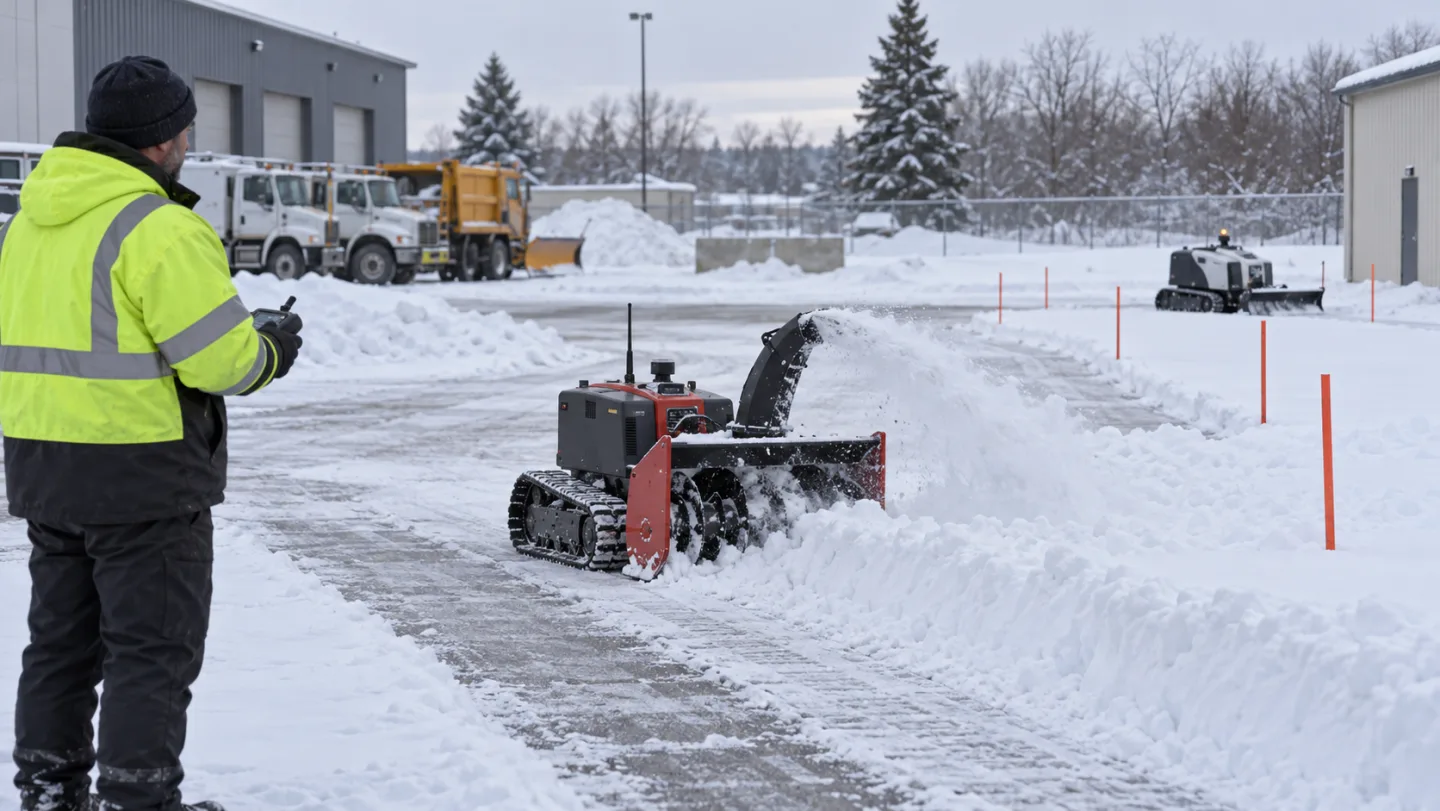
In a directly operated remote-control system, the person supplies ongoing steering commands. Depending on the installed configuration, the operator may also control travel speed, clearing engagement, attachment height, and snow discharge. Those functions should be listed individually, because not all machines offer the same transmitter layout or control authority.
A documented commercial example is Agria’s test of its remotely controlled 9700e carrier with a Westa snow thrower. The company’s 9700e product information explicitly states that its machine is not currently capable of autonomous driving. This illustrates why a powered carrier with snow equipment must not be described as an autonomous snow robot without model-level evidence.
Questions about the operator’s responsibilities
- Which movement and clearing commands require continuous operator input?
- What viewing, presence, supervision, or exclusion-area requirements appear in the manual?
- How does the transmitter control the attachment, auger, chute, and deflector, if applicable?
- What are the documented stop, connection-loss, and fault responses?
- What happens when parked vehicles, pedestrians, fresh drifts, or a blocked passage change the planned work?
Remote operation can change where a worker stands, but it does not eliminate machine movement, thrown-snow, ice, debris, sliding, or public-exposure hazards. Do not assume a maximum advertised radio range is the appropriate working distance for every site.
Robotic snow blowers: what is actually automated?

Robotic snow removal may involve work-area mapping, scheduled clearing, position tracking, automatic route execution, charging, and exception alerts. However, those are possible functions, not a standard feature package. Verify what the offered model can do, which tasks require human confirmation, and whether optional infrastructure or subscriptions are needed.
For instance, Yarbo describes snow-clearing zones configured in an app and automatic clearing based on a schedule or snowfall trigger, together with some manual remote functions. The manufacturer also identifies situations where additional intervention may be needed. Treat such material as documentation for that product family; confirm the exact model generation and manual before making a commercial promise.
Application review
Discuss your mowing application.
Share the working condition, target market, product family and project scope.
Autonomy is not a synonym for unrestricted unattended use
A machine that can follow a configured path might still be unable to proceed when vehicles block a route, a navigation reference is unavailable, snow conditions exceed its specified scope, or the site presents a hazard. Supplier documentation must explain how the robot responds and who remains responsible for supervision and recovery.
Ask whether the navigation system uses a mapped boundary, satellite-based positioning, reference equipment, local sensors, or a combination. Do not assume every robotic snow blower needs a boundary wire or that every app-controlled machine includes obstacle recognition.
Commercial comparison: control, site fit, and deployment cost
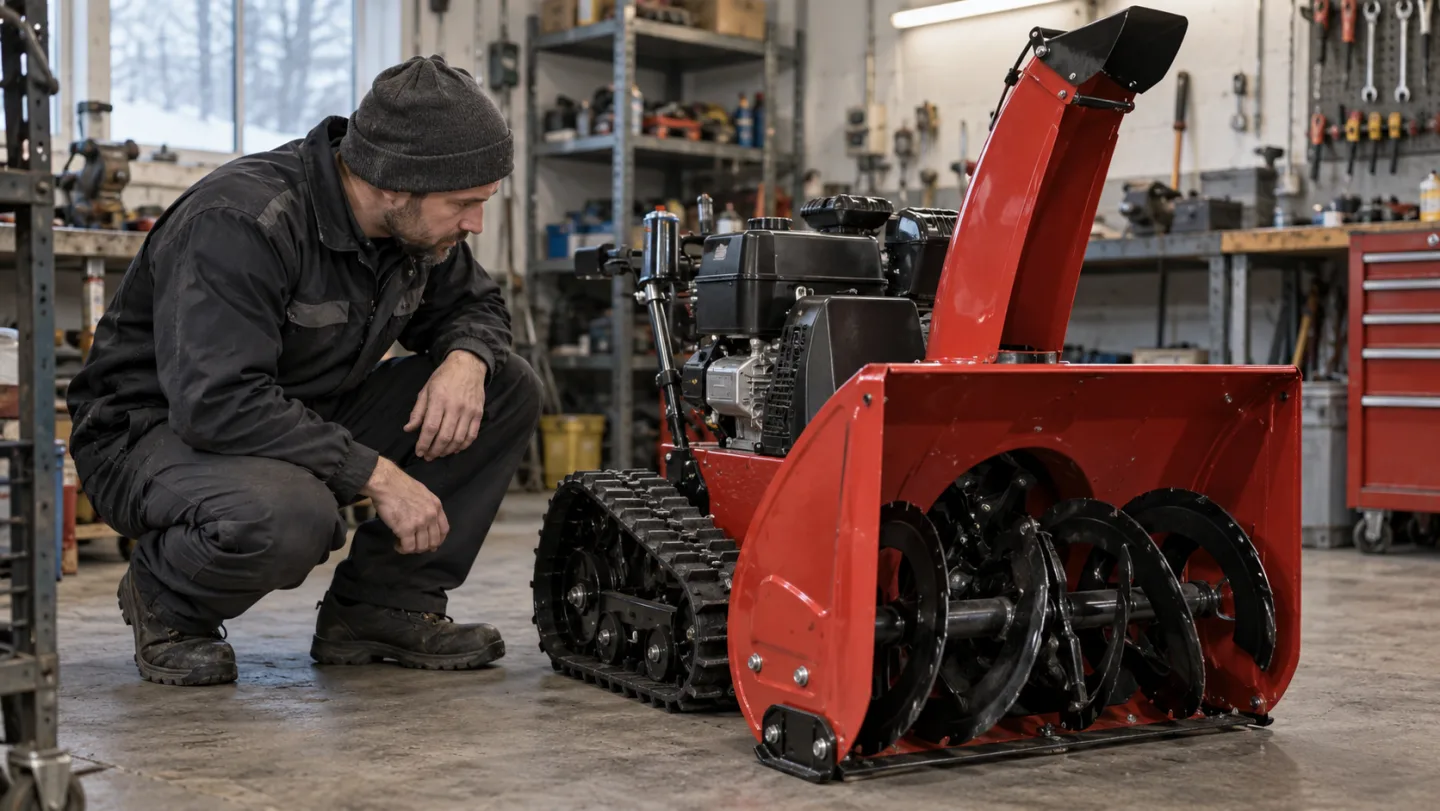
Compare the same snow-clearing task with each supplier. The table focuses on decisions buyers can document without assuming that one category is universally faster, safer, or more reliable.
Snow-clearing performance cannot be established by control mode alone. A wide blower may not fit a narrow walkway, while a machine with impressive throwing distance may be unsuitable where discharge must stay away from windows, parked vehicles, roads, or people.
Ten specifications to request before a snow blower quote

- Exact machine and attachment: manufacturer, model, snow-blower module, control package, build revision, and intended market.
- Clearing dimensions: working width, intake height, overall machine width, height, and transport dimensions. Do not confuse clearing width with gate clearance.
- Snow-handling capability: supported snow depth and type, discharge adjustment, test conditions for throw distance, and restrictions on packed snow or ice.
- Surface and terrain: approved pavement, pavers, gravel, slopes, traction limits, obstacles, and site-specific exclusions.
- Power and winter endurance: gasoline, battery, hybrid, or other power configuration; runtime or fuel use with winter operating conditions stated; cold-weather storage and charging instructions if applicable.
- Control functions: travel, steering, auger engagement, chute and deflector controls, manual spot-clearing, and autonomous route operation—recorded as separate fields.
- Control and navigation interruptions: manufacturer-defined responses to radio loss, positioning failure, obstacles, blocked routes, or low energy.
- Setup and recovery: site mapping, communications, charging or staging, transport, authorized manual recovery, and required supervision.
- Service and warranty: wear parts, auger and chute components, tracks or wheels, batteries or engine service, winter parts availability, and commercial-use exclusions.
- Proof and documents: current operator manual, dimension drawing, supplier answers, warranty, and supervised demonstration plan for representative approved conditions.
Where information is missing, mark it “not confirmed” rather than assuming a feature exists. In particular, do not transfer slope limits, stop behavior, or attachment data from a mower or tracked utility carrier to its snow-blower configuration without approval in the relevant documentation.
Buyer decision path: which snow removal mode fits the site?
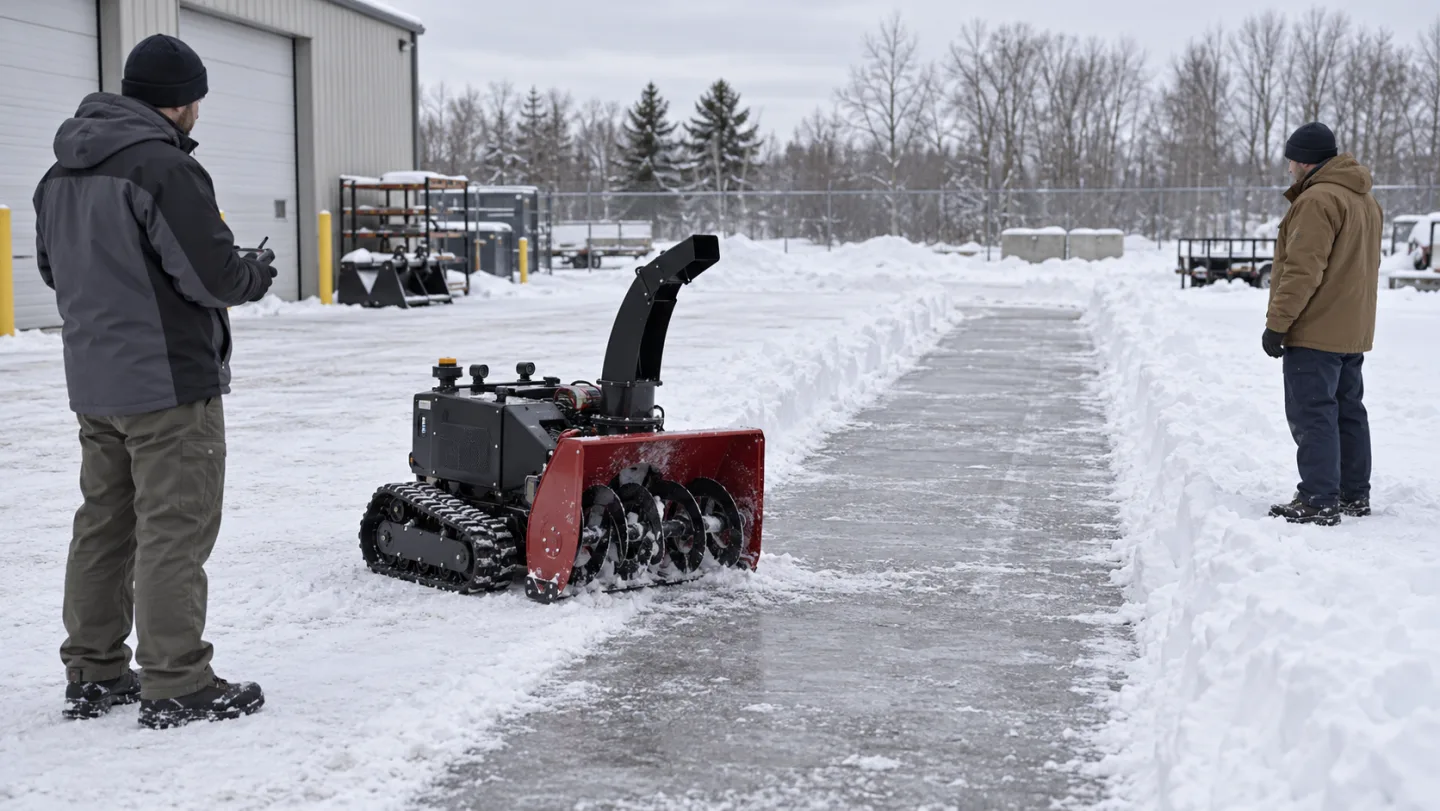
- Define the work: record each driveway, sidewalk, facility yard, or municipal segment, with its dimensions, surfaces, and snow-discharge constraints.
- Identify the operating model: determine whether an operator will actively direct clearing, whether a documented autonomous route is required, or whether the buyer needs both functions.
- Separate fixed routes from changing ones: record parking, vehicle movements, pedestrian access, intersections, site events, and conditions that may interrupt automatic clearing.
- Match snow equipment, not just the carrier: verify blower versus plow attachment, intake and clearing width, discharge direction, and the quoted configuration.
- Resolve site approvals: obtain the owner’s rules for discharge, public exposure, traffic, utilities, access, and supervision before any field demonstration.
- Compare total deployed cost: include machine, control and navigation hardware, charging or fuel equipment, setup labor, training, maintenance, downtime, parts, and warranty support.
- Request written proof: shortlist only models whose manual and supplier documentation address the required control mode, site conditions, and intervention behavior.
What a responsible demonstration should verify
Ask the manufacturer or dealer to demonstrate the exact offered configuration in a controlled, authorized setting. The test should show how operators normally start, pause, stop, and recover the equipment, along with the permitted way to check documented fault behavior. Do not create an uncontrolled loss-of-signal event in an active public area to test a marketing promise.
For professional snow work, OSHA’s winter-weather guidance reinforces the need to account for equipment and exposure hazards. Applicable duties depend on the workplace; an equipment brochure or autonomous label is not a substitute for the employer’s safety program or the manufacturer’s instructions.
Frequently asked questions
Is a remote control snow blower the same as a robotic snow blower?
No. A remote-operated blower can require continuous steering from a person, while an autonomous robot can navigate a configured clearing area. Some products support both functions in separate modes. Check the exact manual rather than using the names interchangeably.
Can a robotic snow blower also be manually controlled?
Some can. The important detail is whether manual control can actually clear snow, merely reposition the machine, or only change its settings. Ask for written confirmation of the supported modes.
Does “remote chute” mean the snow blower drives by remote?
No. On conventional walk-behind machines, a remote chute control may only adjust the snow’s discharge direction. It does not prove wireless steering or autonomous operation.
Does autonomous snow removal mean the machine can run without supervision?
Not automatically. Installation, monitoring, obstacle response, public access, stopping behavior, and recovery obligations depend on the product and worksite. Follow the exact manufacturer’s requirements and owner rules.
Bottom line for equipment buyers
Choose a remote control snow blower when a documented operator-directed workflow matches the job. Evaluate a robotic snow blower when the required route, navigation, setup, and supervision arrangements are supported by the offered system. If the site needs both autonomous clearing and active manual control, request clear evidence for both modes on the same model.
For a scoped supplier inquiry or request for quotation (RFQ), provide the clearing area, surfaces, expected snow conditions, discharge restrictions, available staffing, required control modes, and local service region. Ask for a like-for-like quotation and the exact manual rather than assuming that remote operation, automatic navigation, or a tracked chassis proves suitability for the site.
Video: Yarbo Snow Blower in Action: Autonomous Driveway Clearing & Self-Charging! (Yarbo, third-party)
