

 By Anna
A dealer or fleet manager is comparing a 48 V mower bank with a 12 V bank of the same battery count, or reading a spec sheet that lists "48 V (4 × 12 V / 35 Ah)" and wondering what the amp-hour figure actually describes. The battery series vs parallel voltage amp hours question is simple arithmetic; the equipment permission is not.
Series wiring adds voltage and leaves amp-hours at the single-battery value. Parallel wiring adds amp-hours and leaves voltage at the single-battery value. Series-parallel does both in proportion. Nominal watt-hours stay the same for a given set of identical batteries, but that number does not predict mower runtime.
This article builds one arithmetic worksheet from four identical hypothetical batteries, then uses two named mower documents to show why the worksheet is a reading aid rather than a wiring instruction. The intended readers are commercial mower dealers, rental fleet staff, and maintenance leads who have to check a specification, brief a supplier, or hand a machine to a service team.
Battery series vs parallel voltage amp hours: Separate voltage, amp-hours and nominal energy
Three quantities get mixed together in mower battery conversations, and separating them is the first step before any topology comparison. Voltage describes the electrical potential of the bank. Amp-hours describe charge capacity at a stated rating basis. Nominal watt-hours combine the two into an energy figure. Each answers a different question, and none of them alone tells you whether a mower will run for a given number of hours.
The most important early check is the system voltage the equipment is built for. A mower's drive, control, and charging system is designed around a particular bank voltage, and that figure comes from the machine's own documentation, not from a general wiring rule. Before comparing configurations, confirm what the manufacturer states for the exact model, including any revision or serial-number range that affects the electrical system.
What each term describes
Voltage is the potential difference across the bank terminals. In a series string, the voltages of the individual batteries add. Amp-hours are a charge quantity, usually quoted at a specific discharge rate and temperature; a 35 Ah rating means something only when the test basis is known. Nominal watt-hours are the product of nominal bank voltage and nominal amp-hours, and they give a rough energy comparison between packs built from the same cell type and rating basis.
That last qualification matters. Nominal energy is arithmetic, not a performance promise. Usable energy depends on discharge rate, temperature, cutoff voltage, battery age and condition, and how the machine's management system treats the pack. Two banks with identical nominal watt-hours can deliver different usable energy and very different runtime once those factors are in play. The site's existing explainer on mower battery amp-hours covers the purchasing side of that distinction, and the C-rate explanation covers why discharge rate changes what a rating means in practice.
Confirm the permitted system voltage first
A useful habit is to write the permitted system voltage at the top of any comparison sheet and treat every other figure as subordinate to it. If a machine is documented as a 48 V system, then a 12 V parallel arrangement is not a lower-voltage option for that machine; it is a different electrical system that the machine was not described as accepting. The comparison below is arithmetic, and the equipment question is separate.
| Quantity | What it describes | Where the figure should come from |
|---|---|---|
| Bank voltage | Electrical potential the machine is designed around | Model-specific manual or manufacturer specification |
| Amp-hours | Charge capacity at a stated rating basis | Battery datasheet, including discharge rate and temperature |
| Nominal Wh | Voltage × amp-hours, for rough energy comparison | Calculated, with the basis stated |
| Usable energy | Energy actually available in service | Test data or manufacturer documentation; not derivable from nominal figures alone |
| Permitted configuration | Whether a topology is acceptable for the machine | Manufacturer's documentation for the exact model |
Compare four identical hypothetical batteries in three layouts
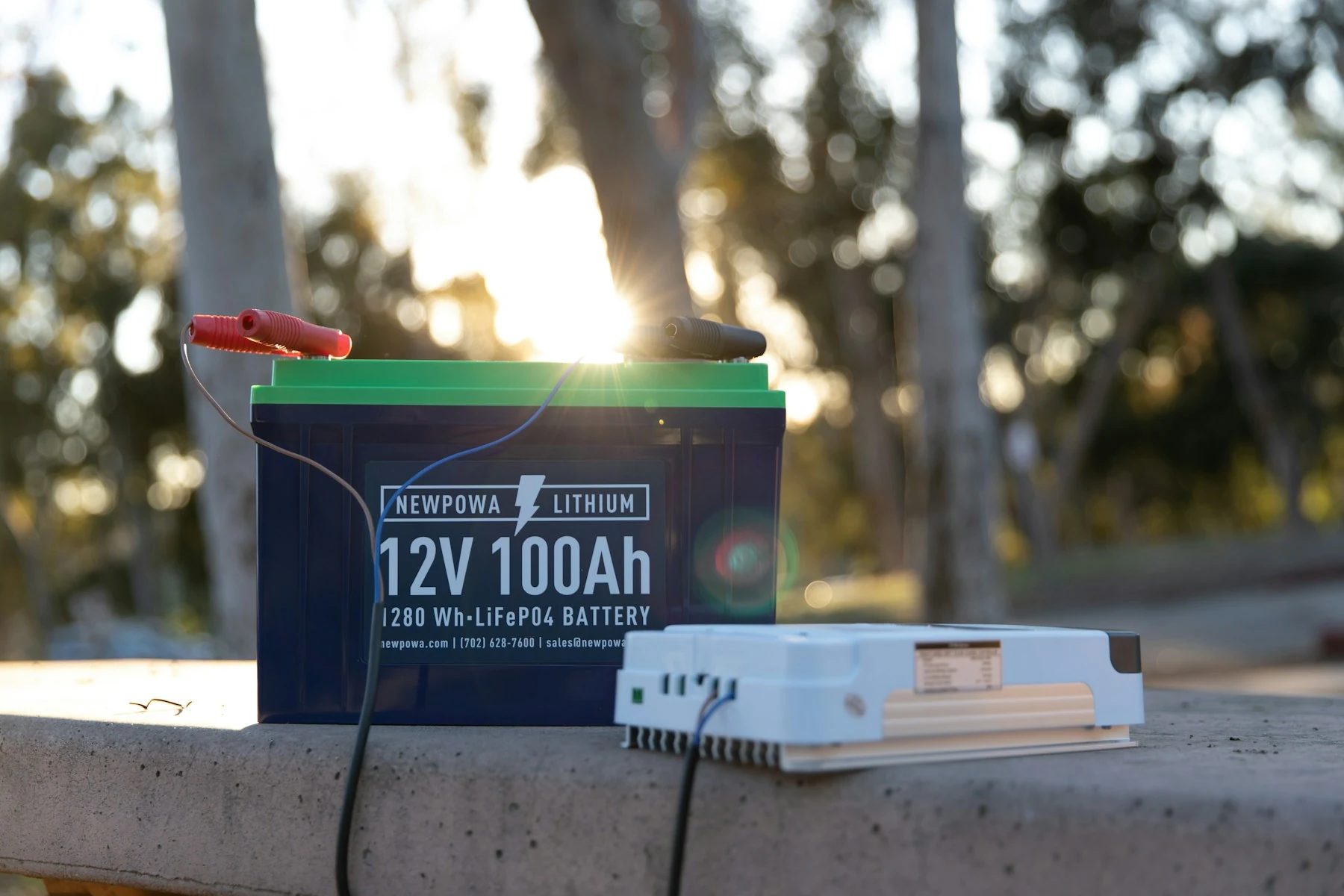
Using four identical hypothetical batteries rated 12 V and 35 Ah, the three common topologies produce three different voltage and amp-hour pairs while keeping the same nominal energy. This is a worked example for reading labels and checking arithmetic. It is not a recommendation for any mower, and it does not show that the three layouts are interchangeable in a machine.
The arithmetic for 4S, 4P and 2S2P
In a four-battery series string (4S), voltage adds and amp-hours stay at the single-battery value: 48 V and 35 Ah. In a four-battery parallel bank (4P), amp-hours add and voltage stays at the single-battery value: 12 V and 140 Ah. In a two-series, two-parallel arrangement (2S2P), each series pair gives 24 V and 35 Ah, and paralleling two such pairs gives 24 V and 70 Ah.
All three come to 1,680 nominal watt-hours, because four identical batteries contain the same nominal energy however they are connected. That equality is exactly why nominal watt-hours should not be used as a runtime forecast. The layouts differ in voltage and in the amp-hour figure a label would show, and those differences matter to the equipment even when the energy total does not change.
| Layout | Connection | Bank voltage | Bank amp-hours | Nominal Wh |
|---|---|---|---|---|
| 4S | Four in series | 48 V | 35 Ah | 1,680 Wh |
| 4P | Four in parallel | 12 V | 140 Ah | 1,680 Wh |
| 2S2P | Two series pairs, paralleled | 24 V | 70 Ah | 1,680 Wh |
What the table does and does not tell you
What the table tells you is how to read a claim. If a listing says 48 V and 35 Ah for a four-battery bank, the arithmetic is consistent with a series string of 12 V, 35 Ah batteries. If a listing says 12 V and 140 Ah for four batteries, the arithmetic is consistent with a parallel bank. What the table does not tell you is whether either arrangement suits a particular mower, whether the batteries are the correct type for the application, or whether the machine's charger and management system accept the configuration.
Three cautions belong next to the worksheet. First, series strings are limited by the weakest battery in the string, so mixing ages, types, or states of charge is a service question for the manufacturer rather than a way to hit a target voltage. Second, parallel banks raise questions about how current shares between batteries, which is again a design matter. Third, changing a bank's topology changes what the charger sees; charger compatibility is a separate check, covered in the site's note on lawn mower battery charger compatibility. None of these points should be resolved by rewiring a machine outside the manufacturer's documented configuration.
Read two named mower documents without transferring specs
Two named mower documents show how the same arithmetic appears in real specifications, and they also show why each figure needs its own confirmation. The Toro Reelmaster 5010-H Service Manual 15212SL Rev F describes the machine's electric drive system as using four 12 V AGM batteries in series at 48 V. The Ferris FRC7 manufacturer specification page lists a 48 V battery arrangement expressed as 4 × 12 V / 35 Ah. The two statements are not interchangeable evidence, and neither should be copied onto a different machine.
Application review
Discuss your mowing application.
Share the working condition, target market, product family and project scope.
Toro 5010-H: a documented series string
The Toro manual is a service document for a specific model and revision, and it states the series arrangement and system voltage for that machine's electric drive. That is the kind of source a dealer can cite when explaining why a 5010-H bank is a series string rather than a parallel bank. It is also model-specific: the manual's statement does not establish what any other Toro model, or any other brand, uses.
The manual's amp-hour rating basis is a point to verify rather than assume. A service manual may quote a battery capacity figure under particular test conditions, and the same number can mean different things if the basis is not stated. When a customer asks whether a replacement battery of a given amp-hour rating is equivalent, the answer should come from the manual's specification and the battery supplier's datasheet, compared on the same basis.
Ferris FRC7: a listing that needs two confirmations
The Ferris FRC7 page presents the battery arrangement as 48 V with four 12 V units at 35 Ah. Two things need confirmation before that line is used in a dealer conversation. The first is whether 35 Ah describes each battery or the bank as a whole; the arithmetic in the previous section shows that a 48 V series string of four 35 Ah batteries would carry 35 Ah at the bank level, but the listing wording alone should not be treated as settling the question. The second is the wiring arrangement itself. A voltage and battery count are consistent with a series string, but a specification line is not a wiring diagram, and the connection details should come from the manufacturer's documentation for the model.
| Document | What it states | What it supports | What still needs confirmation |
|---|---|---|---|
| Toro Reelmaster 5010-H Service Manual 15212SL Rev F | Four 12 V AGM batteries in series, 48 V electric drive | Series arrangement and system voltage for this model and revision | Amp-hour rating basis and any serial-number variations |
| Ferris FRC7 manufacturer specification page | 48 V, expressed as 4 × 12 V / 35 Ah | The listed voltage and battery count for this model | Whether 35 Ah is per battery or per bank; the actual connection arrangement |
Keep the two documents separate
The temptation is to merge the two into a general rule: four 12 V batteries at 35 Ah make a 48 V mower bank. That rule would overreach. Each document speaks for its own model, and the Ferris line still has open questions. A dealer who needs to explain a bank to a customer should quote the document that applies to the machine in front of them, state the revision or page, and mark anything unresolved as a question for the manufacturer.
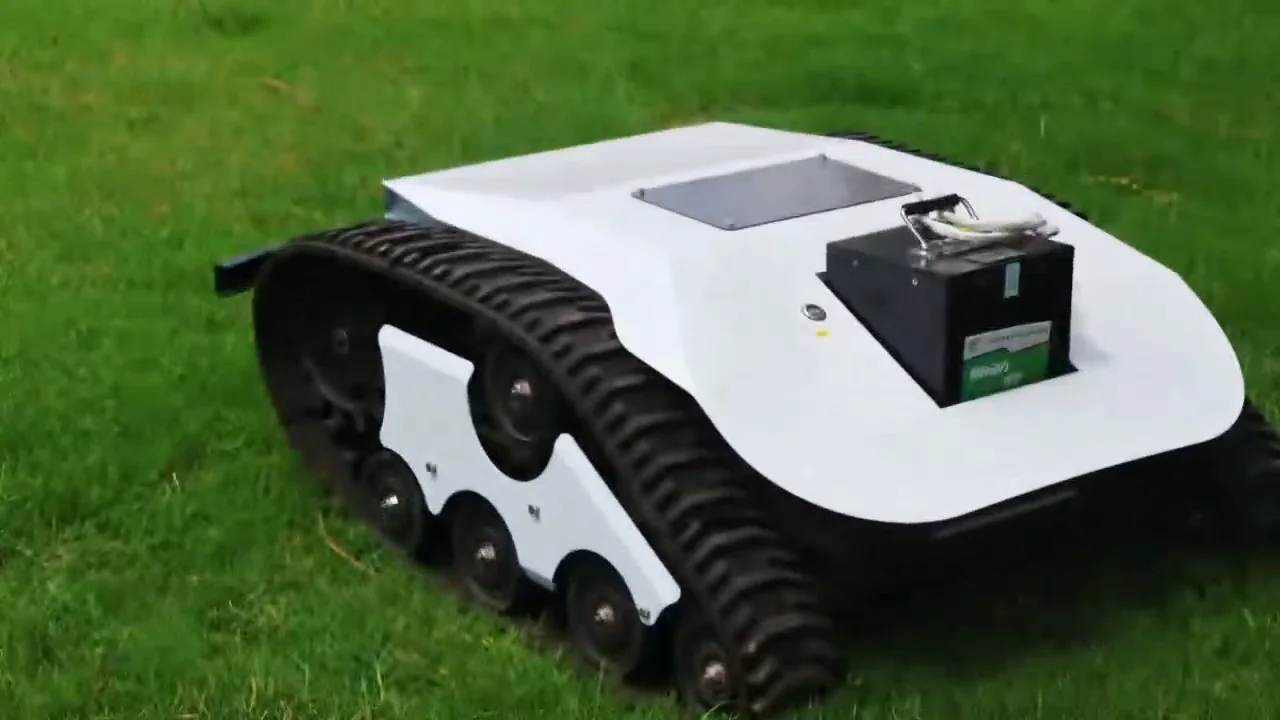
This is also where the site's own position should stay modest. Super Mowers supplies remote-controlled tracked mowers and other commercial mower equipment, and battery-bank questions from dealers and fleets are part of that conversation. Nothing in this article should be read as a statement of Super Mowers battery configuration, capacity, or approved topology for any model; those details belong in the documentation for the specific machine.
Prepare a supplier and service handoff

A clean handoff record prevents most battery-bank confusion, because it forces the writer to separate what is documented from what is assumed. Whether the record is going to a battery supplier, a service technician, or a rental customer, the same fields apply. The goal is not to prescribe a wiring change; it is to make the machine's existing configuration and its evidence trail legible to the next person.
Fields to record
Start with machine identity: make, model, and serial number, plus the manual title and revision used. Then record the bank as documented: system voltage, the number and type of batteries, and the arrangement as stated by the manufacturer. Add the amp-hour figure with its basis, noting whether it refers to a single battery or the whole bank and what discharge conditions the figure assumes. Record the charger model and any manufacturer-approved configuration notes. Where a field is unknown, write "to confirm" rather than filling it with an inference.
| Handoff field | Example entry | Source |
|---|---|---|
| Machine identity | Make, model, serial number | Machine plate and dealer records |
| Manual reference | Title, revision, page | Manufacturer documentation |
| System voltage | As documented for this model | Manual or specification page |
| Battery count and type | Number, chemistry, physical size | Manual and battery labels |
| Arrangement | Series, parallel, or series-parallel as stated | Manufacturer documentation |
| Amp-hour basis | Per battery or per bank; rating conditions | Battery datasheet and manual |
| Charger | Model and compatibility note | Manufacturer documentation |
| Open questions | Listed explicitly with owner and date | Handoff record |
Questions to put to the supplier
When a bank needs replacement batteries, the supplier conversation should be specific. Ask whether the proposed battery matches the required chemistry, physical dimensions, terminal arrangement, and voltage. Ask what discharge rate and temperature the quoted amp-hour figure assumes, and whether it is comparable to the figure in the machine documentation. Ask whether the supplier's battery is approved for the machine's charging profile. Ask for the connection arrangement in writing if the existing documentation is unclear.
These questions are not a substitute for the manufacturer's instructions, and they should never lead to a field rewiring decision made by the dealer or fleet staff. If the documented arrangement and the physical machine disagree, the correct next step is to stop and refer the question to the manufacturer or an authorized service provider. The same discipline applies to battery condition: state-of-charge and state-of-health are different measurements, as the site's note on battery state of charge vs state of health explains, and neither one should be inferred from a voltage reading taken at rest.
FAQ
Do amp-hours add in a series string?
No. In a series string the voltages add and the amp-hour figure stays at the single-battery value. Four 12 V, 35 Ah batteries in series give 48 V and 35 Ah at the bank level. Amp-hours add in a parallel connection, where the voltage stays at the single-battery value.
Does the same nominal Wh guarantee the same mower runtime?
No. Nominal watt-hours are the product of nominal voltage and nominal amp-hours, and identical batteries in different topologies will show the same nominal energy. Runtime depends on usable energy, which is affected by discharge rate, temperature, cutoff voltage, battery condition, and how the machine manages the pack. Nominal figures support comparison, not a runtime forecast.
Can a 48 V mower bank be changed to parallel?
That is a question for the machine's manufacturer, not a wiring decision for a dealer or fleet. A 48 V system is designed around a particular bank voltage, and changing the arrangement changes what the drive, controls, and charger see. The documented configuration for the exact model and revision should be followed, and any proposed change should be confirmed in writing by the manufacturer or an authorized service provider.
Conclusion

Series adds voltage, parallel adds amp-hours, and nominal watt-hours stay the same for identical batteries. Use the worksheet to read labels, then confirm every figure against the machine's own documentation before acting.
Video: Minding Your mAhs Ep032 – Series vs parallel – How does voltage, capacity, and current add up?
