
 By Anna
You are comparing two electric mower packs for a dealer or rental fleet, and one label says 20 Ah while another says 12 Ah. Before you treat the larger number as more capacity, you need the voltage, the pack count and the basis behind any runtime claim. This guide keeps electric lawn mower battery amp hours explained in plain terms, so a quotation can be checked rather than assumed.
Amp hours measure charge, not stored energy. Multiply nominal volts by amp hours to get a labelled watt-hour estimate, then compare packs only at the same voltage and under the same stated assumptions. Treat runtime and charging figures as supplier claims until the test conditions are documented.
Electric lawn mower battery amp hours explained: Read the battery label before comparing packs
A useful comparison starts with the label, not the brochure headline. Commercial buyers often receive a quotation that lists “battery capacity” in amp hours alone, sometimes without saying whether that figure covers one pack or a whole set. Ask for the label information and the pack count before you build a comparison sheet, because a 20 Ah single pack and two 10 Ah packs are different purchasing propositions even when the total charge looks similar.
The references supplied for this article describe amp hours as a measure of charge and explain that battery labels typically show voltage and capacity together. That is the right starting point: the label is an identification record, and your job is to capture it accurately rather than interpret a single number in isolation.
Identify the exact pack, system and nominal voltage
Record the pack model number, the system voltage the mower is designed for, and the nominal voltage printed on the pack. Nominal voltage is the labelled reference value used for capacity calculations; it is not the same as a fully charged voltage, and it should not be treated as a performance guarantee. If a supplier quotes “48 V” in one document and “51.2 V nominal” in another, ask which figure belongs to the pack label and which belongs to a marketing description.
Also note whether the mower uses one pack, two packs in series, or two packs in parallel. Series connection raises system voltage; parallel connection raises available charge at the same voltage. A quotation that gives only a total amp-hour figure without the connection arrangement is incomplete for comparison purposes.
Separate amp hours, volts and watt hours
The three terms answer different questions:
- Amp hours (Ah) describe charge capacity — how much current a pack can deliver over time under stated conditions.
- Volts (V) describe electrical potential. Nominal voltage is the reference value on the label.
- Watt hours (Wh) describe energy, calculated as nominal volts multiplied by amp hours.
A common error in supplier documents is to call watt hours “power.” Watt hours are energy; watts are power. A pack with more watt hours stores more energy in nominal terms, but that alone does not tell you how fast a mower will cut, how long it will run on a specific site, or whether the charger is approved for that pack.

Understand nominal energy calculations
The calculation itself is simple; the discipline is in labelling it correctly. Nominal watt hours equal nominal voltage multiplied by amp hours. If a pack is labelled 48 V nominal and 20 Ah, the nominal energy estimate is 960 Wh. If another pack is labelled 24 V nominal and 30 Ah, the estimate is 720 Wh. The second pack has more amp hours but less nominal energy, which is exactly why amp hours alone cannot rank packs across different voltages.
Use these figures as a labelled estimate, not a measured result. The calculation assumes the nominal voltage and rated capacity are stated on a consistent basis. Real delivered energy depends on discharge rate, temperature, cell behaviour, cutoff voltage and how the mower’s control system draws current. None of those variables are captured by a simple multiplication.
Use nominal V multiplied by Ah as a labelled estimate
When you build a comparison sheet, show the formula and the inputs so a colleague can audit it. A transparent row might read: pack model, nominal voltage, rated amp hours, calculated nominal watt hours, number of packs per mower, and the source document and date. That structure prevents the common problem where a watt-hour figure circulates in a quotation without anyone knowing whether it was calculated, measured, or copied from a different model.
If a supplier provides a watt-hour figure that does not match nominal volts multiplied by amp hours, ask for the basis. There may be a legitimate reason — for example, a different nominal voltage definition or a pack rated at a different capacity — but the discrepancy should be explained in writing rather than smoothed over.
Distinguish Wh energy from W power
Energy and power are related but not interchangeable. A 1,000 Wh pack can deliver energy over time; the mower’s motors draw power in watts depending on load. A higher-watt-hour pack does not automatically mean a more powerful mower, and a more powerful mower does not automatically mean longer runtime. The relationship between the two depends on how hard the machine works.
For fleet buyers, this matters when a supplier markets a pack by watt hours while the mower’s motor rating is quoted separately. Record both, but do not multiply or divide them to produce a runtime figure unless the supplier has provided a documented basis for that calculation.
Compare packs under compatible assumptions
A fair comparison holds as many variables constant as possible. If you are choosing between packs for the same mower model, the system voltage and connection arrangement should match; then amp hours and nominal watt hours can be compared directly. If you are comparing packs for different mower models, the comparison is really about complete systems, and you should say so rather than presenting a pack-to-pack ranking.
The table below shows the kind of record that keeps a comparison honest. It uses illustrative label values only; replace them with the figures from your actual supplier documents.
| Comparison item | Pack A (example) | Pack B (example) | What to confirm |
|---|---|---|---|
| Pack model number | From label | From label | Exact model and revision |
| Nominal voltage | 48 V | 24 V | Which figure is on the pack label |
| Rated amp hours | 20 Ah | 30 Ah | Whether rating is per pack or per set |
| Calculated nominal Wh | 960 Wh | 720 Wh | Show the formula in the record |
| Packs per mower | 1 | 2 in parallel | Series or parallel arrangement |
| Usable energy claim | Supplier to state | Supplier to state | Basis and cutoff conditions |
| Approved charger | Supplier to state | Supplier to state | Model-specific approval |
| Runtime claim | Supplier to state | Supplier to state | Load, terrain and test conditions |
The example values are arithmetic illustrations, not product specifications. The point of the table is the confirmation column: every row should have a source, and any blank row is a question for the supplier rather than an assumption.
Do not compare Ah alone across different voltages
A 30 Ah pack at 24 V and a 20 Ah pack at 48 V are not equivalent, even though the first number is larger. The 48 V pack carries more nominal energy in this example because voltage multiplies the charge. Presenting only amp hours in a dealer comparison can mislead a fleet manager into choosing the pack with the bigger label number rather than the pack with more stored energy for the application.
The same caution applies to “equivalent” claims in marketing material. If a supplier says a pack is “equivalent to” a different voltage class, ask for the conversion basis and whether the comparison is about energy, charge, physical size, or runtime. Those are different questions and may produce different answers.
Confirm pack quantity, usable energy and approved compatibility
Usable energy is not always the same as nominal energy. Battery management systems, cutoff voltages and temperature limits can reduce what the mower can actually draw. Ask the supplier whether the quoted capacity is nominal, rated, or usable, and under what conditions. If the answer is “nominal,” record it as nominal and do not present it to a fleet operator as guaranteed delivered energy.
Application review
Discuss your mowing application.
Share the working condition, target market, product family and project scope.
Compatibility is a separate question. A pack with the right voltage and connector may still not be approved for a particular mower model, charger or control system. Confirm compatibility from the model-specific manual or supplier statement, not from the shape of the connector or the voltage label alone.

Ask for a representative runtime basis

Runtime is where battery comparisons most often go wrong. A supplier may quote “up to” a number of hours without stating the load, grass condition, terrain, cutting height, attachment or temperature. Those variables can change the result substantially, so a runtime figure without a basis is a marketing statement rather than a planning input.
When you request runtime information, ask for the test or field conditions in writing. If the supplier cannot provide them, record the figure as an unverified claim and plan your fleet around a conservative assumption or a trial on your own site. Do not convert a nominal watt-hour figure into a runtime estimate yourself unless the supplier has given you a documented consumption basis.
Record load, terrain, attachment and test conditions
A useful runtime record includes the mower model, battery pack configuration, attachment, cutting height, vegetation type and density, terrain description, ambient temperature, and whether the figure came from a controlled test or a field observation. For remote-control equipment, also note the control arrangement and whether the machine was operated continuously or with stops. These details let a fleet manager compare like with like across suppliers.
The table below is a template for capturing that information. It is deliberately qualitative where numbers are not supplied.
| Runtime evidence item | Why it matters | Status in your record |
|---|---|---|
| Mower model and revision | Runtime is model-specific | To be supplied |
| Battery pack model and count | Capacity and connection affect result | To be supplied |
| Attachment and cutting height | Load changes with cutting task | To be supplied |
| Vegetation type and density | Heavy growth draws more power | To be supplied |
| Terrain and ground conditions | Slope and surface affect load | To be supplied |
| Ambient temperature | Battery behaviour varies with temperature | To be supplied |
| Test type (controlled or field) | Distinguishes measurement from observation | To be supplied |
| Charging time and charger model | Affects fleet turnaround planning | To be supplied |
Keep actual runtime and charging claims supplier-sourced
Charging claims deserve the same treatment as runtime claims. A charger’s output, the pack’s accepted charge rate, the state of charge at the start, and the temperature all affect charging time. Ask the supplier for the charger model, the pack model it is approved for, and the conditions behind any charging-time figure. Do not assume that a higher-capacity pack charges in proportion to its capacity, or that a charger supplied with one model is approved for another.
For fleet planning, the practical question is often turnaround: how many packs are needed to keep a mower working through a shift, and how long each pack spends charging. That is a site-specific calculation. Build it from supplier-documented charging times and your own operating pattern, and label any assumption clearly.
If you are weighing battery equipment against other drive options for a fleet, the site’s own comparison of electric versus gas remote-control mowers is a useful starting point for the wider decision, while battery figures still need to come from the actual product documentation.
FAQ

Do more amp hours always mean longer mower runtime? No. Amp hours measure charge, and runtime depends on voltage, load, terrain, vegetation, attachment and temperature. At the same voltage and under the same conditions, a higher-amp-hour pack may support longer runtime, but the claim should come from the supplier with a stated basis.
Can I compare amp hours across different voltages? Not directly. Convert to nominal watt hours by multiplying nominal voltage by amp hours, then compare. Even then, the result is a labelled estimate of stored energy, not a measured runtime.
Does watt-hour capacity prove charger compatibility? No. Watt hours describe nominal energy. Charger compatibility depends on the specific pack model, charger model and the mower’s approved configuration. Confirm it from the model-specific manual or supplier statement.
Conclusion
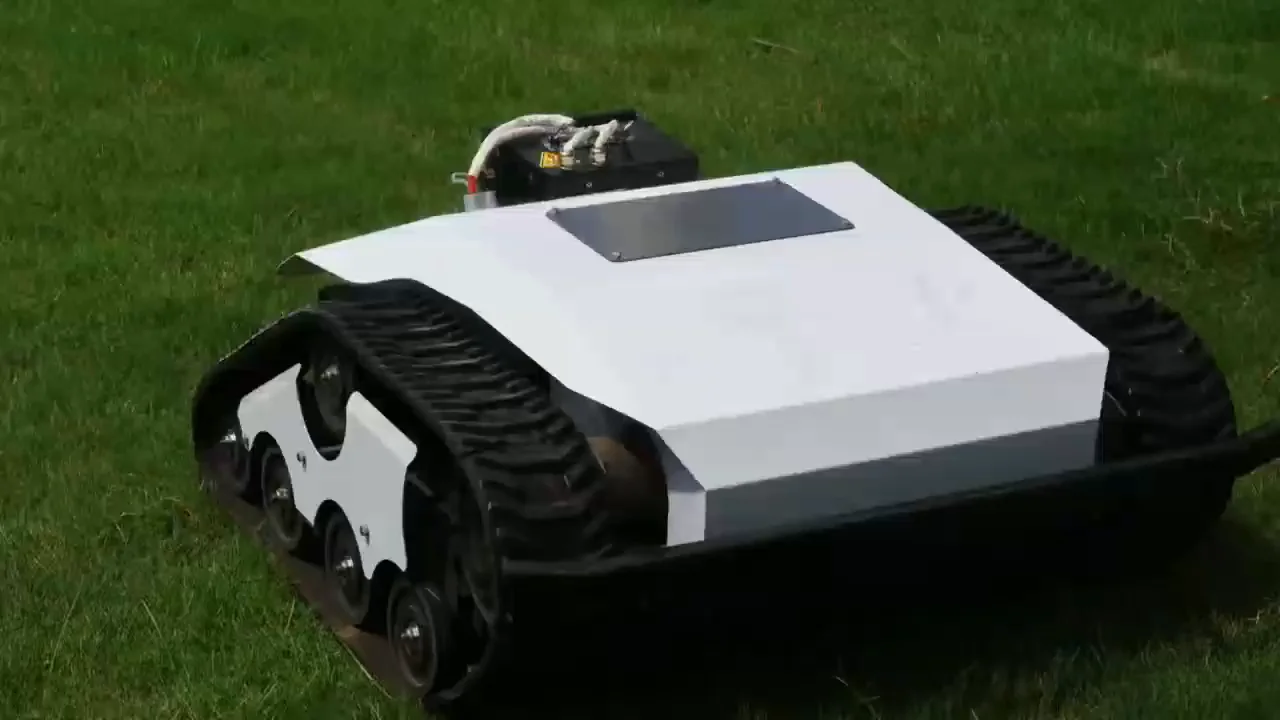
Compare packs by nominal voltage, amp hours and calculated watt hours, and ask suppliers for the conditions behind every runtime and charging claim. Build one comparison sheet per fleet decision and leave unknown fields as questions, not assumptions. For electric remote-control mower options, start from the Super Mowers product range and confirm battery details against the actual product documentation.
Video: Watt Hours vs Amp Hours Explained! - What's The Difference?
