

 Von Anna
A dealer or fleet manager is comparing a 48 V mower bank with a 12 V bank of the same battery count, or reading a spec sheet that lists "48 V (4 × 12 V / 35 Ah)" and wondering what the amp-hour figure actually describes. The battery series vs parallel voltage amp hours question is simple arithmetic; the equipment permission is not.
Series wiring adds voltage and leaves amp-hours at the single-battery value. Parallel wiring adds amp-hours and leaves voltage at the single-battery value. Series-parallel does both in proportion. Nominal watt-hours stay the same for a given set of identical batteries, but that number does not predict mower runtime.
This article builds one arithmetic worksheet from four identical hypothetical batteries, then uses two named mower documents to show why the worksheet is a reading aid rather than a wiring instruction. The intended readers are commercial mower dealers, rental fleet staff, and maintenance leads who have to check a specification, brief a supplier, or hand a machine to a service team.
Battery series vs parallel voltage amp hours: Separate voltage, amp-hours and nominal energy
Three quantities get mixed together in mower battery conversations, and separating them is the first step before any topology comparison. Voltage describes the electrical potential of the bank. Amp-hours describe charge capacity at a stated rating basis. Nominal watt-hours combine the two into an energy figure. Each answers a different question, and none of them alone tells you whether a mower will run for a given number of hours.
The most important early check is the system voltage the equipment is built for. A mower's drive, control, and charging system is designed around a particular bank voltage, and that figure comes from the machine's own documentation, not from a general wiring rule. Before comparing configurations, confirm what the manufacturer states for the exact model, including any revision or serial-number range that affects the electrical system.
What each term describes
Voltage is the potential difference across the bank terminals. In a series string, the voltages of the individual batteries add. Amp-hours are a charge quantity, usually quoted at a specific discharge rate and temperature; a 35 Ah rating means something only when the test basis is known. Nominal watt-hours are the product of nominal bank voltage and nominal amp-hours, and they give a rough energy comparison between packs built from the same cell type and rating basis.
That last qualification matters. Nominal energy is arithmetic, not a performance promise. Usable energy depends on discharge rate, temperature, cutoff voltage, battery age and condition, and how the machine's management system treats the pack. Two banks with identical nominal watt-hours can deliver different usable energy and very different runtime once those factors are in play. The site's existing explainer on mower battery amp-hours covers the purchasing side of that distinction, and the C-rate explanation covers why discharge rate changes what a rating means in practice.
Confirm the permitted system voltage first
A useful habit is to write the permitted system voltage at the top of any comparison sheet and treat every other figure as subordinate to it. If a machine is documented as a 48 V system, then a 12 V parallel arrangement is not a lower-voltage option for that machine; it is a different electrical system that the machine was not described as accepting. The comparison below is arithmetic, and the equipment question is separate.
| Größe | Was er beschreibt | Where the figure should come from |
|---|---|---|
| Bankspannung | Electrical potential the machine is designed around | Model-specific manual or manufacturer specification |
| Amp-hours | Charge capacity at a stated rating basis | Battery datasheet, including discharge rate and temperature |
| Nennleistung in Wh | Voltage × amp-hours, for rough energy comparison | Calculated, with the basis stated |
| Usable energy | Energy actually available in service | Test data or manufacturer documentation; not derivable from nominal figures alone |
| Permitted configuration | Whether a topology is acceptable for the machine | Manufacturer's documentation for the exact model |
Compare four identical hypothetical batteries in three layouts
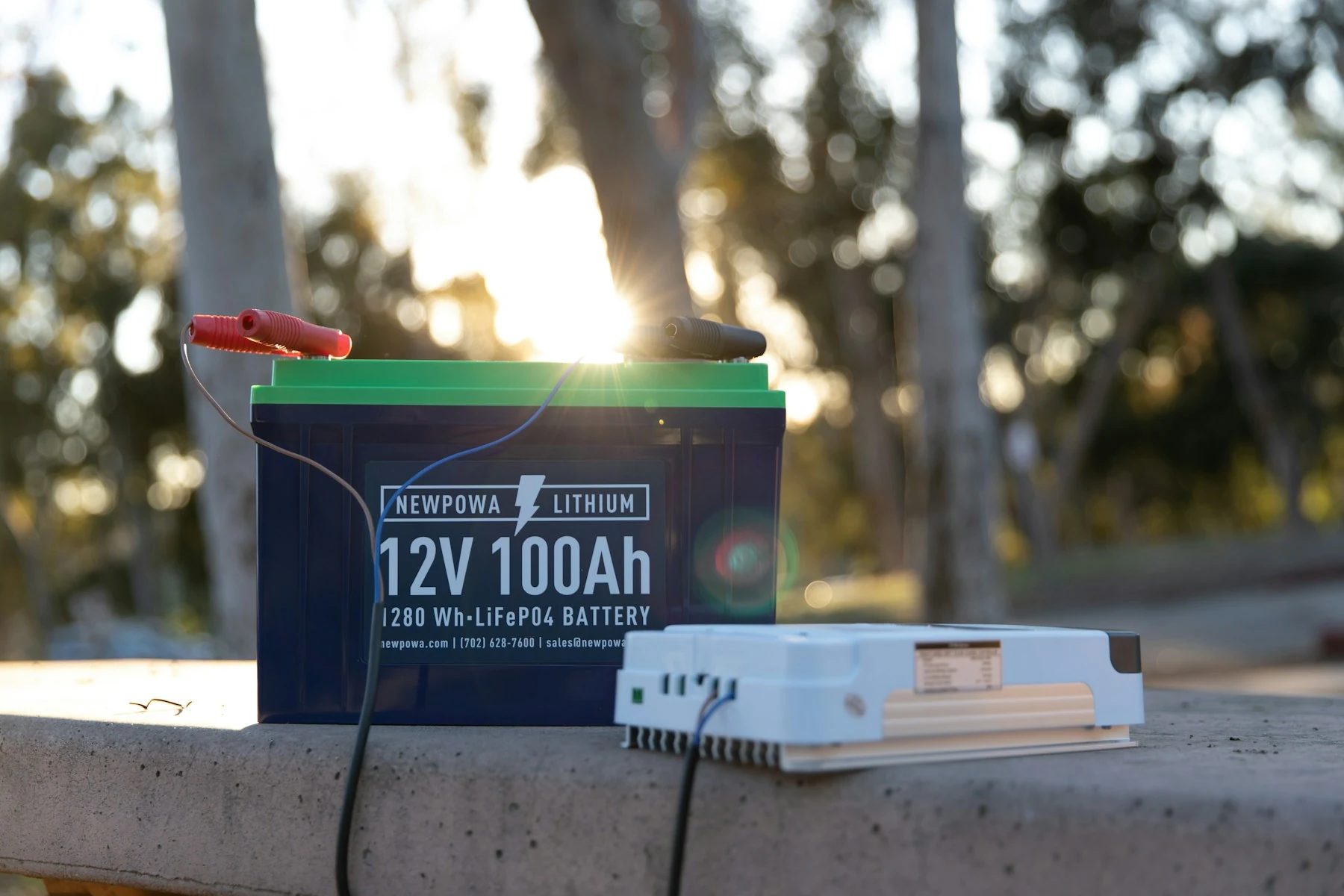
Mit vier identischen hypothetischen Akkus mit 12 V und 35 Ah ergeben die drei gängigen Topologien drei verschiedene Spannungs- und Amperestunden-Paare, während die nominale Energie gleich bleibt. Dies ist ein durchgerechnetes Beispiel zum Lesen von Etiketten und zum Überprüfen der Arithmetik. Es ist keine Empfehlung für einen bestimmten Rasenmäher und zeigt nicht, dass die drei Anordnungen in einer Maschine austauschbar sind.
Die Arithmetik für 4S, 4P und 2S2P
In einer Reihenschaltung aus vier Akkus (4S) addieren sich die Spannungen, und die Amperestunden bleiben beim Wert eines einzelnen Akkus: 48 V und 35 Ah. In einer Parallelschaltung aus vier Akkus (4P) addieren sich die Amperestunden, und die Spannung bleibt beim Wert eines einzelnen Akkus: 12 V und 140 Ah. In einer Anordnung aus zwei Reihen- und zwei Parallelzweigen (2S2P) ergibt jedes Reihenpaar 24 V und 35 Ah, und die Parallelschaltung zweier solcher Paare ergibt 24 V und 70 Ah.
Alle drei ergeben 1,680 nominale Wattstunden, weil vier identische Akkus unabhängig von ihrer Verschaltung dieselbe nominale Energie enthalten. Genau wegen dieser Gleichheit sollten nominale Wattstunden nicht als Laufzeitprognose verwendet werden. Die Anordnungen unterscheiden sich in der Spannung und in der Amperestunden-Angabe, die ein Etikett zeigen würde, und diese Unterschiede sind für das Gerät relevant, auch wenn sich die Gesamtenergie nicht ändert.
| Anordnung | Verschaltung | Bankspannung | Bank-Amperestunden | Nennleistung in Wh |
|---|---|---|---|---|
| 4S | Vier in Reihe | 48 V | 35 Ah | 1,680 Wh |
| 4P | Vier parallel | 12 V | 140 Ah | 1,680 Wh |
| 2S2P | Zwei Reihenpaare, parallel geschaltet | 24 V | 70 Ah | 1,680 Wh |
Was die Tabelle aussagt und was nicht
What the table tells you is how to read a claim. If a listing says 48 V and 35 Ah for a four-battery bank, the arithmetic is consistent with a series string of 12 V, 35 Ah batteries. If a listing says 12 V and 140 Ah for four batteries, the arithmetic is consistent with a parallel bank. What the table does not tell you is whether either arrangement suits a particular mower, whether the batteries are the correct type for the application, or whether the machine's charger and management system accept the configuration.
Three cautions belong next to the worksheet. First, series strings are limited by the weakest battery in the string, so mixing ages, types, or states of charge is a service question for the manufacturer rather than a way to hit a target voltage. Second, parallel banks raise questions about how current shares between batteries, which is again a design matter. Third, changing a bank's topology changes what the charger sees; charger compatibility is a separate check, covered in the site's note on Kompatibilität von Rasenmäher-Akkuladegeräten. None of these points should be resolved by rewiring a machine outside the manufacturer's documented configuration.
Zwei benannte Mäherdokumente lesen, ohne Spezifikationen zu übertragen
Two named mower documents show how the same arithmetic appears in real specifications, and they also show why each figure needs its own confirmation. The Toro Reelmaster 5010-H Service Manual 15212SL Rev F describes the machine's electric drive system as using four 12 V AGM batteries in series at 48 V. The Ferris FRC7 manufacturer specification page lists a 48 V battery arrangement expressed as 4 × 12 V / 35 Ah. The two statements are not interchangeable evidence, and neither should be copied onto a different machine.
Anwendungsprüfung
Besprechen Sie Ihre Mähaufgabe.
Teilen Sie die Arbeitsbedingungen, den Zielmarkt, die Produktfamilie und den Projektumfang mit.
Toro 5010-H: eine dokumentierte Reihenschaltung
The Toro manual is a service document for a specific model and revision, and it states the series arrangement and system voltage for that machine's electric drive. That is the kind of source a dealer can cite when explaining why a 5010-H bank is a series string rather than a parallel bank. It is also model-specific: the manual's statement does not establish what any other Toro model, or any other brand, uses.
The manual's amp-hour rating basis is a point to verify rather than assume. A service manual may quote a battery capacity figure under particular test conditions, and the same number can mean different things if the basis is not stated. When a customer asks whether a replacement battery of a given amp-hour rating is equivalent, the answer should come from the manual's specification and the battery supplier's datasheet, compared on the same basis.
Ferris FRC7: ein Eintrag, der zwei Bestätigungen erfordert
The Ferris FRC7 page presents the battery arrangement as 48 V with four 12 V units at 35 Ah. Two things need confirmation before that line is used in a dealer conversation. The first is whether 35 Ah describes each battery or the bank as a whole; the arithmetic in the previous section shows that a 48 V series string of four 35 Ah batteries would carry 35 Ah at the bank level, but the listing wording alone should not be treated as settling the question. The second is the wiring arrangement itself. A voltage and battery count are consistent with a series string, but a specification line is not a wiring diagram, and the connection details should come from the manufacturer's documentation for the model.
| Dokumentieren | Was er angibt | Was sie stützt | Was noch bestätigt werden muss |
|---|---|---|---|
| Toro Reelmaster 5010-H Servicehandbuch 15212SL Rev F | Vier 12-V-AGM-Batterien in Reihe, 48-V-Elektroantrieb | Reihenanordnung und Systemspannung für dieses Modell und diese Revision | Grundlage der Amperestunden-Angabe und etwaige Seriennummernvarianten |
| Herstellerspezifikationsseite des Ferris FRC7 | 48 V, ausgedrückt als 4 × 12 V / 35 Ah | Die angegebene Spannung und Batterieanzahl für dieses Modell | Ob sich 35 Ah auf eine Batterie oder auf einen Batterieverbund beziehen; die tatsächliche Anschlussanordnung |
Die beiden Dokumente getrennt halten
Die Versuchung besteht darin, beide zu einer allgemeinen Regel zu verschmelzen: Vier 12-V-Batterien mit 35 Ah ergeben einen 48-V-Mäher-Batterieverbund. Diese Regel würde zu weit gehen. Jedes Dokument gilt für sein eigenes Modell, und bei der Ferris-Reihe sind noch Fragen offen. Ein Händler, der einem Kunden einen Batterieverbund erklären muss, sollte das Dokument zitieren, das für die ihm vorliegende Maschine gilt, die Revision oder Seite angeben und alles Ungeklärte als Frage an den Hersteller kennzeichnen.
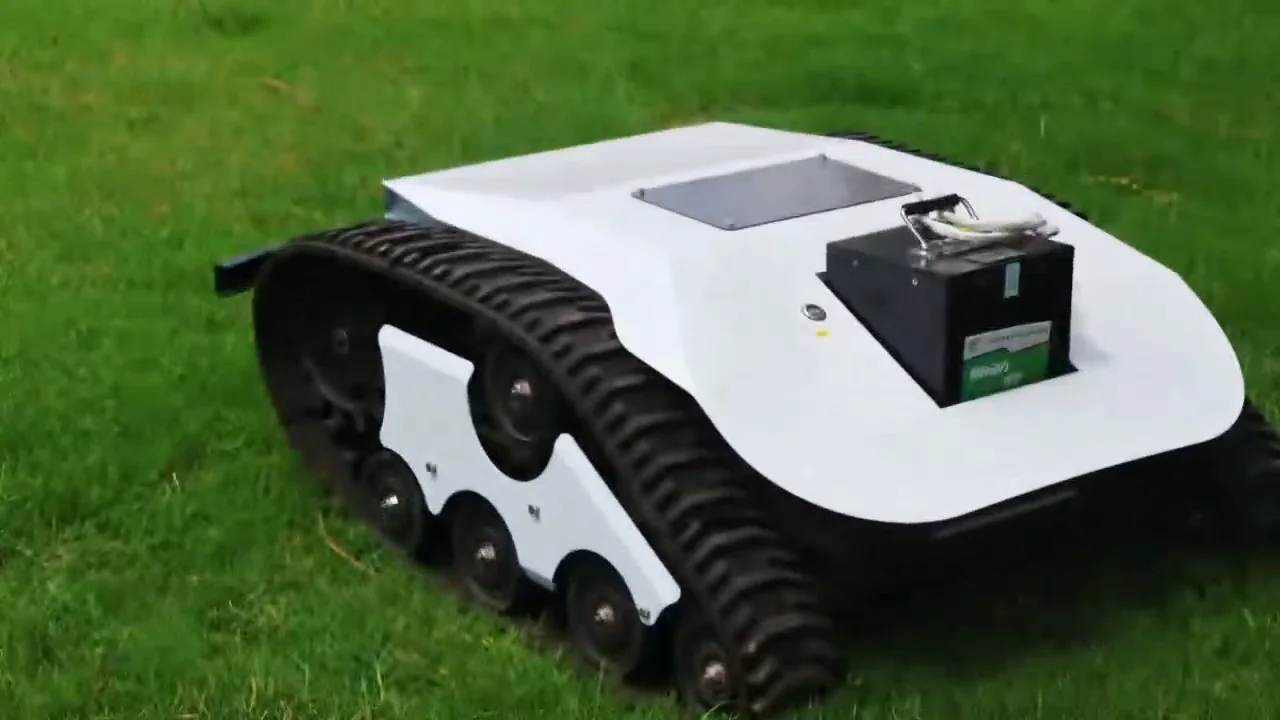
This is also where the site's own position should stay modest. Super Mowers liefert ferngesteuerte Raupenmäher und andere gewerbliche Mäher, und Fragen zu Batteriebänken von Händlern und Fuhrparks sind Teil dieses Gesprächs. Nichts in diesem Artikel sollte als Aussage über die Batteriekonfiguration, die Kapazität oder die zugelassene Topologie von Super Mowers für irgendein Modell gelesen werden; diese Details gehören in die Dokumentation für die jeweilige Maschine.
Eine Lieferanten- und Serviceübergabe vorbereiten

A clean handoff record prevents most battery-bank confusion, because it forces the writer to separate what is documented from what is assumed. Whether the record is going to a battery supplier, a service technician, or a rental customer, the same fields apply. The goal is not to prescribe a wiring change; it is to make the machine's existing configuration and its evidence trail legible to the next person.
Zu erfassende Felder
Start with machine identity: make, model, and serial number, plus the manual title and revision used. Then record the bank as documented: system voltage, the number and type of batteries, and the arrangement as stated by the manufacturer. Add the amp-hour figure with its basis, noting whether it refers to a single battery or the whole bank and what discharge conditions the figure assumes. Record the charger model and any manufacturer-approved configuration notes. Where a field is unknown, write "to confirm" rather than filling it with an inference.
| Übergabefeld | Beispieleintrag | Quelle |
|---|---|---|
| Maschinenidentität | Marke, Modell, Seriennummer | Typenschild der Maschine und Händlerunterlagen |
| Handbuchreferenz | Titel, Revision, Seite | Herstellerdokumentation |
| Systemspannung | Wie für dieses Modell dokumentiert | Handbuch- oder Spezifikationsseite |
| Anzahl und Typ der Batterien | Anzahl, Chemie, physische Größe | Handbuch und Batterieetiketten |
| Anordnung | Reihe, parallel oder Reihe-Parallel wie angegeben | Herstellerdokumentation |
| Amperestunden-Basis | Pro Batterie oder pro Bank; Nennbedingungen | Batteriedatenblatt und Handbuch |
| Ladegerät | Modell- und Kompatibilitätshinweis | Herstellerdokumentation |
| Offene Fragen | Explizit mit Verantwortlichem und Datum aufgeführt | Übergabeprotokoll |
Fragen an den Lieferanten
When a bank needs replacement batteries, the supplier conversation should be specific. Ask whether the proposed battery matches the required chemistry, physical dimensions, terminal arrangement, and voltage. Ask what discharge rate and temperature the quoted amp-hour figure assumes, and whether it is comparable to the figure in the machine documentation. Ask whether the supplier's battery is approved for the machine's charging profile. Ask for the connection arrangement in writing if the existing documentation is unclear.
These questions are not a substitute for the manufacturer's instructions, and they should never lead to a field rewiring decision made by the dealer or fleet staff. If the documented arrangement and the physical machine disagree, the correct next step is to stop and refer the question to the manufacturer or an authorized service provider. The same discipline applies to battery condition: state-of-charge and state-of-health are different measurements, as the site's note on Batterieladezustand im Vergleich zum Gesundheitszustand erklärt, und keiner von beiden sollte aus einer im Ruhezustand abgelesenen Spannungsmessung abgeleitet werden.
FAQ
Addieren sich die Amperestunden in einer Reihenschaltung?
Nein. In einer Reihenschaltung addieren sich die Spannungen, und die Amperestunden-Zahl bleibt beim Wert einer einzelnen Batterie. Vier 12 V, 35 Ah Batterien in Reihe ergeben auf Verbundebene 48 V und 35 Ah. Die Amperestunden addieren sich bei einer Parallelschaltung, bei der die Spannung beim Wert einer einzelnen Batterie bleibt.
Garantiert dieselbe Nenn-Wattstundenzahl dieselbe Laufzeit des Mähers?
Nein. Nenn-Wattstunden sind das Produkt aus Nennspannung und Nenn-Amperestunden, und identische Batterien in unterschiedlichen Topologien weisen dieselbe Nennenergie auf. Die Laufzeit hängt von der nutzbaren Energie ab, die durch Entladerate, Temperatur, Abschaltspannung, Batteriezustand und die Art und Weise, wie die Maschine den Akkupack verwaltet, beeinflusst wird. Nennwerte dienen dem Vergleich, nicht einer Laufzeitprognose.
Kann ein 48-V-Mäher-Batteriepaket auf Parallelbetrieb umgestellt werden?
That is a question for the machine's manufacturer, not a wiring decision for a dealer or fleet. A 48 V system is designed around a particular bank voltage, and changing the arrangement changes what the drive, controls, and charger see. The documented configuration for the exact model and revision should be followed, and any proposed change should be confirmed in writing by the manufacturer or an authorized service provider.
Fazit

Series adds voltage, parallel adds amp-hours, and nominal watt-hours stay the same for identical batteries. Use the worksheet to read labels, then confirm every figure against the machine's own documentation before acting.
Video: Minding Your mAhs Ep032 – Series vs parallel – How does voltage, capacity, and current add up?
