

 Par Anna
A dealer or fleet manager is comparing a 48 V mower bank with a 12 V bank of the same battery count, or reading a spec sheet that lists "48 V (4 × 12 V / 35 Ah)" and wondering what the amp-hour figure actually describes. The battery series vs parallel voltage amp hours question is simple arithmetic; the equipment permission is not.
Series wiring adds voltage and leaves amp-hours at the single-battery value. Parallel wiring adds amp-hours and leaves voltage at the single-battery value. Series-parallel does both in proportion. Nominal watt-hours stay the same for a given set of identical batteries, but that number does not predict mower runtime.
This article builds one arithmetic worksheet from four identical hypothetical batteries, then uses two named mower documents to show why the worksheet is a reading aid rather than a wiring instruction. The intended readers are commercial mower dealers, rental fleet staff, and maintenance leads who have to check a specification, brief a supplier, or hand a machine to a service team.
Battery series vs parallel voltage amp hours: Separate voltage, amp-hours and nominal energy
Three quantities get mixed together in mower battery conversations, and separating them is the first step before any topology comparison. Voltage describes the electrical potential of the bank. Amp-hours describe charge capacity at a stated rating basis. Nominal watt-hours combine the two into an energy figure. Each answers a different question, and none of them alone tells you whether a mower will run for a given number of hours.
The most important early check is the system voltage the equipment is built for. A mower's drive, control, and charging system is designed around a particular bank voltage, and that figure comes from the machine's own documentation, not from a general wiring rule. Before comparing configurations, confirm what the manufacturer states for the exact model, including any revision or serial-number range that affects the electrical system.
What each term describes
Voltage is the potential difference across the bank terminals. In a series string, the voltages of the individual batteries add. Amp-hours are a charge quantity, usually quoted at a specific discharge rate and temperature; a 35 Ah rating means something only when the test basis is known. Nominal watt-hours are the product of nominal bank voltage and nominal amp-hours, and they give a rough energy comparison between packs built from the same cell type and rating basis.
That last qualification matters. Nominal energy is arithmetic, not a performance promise. Usable energy depends on discharge rate, temperature, cutoff voltage, battery age and condition, and how the machine's management system treats the pack. Two banks with identical nominal watt-hours can deliver different usable energy and very different runtime once those factors are in play. The site's existing explainer on mower battery amp-hours covers the purchasing side of that distinction, and the C-rate explanation covers why discharge rate changes what a rating means in practice.
Confirm the permitted system voltage first
A useful habit is to write the permitted system voltage at the top of any comparison sheet and treat every other figure as subordinate to it. If a machine is documented as a 48 V system, then a 12 V parallel arrangement is not a lower-voltage option for that machine; it is a different electrical system that the machine was not described as accepting. The comparison below is arithmetic, and the equipment question is separate.
| Grandeur | Ce qu'elle décrit | Where the figure should come from |
|---|---|---|
| Tension du banc | Electrical potential the machine is designed around | Model-specific manual or manufacturer specification |
| Amp-hours | Charge capacity at a stated rating basis | Battery datasheet, including discharge rate and temperature |
| Wh nominaux | Voltage × amp-hours, for rough energy comparison | Calculated, with the basis stated |
| Usable energy | Energy actually available in service | Test data or manufacturer documentation; not derivable from nominal figures alone |
| Permitted configuration | Whether a topology is acceptable for the machine | Manufacturer's documentation for the exact model |
Compare four identical hypothetical batteries in three layouts
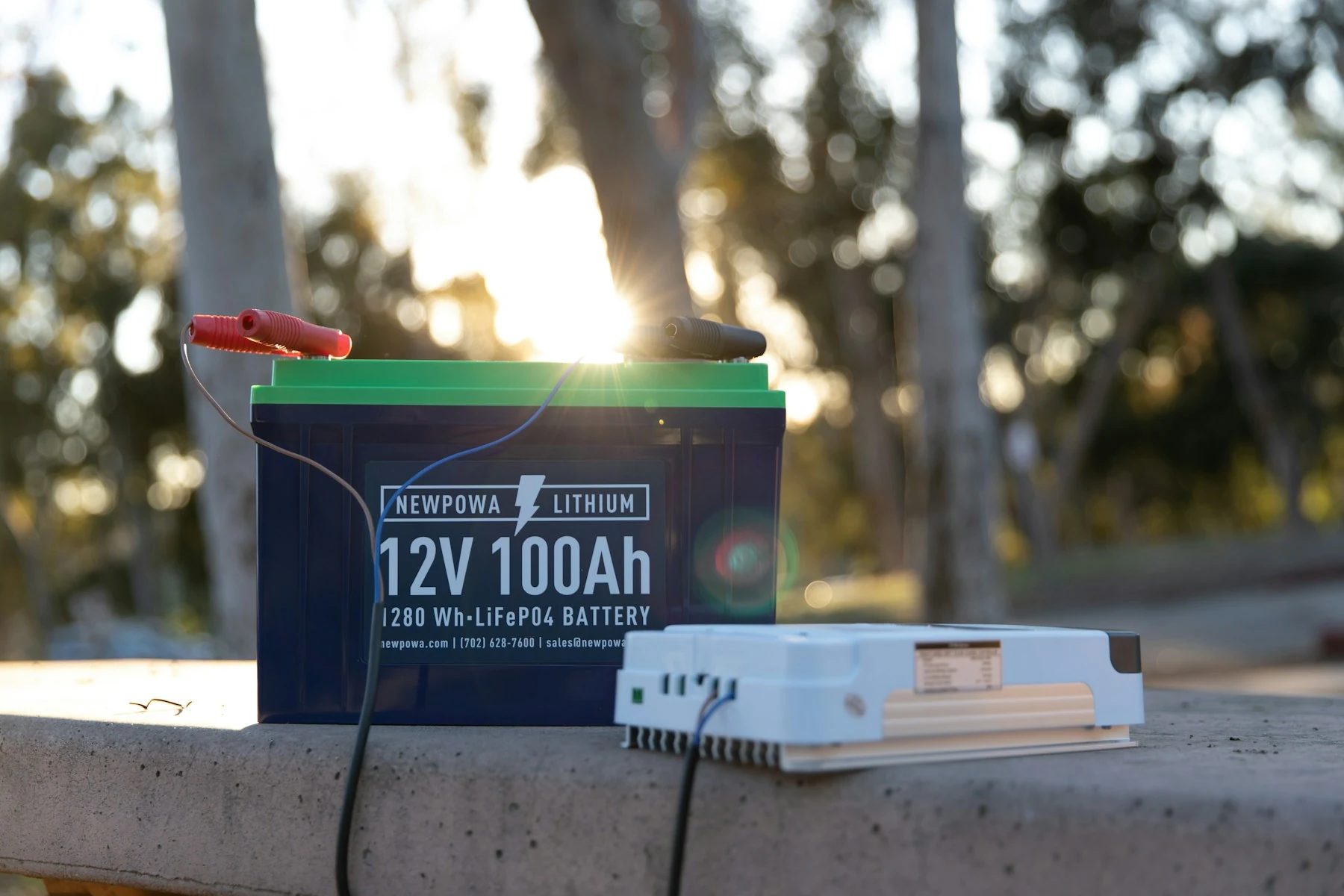
En utilisant quatre batteries hypothétiques identiques de 12 V et 35 Ah, les trois topologies courantes produisent trois paires tension-ampères-heures différentes tout en conservant la même énergie nominale. Il s'agit d'un exemple concret pour lire les étiquettes et vérifier les calculs. Ce n'est pas une recommandation pour une tondeuse quelconque, et cela ne montre pas que les trois configurations sont interchangeables dans une machine.
Le calcul pour 4S, 4P et 2S2P
Dans une chaîne en série de quatre batteries (4S), les tensions s'additionnent et les ampères-heures restent à la valeur d'une seule batterie : 48 V et 35 Ah. Dans un banc parallèle de quatre batteries (4P), les ampères-heures s'additionnent et la tension reste à la valeur d'une seule batterie : 12 V et 140 Ah. Dans un montage à deux séries et deux parallèles (2S2P), chaque paire en série donne 24 V et 35 Ah, et la mise en parallèle de deux telles paires donne 24 V et 70 Ah.
Les trois totalisent 1,680 wattheures nominaux, car quatre batteries identiques contiennent la même énergie nominale quelle que soit leur connexion. Cette égalité est précisément la raison pour laquelle les wattheures nominaux ne doivent pas être utilisés comme prévision d'autonomie. Les configurations diffèrent par la tension et par le chiffre d'ampères-heures qu'une étiquette indiquerait, et ces différences importent pour l'équipement même lorsque le total d'énergie ne change pas.
| Configuration | Connexion | Tension du banc | Ampères-heures du banc | Wh nominaux |
|---|---|---|---|---|
| 4S | Quatre en série | 48 V | 35 Ah | 1,680 Wh |
| 4P | Quatre en parallèle | 12 V | 140 Ah | 1,680 Wh |
| 2S2P | Deux paires en série, mises en parallèle | 24 V | 70 Ah | 1,680 Wh |
Ce que le tableau dit et ne dit pas
What the table tells you is how to read a claim. If a listing says 48 V and 35 Ah for a four-battery bank, the arithmetic is consistent with a series string of 12 V, 35 Ah batteries. If a listing says 12 V and 140 Ah for four batteries, the arithmetic is consistent with a parallel bank. What the table does not tell you is whether either arrangement suits a particular mower, whether the batteries are the correct type for the application, or whether the machine's charger and management system accept the configuration.
Three cautions belong next to the worksheet. First, series strings are limited by the weakest battery in the string, so mixing ages, types, or states of charge is a service question for the manufacturer rather than a way to hit a target voltage. Second, parallel banks raise questions about how current shares between batteries, which is again a design matter. Third, changing a bank's topology changes what the charger sees; charger compatibility is a separate check, covered in the site's note on la compatibilité des chargeurs de batterie de tondeuse. None of these points should be resolved by rewiring a machine outside the manufacturer's documented configuration.
Lire deux documents de tondeuse nommés sans transférer les spécifications
Two named mower documents show how the same arithmetic appears in real specifications, and they also show why each figure needs its own confirmation. The Toro Reelmaster 5010-H Service Manual 15212SL Rev F describes the machine's electric drive system as using four 12 V AGM batteries in series at 48 V. The Ferris FRC7 manufacturer specification page lists a 48 V battery arrangement expressed as 4 × 12 V / 35 Ah. The two statements are not interchangeable evidence, and neither should be copied onto a different machine.
Examen de l'application
Discutez de votre application de tonte.
Partagez les conditions de travail, le marché cible, la famille de produits et la portée du projet.
Toro 5010-H : une chaîne en série documentée
The Toro manual is a service document for a specific model and revision, and it states the series arrangement and system voltage for that machine's electric drive. That is the kind of source a dealer can cite when explaining why a 5010-H bank is a series string rather than a parallel bank. It is also model-specific: the manual's statement does not establish what any other Toro model, or any other brand, uses.
The manual's amp-hour rating basis is a point to verify rather than assume. A service manual may quote a battery capacity figure under particular test conditions, and the same number can mean different things if the basis is not stated. When a customer asks whether a replacement battery of a given amp-hour rating is equivalent, the answer should come from the manual's specification and the battery supplier's datasheet, compared on the same basis.
Ferris FRC7 : une fiche qui nécessite deux confirmations
The Ferris FRC7 page presents the battery arrangement as 48 V with four 12 V units at 35 Ah. Two things need confirmation before that line is used in a dealer conversation. The first is whether 35 Ah describes each battery or the bank as a whole; the arithmetic in the previous section shows that a 48 V series string of four 35 Ah batteries would carry 35 Ah at the bank level, but the listing wording alone should not be treated as settling the question. The second is the wiring arrangement itself. A voltage and battery count are consistent with a series string, but a specification line is not a wiring diagram, and the connection details should come from the manufacturer's documentation for the model.
| Documenter | Ce qu'il indique | Ce qu'elle soutient | Ce qui reste à confirmer |
|---|---|---|---|
| Manuel d'entretien Toro Reelmaster 5010-H 15212SL Rév F | Quatre batteries AGM de 12 V en série, entraînement électrique de 48 V | Montage en série et tension du système pour ce modèle et cette révision | Base de la capacité en ampères-heures et toute variation liée au numéro de série |
| Page de spécifications du fabricant Ferris FRC7 | 48 V, exprimé en 4 × 12 V / 35 Ah | La tension et le nombre de batteries indiqués pour ce modèle | Si les 35 Ah sont par batterie ou par banc ; le schéma de connexion réel |
Gardez les deux documents séparés
La tentation est de fusionner les deux en une règle générale : quatre batteries de 12 V à 35 Ah constituent un banc de 48 V pour tondeuse. Cette règle serait excessive. Chaque document concerne son propre modèle, et la gamme Ferris comporte encore des questions ouvertes. Un concessionnaire qui doit expliquer un banc à un client doit citer le document qui s'applique à la machine qui lui fait face, indiquer la révision ou la page, et signaler tout point non résolu comme une question à poser au fabricant.
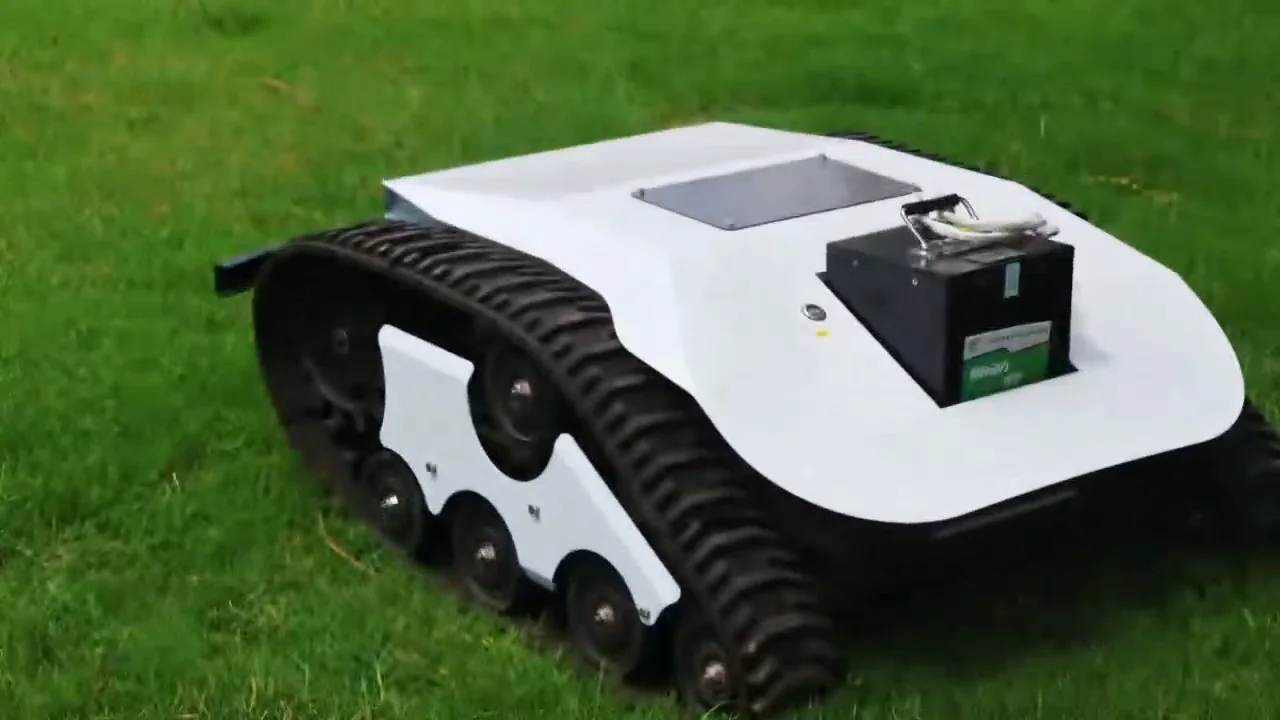
This is also where the site's own position should stay modest. Super Mowers fournit des tondeuses chenillées télécommandées et d'autres équipements de tonte commerciaux, et les questions relatives aux bancs de batteries posées par les concessionnaires et les flottes font partie de cette conversation. Rien dans cet article ne doit être interprété comme une déclaration de la configuration, de la capacité ou de la topologie approuvée des batteries Super Mowers pour un modèle quelconque ; ces détails relèvent de la documentation de la machine spécifique.
Préparer une transmission au fournisseur et au service

A clean handoff record prevents most battery-bank confusion, because it forces the writer to separate what is documented from what is assumed. Whether the record is going to a battery supplier, a service technician, or a rental customer, the same fields apply. The goal is not to prescribe a wiring change; it is to make the machine's existing configuration and its evidence trail legible to the next person.
Champs à enregistrer
Start with machine identity: make, model, and serial number, plus the manual title and revision used. Then record the bank as documented: system voltage, the number and type of batteries, and the arrangement as stated by the manufacturer. Add the amp-hour figure with its basis, noting whether it refers to a single battery or the whole bank and what discharge conditions the figure assumes. Record the charger model and any manufacturer-approved configuration notes. Where a field is unknown, write "to confirm" rather than filling it with an inference.
| Champ de transmission | Exemple de saisie | Source |
|---|---|---|
| Identité de la machine | Marque, modèle, numéro de série | Plaque de la machine et dossiers du concessionnaire |
| Référence du manuel | Titre, révision, page | Documentation du fabricant |
| Tension du système | Comme documenté pour ce modèle | Page du manuel ou des spécifications |
| Nombre et type de batteries | Nombre, chimie, taille physique | Manuel et étiquettes de batterie |
| Configuration | En série, en parallèle ou série-parallèle selon indication | Documentation du fabricant |
| Base ampère-heure | Par batterie ou par banc ; conditions nominales | Fiche technique et manuel de la batterie |
| Chargeur | Modèle et note de compatibilité | Documentation du fabricant |
| Questions ouvertes | Indiqué explicitement avec le propriétaire et la date | Fiche de transmission |
Questions à poser au fournisseur
When a bank needs replacement batteries, the supplier conversation should be specific. Ask whether the proposed battery matches the required chemistry, physical dimensions, terminal arrangement, and voltage. Ask what discharge rate and temperature the quoted amp-hour figure assumes, and whether it is comparable to the figure in the machine documentation. Ask whether the supplier's battery is approved for the machine's charging profile. Ask for the connection arrangement in writing if the existing documentation is unclear.
These questions are not a substitute for the manufacturer's instructions, and they should never lead to a field rewiring decision made by the dealer or fleet staff. If the documented arrangement and the physical machine disagree, the correct next step is to stop and refer the question to the manufacturer or an authorized service provider. The same discipline applies to battery condition: state-of-charge and state-of-health are different measurements, as the site's note on l'état de charge de la batterie par rapport à l'état de santé et aucune des deux ne doit être déduite d'une lecture de tension prise au repos.
FAQ
Les ampères-heures s'additionnent-ils dans un montage en série ?
Non. Dans un montage en série, les tensions s'additionnent et le chiffre d'ampères-heures reste à la valeur d'une seule batterie. Quatre batteries de 12 V, 35 Ah en série donnent 48 V et 35 Ah au niveau du parc. Les ampères-heures s'additionnent dans un montage en parallèle, où la tension reste à la valeur d'une seule batterie.
La même valeur nominale en Wh garantit-elle la même autonomie de la tondeuse ?
Non. Les wattheures nominaux sont le produit de la tension nominale et des ampères-heures nominaux, et des batteries identiques dans différentes topologies afficheront la même énergie nominale. L'autonomie dépend de l'énergie utilisable, qui est affectée par le taux de décharge, la température, la tension de coupure, l'état de la batterie et la façon dont la machine gère le pack. Les chiffres nominaux servent à la comparaison, pas à une prévision d'autonomie.
Un banc de tondeuse 48 V peut-il être modifié en parallèle ?
That is a question for the machine's manufacturer, not a wiring decision for a dealer or fleet. A 48 V system is designed around a particular bank voltage, and changing the arrangement changes what the drive, controls, and charger see. The documented configuration for the exact model and revision should be followed, and any proposed change should be confirmed in writing by the manufacturer or an authorized service provider.
Conclusion

Series adds voltage, parallel adds amp-hours, and nominal watt-hours stay the same for identical batteries. Use the worksheet to read labels, then confirm every figure against the machine's own documentation before acting.
Video: Minding Your mAhs Ep032 – Series vs parallel – How does voltage, capacity, and current add up?
