


 By Anna
A commercial crew is mid-route, the discharge slows to a trickle, and the operator wants to fix it fast. The pressure to keep the route moving is exactly when a snow blower clogged chute turns into a hand injury. This guide covers recognition, stop boundaries, and handover records.
Treat a snow blower clogged chute as a stop-work condition, not a roadside repair. Shut down per the actual machine's manual, keep hands and tools out of the chute until motion and stored energy are addressed as that manual requires, and escalate recurring or unexplained faults with model, conditions, and service history recorded.
Snow blower clogged chute: Identify a clog without approaching moving parts

Recognition should happen from the operator's normal control position or a safe observation point, not by walking up to the discharge chute. The practical skill is separating three different symptoms that crews often lump together as "blocked." Each points to a different next step, and only one of them is clearly a chute obstruction.
Differentiate reduced discharge, packed snow and a stopped auger
Reduced discharge means snow still leaves the chute but with less volume or distance than the crew expects for the conditions. Packed snow usually shows as a dense, wet mass at the chute mouth or in the discharge path, often after the machine has moved through heavy, water-laden snow. A stopped auger is a different event: the snow-gathering mechanism itself is no longer turning, which may or may not involve the chute at all.
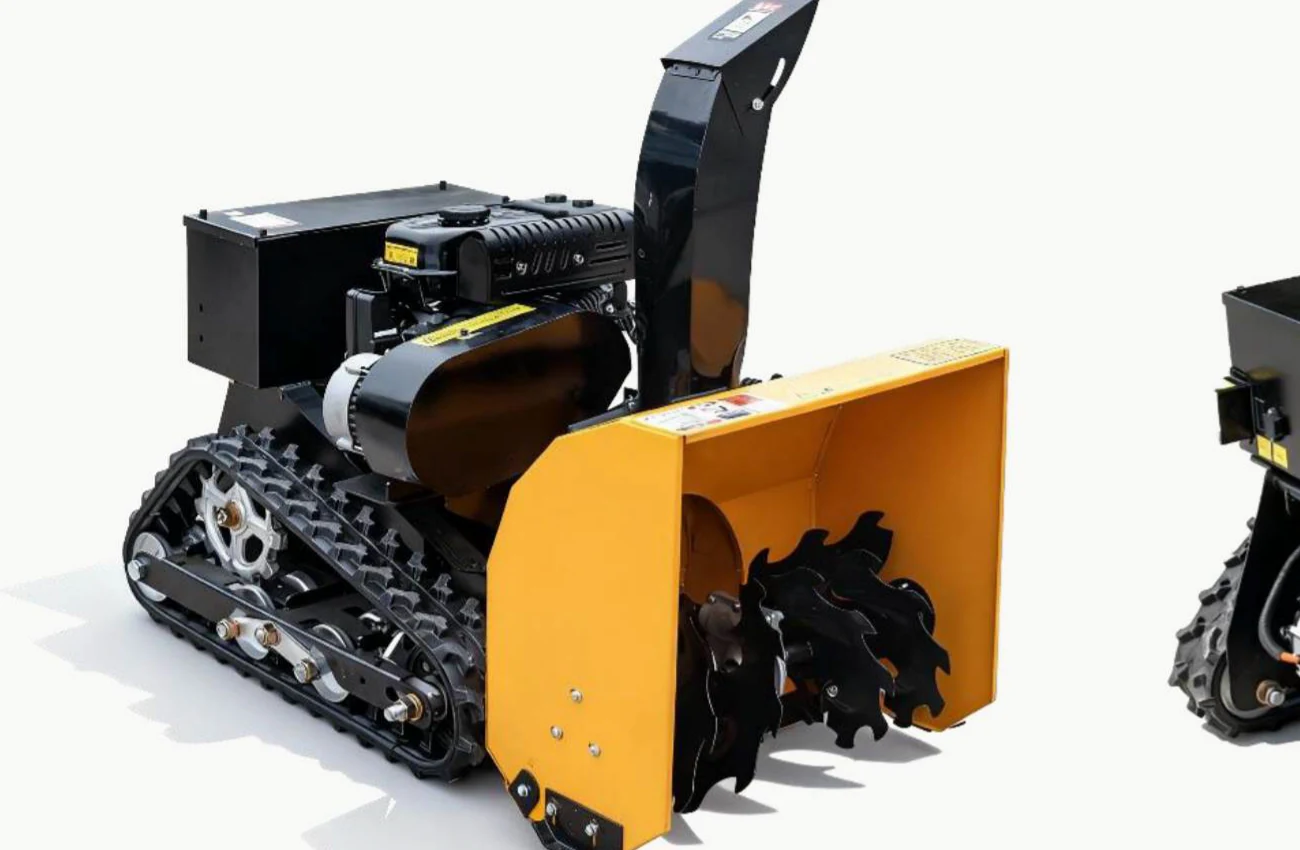
These are not interchangeable. A chute that is partly packed can still throw snow; an auger that has stopped may leave the chute clear. For a remote-controlled tracked machine such as the DY-620, which the public product page describes as using an auger-based snow-gathering system, the operator is working at a distance and may have less direct view of the chute mouth than a walk-behind operator. That makes visual and audible cues more important, and it makes the temptation to walk up and look inside stronger. Resist it. Remote control does not by itself mean the machine is safe to approach, unattended, or free of stored energy.
A simple triage table helps crews report what they actually saw rather than a guess:
| Observed symptom | What it may indicate | Safe immediate action | What to record |
|---|---|---|---|
| Snow still exits, but volume or distance drops | Partial obstruction, wet feed, or changed snow conditions | Stop the pass, observe from the control position, consult the manual | Time, location, snow type, discharge behaviour |
| Dense wet mass visible at the chute mouth | Packed snow in the discharge path | Shut down per manual; do not reach in | Photo from a safe distance, conditions, duration of run |
| Auger no longer turning | Drive, shear, or feed problem — not necessarily a chute clog | Stop and isolate per manual; treat as a fault | Any noise, warning, or change before it stopped |
| Repeated stalls in the same area | Feed conditions, pass depth, or machine fault | Stop the route section; escalate | Location, pass pattern, snow depth, repetition count |
None of these rows authorises a clearing method. They organise observation and reporting so the next decision is made with the manual in hand.
Do not assume all reduced throw is a chute blockage
Reduced throw can come from snow conditions, from the direction and height of the chute setting, from how full the machine is being fed, or from a mechanical problem elsewhere. Manufacturer guidance on clogged chutes, such as Troy-Bilt's model-specific page on clearing a clogged snow blower chute, is written for that maker's machines and should not be transplanted onto a different brand or control type. The same applies to remote and autonomous snow-removal systems: Yarbo's snow-removal safety material is a manufacturer example for its own equipment, and its tools or settings do not transfer to a tracked remote-controlled machine from another maker.
For the crew, the useful rule is: describe the symptom precisely, and let the correct manual decide whether it is a chute issue. A report that says "reduced throw, wet snow, third pass on the north ramp" is far more actionable than "chute blocked."
Immediate safety boundaries
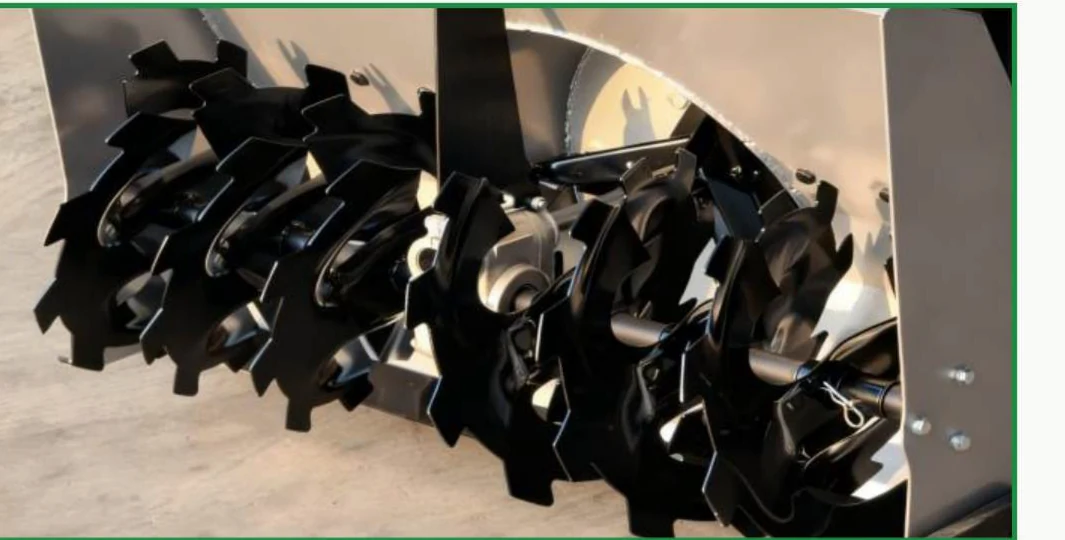
The single most important boundary is simple and does not depend on brand: hands and arms never go into a discharge chute or auger housing while the machine could move or store energy. Manufacturer clog-clearing pages consistently frame the chute as a hazard zone, and that framing holds regardless of whether the operator is standing behind a walk-behind unit or holding a remote control.
Stop according to the actual machine's instructions and never use hands in a chute
The correct shutdown sequence is the one in the manual for that exact model and configuration. It may involve disengaging drives, lowering the auger, setting a parking or transport state, removing a key or enabling device, or waiting a specified period. This article does not supply a universal sequence, because a sequence copied from one machine can leave another machine in a partially energised state.
What can be stated safely is the boundary: no hand clearing, no kicking snow loose with a boot, no reaching in with a glove, and no improvised tool used as a probe while anyone could restart the machine. Where a manufacturer supplies a clearing tool, its use is defined by that manufacturer's instructions — not by what fits in the chute.
Wait for motion to cease; stored energy and isolation remain model-specific
Rotating assemblies do not always stop the instant a control is released, and some designs retain tension or stored energy after the drive is disengaged. The waiting period, the isolation step, and any lockout arrangement are model-specific and belong to the manual. For a remote-controlled machine, add a second question: who holds the transmitter, and how is restart prevented while someone is near the machine? A crew that has not agreed on that answer before the shift should not be clearing anything.
A short pre-season agreement closes most of this gap:
| Decision | Who confirms | Where it is recorded |
|---|---|---|
| Exact shutdown and isolation sequence for each model | Fleet or service lead, from the manual | Machine file and crew briefing sheet |
| Who holds the transmitter during any inspection | Site supervisor | Daily job record |
| Approved clearing tool, if the manual specifies one | Service lead | Machine file |
| Who is authorised to clear versus who must escalate | Operations manager | Role list |
| Restart authorisation after a blockage | Site supervisor | Job record |
Why the chute may block

Blockage causes fall into two broad groups: the snow being fed into the machine, and the machine's own condition. Manufacturer material on clogged chutes commonly points to wet, heavy snow as a contributing factor, because dense snow moves less freely through a discharge path than cold, dry snow. That is a possibility to consider, not a diagnosis, and it does not explain every blockage.
Discuss wet snow and feed conditions as possibilities using manufacturer material
Wet snow, snow that has been piled and refrozen, and snow mixed with slush all change how the machine feeds and discharges. So does the way the machine is used: a pass that takes too much snow at once, a travel speed that outruns the auger's ability to clear, or repeated working of the same windrow can all load the discharge path. On a remote-controlled tracked machine, the operator's distance from the chute can make these conditions harder to see developing.
Application review
Discuss your mowing application.
Share the working condition, target market, product family and project scope.
When reporting, separate the snow condition from the operating choice. "Wet snow after the afternoon thaw" is a condition. "Full-depth pass at normal travel speed" is an operating choice. Both matter, and the service team needs both to judge whether the fault is environmental or mechanical.
Avoid universal sprays, speeds or pass widths
There is no shortage of advice about coatings, sprays, travel speeds, and pass widths for preventing clogs. This guide does not recommend any of them, because the correct figures and any approved treatments belong to the specific machine's manual. A spray that is acceptable on one maker's chute may be unsuitable on another's, and a pass width that suits a walk-behind unit tells you nothing about a tracked remote machine.
What a crew can do without inventing numbers is observe and record. If blockages cluster at a particular location, snow type, or time of day, that pattern is evidence for the service conversation. It is not a licence to change settings beyond the manual.
Escalate recurring or unexplained faults
A single blockage in heavy wet snow is a nuisance. A blockage that repeats in the same conditions, appears in dry snow, or follows a noise or warning is a fault signal that belongs with the service team, not with the operator's improvisation. The escalation record is what turns a vague complaint into a diagnosable report.
Capture model, operating conditions and service history
A useful blockage report answers the questions a technician will ask anyway. The table below is a reporting template, not a set of specifications:
| Field | What to capture | Why it matters |
|---|---|---|
| Machine identity | Model, configuration, attachment, control type | Procedures differ by model and revision |
| Conditions | Snow type, depth, temperature trend, location | Separates environmental from mechanical causes |
| Operating pattern | Travel speed setting, pass pattern, run duration | Shows whether feed load is a factor |
| Symptom detail | Reduced throw, packed mass, stopped auger, noise, warning | Distinguishes chute from drive or feed faults |
| Repetition | How often, where, under what conditions | Identifies patterns versus one-off events |
| History | Recent service, parts replaced, previous reports | Links the fault to prior work |
| Actions taken | Shutdown performed, who was present, restart authorised by whom | Confirms the safety boundary was respected |
For a remote-controlled fleet, add who held the transmitter and whether the machine was within the operator's view. That detail matters when the service team is judging whether the operator could have seen the blockage developing.
Refer to approved tools and qualified personnel under the correct manual
Clearing tools, if the manufacturer supplies or specifies one, are part of the machine's documented equipment. A tool from another brand, a length of timber, or a broom handle is not an approved substitute, and this article does not endorse improvisation. Where the manual assigns clearing to qualified personnel, the crew's job is to stop, secure, record, and hand over — not to attempt the task.
The same discipline applies across a fleet transitioning from mowing to snow work. The lawn care to snow removal checklist is a useful place to confirm that each machine's manual, tools, and crew briefing are in place before the season starts, rather than discovering a gap at the roadside.
FAQ
Can I clear a chute by hand after the motor stops? No. A stopped motor does not by itself establish that the machine is isolated or free of stored energy, and the correct shutdown and waiting steps are model-specific. Follow the manual for that machine, and never put hands into the chute or auger housing.
Is wet snow the only cause of blockage? No. Wet, heavy snow is a commonly cited contributing factor in manufacturer material, but reduced discharge can also come from feed conditions, operating choices, or a mechanical fault elsewhere. Record the conditions and the symptom so the cause can be assessed properly.
Are clearing tools interchangeable? No. Where a manufacturer supplies or specifies a clearing tool, its use is defined by that manufacturer's instructions for that machine. A tool from another brand or an improvised object is not an approved substitute.
Conclusion

A clogged chute is a stop-work signal. Shut down per the actual manual, keep hands out, and escalate recurring faults with model, conditions, and history recorded. Confirm your fleet's procedures before the next storm.
For readers comparing control approaches before buying, see remote-control snow blower vs robotic snow blower.
Video: Chute Clearing (Snow Blowers)
