


 By Anna
A contractor takes on a lot with a gravel apron, a stone-surfaced lane, or an orchard row and plans to clear snow with a snow blower. Before the machine is unloaded, someone has to decide whether the surface and the delivered unit actually match. Using a snow blower on gravel raises two separate questions — what the ground does to the machine, and what the machine is documented to do on that ground — and both need an answer before work starts.
Loose gravel is not a snow surface problem alone. It changes what the auger can pick up, where material can be thrown, and whether the machine is documented for that ground at all. Treat surface suitability and model approval as two separate questions, and answer both before work starts.
Snow blower on gravel: Why loose gravel changes the job

On pavement, the snow is usually the loose material and the ground underneath is a fixed reference. On gravel, the reference itself moves. Stones, grit, and small debris sit on top of the surface or work loose as snow is cleared, and a rotating auger does not distinguish between snow and stone. That is the core reason a gravel job cannot be planned as a copy of the same job on asphalt.
The practical consequences fall into three groups: what the machine contacts, what it can pick up and throw, and what happens to the surface afterwards. A snow blower that works acceptably on a compacted driveway may behave very differently where the stone layer is deep, uneven, or recently replenished. None of this can be settled by looking at the machine alone; it depends on the site, the snow condition, and the documented limits of the exact unit.
Distinguish compacted surfaces from loose or uneven stone
"Gravel" covers a wide range of ground conditions, and they do not carry the same risk. A useful first step is to describe the surface in specific terms rather than accepting the label.
| Surface description | What to establish before clearing | Why it matters for the decision |
|---|---|---|
| Compacted gravel or crushed stone with a firm, bound top layer | Whether the surface is stable under the machine's weight and whether stones are embedded | Embedded stone behaves more like a rough paved surface than a loose one, but this must be confirmed on site, not assumed |
| Loose gravel with visible unbound stones | Depth of the loose layer, stone size, and whether the layer is uniform | Loose stone is the material most likely to be lifted and projected |
| Mixed surface: paved apron meeting gravel lane | Where the transition occurs and how it is marked | The operator needs to know when the machine is over a different surface type |
| Uneven or rutted stone with potholes or soft spots | Whether the machine can be kept on a consistent path and whether the surface can support it | Uneven ground affects control and can change how the auger housing meets the surface |
| Gravel over a geotextile or bound base | Whether the top layer stays in place during clearing | A bound base reduces stone movement but does not by itself establish machine approval |
This table is a site-information checklist, not a classification of approved surfaces. The point is to replace "gravel" with a description specific enough to compare against the machine's documentation and the site plan.
Explain auger contact and projected-object hazards without declaring a safe distance
A snow blower's auger and impeller move snow at speed. When loose stone enters that flow, it can be thrown with the snow. The Newfoundland and Labrador occupational health and safety guidance on snow removal identifies thrown objects as a hazard associated with snow-clearing equipment, which is consistent with how these machines work. That source is a workplace safety reference from one jurisdiction; it is not a US regulation, not a Super Mowers specification, and not a statement about any particular model's behavior.
What follows from the hazard is a planning requirement, not a number. The machine's manual, the site's work plan, and the responsible supervisor's instructions define where people and property may be during clearing. This article does not set a safe distance, because distance depends on the machine, the discharge direction, the material, and the site. What can be said is that the potential path of thrown material has to be identified before the auger turns, and that path includes anything the snow is directed toward.
Identify the machine and documented surface limits

The second question is not about gravel in general but about the specific unit on the trailer. Manufacturer documentation is the reference point, and it is model-specific. A family description, a dealer's summary, or another machine's manual does not establish what this unit is approved to do.
Ask whether the exact delivered equipment is approved for the surface
Start with the identification details: make, model, serial number, manual revision, and the configuration as delivered. Then look for what the documentation says about surfaces, ground conditions, and attachments. If the manual addresses gravel, loose stone, or unpaved ground, follow it exactly, including any conditions attached. If it is silent, that silence is not permission.
Super Mowers' DY-620 is publicly described as a remote-controlled tracked auger snow-clearing machine. The public product record does not state that it is approved for gravel surfaces, and it does not list adjustable skid shoes. Those are open questions to confirm with the manufacturer or distributor for the exact unit, not assumptions to carry into a job. The same discipline applies to any brand: the delivered configuration and its documentation decide the answer.
Do not presume adjustable skid shoes or scraper bars
Skid shoes and scraper bars are the components most often discussed in gravel conversations, because they influence how the housing sits relative to the ground. But their presence, adjustability, and permitted settings are model facts. A machine may have fixed shoes, adjustable shoes, a different housing design, or no separate shoe at all.
For planning purposes, treat the equipment record as a branch point:
- Documented adjustable shoes with stated settings: follow the manual's settings and conditions for the surface in question.
- Documented fixed shoes or no separate shoes: the manual's ground-clearance and surface statements govern; do not improvise a change.
- No documentation on shoes or surface clearance: record the gap and stop before committing the machine to loose stone.
A dealer preparing a unit for a contractor should be able to state which of these applies, in writing, before the machine leaves the yard.
Compare manufacturer examples

Published manufacturer guidance is useful for understanding how surface questions are framed, but only within the scope of the machine it describes. The Ariens guidance on improving snow blower performance discusses skid shoes and ground conditions for Ariens two-stage equipment. It is an example of how one manufacturer addresses the topic; it is not a Super Mowers specification and not a universal procedure.
Use the Ariens example and workplace safety source within their scope
The Ariens material is relevant because it shows that shoe adjustment is a manufacturer-defined setting tied to a specific machine family and surface condition. That is the pattern to look for in any manual: the manufacturer states the setting, the surface it applies to, and any conditions. The Newfoundland and Labrador guidance is relevant because it names thrown objects as a snow-clearing hazard, which supports treating the discharge path as a planning item.
Application review
Discuss your mowing application.
Share the working condition, target market, product family and project scope.
Neither source answers the contractor's actual question about a specific delivered unit on a specific gravel lot. They inform the questions to ask; they do not replace the manual for the machine in hand.
Do not transfer clearance figures or settings to another machine
A clearance figure or shoe setting from one machine does not carry over to another. Housing geometry, shoe design, auger position, and the manufacturer's intended use all differ. Copying a number from a forum, a video, or another brand's manual is not a documented setting, and it can put the machine outside its intended configuration.
| Source type | What it can establish | What it cannot establish |
|---|---|---|
| Manual for the exact delivered unit and revision | Documented surfaces, settings, and conditions for that machine | Anything about a different model or revision |
| Manufacturer product page for the model | Publicly stated configuration and features | Surface approval not stated on the page |
| Another brand's manual or blog guidance | How that manufacturer frames the topic | Settings, clearances, or approval for a different machine |
| Workplace safety guidance | That a hazard exists and should be planned for | Machine-specific limits or a safe distance figure |
| Dealer or distributor statement | Configuration as supplied, if confirmed in writing | Manufacturer approval the documentation does not give |
Make a site decision and service handoff
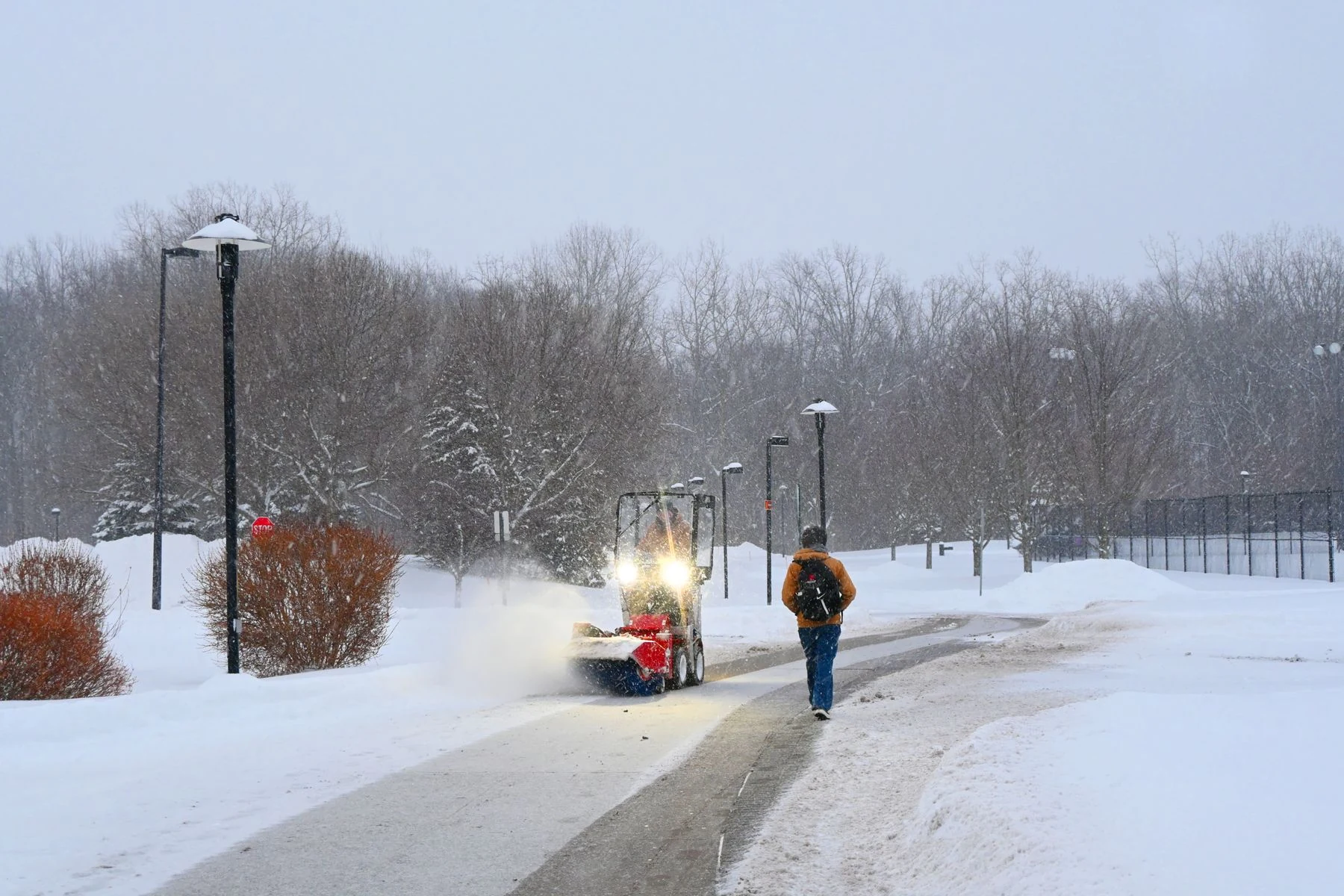
With the surface described and the machine documentation checked, the decision becomes concrete: proceed under the approved plan, proceed with conditions, or stop. The service handoff matters as much as the first job, because the next operator, the dealer, and the maintenance team all need to know what was decided and why.
Assess bystanders, objects and local work conditions under the approved plan
The site assessment should identify who else is present, what property sits in the potential path of thrown material, and what objects are on or near the surface. Vehicles, signs, fencing, windows, and stored materials near a gravel area are part of the picture. Local work rules, client requirements, and the responsible supervisor's instructions set the operating arrangements; this article does not substitute for them.
Weather and snow condition also belong in the record. Wet, heavy snow and dry, blown snow behave differently, and a surface that was firm on one visit may be soft on the next. The operator needs a clear route to report a changed condition rather than pressing on.
If documentation is missing or surface is unsuitable, stop and request guidance
The stop condition should be written down before the season starts. If the manual does not address the surface, if the delivered configuration does not match the documentation, or if the site cannot be worked within the approved plan, the machine should not be committed to that job until the manufacturer or distributor provides guidance.
A simple handoff record keeps this from being re-litigated at every site:
| Record item | Why it is needed |
|---|---|
| Machine make, model, serial number, manual revision | Ties the decision to the exact unit |
| Surface description and location | Shows what the decision was based on |
| Documentation checked and the answer given | Distinguishes approval, silence, and prohibition |
| Configuration as delivered, including shoes if documented | Prevents assumptions about adjustable parts |
| Decision: proceed, proceed with conditions, or stop | Gives the next operator a clear starting point |
| Who was consulted and when | Supports the service handoff and later review |
For related planning topics, see the comparison of snow blowers and snow plows for commercial sidewalks and the discussion of remote-control versus robotic snow blowers. Both address equipment category questions; neither replaces the manual for a specific unit.
FAQ
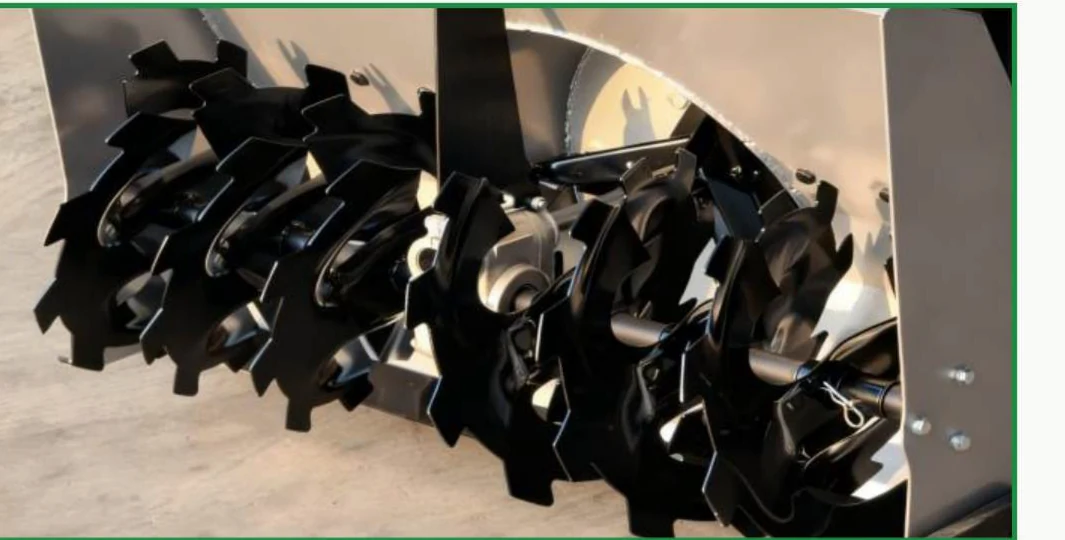
Can every snow blower work on gravel? No. Surface suitability is a model-specific question answered by the manufacturer's documentation for the exact unit. Some machines may be documented for certain unpaved conditions; others are not. Where the documentation is silent, the safe planning position is to treat the surface as unconfirmed and seek guidance before work.
Does an adjustable shoe guarantee no stones will be thrown? No. Shoes influence how the housing sits relative to the ground, but they do not eliminate loose stone from the working face or guarantee that nothing is projected. Thrown-object hazard planning remains necessary regardless of shoe configuration.
What if the machine manual does not mention gravel? Silence is not approval. Record that the manual does not address the surface, keep the machine off that job, and request written guidance from the manufacturer or distributor for the exact model and configuration.
Conclusion

Gravel changes what the auger meets and where material can go. Confirm the surface, confirm the delivered machine's documented limits, and stop when either answer is missing.
Video: SNOWBLOWER ON A GRAVEL DRIVEWAY
