
 By Anna
You are comparing remote-control mower quotes, and one supplier lists LiFePO4 while another writes only "lithium-ion." Before you treat those as two different battery families, check what each label actually names. This guide to the lithium iron phosphate vs lithium ion lawn mower battery question starts with the label, not the marketing headline.
Yes. LiFePO4, or lithium iron phosphate, is one lithium-ion battery chemistry, not a separate family outside it. "Lithium-ion" is the broad category, and LFP is one cathode option within it. A datasheet that says only "lithium-ion" has not told you which cathode chemistry the pack uses.
That distinction matters for procurement because it changes the questions you ask. It does not, by itself, tell you which pack lasts longer, runs cooler, or suits a particular mower. Those answers come from the pack specification, the charger, the mower's power system, and the supplier's own documentation.
Lithium iron phosphate vs lithium ion lawn mower battery: Explain that lithium-ion covers several cathode chemistries
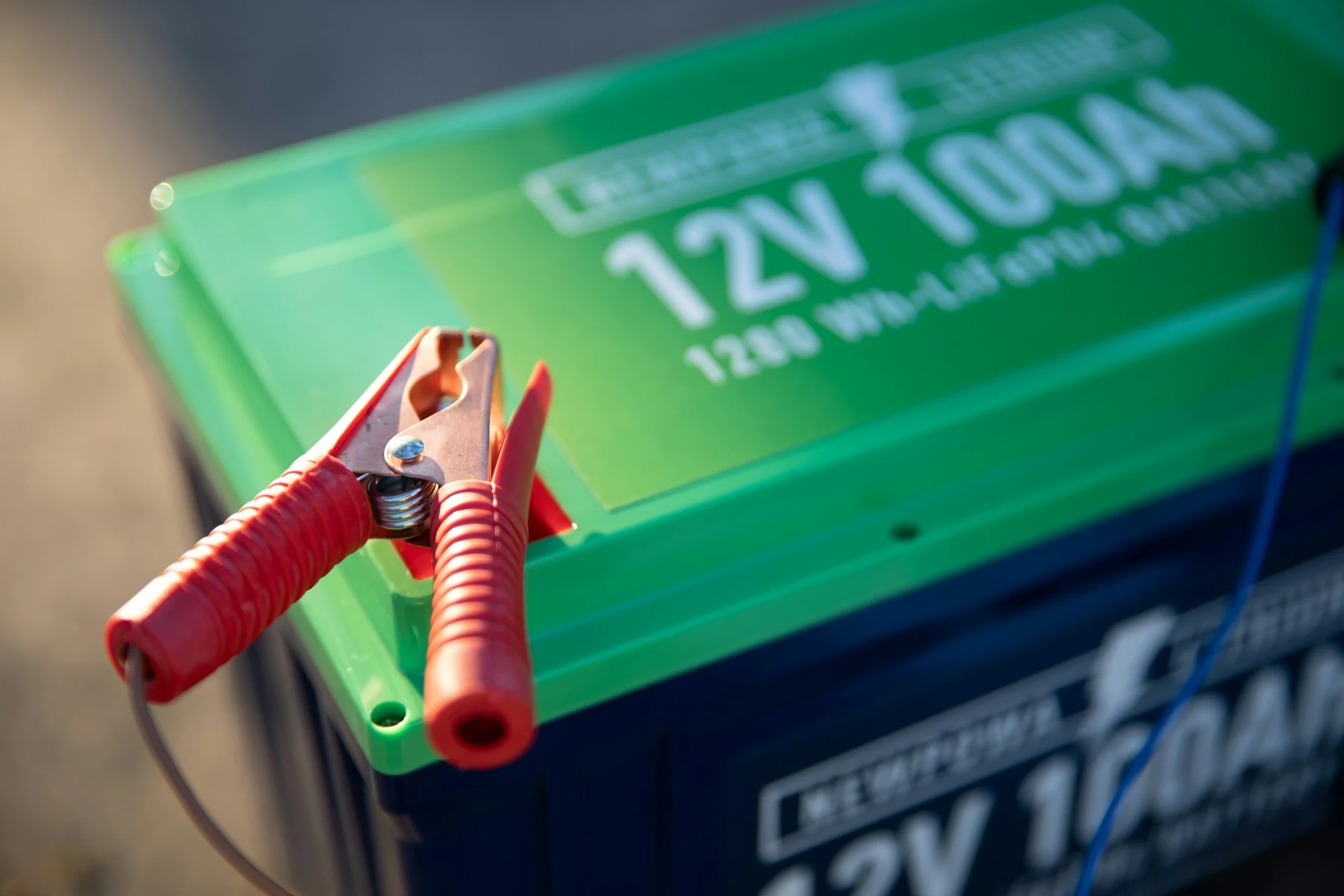
The short answer is that "lithium-ion" describes a family of rechargeable cells that move lithium ions between electrodes during charge and discharge. The family includes several cathode chemistries, and lithium iron phosphate is one of them.
The U.S. Department of Energy's lithium-ion technology strategy assessment classifies lithium-ion batteries by cathode chemistry, listing lithium iron phosphate alongside other cathode types in its chemistry discussion. That is a general taxonomy statement about the battery family, not a statement about any mower. It is enough to settle the naming question: LFP sits inside the lithium-ion category.
Battery University's summary table of lithium-based batteries takes a similar comparative approach, setting out chemistry types side by side. Its table values are that source's own reference material; they are not Super Mowers specifications and should not be pasted into a mower comparison as if they described a delivered pack.
Why the confusion is common
Marketing language often treats the two terms as rivals. A page may present "lithium-ion vs LiFePO4" as a head-to-head choice, which reads as though they were mutually exclusive. In practice, the comparison is usually between one named chemistry (LFP) and an unnamed or differently named chemistry inside the same broad family.
For a fleet buyer, the practical translation is simple:
- "Lithium-ion" is a category label. It is incomplete on its own.
- "LiFePO4" or "LFP" names a cathode chemistry within that category.
- "NMC," "NCA," and similar abbreviations name other cathode chemistries.
- A voltage and amp-hour figure describes pack electrical ratings, not chemistry.
If you are still working through how amp-hours, voltage, and watt-hours relate, the site's guide to electric lawn mower battery amp hours covers those ratings separately from chemistry.
What the category label cannot tell you
Knowing that a pack is lithium-ion tells you nothing specific about its cycle life, its behavior in heat, its usable capacity at a given discharge rate, its enclosure rating, or its warranty terms. Those are properties of a particular product built to a particular specification. Two packs in the same chemistry family can differ substantially because of cell selection, pack design, battery management, charging, and how the mower uses them.
That is why the useful procurement move is not to argue about which family name is better. It is to get the named chemistry plus the system details that determine whether the pack fits the machine and the work.
Distinguish an LFP label from an unspecified lithium-ion label
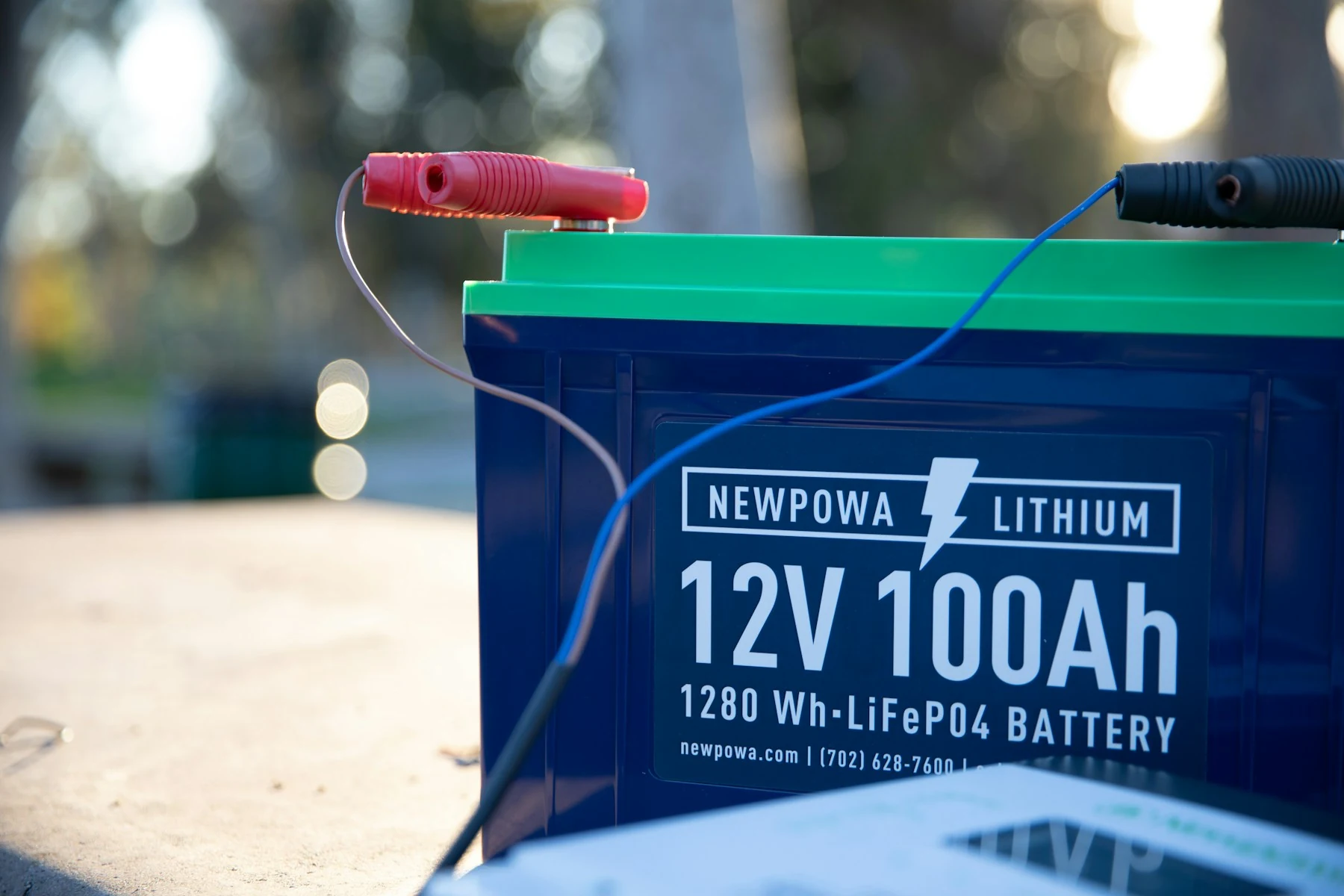
A named chemistry label and a generic category label carry different amounts of information. Treat the named label as a starting point and the generic label as an open question.
When a supplier writes LiFePO4, you have one confirmed fact: the cathode chemistry claimed for that pack. You still need the rest of the specification. When a supplier writes only lithium-ion, you do not yet know the cathode chemistry at all, and you should not assume it is LFP, NMC, or anything else.
Reading the label in practice
A useful LiFePO4 mower battery label or datasheet entry usually lets you separate four layers of information:
| Layer | What it describes | Example of a complete entry | What to do if it is missing |
|---|---|---|---|
| Chemistry | Cathode material claimed for the cells | LiFePO4 (LFP) | Ask the supplier to name the cathode chemistry in writing |
| Electrical ratings | Pack voltage, capacity, energy | Nominal voltage and amp-hour or watt-hour rating | Request the pack datasheet, not just a marketing page |
| System compatibility | Charger, connector, BMS, mower model | Charger model and mower model the pack is released for | Ask which mower models and chargers the pack is approved for |
| Commercial terms | Warranty, service, replacement parts | Warranty period and conditions in the supply document | Request the warranty terms in the quotation |
None of the right-hand cells can be filled from a generic "lithium-ion" phrase. That is the whole point of asking.
Why dealers should not fill the gap themselves
It is tempting to assume that a generic lithium-ion mower uses LFP because LFP is common in some outdoor power equipment. That assumption can travel into your own catalogue, your customer conversations, and your service planning. If it is wrong, you have created a specification claim you cannot support.
A safer habit is to keep the supplier's exact wording in your records and mark anything beyond it as unconfirmed. If the supplier's page says "lithium-ion," your internal note should say "lithium-ion, chemistry not specified," not "LFP." That single discipline prevents a lot of downstream confusion when a fleet customer asks what is inside the pack.
Compare the scope of a named mower example and DOE classification
The two kinds of source you are likely to encounter answer different questions, and mixing them up is where comparisons go wrong.
Application review
Discuss your mowing application.
Share the working condition, target market, product family and project scope.
A named mower example, such as a manufacturer page describing a 56V LFP battery for its own mower, tells you what that company claims about its own product. It is a product-specific label. The DOE classification is a general statement about how lithium-ion chemistries are grouped. Neither one proves anything about a different mower's pack.
Two scopes, two uses
| Source type | What it can establish | What it cannot establish |
|---|---|---|
| DOE chemistry classification | That LFP is classified within the lithium-ion family | Any mower's capacity, cycle life, runtime, or warranty |
| Battery University reference table | Comparative chemistry reference values from that publisher | That a delivered mower pack matches those values |
| A named competitor's LFP mower page | That the competitor labels its own product as LFP | The chemistry, performance, or safety of another brand's mower |
| A multi-model battery-life comparison article | What that article claims across the models it lists | Verified test conditions, or Super Mowers specifications |
| A Super Mowers product page or quotation | Only what that document actually states | Chemistry or ratings the document does not state |
Competitor comparison articles, including multi-model battery-life roundups, are secondary commentary. They may be useful for seeing how other buyers frame the question, but their cycle counts, runtime figures, and rankings are not verified Super Mowers facts and should not be transferred to an SM machine.
Where Super Mowers fits
The Super Mowers catalogue includes lithium-battery remote-control mower models, and you can review the range on the products page. What this article cannot do is assign a chemistry, capacity, cycle life, or warranty to a specific model, because those details are not confirmed in the material available for this guide. Treat them as questions for the quotation stage, not as assumptions.
If you are also weighing drive systems, the comparison of electric vs gas remote control mowers covers the power-source decision at a broader level. Chemistry sits underneath that decision, not in place of it.
Ask for the actual battery specification and compatible system

The productive move is to convert a vague label into a documented pack specification tied to a specific mower model. Do this before you compare prices across suppliers, because a price difference between an unspecified pack and a documented one is not a like-for-like comparison.
Send the supplier a short written request. Keep it specific enough that a marketing reply will not satisfy it.
Questions to put to the supplier
- What cathode chemistry do the cells in this pack use, stated in writing?
- What are the pack's nominal voltage, capacity, and energy rating, and under what test conditions?
- Which mower models and which charger is this pack released for?
- What battery management functions does the pack include, and what does the supplier document about them?
- What are the warranty terms, including period, exclusions, and who handles claims in your market?
- Which documents can you provide: pack datasheet, charger specification, mower manual section on the battery, and any transport documentation for the pack?
- If the same mower is offered with more than one pack option, what changes between them?
Questions 1 and 2 are the ones that resolve the label problem. Questions 3 to 7 are what turn a chemistry name into a usable fleet decision.
Building a comparison you can defend
When quotes come back, record each answer against the supplier and model rather than in a single blended note. A simple matrix keeps the evidence traceable:
| Item to confirm | Supplier A | Supplier B | Evidence held |
|---|---|---|---|
| Cathode chemistry named in writing | To confirm | To confirm | Datasheet or written reply |
| Pack voltage and capacity | To confirm | To confirm | Pack datasheet |
| Charger model matched to pack | To confirm | To confirm | Charger specification |
| Mower models the pack is released for | To confirm | To confirm | Manual or release note |
| Warranty period and claim route | To confirm | To confirm | Quotation terms |
| Transport documentation for the pack | To confirm | To confirm | Shipping documents |
Leave cells blank until you have the document. A blank is honest; a guessed chemistry is not.
What to do when the answer stays vague
If a supplier will not name the chemistry or provide a pack datasheet, treat that as a commercial signal rather than a technical puzzle. You can still buy on other grounds, but you should not repeat a chemistry claim in your own materials, and you should not promise a fleet customer a cycle life or warranty position the supplier has not documented.
For dealers, the risk is concentrated in resale and service. If a customer later asks what chemistry their mower uses, your answer should come from the supplier's document, not from an inference made at the quotation stage.
FAQ
Is LFP outside the lithium-ion family?
No. Lithium iron phosphate is a lithium-ion cathode chemistry. The DOE classification places LFP within the lithium-ion family rather than outside it. Saying a mower uses LFP and saying it uses a lithium-ion battery are not contradictory statements; the first is simply more specific than the second.
Does a lithium-ion label identify the exact chemistry?
Usually not. "Lithium-ion" names the family, not the cathode material. A pack may be LFP, or it may use another lithium-ion chemistry. If the exact chemistry matters to your purchasing decision, ask the supplier to state it in writing and support it with a pack datasheet.
Can a competitor's battery life be applied to an SM mower?
No. Cycle-life and runtime figures published by another manufacturer describe that manufacturer's product under its own conditions. They are not verified Super Mowers specifications and cannot be transferred to an SM model. Request the relevant figures, conditions, and warranty terms for the specific SM mower and pack you are considering.
Conclusion
LiFePO4 is a lithium-ion chemistry, so the real question is not which family wins but which pack is documented. Ask suppliers to name the chemistry and provide the pack specification for your exact mower model.
Video: Tykool Lithium Iron Phosphate LIFEPO4 U1 Lawntractor Battery Upgrade stabile long lasting & Reliable
