
 By Anna
You are writing the battery specification into a fleet purchase or service plan, and a supplier offers a cycle figure such as 1,000 or 2,000 cycles. Before that number enters a budget line, you need to know what the supplier counted, what capacity remained at the end, and what the warranty actually covers. The question of lawn mower battery cycle life how long it really is cannot be answered by one number alone.
Cycle life is not the same as single-charge runtime, calendar age, or a guaranteed replacement date. Ask for the exact pack, the cycle definition, the remaining-capacity endpoint, the test conditions, and the warranty wording — then record each of those separately per model in your fleet file.
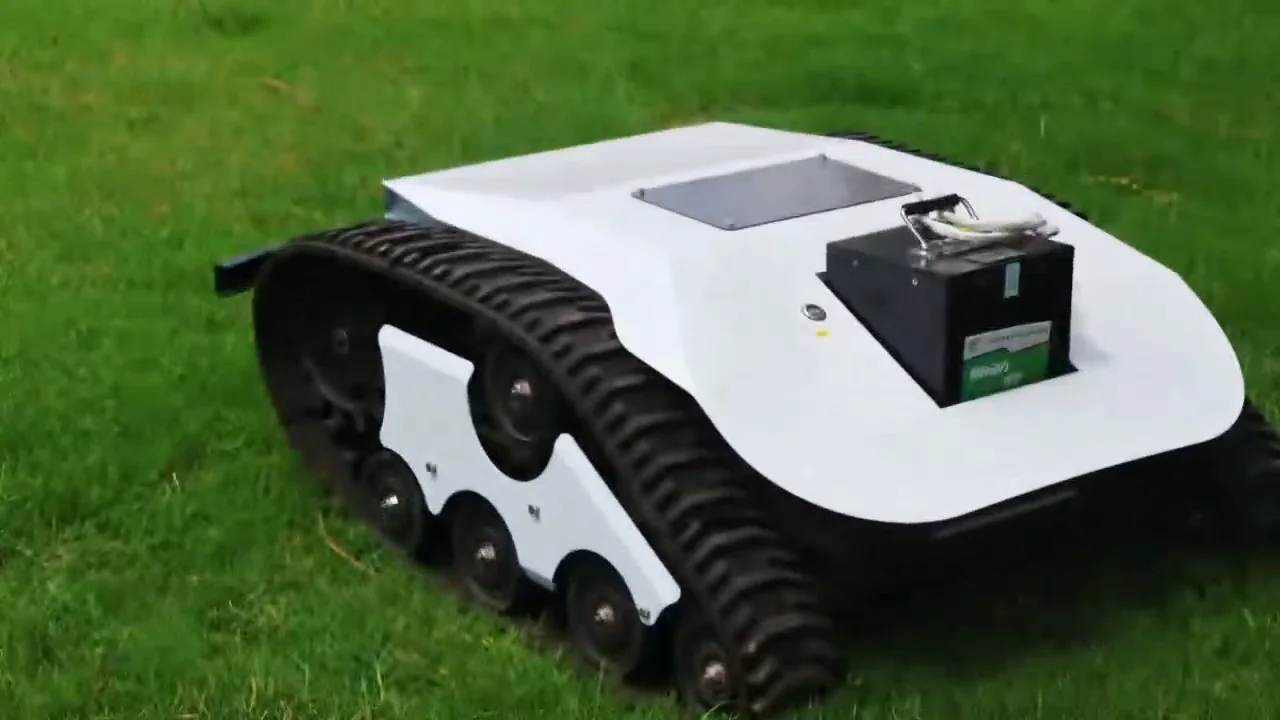
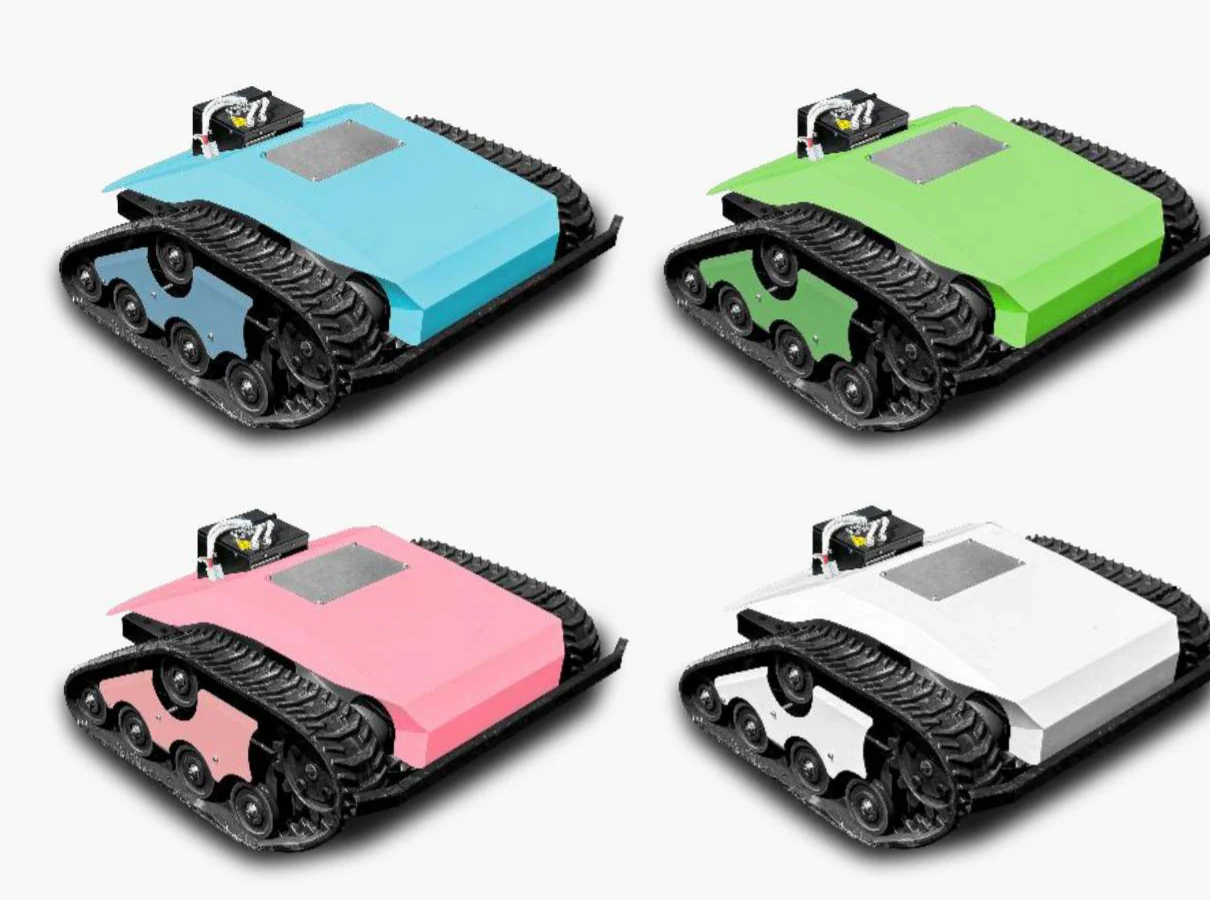
This article is written for buyers, maintenance leads, and asset managers who run electric mower fleets and have to compare battery statements across brands. It uses two named manufacturer sources as worked examples of how differently cycle information can be presented. Neither example establishes what a Super Mowers machine's battery will do; the Super Mowers catalogue includes lithium-battery remote-control mowing equipment, but the supplied material contains no cell-level cycle count, capacity floor, or replacement cost for those machines.
Lawn mower battery cycle life how long: Separate runtime, calendar age and battery cycle life

Three different clocks run on the same battery, and a fleet plan that merges them will misprice replacements. Runtime is how long the machine works on one charge under given conditions. Calendar age is how long the pack has existed since manufacture, regardless of use. Cycle life is a count of charge-and-discharge events measured against a defined capacity endpoint. A pack can be young in cycles and old in years, or the reverse, and either can be the reason a machine no longer finishes a shift.
For procurement, the practical consequence is that a single "battery life" number cannot answer the fleet question. You need to know which of the three the supplier is describing, and you need your own records to detect which one is actually degrading in service. A mower that once completed a full site and now needs a mid-shift charge may be showing capacity loss, but it may equally be cutting wetter grass, running a different attachment, or working a longer route. Without separate records, the battery gets blamed for an operational change.
A useful way to keep the three apart is to give each one its own column in the fleet file and its own question in the supplier enquiry:
| Clock | What it measures | Typical evidence | Fleet question |
|---|---|---|---|
| Single-charge runtime | Work time on one charge under stated conditions | Your own shift records, duty notes | Does the machine still finish the expected work on one charge? |
| Calendar age | Time since manufacture or commissioning | Pack date code, commissioning log | Is the pack approaching a warranty or storage-age boundary? |
| Cycle life | Charge/discharge events to a defined capacity endpoint | Manufacturer pack-level statement | How many cycles, to what remaining capacity, under what test profile? |
Identify the actual pack and how each source defines a cycle
Start with the pack, not the machine family. Battery statements are only meaningful for a specific pack model, and often for a specific generation of that pack. Record the pack part number, nominal voltage, capacity rating, and the date or revision of the document that states the cycle figure. If a supplier quotes a cycle number for a product line rather than a pack, treat it as a family-level statement until the pack-level document is produced.
A "cycle" itself is a definition, not a physical constant. Common conventions include counting each charge event as one cycle, or counting equivalent full cycles by adding partial discharges until they total the pack's rated capacity. A pack charged from 50% to full twice may be counted as one equivalent full cycle under one method and two events under another. Partial charging, storage at high state of charge, and depth of discharge can all change how a pack ages, so a cycle count without a stated method is not comparable across suppliers.
Ask specifically whether the figure refers to charge events, equivalent full cycles, or a test profile. Then ask what capacity remained when the count was reached. A cycle figure with no endpoint describes an unknown amount of degradation.
Compare two named manufacturer statements
The two public sources supplied for this article show different ways of presenting battery information, and the contrast is useful for buyers even though neither source describes a Super Mowers product. One ties a cycle claim to a remaining-capacity endpoint; the other shows that a connected product's app can display a charge count. Both are manufacturer support material for their own product contexts, and neither should be read as a cross-brand standard.
EGO states a remaining-capacity endpoint; Husqvarna shows an app charge-count field
The EGO Power+ support page on expected recharge cycles is an example of a manufacturer attaching a cycle statement to a capacity outcome rather than presenting a bare number. The value of that structure for a buyer is that it gives you something to ask your own supplier to match: how many cycles, and what percentage of original capacity is expected to remain at that point. It does not tell you what any other brand's pack will do, and the page sits in a European support context, so its applicability to a given market or model should be confirmed rather than assumed.
The Husqvarna support article on Automower battery ageing describes an app field that records charging activity, alongside general guidance on signs of ageing and maximising lifespan. That is a different kind of evidence: it shows that a connected mower can surface usage data to the operator. It does not, on its own, establish that the displayed count equals equivalent full cycles, nor that it maps to a capacity threshold. A charge-count field is a monitoring input, not a lifetime specification.
Put side by side, the two examples illustrate the gap a fleet buyer has to close:
| Source type | What it appears to provide | What it does not establish | Question to carry into your own specification |
|---|---|---|---|
| Manufacturer support page stating expected recharge cycles with a capacity endpoint (EGO example) | A cycle figure linked to a remaining-capacity outcome, in that brand's own product context | Any other brand's cycle life, chemistry, or warranty terms | "What capacity percentage remains at your stated cycle count, and under what test profile?" |
| Manufacturer support article describing an app charge-count field (Husqvarna example) | Evidence that usage/charging activity can be displayed in an app for that product | That the count equals equivalent full cycles, or that it predicts a replacement date | "Does your app or controller log charge events, and how is that count defined?" |
| Super Mowers catalogue (lithium-battery remote-control mowers) | Product listings for remote-control mowing equipment | Cell-level cycle count, capacity floor, or replacement cost for those machines | "Please supply the pack-level cycle statement and warranty language for this model." |
The table is deliberately about what each source can and cannot support. It is not a performance comparison, and the rows should not be read as equivalent evidence.
Ask for missing test conditions and warranty language
Application review
Discuss your mowing application.
Share the working condition, target market, product family and project scope.
Most cycle claims arrive without the conditions that make them interpretable. A disciplined enquiry asks for the same short list every time, so that quotes from different suppliers can be compared on equal terms. Where an answer is not available, record it as outstanding rather than filling the gap with an assumption.
The conditions that matter most are: the discharge depth used in the test, the charge rate and method, the ambient temperature, whether the pack was tested standalone or in the machine, and the capacity measurement method at the endpoint. A cycle figure produced in a laboratory bench test and one produced in a machine duty cycle are different claims. Neither is wrong, but they answer different questions, and a fleet buyer needs the one closer to the actual duty.
Warranty language needs the same scrutiny. A cycle count in a specification sheet and a cycle count in a warranty are separate documents with separate purposes. Check whether the warranty defines a capacity threshold, how capacity would be measured in a claim, who performs the measurement, what period applies, and whether the coverage is pro-rated. If the warranty is silent on capacity, the specification figure does not become an entitlement.
| Item to request | Why it matters for a fleet decision | Acceptable form of answer |
|---|---|---|
| Pack model and revision | Cycle statements apply to a specific pack, not a product family | Part number plus document date |
| Cycle definition | Charge events and equivalent full cycles are not interchangeable | Written definition of what is counted |
| Remaining-capacity endpoint | A count without an endpoint describes unknown degradation | Percentage of original capacity at the stated count |
| Test conditions | Bench and in-machine results answer different questions | Discharge depth, temperature, charge method, test setup |
| Capacity measurement method | Determines whether a warranty claim can be verified | Named method and who performs it |
| Warranty terms on capacity | Separates a marketing figure from a remedy | Written warranty clause, including pro-rating if any |
| Replacement part availability | Fleet continuity depends on packs remaining orderable | Part number, availability statement, lead time |
Do not equate an app count with full equivalent cycles without a definition
A charge count on a display or in an app is useful, but it is a raw event log until the manufacturer defines it. If the system counts every plug-in, a fleet that tops up packs between short jobs will accumulate a high count quickly, while a fleet that runs packs to a deeper discharge and charges once will accumulate fewer events for similar energy throughput. Reading the first number as "cycles used" and the second as "cycles saved" would be a mistake.
Use the count as a trend indicator instead. Record it at each service interval alongside the machine's hours, the sites worked, and any change in how often packs need recharging mid-shift. Over several seasons, that combination tells you whether capacity is declining in your own duty cycle, which is more decision-useful than a single manufacturer figure. Where the manufacturer does publish a definition, record the definition version next to the count so that a later change in counting method does not corrupt your history.
Plan a model-specific fleet record and service review
A fleet record turns scattered battery claims into an asset plan. The record should be per machine and per pack, because packs get swapped between machines and a pack's history follows the pack, not the chassis. Keep the pack part number, commissioning date, and the cycle or charge-count reading at each service, together with the machine hours and a short note on duty changes.
The review rhythm matters more than the format. At each service interval, compare three things: whether the machine still completes its expected work on one charge, whether the pack's recorded count is rising faster than expected for the duty, and whether any pack is showing behaviour that needs qualified service attention. If a pack no longer meets the work requirement, the decision is a service question first — the cause may be the pack, the charger, the connection, or the duty — and a replacement question second.
For procurement, the record feeds the next purchase. When you know how long packs actually last in your duty, you can ask suppliers for the specific documents that would let you plan replacements, and you can challenge a cycle figure that arrives without an endpoint. It also protects you at handover: a documented pack history is easier to defend than a verbal recollection when a warranty question arises.
Super Mowers' public catalogue at https://supermowers.com/products/ lists lithium-battery remote-control mowing equipment. Buyers evaluating those machines should request the pack-level cycle statement, capacity endpoint, test conditions, and warranty clause directly, since the supplied material does not contain them. For charger and pack pairing questions, the site's guidance on charger compatibility is a useful companion.
| Record field | Example entry format | Review action |
|---|---|---|
| Machine model and serial | Model plus serial number | Confirm against asset register |
| Pack part number and serial | Part number plus pack serial | Confirm pack is the specified type |
| Commissioning date | Date first put into service | Flag packs approaching end of warranty period |
| Charge or cycle count at service | Number plus the manufacturer's definition version | Compare rise against machine hours |
| Machine hours since last service | Hours | Normalise count against duty |
| Duty note | Sites, grass conditions, attachment changes | Explain anomalies before blaming the pack |
| Runtime observation | Whether a full shift is still completed on one charge | Trigger a service review if it changes |
| Open supplier questions | Documents still outstanding | Carry into next quotation round |
FAQ
Is battery runtime the same as cycle life? No. Runtime is how long the machine works on one charge under given conditions. Cycle life is a count of charge and discharge events measured against a defined capacity endpoint. A pack can lose runtime gradually as capacity declines, but the two figures are measured differently and should be recorded separately.
Can cycle claims from one brand describe another? No. A cycle claim is specific to a pack, a test method, and a capacity endpoint. The EGO and Husqvarna examples in this article describe their own product contexts and do not establish the chemistry, lifetime, or warranty of any other brand, including Super Mowers machines. Ask each supplier for its own pack-level statement.
Does a stated cycle count guarantee a replacement date? No. A cycle count is a test-based expectation, not a calendar promise. Actual replacement timing depends on duty cycle, charging habits, storage conditions, and the warranty terms. Treat the count as a planning input and confirm the warranty's capacity clause separately.
Conclusion
Separate runtime, calendar age, and cycle life; ask for the pack, the cycle definition, the capacity endpoint, and the warranty clause; then record each per model. Start by requesting those documents for the specific machines on your shortlist.