

 By Anna
A commercial route planner has a straight run to cover and one number on a spec sheet: the snow blower clearing width. Before quoting a route or comparing machines, the planner needs a defensible pass count. That count depends on the route width, the clearing width, and an overlap the planner states openly.
Clearing width is the swath the machine is declared to clear in one pass, not the machine's full outer width. Ideal straight-line passes equal the route width divided by the usable swath, where usable swath is clearing width minus the overlap you assume. State the overlap as an assumption, not a measured result.
This article builds that calculation from three inputs, works a named example, and marks clearly where geometry stops and site assessment begins. It does not predict speed, productivity, or safe operation.
Snow blower clearing width: Separate clearing width from the complete machine envelope

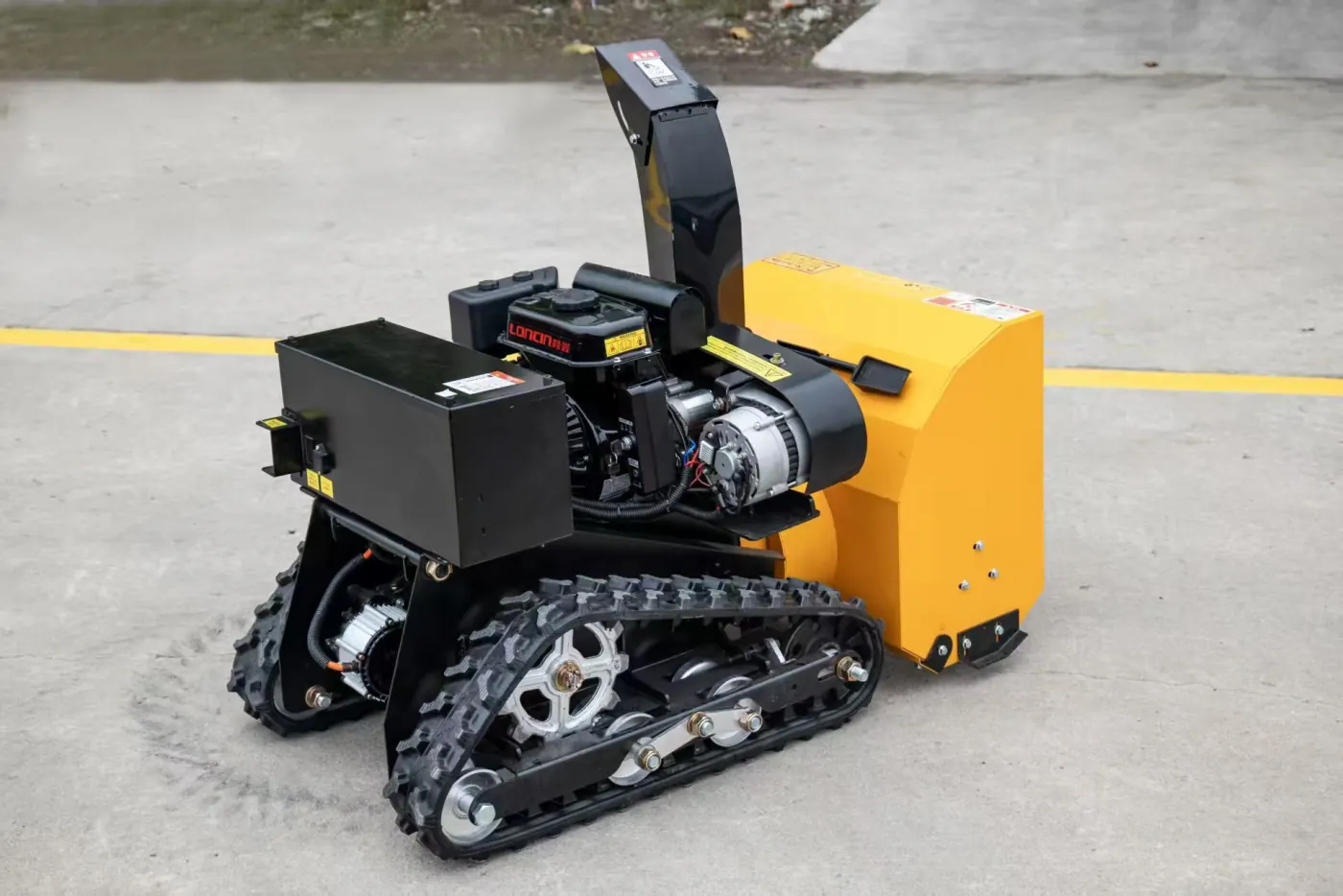
Clearing width and machine width answer different questions. Clearing width tells you how much ground one pass is declared to clear. The complete machine envelope tells you what space the machine occupies, including housing, handles, guards, and any control or power unit. A route can be wide enough for the swath and still be too tight for the machine to enter, turn, or pass a fixed object.
Manufacturer guidance treats these as separate figures. Troy-Bilt's explainer on how wide of a snow blower you need describes clearing width and intake height as distinct specifications, which supports reading each number on its own terms rather than treating one as the other. That source is a manufacturer's general explanation; it is not a Super Mowers specification and does not set limits for any Super Mowers model.
Read the manufacturer-defined width
Start with the exact model and configuration. The Super Mowers DY-620 remote snow blower product page records a clearing width of 620 mm, and the same record states that the specific configuration must be confirmed. Treat 620 mm as a published nominal figure for that model listing, not as a verified measurement of every unit, attachment combination, or delivery configuration. Confirm the figure against the documentation supplied with the actual machine before it enters a route plan.
Three cautions follow from that:
- A nominal width is a planning input, not proof of achieved coverage in snow.
- A figure published for one model does not transfer to another model or to a different configuration.
- A clearing width does not tell you the machine's outer dimensions, turning envelope, or transport footprint.
If a quotation or specification sheet does not state the clearing width for the exact configuration, ask for it in writing rather than inferring it from a photograph or a family description.
Check access and turning separately
Access is a separate check with its own numbers. For each route segment, record the narrowest clear opening the machine must pass, the space available at each turn, and the clearance around fixed objects such as posts, bollards, hydrants, planters, and building corners. Compare those against the machine envelope and the manufacturer's stated dimensions, not against the clearing width.
A practical way to keep this honest is to list access constraints as questions to confirm rather than as assumptions:
| Check | What to record | Why it is separate from clearing width |
|---|---|---|
| Narrowest opening on route | Measured clear width at gates, between posts, beside parked vehicles | Clearing width describes the swath, not the machine body |
| Turn locations | Available space and surface at each direction change | Turning needs room beyond the straight-line swath |
| Fixed obstacles | Position and spacing of posts, hydrants, signs, planters | Obstacles interrupt the ideal parallel pattern |
| Discharge direction | Where snow can be thrown relative to people, property, and traffic | Discharge is a site and safety question, not a width figure |
| Surface and slope | Ground condition and gradient along the route | Geometry assumes a straight, uniform run |
None of these rows can be filled from a clearing width alone. They require a site check by someone responsible for the route.
Calculate ideal passes using assumed overlap

The ideal pass count is a coverage geometry exercise. It assumes a straight route, a uniform surface, a constant clearing width, and a stated overlap between adjacent swaths. Under those assumptions, the usable swath per pass is the clearing width minus the overlap, and the ideal number of passes is the route width divided by the usable swath, rounded up to a whole pass.
Overlap is not a manufacturer setting in this calculation. It is an input the planner chooses and labels. A planner might assume a small overlap to allow for slight steering variation, or a larger one where edges are ragged or the operator must work close to a boundary. Whatever value is used, it should be written down next to the result so the estimate can be reviewed and revised.
Record the three inputs
Keep the calculation auditable by recording three inputs and their sources:
- Route width (W). The width of the straight segment to be cleared, measured on site or taken from a drawing, in millimetres or metres.
- Clearing width (C). The manufacturer-published clearing width for the exact model and configuration, confirmed against supplied documentation.
- Assumed overlap (O). A stated planning assumption, in the same unit as the other two, chosen by the planner and labelled as an assumption.
The formula is:
- Usable swath per pass = C − O
- Ideal passes = W ÷ (C − O), rounded up to the next whole number
Two conditions must hold before the formula means anything: C must be greater than O, and all three values must be in the same unit. If the overlap assumption equals or exceeds the clearing width, the calculation is invalid and the inputs need revisiting.
Application review
Discuss your mowing application.
Share the working condition, target market, product family and project scope.
Work the 3,000 mm and 620 mm example
Use a hypothetical straight route 3,000 mm wide and the DY-620 listing's nominal 620 mm clearing width, with an assumed overlap of 100 mm. Both the route width and the overlap are assumptions for illustration; only the 620 mm figure comes from the product listing, and that figure still requires configuration confirmation.
| Input or step | Value | Status |
|---|---|---|
| Route width (W) | 3,000 mm | Hypothetical example |
| Clearing width (C) | 620 mm | Published nominal figure for DY-620 listing; configuration to confirm |
| Assumed overlap (O) | 100 mm | Stated planning assumption |
| Usable swath (C − O) | 520 mm | Calculated |
| Ideal passes (W ÷ 520) | 5.77, rounded up to 6 | Calculated |
So the ideal straight-line estimate is six passes. Without the overlap assumption, 3,000 ÷ 620 gives 4.84, rounded up to five passes. The difference shows why the overlap must be stated: it changes the answer, and a reader cannot check the result without knowing it.
This example is coverage geometry only. It does not establish that a DY-620 will clear a 3,000 mm route in six passes on any real site, at any speed, in any snow condition, or with any particular discharge pattern. It shows how the inputs combine.
Separate ideal passes from route completion
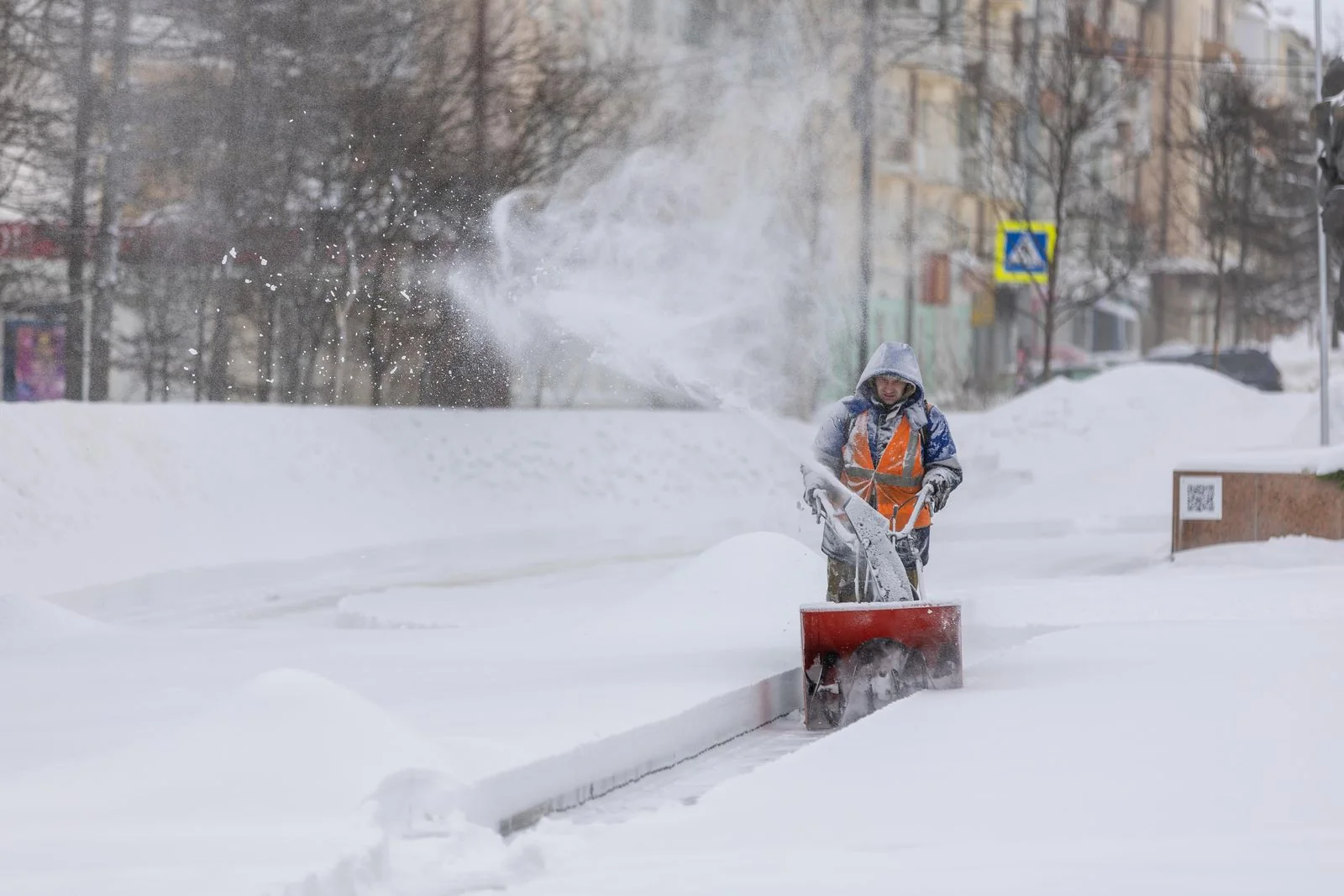
An ideal pass count describes a straight, uniform run. A real route includes turns, obstacles, variable snow, discharge decisions, and access constraints, each of which can add work beyond the geometric figure. The estimate is a starting point for planning and comparison, not a completion guarantee.
This distinction matters when the number is used commercially. A route plan or quotation that cites a pass count should say whether it is the ideal geometric figure or a site-adjusted figure, and what adjustments were applied. Blending the two without labelling them makes the estimate impossible to review.
Review obstacles, turns, snow and discharge separately
Each of these factors needs its own assessment by someone responsible for the site:
- Obstacles. Posts, signs, hydrants, planters, and parked vehicles break the parallel pattern and may require extra manoeuvring or hand work.
- Turns. Direction changes consume space and time and may need a different approach pattern than straight parallel passes.
- Snow conditions. Depth, density, wetness, and drift affect how much the machine can handle in a pass; these are site and machine-limit questions, not width arithmetic.
- Discharge. Where snow can be directed depends on the site, nearby people and property, and the manufacturer's instructions for the exact model.
- Access and boundaries. Narrow openings and edges may require a different swath plan or additional passes.
For the machine side of these questions, use the manual supplied with the exact model and configuration. Super Mowers' article on snow blower intake height and specification matching explains why intake height, clearing width, and the machine envelope should be read as separate specifications. For the broader choice between blowing and plowing on commercial routes, see the comparison of snow blowers and snow plows for commercial sidewalks.
No speed or safety guarantee
A pass count is not a speed figure, a productivity figure, or a safety statement. It does not tell you how fast a machine will move, how long a route will take, how much snow can be handled, or whether a given slope, surface, or snow condition is within the machine's limits. Those questions belong to the manufacturer's documentation, the site assessment, and the responsible operator's judgement.
Treat the calculation as one input in route planning alongside access checks, snow-condition assessment, discharge planning, and the manual's operating limits. Where the manual and a planning estimate appear to conflict, the manual governs.
FAQ

Is clearing width the same as machine width?
No. Clearing width is the swath the machine is declared to clear in one pass. Machine width, including housing, guards, and controls, is a separate envelope figure used for access and turning checks. Read both from the manufacturer's documentation for the exact model and configuration.
Where does the overlap input come from?
It is a planning assumption chosen by the person estimating the route, not a manufacturer setting in this calculation. State the value and the reason for it, keep it in the same unit as the other inputs, and revise it when site conditions or review show it was unrealistic.
Can the calculated pass count guarantee actual speed?
No. The calculation covers ideal straight-line coverage only. Speed, productivity, snow handling, and safe operation depend on the machine's documented limits, the site, the snow conditions, and the operator, and must be assessed separately.
Conclusion

Clearing width plus a stated overlap gives an auditable ideal pass count for straight runs. Confirm the width for the exact configuration, label every assumption, and leave turns, obstacles, snow, discharge, and safety to a site assessment.
Next, record the three inputs for your own route and confirm the clearing width for the exact machine configuration before using the estimate in a plan.