


 By Anna
You are preparing an international shipment of a lithium-powered remote-control mower, and the forwarder has asked for "the battery documents." Before you forward a folder of PDFs, you need to know what is actually being shipped and who decides which papers apply.
Start with the physical configuration, not the paperwork. A loose battery pack, a pack installed in a mower, and a machine that may be treated as a battery-powered vehicle can follow different paths. A qualified shipper or carrier confirms the classification, the documents, and the conditions for your specific route.
This article is a question framework for importers, dealer purchasing staff, and logistics coordinators working through lithium battery shipping documents. It does not classify any Super Mowers machine, assign a UN number, or confirm that any model holds a particular approval. The Super Mowers product catalogue shows lithium-powered remote-control equipment; what follows is about delivery and supply-chain evidence, not product certification claims.
Lithium battery shipping documents: Identify the actual mower, battery and route

The first useful step is a plain description of what leaves the supplier's premises. Write it down before anyone opens a form. A shipment description that says only "mower with lithium battery" hides the details a carrier needs: whether the pack is inside the machine, whether spare packs travel in the same carton, what the battery chemistry and rated capacity are, and how the goods move from origin to destination.
Ask the supplier to state the machine model, the battery model or part number, the number of packs, whether each pack is installed or packed separately, and the packaging arrangement. Then record the route: origin country, destination country, transit points, and every transport mode in the chain. A sea leg followed by a road leg is not the same question as an air shipment, and a mixed route may bring more than one set of rules into play.
Separate standalone packs, batteries in equipment and potentially battery-powered vehicles
Three configurations deserve separate lines in your notes, because they are not interchangeable:
- Standalone packs. A spare battery shipped on its own, outside the machine, is the configuration most people picture when they say "lithium battery shipment." It is also the one where packing, labelling, and documentation questions tend to be most detailed.
- Batteries installed in equipment. A pack fitted inside the mower and secured for transport is a different case from a loose pack. The machine itself becomes part of the packaging and protection story.
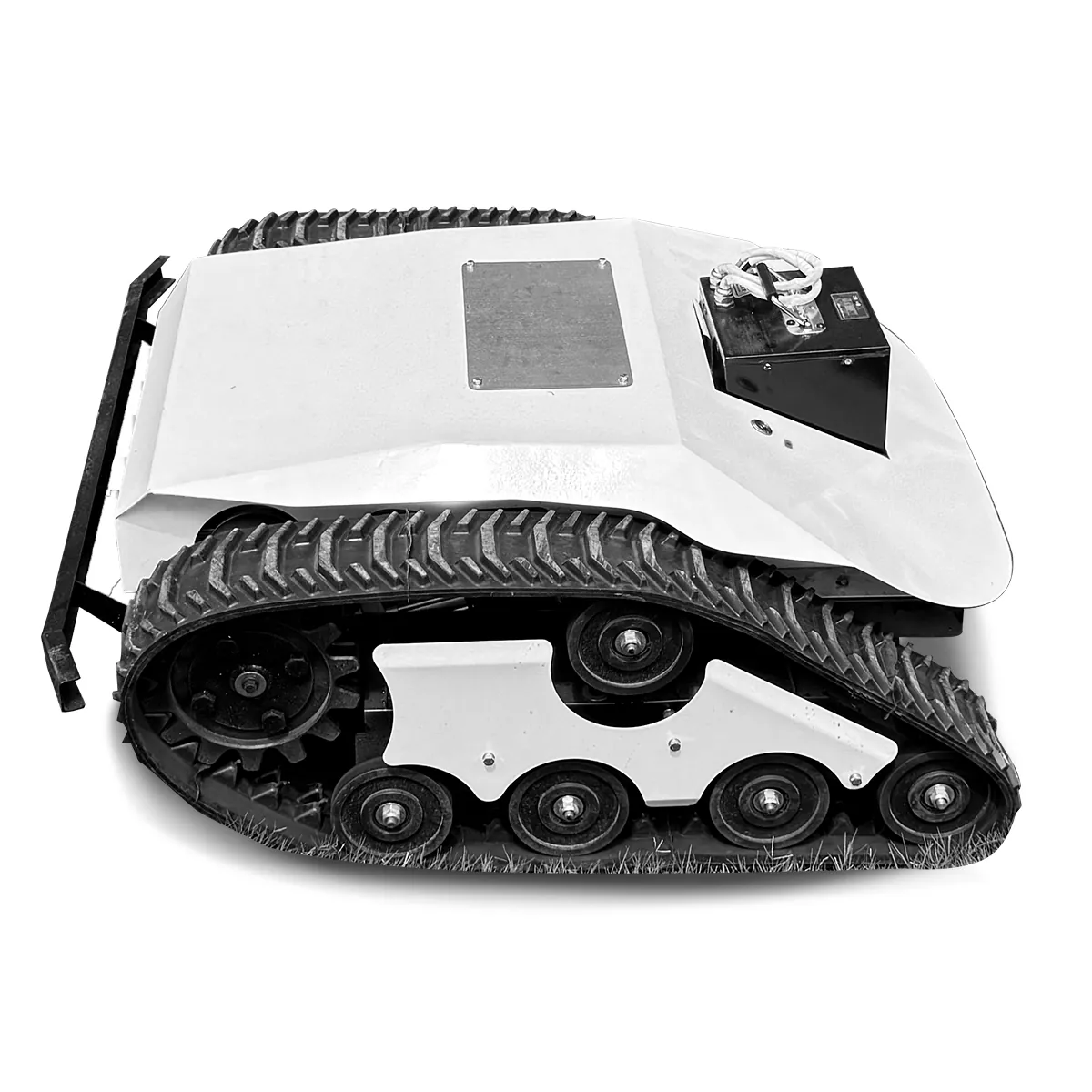
- Potentially battery-powered vehicles. Some lithium-powered machines may fall into a vehicle-related category rather than a simple "battery in equipment" category. Whether a particular mower is treated that way is a classification decision, not something you should settle from a product page or from this article.
That third branch is the one importers most often skip. A remote-control mower is a machine with a traction system and a battery; a carrier may ask whether it is being handled as equipment containing batteries or under vehicle provisions. Do not decide this yourself, and do not assume that two mower models share an answer because they look similar. The classification depends on the actual machine, battery, and how it is presented for transport.
| What to record | Why the carrier needs it | Where to confirm it |
|---|---|---|
| Machine model and description | Identifies the article being shipped | Supplier specification sheet |
| Battery model, chemistry, rated capacity | Central to classification and limits | Battery label and supplier data |
| Installed, spare, or shipped alone | Changes the packaging and paperwork path | Packing list and photos |
| Quantity of packs per package | Affects package-level requirements | Supplier packing record |
| Origin, destination, transit points | Determines which rules and carrier policies apply | Booking and routing plan |
| Transport modes in the chain | Air, sea, road and rail have different frameworks | Forwarder itinerary |
| Package dimensions and gross weight | Needed for booking and handling | Packing list |
Treat every blank cell as a question, not as a value to estimate. If the supplier cannot state the battery capacity or whether a spare pack is included, that gap belongs in your enquiry, not in a guess on a shipping form.
Ask a qualified shipper to determine classification
Classification is the pivot of the whole exercise. The question "what documents do I need?" cannot be answered until someone qualified has decided what the goods are for transport purposes. That decision normally sits with the shipper, supported by the carrier's dangerous-goods acceptance process, and it should be documented rather than agreed verbally.
Your job as importer or dealer is to supply accurate inputs and to ask for the decision in writing. A useful request to a forwarder or carrier sounds like this: "Here is the machine model, battery model and capacity, quantity, whether packs are installed or separate, the full route and modes, and the destination country. Please confirm the classification you will apply, the documents you require from us, and any packaging, labelling, or state-of-charge conditions." That single message does more than a dozen generic checklist emails.
Use mode, destination, battery and machine details; do not assign a UN number from the article
You will see UN numbers quoted in freight forums and supplier emails. Resist copying one into your own paperwork. The correct entry depends on the combination of battery chemistry, whether the battery is alone or in equipment, whether the equipment is a vehicle, and the regulatory framework that applies to the mode and route. A number that fits one configuration can be wrong for another, and an incorrect declaration is worse than an unanswered question.
Mode matters in practical ways. Air transport follows the IATA Dangerous Goods Regulations and associated guidance; surface and sea transport follow different international and national frameworks. The IATA lithium battery guidance document addresses air transport and should be read as guidance for that mode, not as a universal compliance manual. IATA itself frames such guidance as a support document rather than a standalone regulatory source, so confirm current rules and your carrier's requirements rather than relying on a saved PDF.
Destination matters too. Countries and carriers can impose their own acceptance conditions, documentation expectations, and restrictions on how batteries travel. The PHMSA lithium battery guide for shippers is a useful orientation to shipper responsibilities in the US context, but it does not replace the rules that apply at the other end of your route. When a shipment crosses several jurisdictions, expect to reconcile more than one set of expectations.
Finally, the machine details matter. A mower with a large installed pack, shipped with two spare packs in the same crate, is a different proposition from a bare machine with the battery removed and shipped separately. Tell the carrier which one you have. If you are still planning the move, the remote-control mower transport and fleet move plan covers the handling side of the same project.
Separate the test summary from transport papers
One of the most common misunderstandings is treating the UN 38.3 test summary as if it were the shipping document. They serve different purposes. The test summary is evidence about battery testing; transport papers are the declaration and handling documents for a particular shipment. Having one does not automatically produce the other.
Application review
Discuss your mowing application.
Share the working condition, target market, product family and project scope.
The UN Manual of Tests and Criteria includes Test 38.3 for lithium batteries, and the associated requirement concerns making a test summary available. The PHMSA page on the UN test summary requirement explains the background in the US context. In practice, importers should ask the battery or equipment supplier for the test summary that corresponds to the exact battery model being shipped, and should check that the model designation on the summary matches the pack on the packing list.
IATA 2026 discusses making a test summary available and when a State or operator may ask for it
The IATA guidance discusses the test summary in terms of making it available, and notes circumstances in which a State or an operator may ask to see it. That wording is worth reading carefully. "Available" is not the same as "attached to every consignment." A supplier may hold a valid summary that can be produced on request, while the shipment itself travels with a different set of papers.
This distinction matters when you are assembling a document pack. Do not assume that because a test summary exists, it must be physically enclosed with every box. Equally, do not assume it will never be requested. Ask the carrier and the shipper what they want for your route, and keep the summary retrievable in case an authority or operator asks. If the summary is missing, out of date for the battery model, or refers to a different cell or pack, that is a supplier evidence gap to resolve before booking.
| Document or evidence | What it tells you | Common misunderstanding |
|---|---|---|
| UN 38.3 test summary | Testing evidence for a battery model | Treated as the shipment declaration |
| Shipper's declaration or transport document | The shipment's declared contents and details | Assumed to be produced by the importer |
| Safety data sheet, where applicable | Hazard information for the battery | Assumed to replace transport papers |
| Packing list and packing record | What is in each package and how it is packed | Treated as a formality |
| Carrier acceptance confirmation | That the carrier will take the goods as described | Assumed from a generic quote |
| Labelling and marking evidence | That packages carry required marks | Left to the warehouse without instruction |
Use the table as a prompt for questions, not as a fixed list of required documents. Which items apply, and in what form, is exactly what the qualified shipper should confirm for your configuration and route.
Build a document handoff by responsible party
Most documentation failures are handoff failures. The supplier has one folder, the forwarder has another, the importer has an email thread, and nobody owns the version that actually travels with the goods. A simple responsibility map prevents that.
Assign each item to a named party and a status: supplier, importer or dealer, forwarder, carrier, or destination agent. Record what has been received, what has been checked against the machine and battery details, and what is still open. Keep the evidence with the shipment file so that a later question about a particular consignment can be answered without reconstructing the story from memory.
Record supplier evidence, carrier requirements and unknowns without assuming one universal document set
There is no single worldwide document set that covers every lithium-powered mower shipment. The applicable papers depend on the classification, the mode, the route, and the carrier's own acceptance rules. A checklist copied from another importer's shipment may be a useful starting point, but it is not evidence for yours.
Build your handoff record around three columns: what the supplier has provided, what the carrier has required, and what remains unknown. The unknowns column is the most valuable. It shows the booking team exactly where a decision is still pending, rather than letting an assumption harden into a declaration.
| Responsibility | Typical owner | Evidence to keep | Open question to close |
|---|---|---|---|
| Machine and battery identification | Supplier | Specification sheet, battery label photo | Exact battery model and capacity |
| Test summary for the battery model | Supplier | Current summary matching the pack | Does it cover this model and revision? |
| Packing configuration | Supplier and warehouse | Packing list, packing photos | Installed, spare, or separate? |
| Classification decision | Qualified shipper | Written confirmation | Which entry and framework apply? |
| Carrier acceptance | Forwarder and carrier | Booking confirmation, acceptance note | Any route or mode restrictions? |
| Labels and marks | Warehouse, per carrier instruction | Photos of marked packages | Who applies and checks them? |
| Destination requirements | Importer and destination agent | Local agent confirmation | Any import or handling conditions? |
| Final document pack | Importer or dealer | Indexed shipment file | Who signs off before dispatch? |
Two practical habits make this work. First, version the file: date each document and note which machine and battery it refers to. Second, reconcile before dispatch, not after arrival. A pre-shipment review that compares the packing list, the battery label, the test summary, and the carrier's written requirements catches most mismatches while they are still cheap to fix. When the container or crate arrives, the delivery inspection before signing process takes over, but the paperwork review belongs earlier.
FAQ
Does every lithium-powered mower use the same shipping classification? No. Classification depends on the actual battery, whether it is installed or shipped separately, whether the machine may be treated as a battery-powered vehicle, and the mode and route. Similar-looking mowers can sit in different categories, so each configuration needs its own confirmed answer from a qualified shipper.
Is making a UN 38.3 test summary available the same as attaching it to every shipment? Not necessarily. The IATA guidance discusses making the summary available and notes when a State or operator may ask for it. Whether it must travel with a particular consignment is a question for your shipper and carrier, based on the configuration and route.
Who confirms carrier, transport mode and destination requirements? The qualified shipper and the carrier's dangerous-goods acceptance process confirm what applies, using the details you supply. The importer's role is to provide accurate machine, battery, packing, and routing information, and to keep the written confirmations on file.
Conclusion

Identify the machine, battery, and route first, then let a qualified shipper confirm classification and papers. Keep supplier evidence, carrier requirements, and open questions in one versioned file before dispatch.
Video: Lithium Battery Test Summary Mandatory Jan 1
