By Anna
You have a packing list showing two mower crates at 1,100 kg each, and a carrier form asking for a container's verified gross mass. If you copy the crate total into that field, the number is wrong before the container is even loaded. This check separates the two figures.
Cargo gross weight describes the goods and their packing. Verified gross mass (VGM) describes the packed container, including the container's own tare weight. A crate weight is never a VGM, and adding crate weights alone will not produce one unless every other element inside the box is also counted.
The distinction matters most at the point where documents change hands. A supplier's packing list, a forwarder's loading plan, and a shipping line's VGM submission may all use the word "weight," yet each refers to a different scope. This article sets out where the boundary sits, how the two approved verification routes differ, and how to reconcile a worked example without double-counting packaging.
Verified gross mass vs cargo gross weight: Separate a crate from a loaded container
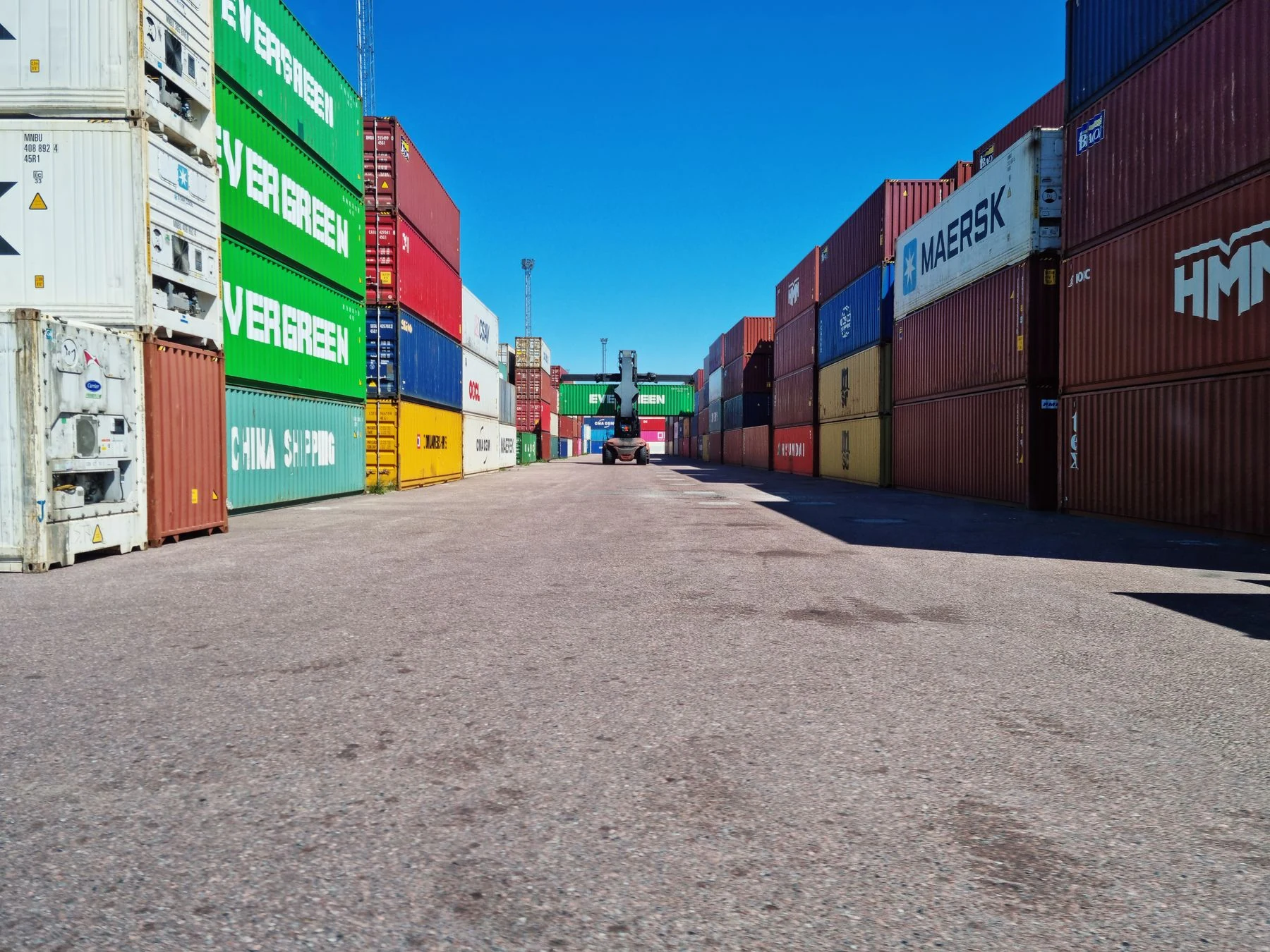
The first step is to stop treating a shipping unit and a cargo unit as the same object. A mower crate is a cargo unit: equipment plus its internal packing, closed and marked for transport. A container is the shipping unit that holds one or more cargo units, plus any loose dunnage or bracing used to secure them. VGM applies to the second object, not the first.
A single crate is not the loaded container
A crate's gross weight normally covers the equipment and the packaging that travels inside or as part of that crate. It says nothing about the steel box the crate sits in, the pallets or timber placed around it, or any other cargo loaded on the same bill. Treating a crate gross weight as a container's verified mass understates the load and can put a submission outside what the carrier will accept.
The reverse error is also common. Teams that know tare must be added sometimes add packaging twice, once inside a crate gross figure and again as a separate dunnage line. The safe habit is to define each line before adding anything: what is inside this figure, and what is deliberately outside it?
For a single-crate density or measurement question, the earlier Super Mowers article on freight density for machinery crates covers that narrower calculation. This article deals with the loaded container, which is a different scope.
| Figure | What it normally covers | What it normally excludes |
|---|---|---|
| Crate gross weight | Mower, internal packing, crate structure | Container tare, other cargo, loose securing material outside the crate |
| Extra dunnage or bracing | Timber, airbags, lashing added inside the container | Equipment and crate contents already counted |
| Container tare weight | The empty container as marked | Any cargo, packing, or dunnage |
| Verified gross mass | The whole packed container, verified by an approved method | Nothing inside the container; it is the total |
Read the carrier's VGM explanation

The International Maritime Organization's page on verification of the gross mass is the reference point for why this figure exists and who is responsible for providing it. Carrier guidance, such as Maersk's verified gross mass FAQ, translates the requirement into the two accepted routes and the practical submission steps a shipper faces.
Keep approved methods and jurisdictions attached
The two routes are usually described as method one and method two. Method one weighs the packed container on calibrated equipment. Method two adds the cargo's verified weight to the container tare weight, using a documented process. Both are described in the IMO material and in carrier guidance; neither is a rough estimate, and a figure produced by a third, informal route is not a VGM.
Two habits keep the methods from blurring:
- Name the method on the record. A submission that does not state how the figure was produced is hard to audit later, especially if a terminal or carrier queries it.
- Keep the jurisdiction attached. The SOLAS requirement is international, but the detailed arrangements, accepted evidence, and deadlines are set within the applicable national and port framework and by the carrier. A procedure copied from one trade lane should not be assumed to satisfy another.
Method two depends on a cargo weight that is itself verified, not merely estimated from a catalogue. For mower equipment, that means the crate gross figures must come from a controlled weighing or a documented calculation the shipper can stand behind. A sales brochure weight for the machine alone is not a substitute.
Reconcile a clearly labelled example

The following example is hypothetical. It is included only to show how the parts fit together under a method-two style reconciliation. It is not a certified VGM, not a carrier submission, and not a statement about any real shipment.
Application review
Discuss your mowing application.
Share the working condition, target market, product family and project scope.
Assumptions: two crates at 1,100 kg gross each (equipment and internal packing already included), 100 kg of additional dunnage and bracing, and a container tare of 2,300 kg.
Keep crate gross, extra dunnage and container tare separate
The reconciliation runs as follows:
| Line | Basis | Weight (kg) |
|---|---|---|
| Crate 1 gross | Equipment plus internal packing | 1,100 |
| Crate 2 gross | Equipment plus internal packing | 1,100 |
| Crate subtotal | Two crates | 2,200 |
| Additional dunnage and bracing | Added inside the container, outside the crates | 100 |
| Container tare | Empty container as marked | 2,300 |
| Illustrative total | Crate subtotal plus dunnage plus tare | 4,600 |
The arithmetic is 2,200 + 100 + 2,300 = 4,600 kg. The figure is a range check for the method, not a verified value. If the crates' gross weights already included the dunnage, adding 100 kg again would double-count it. If the tare were taken from a different container than the one actually loaded, the total would describe the wrong box. Both errors are document errors, not weighing errors, and both are caught by labelling each line.
A second check is worth running before submission. Compare the illustrative total against the container's permitted payload and against the carrier's declared limits for the route. A reconciliation that adds up correctly can still describe a container that should not be loaded as planned.
Confirm the applicable shipment requirements

No article can supply the deadline for your shipment. The submission cut-off, the accepted evidence format, and the party responsible for submitting depend on the carrier, the terminal, the trade lane, and the rules in force at the time of shipment. Confirm them for the actual booking rather than relying on a general guide.
Ask the shipping line about the deadline
Put the question to the carrier or its local agent in writing, and record the answer against the booking. Useful questions include:
- What is the VGM submission deadline for this specific booking and loading port?
- Which method will be used, and what documentation must accompany it?
- Who submits the figure: the shipper, the forwarder, or another party named in the arrangement?
- What happens if the figure arrives late or is queried at the terminal?
- Are there local requirements beyond the carrier's own instructions?
Airlift's VGM glossary entry is a useful secondary explanation of how VGM relates to cargo weight, the two methods, tare, and less-than-container-load handovers. It supports understanding, not a substitute for the booking-specific instruction.
| Question | Who can answer it | Where to record it |
|---|---|---|
| Submission deadline for this booking | Carrier or local agent | Booking file, dated |
| Accepted method and evidence | Carrier, per applicable rules | VGM record |
| Party responsible for submitting | Shipper and forwarder, per arrangement | Handover note |
| Local requirements at load port | Local authority or terminal, as advised | Compliance file |
| Payload and route limits | Carrier | Loading plan |
Frequently asked questions

Does cargo gross weight include container tare?
No. Cargo gross weight describes the goods and their packing. Container tare is the empty container's own weight and sits outside the cargo figure. VGM is the one figure that brings the packed container together, including tare.
Is one crate's weight the VGM?
No. A single crate is one cargo unit inside the container. VGM covers the whole packed container, so it includes every crate, any additional dunnage, and the container tare, verified by an approved method.
Who confirms the deadline?
The carrier or its local agent confirms the deadline for the actual booking, within the rules applicable at the loading port. The shipper and forwarder should agree in writing who submits the figure and by when.
Conclusion
Crate weight, dunnage, and tare are separate lines; only their verified combination describes a packed container. Confirm the method and deadline for your booking before submitting.
Video: VGM Explained: What Counts in a Packed Container Weight?