

 By Anna
A rental fleet coordinator walks the yard and notices fine cracks around the sidewall of a wheeled remote mower. The machine still runs. The question is not whether to declare the tire failed, but what to write down, which tire is actually fitted, and who should judge it before the machine goes back out.
Record the visible cracking, its exact location, and the tire's identity before drawing any conclusion. Photograph the sidewall markings, note the machine and wheel position, and route the record to the machine maker or a tire professional. Lawn mower tire dry rot is a reason to investigate, not a diagnosis you can complete from a yard walk.
This guide is for rental fleets, dealers, and maintenance leads who handle wheeled remote-controlled equipment. It sets out what to capture, how to separate a tire maker's replacement warning from a sealant seller's marketing claim, and which questions to put to the people qualified to answer them.
Lawn mower tire dry rot: Identify the actual wheel, tire and construction
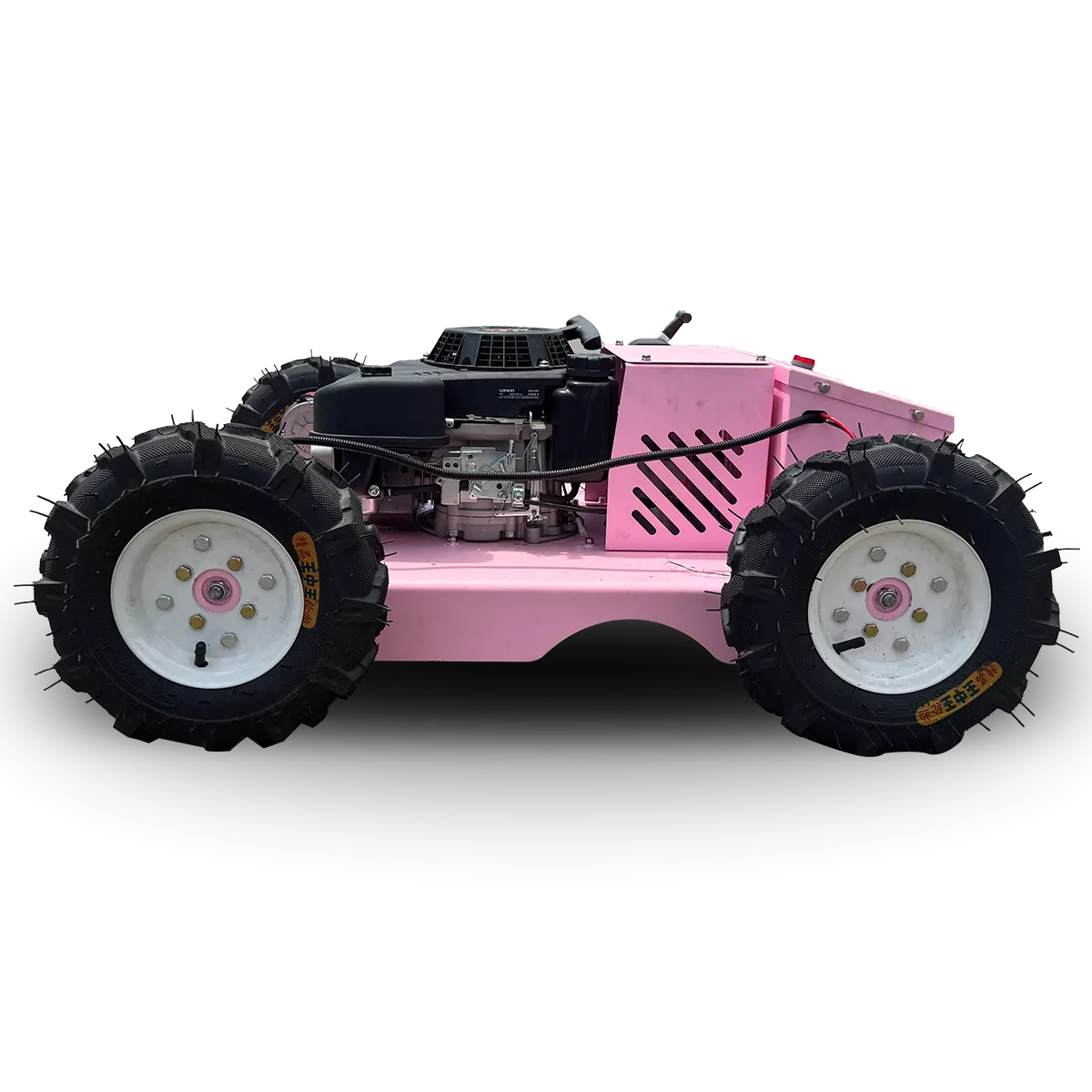
Before anyone writes "dry rot" on a job card, establish what is physically on the machine. A fleet record that says only "front tire cracked" is nearly useless later, because it cannot be matched to a replacement part, a manual instruction, or a warranty conversation.
Start with the machine identity: model, serial number or fleet asset number, and the date and hour meter reading at inspection. Then locate the wheel precisely — left or right, front or rear, and whether the machine has more than one axle position that could be confused. On some wheeled equipment the same nominal size appears in several positions, so position is part of the identity, not a detail.
Next, capture the tire itself. Sidewall markings typically carry a size designation, a load or inflation-related marking, and sometimes a brand and model name. Photograph the whole sidewall rather than transcribing it by hand, then transcribe carefully into the record. Our guide to the numbers on a lawn mower tire sidewall explains what those markings represent; it does not tell you which tire is approved for a given machine.
Construction matters too, and it is the point where assumptions cause the most trouble. Not every wheeled mower runs a pneumatic (air-filled) tire. Some equipment uses solid, semi-pneumatic, or foam-filled wheels, and the inspection language differs for each. A crack in a pneumatic sidewall, a split in a solid tire's tread, and a damaged rim are different observations with different consequences.
Do not assume that because Super Mowers has published wheeled remote-controlled models, every machine in your fleet uses one tire type. Record what is fitted, not what you expect. If the tire type cannot be confirmed from the sidewall or the machine documentation, write "construction not confirmed" and treat that as an open question for the maker.
| What to capture | Why it matters | Where to find it |
|---|---|---|
| Machine model and asset number | Links the tire record to the correct manual and parts list | Machine plate, fleet register |
| Wheel position (left/right, front/rear) | Prevents confusion between same-size wheels | Physical inspection |
| Tire size and sidewall markings | Identifies the tire family for a replacement enquiry | Tire sidewall photograph |
| Brand and model name, if legible | Lets a tire professional check the specific product | Sidewall |
| Construction (pneumatic, solid, foam-filled, unknown) | Determines what inspection and service questions apply | Sidewall, wheel, machine documentation |
| Rim and valve condition | Separates tire damage from wheel damage | Close visual check |
| Date and hour meter at inspection | Builds an aging and usage history | Machine records |
Record visible cracking and location without a diagnosis
The inspection task is description, not judgement. A maintenance lead who writes "dry rot — replace" has made a decision the evidence may not support; a lead who writes "cracks visible in sidewall shoulder area, left rear, photographed, referred" has created something a professional can act on.
Describe location in plain terms: tread surface, tread shoulder, upper sidewall, lower sidewall near the rim, or bead area. Note whether cracking appears as fine surface lines, deeper splits, or a network pattern. Record whether the cracks are isolated or spread around the circumference. State whether the tire holds air, if that can be checked safely under your own procedures, and whether any wheel or rim damage is visible nearby.
Use consistent vocabulary across the fleet so records can be compared. A simple three-part description works: what is visible, where it is, and what has not been determined. The third part is the one fleets skip, and it is the one that protects everyone later.
Do not assign a crack depth, a percentage of sidewall affected, or a "safe to use" verdict unless your own documented procedure and the tire maker's guidance give you a basis. No universal threshold exists that converts a photograph of cracking into an operating decision for every tire and machine. Car-tire aging guidance is useful background on why rubber deteriorates, but it is not a mower replacement criterion.
A practical record entry might read: "Left rear tire, size as marked, pneumatic (assumed — confirm), fine circumferential cracks on outer sidewall, no tread splitting seen, holds pressure at time of check, no rim damage seen. Photographed. Referred to tire professional; machine held from rental pending advice." That entry is honest about the assumption and clear about the next step.
| Record field | Example entry | Avoid |
|---|---|---|
| Position | Left rear | "A tire" |
| Visible condition | Fine circumferential cracks, outer sidewall | "Dry rot" |
| Extent | Around full circumference, no tread splits seen | "Bad" or "50% worn" |
| Pressure status | Held at check | "Fine" |
| Related damage | None seen on rim or valve | Omitting the check |
| Action taken | Machine held, referred to professional | "Monitor" with no owner |
| Open questions | Construction to confirm with maker | Silent assumptions |
Compare a tire maker replacement warning with a sealant seller claim without treating the claim as proof

Fleet teams searching for guidance on lawn mower tire aging quickly meet two very different kinds of source. One is a tire manufacturer explaining aging and listing deterioration among replacement signs. The other is a sealant seller marketing a product for tires that are already cracked. Both appear in search results; they do not carry the same evidential weight.
Hercules, a tire maker, lists sidewall dry rot among the signs that a lawn mower tire should be replaced, in its published mower maintenance material. That is a manufacturer's general replacement warning. It is worth reading and worth citing in a fleet procedure, but it does not set a measurable threshold, and it is not a Super Mowers machine-specific instruction. It tells you that a tire maker considers sidewall dry rot a replacement indicator — not how to grade the cracking on your particular wheel.
Application review
Discuss your mowing application.
Share the working condition, target market, product family and project scope.
TireJect, a sealant seller, markets sealant for lawn mower tires including cracked ones. That is a product claim made by a party selling the product. It is not evidence that a cracked tire remains safe, and it is not confirmation that the sealant is compatible with the tire on your machine. A sealant may address air loss; it does not restore sidewall structure. Treating a seller's marketing line as an engineering conclusion would be a category error.
Cooper Tire's dry rot explainer is useful for understanding why rubber ages and cracks — exposure, time, and service conditions. Its scope is tires generally, and the page is not an SM mower replacement criterion. Lowe's buying guide discusses replacement clues including cracked tires in a retail context. Neither source authorises a fleet to declare a specific tire serviceable or unserviceable.
| Source | What it actually says | What it can support in a fleet record | What it cannot support |
|---|---|---|---|
| Hercules (tire maker) | Sidewall dry rot listed among replacement signs | A cited reason to refer the tire for professional judgement | A crack-depth threshold or SM model approval |
| TireJect (sealant seller) | Sealant marketed for cracked mower tires | Nothing beyond noting a commercial claim exists | Proof of safety, structural repair, or compatibility |
| Cooper Tire (tire maker education) | General explanation of tire aging and dry rot | Background on why cracking occurs | A mower-specific replacement rule |
| Lowe's (retail guide) | Replacement clues include cracked tires | A general prompt to inspect and consider replacement | A machine-specific service limit |
| Machine manual / tire maker for the fitted tire | Model- and product-specific instructions | The basis for the actual service decision | — (this is the source to obtain) |
The practical lesson for a fleet is procedural: cite manufacturer warnings as reasons to inspect and refer, quote seller claims only as claims, and make the final call rest on the documentation for the exact tire and machine.
Ask the maker or tire professional about service

Once the record is complete, the question becomes who decides. For a machine under warranty or in a rental fleet with liability exposure, that decision should sit with the machine maker's service channel and a qualified tire professional, not with the person who noticed the cracks.
Prepare a short enquiry pack. Include the machine model and serial number, the wheel position, clear photographs of the sidewall markings and the cracking, the tire size as marked, the construction if known, the machine's hour meter and age, and the conditions the machine works in. Ask specific questions: is this tire type still the approved fitment; does the maker or tire manufacturer publish an inspection or replacement criterion for this condition; is the machine to be held from service pending assessment; and what replacement part is specified if replacement is needed.
A size match alone does not prove a replacement is approved. Two tires can share a nominal size and differ in load rating, construction, tread, or intended application. Our article on remote mower tire pressure specifications covers why pressure figures must come from the correct source rather than a generic table; the same discipline applies to replacement approval. Confirm the part against the machine's documentation, not against a tape measure. Where a fleet needs to check what wheeled configurations Super Mowers has published, the product catalogue is the starting point — not a substitute for the manual for the exact machine.
Keep the enquiry and the reply in the asset record. If the professional advises continued use with monitoring, record the date, the adviser, and the stated conditions. If the advice is replacement, record the part number and the fitment confirmation. Either way, the next inspector inherits a documented history rather than a verbal recollection.
For fleets running mixed equipment, a simple referral log keeps the process consistent across sites and shifts.
| Referral log field | Purpose |
|---|---|
| Asset number and wheel position | Ties the case to one physical tire |
| Date referred and referred by | Establishes the inspection timeline |
| Photographs attached (sidewall, cracking, rim) | Gives the adviser usable evidence |
| Question asked | Prevents vague "is this OK?" exchanges |
| Adviser and date of reply | Records who made the judgement |
| Outcome (hold, monitor, replace) and conditions | Directs the next shift |
| Part number confirmed, if replaced | Closes the loop for parts and warranty |
FAQ

Do all remote mowers use pneumatic tires? No. Wheeled remote-controlled equipment can use pneumatic, solid, semi-pneumatic, or foam-filled wheels depending on the model and configuration. Record the construction actually fitted rather than assuming air-filled tires, and confirm with the machine documentation when the sidewall does not make it clear.
Does a size match prove a replacement is approved? No. Matching the nominal size is only the first filter. Load rating, construction, tread pattern, and the maker's specified fitment all matter. Get the replacement part confirmed against the machine's documentation or by the maker's service channel before fitting.
Can tire cracks be judged from a generic checklist? Not reliably. A generic checklist can prompt you to look at the sidewall, tread, and rim, and to photograph what you see. It cannot tell you whether a specific crack on a specific tire is acceptable. That judgement belongs to the machine maker or a qualified tire professional using the documentation for the fitted tire.
Conclusion
Record the wheel, the tire markings, the cracking, and the open questions, then refer the case with photographs. Cracking is a prompt for professional judgement, not a verdict from the yard.
Video: How To Repair Dry Rot On Lawn Mower Tires
