 By Anna
You are placing a commercial mower order and the supplier asks whether you want a factory acceptance test, a pre-shipment inspection, or both. The two terms sound interchangeable in a quotation, yet they answer different questions and produce different evidence for your file.
The factory acceptance test vs pre shipment inspection distinction is simple: a factory acceptance test checks agreed functions and contract specifications, usually at the factory before shipment. A pre-shipment inspection checks quantity, identification, packaging, marking and loading arrangements before dispatch. They can overlap, but neither is a legal requirement, and the contract must define scope, witness and records.
This article is written for brand owners, importers and OEM/ODM purchasing teams ordering commercial mowing equipment. It does not claim that Super Mowers provides certification, third-party inspection or any particular test result. It sets out how to write both checks into a purchase contract and an acceptance record so that the handover is clear.
Factory acceptance test vs pre shipment inspection: Define the documented FAT and PSI scopes

Start with what each term describes in the service market, then narrow it to your order. SGS publishes a factory acceptance test service description and a separate pre-shipment inspection service description. Read together, they show the split that buyers usually need: one service is oriented to whether equipment meets contractual functional and specification requirements, and the other to checks carried out before shipment covering matters such as quantity, marking, packaging and loading. Those are service descriptions from a named inspection provider, not a legal definition that binds every supplier.
For a mower order, that split matters because the two checks look at different things. A functional acceptance test might examine whether a unit starts, drives, steers, stops and operates its controls as the order specifies. A pre-shipment inspection might examine whether the right number of units, with the right labels and the right packaging, are ready to be loaded. Neither check, by itself, proves that every unit in a batch performs identically, and neither replaces your own receiving inspection after arrival.
Functional acceptance and shipment inspection
The SGS factory acceptance test page describes a service tied to contract requirements and functional checks. The SGS pre-shipment inspection page describes checks performed before shipment, including quantity, identification, packaging and loading-related matters. Use these as a starting vocabulary for your contract, not as a fixed menu. Your order may need only part of either scope, or a different combination.
For mower equipment, write the functional side in the language of the machine you are buying. If the order includes a specific cutting deck, control configuration, engine option or attachment, the acceptance record should name it. If the order includes a manual, label set or declaration pack, say whether that pack is checked at the functional stage, at the shipment stage, or both. The point is to remove ambiguity before anyone travels to a factory or signs a release.
A useful discipline is to separate three questions: what is being checked, who witnesses it, and what document proves it happened. The first question belongs in the specification and the acceptance plan. The second belongs in the commercial terms. The third belongs in the handover file. When a supplier quotes "inspection included," ask which of these three questions the quote actually answers.
Compare tasks rather than assume a universal sequence

Buyers often assume that a factory acceptance test must happen first and a pre-shipment inspection must follow. That sequence is common and can be sensible, but it is not a rule that applies to every order. A small order of a standard model may need only a packing and quantity check. A custom OEM/ODM build may need a witnessed functional stage before crating. A repeat order with a stable history may rely on supplier records plus a receiving check.
The comparison below sets out the typical task split. Treat every row as a question to confirm in the contract, not as a mandatory step.
| Question | Factory acceptance test (typical focus) | Pre-shipment inspection (typical focus) |
|---|---|---|
| What is examined? | Agreed functions and contract specifications of the equipment | Quantity, identification, marking, packaging and loading arrangements |
| Where does it happen? | Usually at the factory, before packing or shipment | Before shipment, often at the dispatch or loading point |
| Who may witness? | Buyer, nominated representative, or provider, as agreed | Buyer, nominated representative, or provider, as agreed |
| What evidence is produced? | Test record against the agreed specification | Inspection record covering the agreed shipment checks |
| Does it prove every unit in the batch? | No, unless the contract says so | No, unless the contract says so |
| Is it legally required? | Not by the term itself; confirm applicable rules and contract terms | Not by the term itself; confirm applicable rules and contract terms |
| Can the two overlap? | Yes, where the contract assigns the same item to both | Yes, where the contract assigns the same item to both |
Let the contract define overlapping work
Overlap is normal. A label pack might be checked functionally because the correct controls and warnings must match the model, and again at shipment because the cartons must carry the right marks. A manual might be verified as part of the functional record and then counted as part of the packed contents. Overlap is not waste if the contract says why each check exists and which record is authoritative.
The risk is duplicated or missing responsibility. If both stages are described only as "inspection," a buyer may assume a function was checked when only the carton count was verified. Write each item once, name the stage responsible for it, and state whether the other stage re-checks it. Where a standard or destination-market rule applies to a label or document, cite the exact rule and version in the contract rather than relying on a generic phrase.
Create a mower order acceptance matrix

An acceptance matrix turns the discussion into a working document. It does not need to be long. One row per checkable item, with columns for stage, method, witness and evidence, is enough to prevent most handover disputes. Adapt the rows to the actual order; do not copy a template that includes items your order does not contain.
Application review
Discuss your mowing application.
Share the working condition, target market, product family and project scope.
| Item to confirm | Stage | Method or reference | Witness | Evidence to file |
|---|---|---|---|---|
| Model, variant and configuration match the order | Functional | Compare against signed order and specification | As agreed | Signed configuration record |
| Agreed functions operate as specified | Functional | Order-specific function list | As agreed | Completed test record |
| Controls, labels and manual match the model | Functional and/or shipment | Model-specific document list | As agreed | Label and manual check sheet |
| Quantity per model and variant | Shipment | Count against packing list | As agreed | Count record and packing list |
| Packaging condition and marking | Shipment | Agreed packing specification | As agreed | Photographs and inspection record |
| Loading arrangement | Shipment | Agreed loading plan | As agreed | Loading record |
| Documents for destination market | As assigned in contract | Named rule, version and date | As agreed | Document pack copy |
Two cautions apply. First, a matrix is only as good as the specification behind it. If the order does not state which functions, labels or documents are required, the inspection has nothing firm to measure against. Second, a matrix does not create a certification. If your destination market requires a declaration or approval, that requirement comes from the applicable rule and the responsible party, not from the word "inspection" on a purchase order.
Record scope, witness and evidence
For each row, write who is present and who signs. A buyer's own engineer, a nominated agent, a third-party provider and the supplier's quality representative are different roles, and the contract should say which one applies. If a provider is used, name the service and the scope it was engaged for; do not describe the provider's general capability as proof of your specific order.
Evidence should be specific enough to be checked later. "Inspection passed" is weak. A record that names the model, the functions checked, the packing specification, the date, the location and the signatory is far more useful when a question arises weeks later. Keep the record with the order file, and pass it to the receiving team so that the arrival check can confirm what was agreed rather than start from scratch.
Agree on responsibility and next steps

Responsibility is the part buyers most often leave implicit. Decide who prepares the acceptance plan, who performs each check, who witnesses, who signs, and who receives the record. A simple split works for many orders: the buyer defines the specification and acceptance criteria, the supplier performs and documents the checks, and any witness confirms attendance and observations within the agreed scope.
Confirm who checks and signs each item
Do not assume that every mower order must use a third party. Many commercial orders are handled through supplier records and a buyer's receiving inspection. A third party may be appropriate when the buyer cannot attend, when the order is complex or customized, or when the commercial terms require independent observation. That is a commercial decision for the parties, not a legal obligation created by the term "factory acceptance test."
Before dispatch, confirm the next steps in writing: which records are complete, which open items remain, who accepts them, and what happens if an item fails. A failed function check and a packaging defect usually need different remedies, so the contract should say how each is handled. After arrival, connect the pre-shipment record to your receiving process; our guide to lawn mower delivery inspection before signing covers the arrival side.
Super Mowers operates in commercial equipment and OEM/ODM supply, and buyers are welcome to raise acceptance-scope questions as part of an order discussion through supermowers.com. This article does not promise certification, third-party inspection or any specific test outcome.
FAQ

Are FAT and PSI the same inspection? No. A factory acceptance test typically focuses on agreed functions and contract specifications, while a pre-shipment inspection typically focuses on quantity, identification, marking, packaging and loading. The exact scope comes from the contract, and the two can overlap.
Must every mower order use a third party? No. Third-party involvement is a commercial choice. Some buyers attend themselves, some rely on supplier records plus receiving checks, and some engage a provider. Confirm the applicable rules and contract terms for your order.
Can the two scopes overlap? Yes. Labels, manuals and packed contents are common overlap points. The contract should say which stage is responsible for each item and which record is authoritative.
Conclusion

FAT and PSI answer different questions: function and specification versus shipment readiness. Define each item, witness and record in the contract, then confirm the evidence before dispatch.
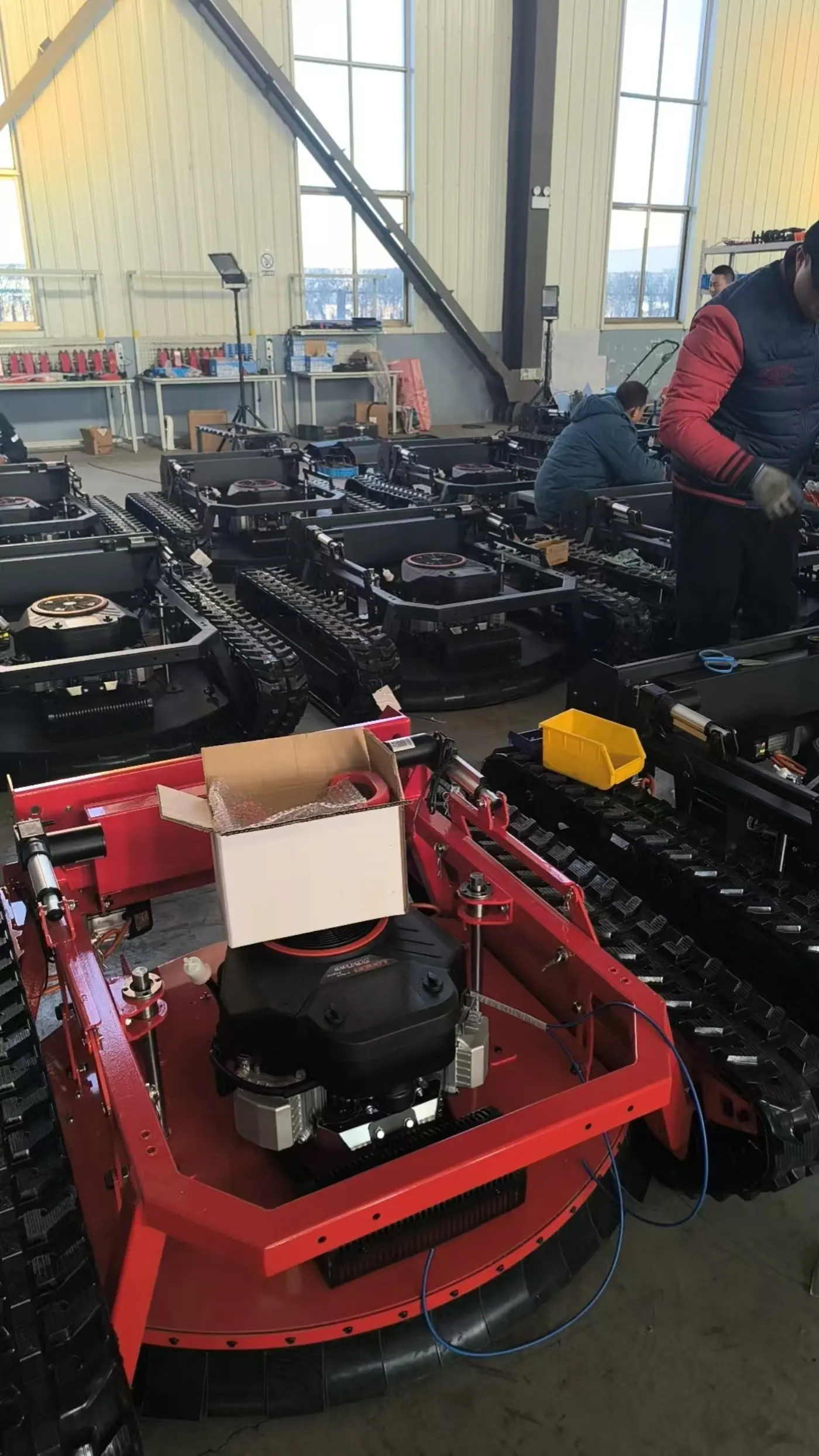
Video: Customer Pre-Shipment Inspection (FAT / Factory Acceptance Test)