
 By Anna
You fuel a mixed fleet of remote-controlled mowers — some gasoline, some diesel, some lithium-electric — and a driver asks whether every unit needs ethanol-free gas. The honest answer depends on each machine’s power system and its own engine documentation, not on a fleet-wide habit.
Ethanol-free gas is not a blanket requirement for remote mowers. Each gasoline unit must be matched to the ethanol range its installed engine manufacturer allows, in the destination market, using the manual that shipped with that engine. Diesel and lithium-electric units are outside that gasoline rule entirely.
This article is written for dealers, grounds contractors and rental-fleet administrators in the US who handle refuelling. It sets out a record-keeping approach: a fuel card per machine that separates equipment identity, engine identity, the manufacturer’s permitted ethanol range, the pump label, the octane system, the source and version of the document, and any field still unknown. It does not supply approved ethanol values for any Super Mowers model, because the serial-specific engine manuals were not part of the supplied evidence.
Ethanol free gas lawn mower: Identify the power system first

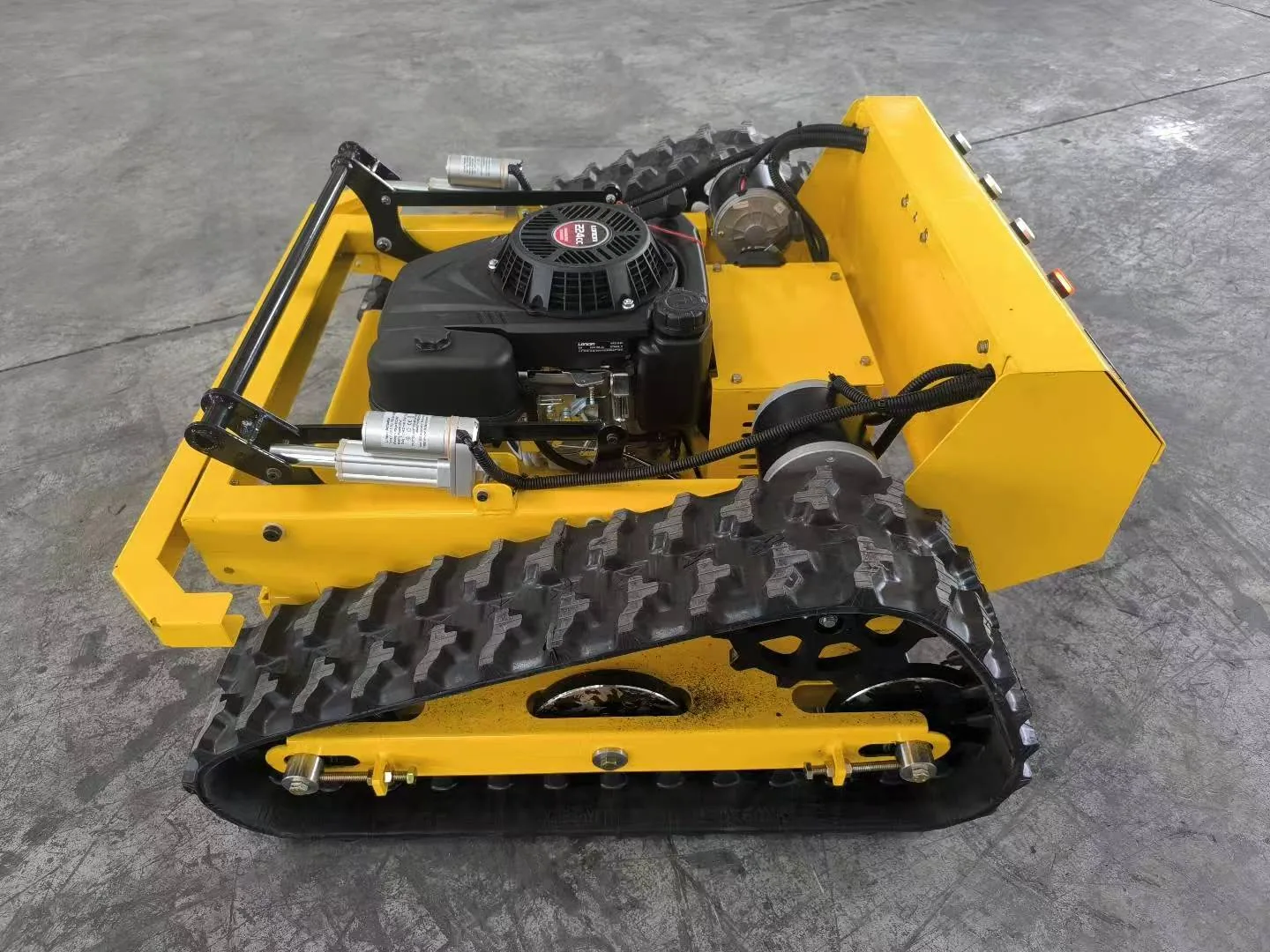
Before anyone reads a pump label, establish what the machine actually burns. A fuel policy that starts with “all mowers take E10” or “all mowers take ethanol-free” will eventually be applied to the wrong unit. The supplied public records show why: the DY-550L wheeled remote mower is recorded as a gasoline-engine configuration, and the Remote 50 gasoline mower is recorded as a gasoline tracked configuration. The SANYANG product catalogue also lists diesel and lithium-battery models. A catalogue listing is a category and model overview, not proof of how any individual delivered machine is configured.
Separate gasoline, diesel and lithium-electric machines
Treat the three groups as three different fuel procedures. A gasoline unit needs a gasoline specification check. A diesel unit needs the diesel instructions that came with its engine, and a gasoline pump label tells you nothing useful about it. A lithium-electric unit has no liquid fuel step at all, so any ethanol discussion is irrelevant to it — the relevant handover questions are about charging, not fuel.
The practical risk is not that staff confuse the fuels deliberately. It is that a shared fuel card, a shared jerrycan or a shared refuelling checklist quietly spreads one machine’s rule across the fleet. Physical separation helps: distinct cans, distinct storage positions, and a card that names the power system in the first field.
Record the installed engine and manual
Equipment model alone is not enough. Two units sold under the same model name can carry different engines over a production run, and the fuel permission belongs to the engine, not to the mower’s marketing name. Record the engine make, engine model, and the manual edition or revision that applies to that engine. Where the machine has a serial or asset number, record it too, so the fuel card can be traced back to a specific unit rather than a model family.
For the Remote 50, the supplied record notes that an exact serial-specific engine manual is not available in the material set. That is exactly the kind of gap the card should show as unknown rather than fill with a guess.
Read the US fuel label
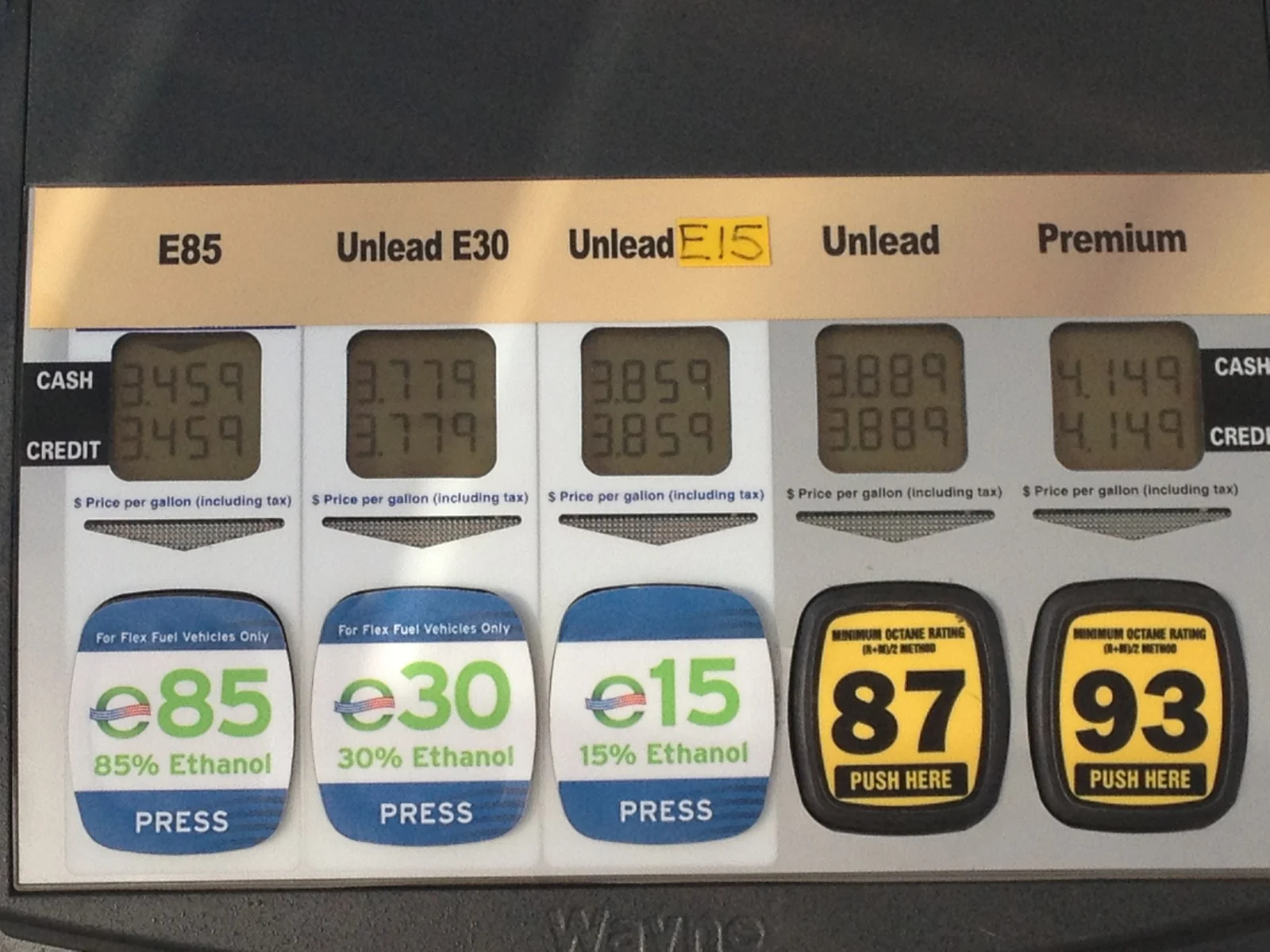
US pump labels carry two different pieces of information that are often read as one. The ethanol content tells you how much ethanol is blended into the gasoline. The octane number tells you the fuel’s anti-knock rating. Neither substitutes for the other, and neither, on its own, tells you whether a particular engine is permitted to use that fuel.
Ethanol content is separate from octane
A pump may display a blend such as E10 or E15, and separately display an octane rating. “Ethanol-free” (sometimes written E0) describes the blend, not the octane. A fuel can be ethanol-free and still be sold at a particular octane rating; a fuel can be E10 and sold at a different octane rating. When a driver reports “I used premium”, that statement says nothing about ethanol content. When a driver reports “I used the ethanol-free pump”, that statement says nothing about octane.
The US Department of Energy’s Ethanol Fuel Basics explains ethanol’s properties as a fuel component; it is a fuel-properties reference, not an approval for any mower model. Use it to understand terminology, not to decide what a specific engine may burn.
Keep pump rating systems distinct
Octane is expressed through more than one rating system, and the number on a US pump is not automatically comparable to a number quoted in another market’s documentation or in an engine manual written for a different region. Record which system the pump displays and which system the engine document uses before comparing figures. If the two cannot be reconciled from the supplied documents, mark the comparison as unresolved rather than assuming the numbers mean the same thing.
The same discipline applies to ethanol figures: record the label exactly as displayed (for example, the blend designation shown on the pump), not a rounded paraphrase. A card that says “about 10%” is weaker evidence than a card that says which label was on which pump on which date.
Match fuel to the engine instructions
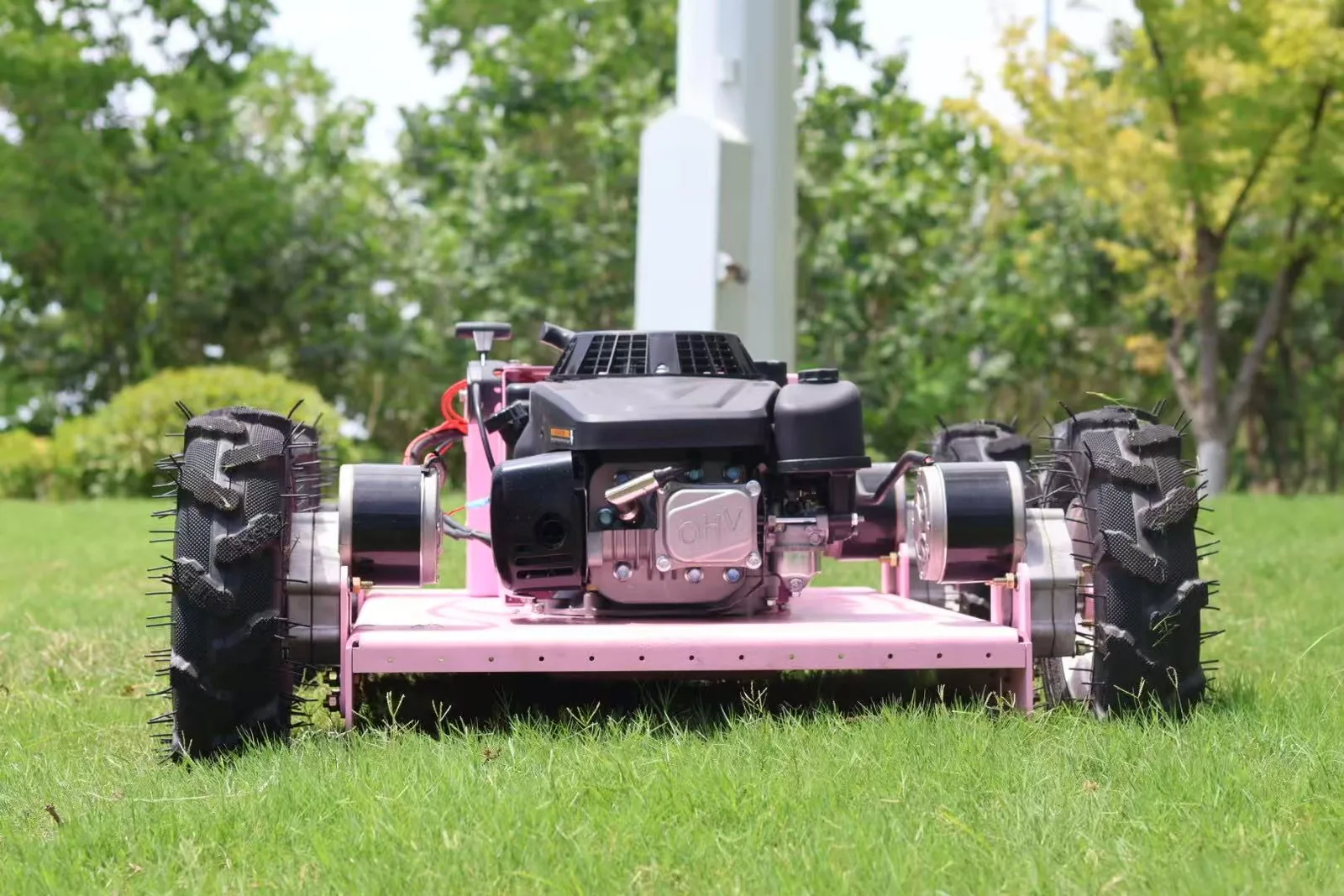
The engine manufacturer’s fuel instructions are the controlling document for a gasoline unit. Pump labels describe what is being sold; the engine manual describes what the engine is documented to accept. The job is to compare the two and record the result — including when the result is “cannot confirm”.
Record approved range, region and document version
Fuel permissions are usually written for a market and a document edition. A manual prepared for one region may list a different permitted ethanol range from a manual for another region, and a later revision may change the wording. Record four things together: the permitted ethanol range as written, the region or market the document addresses, the document identifier and revision, and the date you checked it. A range without its region and version is not a usable fleet rule.
Application review
Discuss your mowing application.
Share the working condition, target market, product family and project scope.
Honda’s Fuel Recommendations page is an example of a manufacturer publishing fuel guidance for its own engines. Its scope is US Honda engines. It is not a certification or approval for SANYANG engines or for any Super Mowers model, and it must not be copied onto a fuel card for a different engine make.
Escalate if the approved range is unknown
When the manual is missing, the engine identity is unclear, or the permitted range cannot be read for the relevant market, the correct action is to escalate — to the dealer, the importer, or the engine manufacturer’s own support route — and to hold the unit out of a fuel decision until the answer is documented. Do not default to ethanol-free because it sounds safer, and do not default to E10 because it is common. Both are guesses dressed as policy.
A useful escalation note states the asset number, engine make and model, the exact question, the pump label in question, and what has already been checked. That lets the recipient answer a specific question instead of a vague one.
Manage mixed-fleet handover

Fuel rules fail at handover: a seasonal crew change, a rental return, a machine moved between sites. The register is the control. It should travel with the machine and be reviewed when responsibility for refuelling changes hands.
Use a blank fuel and responsibility register
The table below is a template, not a source of approved values. Every “to confirm” cell is a question for the engine documentation, not a placeholder for an assumption.
| Field | What to record | Status in this article’s evidence |
|---|---|---|
| Asset / serial number | Unique unit identifier | Record per machine |
| Equipment model | Model name as delivered | DY-550L and Remote 50 recorded as gasoline configurations |
| Power system | Gasoline, diesel or lithium-electric | Confirm per unit; catalogue lists all three categories |
| Engine make and model | As stamped on the engine | To confirm from the unit |
| Engine manual identifier and revision | Document number and edition | To confirm; serial-specific manual not available for Remote 50 in supplied material |
| Permitted ethanol range | Exactly as written in the manual | To confirm — no approved value supplied here |
| Market / region of the manual | Which market the document addresses | To confirm |
| Pump label observed | Blend designation as displayed | Record at each refuel |
| Octane rating and system | Number and rating system shown | Record at each refuel |
| Source and date checked | Who checked, which document, when | Record at each review |
| Unknown fields | Anything unresolved, with the escalation route | Keep visible; do not overwrite |
| Responsible person | Who may authorise refuelling | Name per shift or site |
Explain why another maker’s approval does not transfer
A fuel approval is written for a specific engine family, in a specific market, under a specific document. Copying it to another make is not a conservative shortcut; it is an unsupported claim. This matters most where a fleet mixes engine brands, because the card for one unit can look authoritative and be silently wrong for the next.
The same logic applies to regulatory scope. The EPA’s E15 Fuel Registration page addresses E15 use in the US and lists nonroad lawn-mower engines as excluded from that registration scope. That is a statement about a US registration, not a universal rule for every engine, every state, or every blend, and it is not a substitute for the engine manual. Read it as one input to the question, with its jurisdiction and scope intact.
FAQ

Does every remote mower require ethanol-free gas? No. The requirement depends on the installed gasoline engine and what its manufacturer’s documentation permits for the relevant market. Diesel and lithium-electric units are outside the gasoline rule. For gasoline units, the permitted ethanol range must come from the engine documentation, not from a fleet-wide default.
Can diesel units follow the same gasoline label? No. A gasoline pump label describes a gasoline blend and says nothing about diesel fuel. Diesel units need their own fuel instructions, and mixing the two procedures in one checklist is a common source of error in mixed fleets.
What if the delivered engine manual is missing? Record the gap on the fuel card, identify the engine make and model from the unit, and escalate to the dealer, importer or engine manufacturer’s support route. Hold the fuel decision until the permitted range is documented. Do not substitute another maker’s guidance or a general assumption.
Conclusion

Build one fuel card per machine, confirm the power system, and let the engine manual — not a fleet habit — set the ethanol range. Where the document is missing, escalate and record the gap.
Next step: open your current refuelling checklist and add the engine manual identifier, permitted ethanol range and an explicit unknown field before the next shift. For background on how gasoline and diesel remote mowers differ, see our comparison; for the wider model range, visit Super Mowers.
Video: KNOW THIS BEFORE YOU PUMP ETHANOL-FREE GAS
