
 By Anna
A hydraulic fault report lands on your desk with a vague note: "filter changed, problem back." Before you order parts or book labour, you need to know which filter the technician meant — the one on the pump inlet or the one on the return line. The hydraulic suction filter vs return filter question is not academic; it decides which part number you order and which line you open.
A suction filter (often a strainer) sits between the reservoir and the pump inlet and protects the pump from coarse debris while keeping inlet restriction low. A return filter sits on the line back to the tank and captures wear particles after they pass through the circuit. Position, pressure, and flow requirements differ, so the correct part comes from the machine's own documentation.
Hydraulic suction filter vs return filter: Locate suction and return filters in a simple circuit

In a basic hydraulic circuit, the two filter locations sit at opposite ends of the oil's journey. The suction side is upstream of the pump; the return side is downstream of the working components. That single difference in position explains most of the difference in how each filter is built, rated, and serviced.
Trace fluid from reservoir to pump and back
Start at the reservoir. Fluid leaves the tank through a suction line and enters the pump inlet. If a suction filter or strainer is fitted, it sits in that line — or at the tank outlet — so that anything entering the pump passes through it first. From the pump, pressurised oil travels to valves, cylinders, and motors, does its work, and then flows back through a return line to the tank. A return filter, where fitted, sits on that return path.
Power & Motion's hydraulic filtration overview describes filtration as a circuit-level concern, with filters placed at points where they protect sensitive components and where the system can tolerate the pressure drop they introduce. That framing is useful for maintenance staff: the question is not only "what does this filter catch?" but "what is this filter allowed to cost the circuit in pressure and flow?"
Flowfit's guide to choosing a hydraulic suction filter focuses on the pump-inlet case specifically. It treats suction filtration as a balance between protecting the pump and avoiding excessive restriction on the inlet, which is why suction-side elements are commonly described as strainers with relatively open media rather than fine filters. The exact construction, micron rating, and bypass arrangement remain product- and machine-specific.
State that actual circuits differ
A simple loop is a teaching diagram, not a machine drawing. Real mobile equipment may place filtration in the pressure line, in a dedicated offline loop, in the tank breather, or in combinations. Some circuits use a suction strainer plus a return filter; others use only one of these; others use neither in the form you expect.
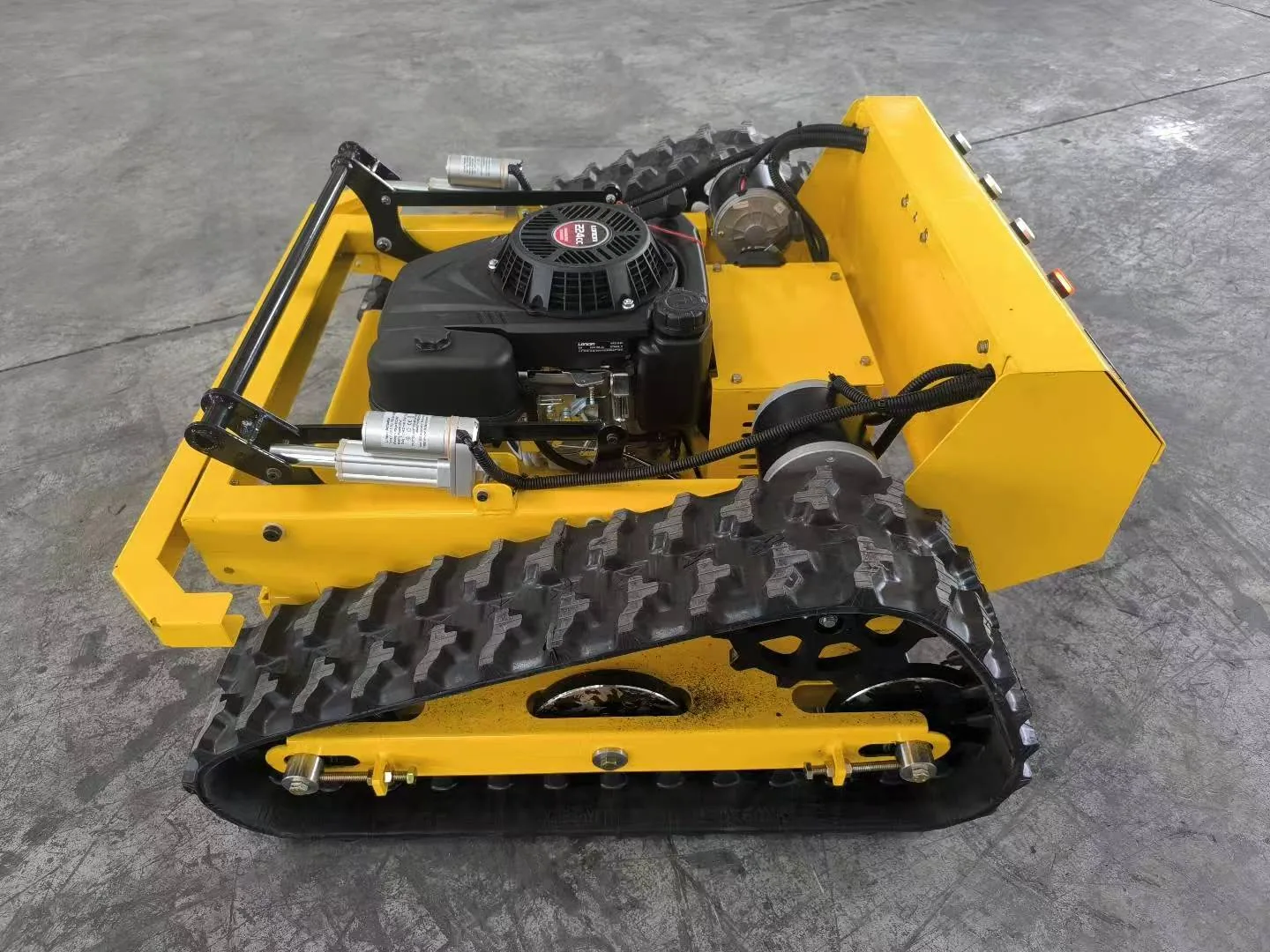
This matters for parts identification. If a technician reports "the hydraulic filter is clogged," the maintenance coordinator should establish which filter, on which line, on which machine and serial number. Without that, a replacement order is a guess. The same caution applies to any Super Mowers machine: the public product page for the remote-controlled gasoline mower lists an optional hydraulic lift, but the filtration layout of that machine is not established by the page and should be confirmed against the actual unit's documentation before any part is ordered.
Compare each location's filtration task and pressure conditions

The two locations face different operating conditions, and that is the practical heart of the comparison. A suction element lives under negative pressure created by the pump's draw; a return element lives under whatever back-pressure the return path and housing impose. Elements are selected for those conditions, not swapped between them.
Use Flowfit and Power & Motion descriptions
Flowfit's suction-filter guidance centres on pump protection and inlet restriction. The pump is the most expensive and least tolerant component in many circuits, and debris entering the inlet can damage it directly. At the same time, too much restriction at the inlet can cause cavitation and poor pump filling. Suction strainers therefore tend to be coarse, generously sized, and sometimes fitted with a bypass or a vacuum indicator, depending on the design.
Power & Motion's overview places return filtration in the context of the whole circuit: return filters capture wear debris generated by components after it has passed through them, and they are positioned where pressure drop is usually more tolerable than at the pump inlet. Return-line filtration is often described as a convenient service point because the housing is accessible and the element can be changed without opening the pressure side.
Donaldson's hydraulic filtration overview is a further reference for how filter media, ratings, and housing design are presented in manufacturer literature. It is a general technical document; it does not establish the filtration specification of any particular mower, and its examples should not be transferred to a machine without the machine's own manual.
Keep pressure and flow requirements attached to the filter
A filter part number is only valid within the pressure, flow, and fluid conditions it was designed for. Two elements may look similar and still differ in collapse pressure, bypass setting, media rating, and flow capacity. Maintenance planning should therefore keep the following attached to every filter record:
| Question | Suction-side element | Return-side element |
|---|---|---|
| Where is it in the circuit? | Between reservoir and pump inlet | On the line returning oil to the tank |
| What is it mainly protecting? | The pump, from debris entering the inlet | Circuit components and fluid cleanliness, by capturing wear debris |
| What pressure condition does it see? | Pump-inlet (negative/limited) pressure | Return-line pressure and housing back-pressure |
| What typically limits element choice? | Inlet restriction and pump filling | Housing rating, flow capacity, and bypass arrangement |
| What should the parts record include? | Machine model, serial number, line position, element part number | Machine model, serial number, housing position, element part number |
| What must be confirmed in the manual? | Whether a strainer is fitted and its service method | Whether a return filter is fitted, its rating, and service interval |
None of the cells above should be filled from a generic article. They are prompts for the machine's own documentation. Where the manual is silent or unavailable, the correct status is "confirm with the manufacturer or dealer," not "assume standard."
Application review
Discuss your mowing application.
Share the working condition, target market, product family and project scope.
Use manufacturer documentation for maintenance planning

Maintenance planning for hydraulic filters depends less on general theory than on accurate machine records. The coordinator's job is to ensure the right element is identified, the right interval is followed, and the right person performs the work. General references help you ask better questions; they do not replace the manual.
Avoid assuming both filters exist on every mower
It is tempting to build a service checklist that lists "suction filter" and "return filter" for every hydraulic machine in a fleet. That checklist will be wrong for some units. Mobile equipment designs vary widely, and a machine with a small hydraulic function — such as a lift circuit — may have a simpler filtration arrangement than a machine with a full hydrostatic drive and multiple work functions.
A safer approach is to build the checklist from the machine's parts list and manual, then use the general suction/return distinction to interpret what you find. For each unit, record:
- Machine model, serial number, and build configuration.
- Which filtration points the manual actually lists.
- The element part number and any supersession noted by the manufacturer.
- The service interval and the condition-based indicators the manual specifies.
- Who is authorised to open pressurised or confined hydraulic components.
This record also helps when a technician's report is ambiguous. "Filter changed" becomes a specific line item with a part number and a location, which is what a parts counter needs to supply the correct item.
Refer pressurized servicing to qualified personnel
Hydraulic systems store energy. Lines may remain pressurised after the machine is shut down, and fluid can be hot. Filter housings on the return or pressure side may be under pressure during operation and may require specific depressurisation steps before opening. The machine's manual defines those steps for that machine; a general article should not.
Maintenance coordinators should route filter replacement, housing opening, and any work on pressurised lines to personnel trained and authorised for that equipment, following the manufacturer's procedure. The coordinator's contribution is scheduling, parts accuracy, and record keeping — not improvising a procedure when the manual is missing. If the manual cannot be obtained, that is a documentation gap to escalate, not a reason to proceed from memory.
Frequently asked questions

Are suction and return filters the same component?
No. They sit at different points in the circuit and are selected for different conditions. A suction element is chosen with pump-inlet restriction in mind; a return element is chosen for the return line's flow and pressure conditions. They should not be treated as interchangeable even when they look similar.
Does every hydraulic machine have both locations?
No. Some machines have a suction strainer and a return filter, some have only one, and some use other filtration arrangements. The machine's own manual and parts list are the authority on what is fitted.
Can an air or fuel filter part number identify a hydraulic filter?
No. Air and fuel filtration are separate systems with their own part numbers and specifications. A number from an engine air or fuel filter does not identify a hydraulic element. Use the hydraulic section of the machine's parts list, and confirm the line position as well as the part number.
For related engine-side filtration topics on this site, see the articles on air filter servicing for remote-controlled fleets and fuel filter symptoms; they cover different systems and do not substitute for hydraulic documentation.
Conclusion

Suction and return filters protect different parts of the circuit under different conditions. Identify the location and part number from the machine's own manual before ordering or servicing.
Video: 032 Suction Filter vs Hydraulic Return Filter Element: Explanation of Differences and Selection
