 Por Anna
A hydraulic fault report lands on your desk with a vague note: "filter changed, problem back." Before you order parts or book labour, you need to know which filter the technician meant — the one on the pump inlet or the one on the return line. The hydraulic suction filter vs return filter question is not academic; it decides which part number you order and which line you open.
A suction filter (often a strainer) sits between the reservoir and the pump inlet and protects the pump from coarse debris while keeping inlet restriction low. A return filter sits on the line back to the tank and captures wear particles after they pass through the circuit. Position, pressure, and flow requirements differ, so the correct part comes from the machine's own documentation.
Filtro de succión hidráulico frente a filtro de retorno: ubique los filtros de succión y de retorno en un circuito simple

In a basic hydraulic circuit, the two filter locations sit at opposite ends of the oil's journey. The suction side is upstream of the pump; the return side is downstream of the working components. That single difference in position explains most of the difference in how each filter is built, rated, and serviced.
Siga el fluido desde el depósito hasta la bomba y de vuelta
Comience en el depósito. El fluido sale del tanque por una línea de succión y entra en la entrada de la bomba. Si se instala un filtro de succión o un colador, se sitúa en esa línea —o en la salida del tanque— de modo que todo lo que entra en la bomba pase primero por él. Desde la bomba, el aceite presurizado viaja a las válvulas, los cilindros y los motores, realiza su trabajo y luego fluye de vuelta por una línea de retorno al tanque. Un filtro de retorno, cuando se instala, se sitúa en esa trayectoria de retorno.
Power & Motion's hydraulic filtration overview describes filtration as a circuit-level concern, with filters placed at points where they protect sensitive components and where the system can tolerate the pressure drop they introduce. That framing is useful for maintenance staff: the question is not only "what does this filter catch?" but "what is this filter allowed to cost the circuit in pressure and flow?"
La guía de Flowfit's para elegir un filtro de succión hidráulico se centra específicamente en el caso de la entrada de la bomba. Trata la filtración de succión como un equilibrio entre proteger la bomba y evitar una restricción excesiva en la entrada, por lo que los elementos del lado de succión se describen comúnmente como coladores con medios relativamente abiertos en lugar de filtros finos. La construcción exacta, la clasificación en micras y la disposición de derivación siguen siendo específicas del producto y de la máquina.
Indique que los circuitos reales difieren
Un bucle simple es un diagrama didáctico, no un plano de máquina. El equipo móvil real puede colocar la filtración en la línea de presión, en un bucle fuera de línea dedicado, en el respiradero del tanque o en combinaciones. Algunos circuitos utilizan un colador de succión más un filtro de retorno; otros utilizan solo uno de estos; otros no utilizan ninguno en la forma que usted espera.
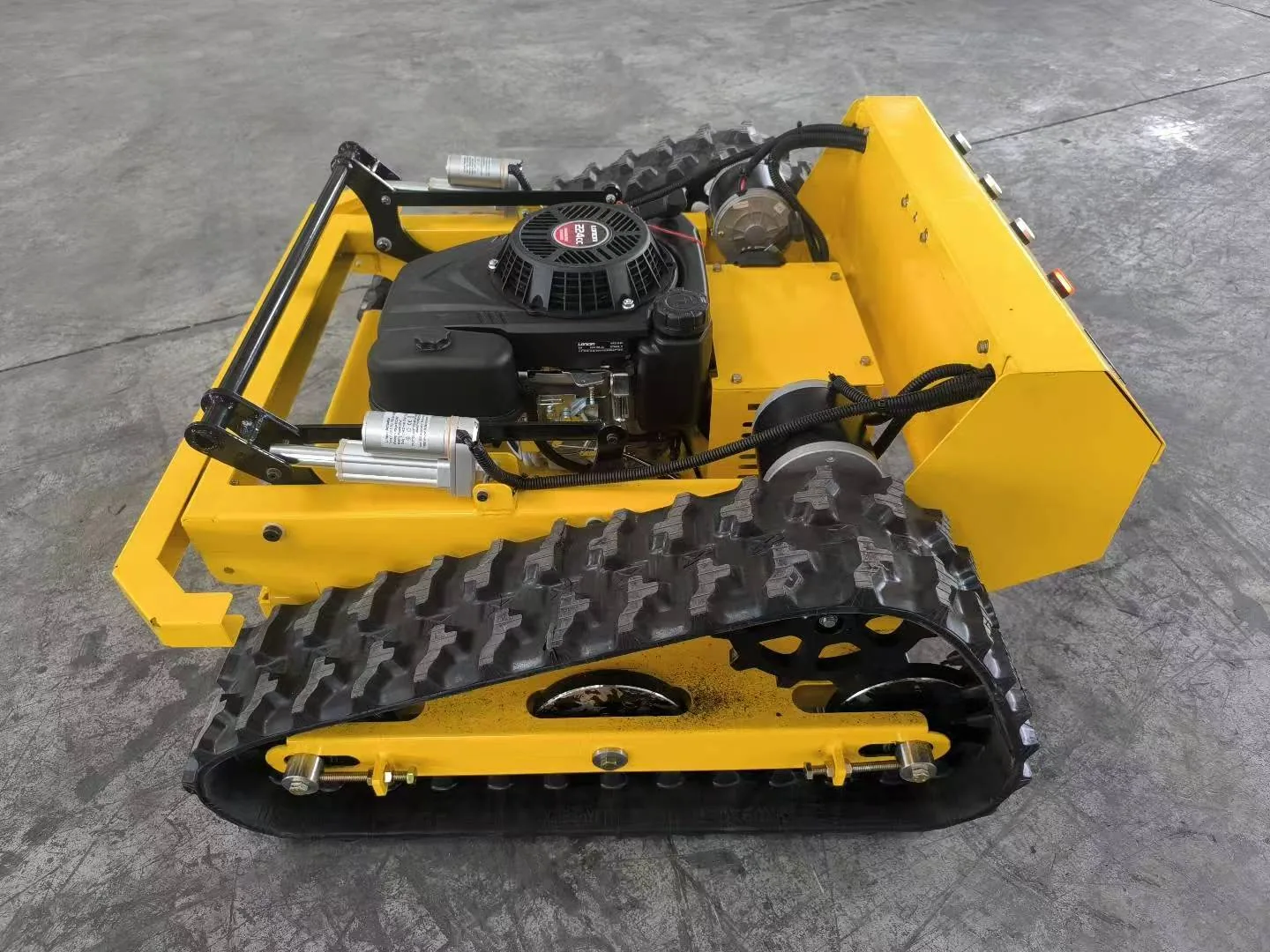
This matters for parts identification. If a technician reports "the hydraulic filter is clogged," the maintenance coordinator should establish which filter, on which line, on which machine and serial number. Without that, a replacement order is a guess. The same caution applies to any Super Mowers machine: the public product page for the remote-controlled gasoline mower lists an optional hydraulic lift, but the filtration layout of that machine is not established by the page and should be confirmed against the actual unit's documentation before any part is ordered.
Compare each location's filtration task and pressure conditions

The two locations face different operating conditions, and that is the practical heart of the comparison. A suction element lives under negative pressure created by the pump's draw; a return element lives under whatever back-pressure the return path and housing impose. Elements are selected for those conditions, not swapped between them.
Utilice las descripciones de Flowfit y Power & Motion
Flowfit's suction-filter guidance centres on pump protection and inlet restriction. The pump is the most expensive and least tolerant component in many circuits, and debris entering the inlet can damage it directly. At the same time, too much restriction at the inlet can cause cavitation and poor pump filling. Suction strainers therefore tend to be coarse, generously sized, and sometimes fitted with a bypass or a vacuum indicator, depending on the design.
Power & Motion's overview places return filtration in the context of the whole circuit: return filters capture wear debris generated by components after it has passed through them, and they are positioned where pressure drop is usually more tolerable than at the pump inlet. Return-line filtration is often described as a convenient service point because the housing is accessible and the element can be changed without opening the pressure side.
Donaldson's hydraulic filtration overview is a further reference for how filter media, ratings, and housing design are presented in manufacturer literature. It is a general technical document; it does not establish the filtration specification of any particular mower, and its examples should not be transferred to a machine without the machine's own manual.
Mantenga los requisitos de presión y caudal asociados al filtro
Un número de pieza de filtro solo es válido dentro de las condiciones de presión, caudal y fluido para las que fue diseñado. Dos elementos pueden parecer similares y aun así diferir en la presión de colapso, el ajuste del bypass, la clasificación del medio filtrante y la capacidad de caudal. Por lo tanto, la planificación del mantenimiento debe mantener lo siguiente asociado a cada registro de filtro:
| Pregunta | Elemento del lado de aspiración | Elemento del lado de retorno |
|---|---|---|
| ¿Dónde está en el circuito? | Entre el depósito y la entrada de la bomba | En la línea que devuelve el aceite al tanque |
| ¿Qué protege principalmente? | La bomba, frente a los residuos que entran por la entrada | Los componentes del circuito y la limpieza del fluido, capturando los residuos de desgaste |
| ¿A qué condición de presión está sometido? | Presión en la entrada de la bomba (negativa/limitada) | Presión de la línea de retorno y contrapresión de la carcasa |
| ¿Qué limita normalmente la elección del elemento? | La restricción en la entrada y el llenado de la bomba | Clasificación de la carcasa, capacidad de caudal y disposición de derivación |
| ¿Qué debe incluir el registro de piezas? | Modelo de la máquina, número de serie, posición en la línea, número de pieza del elemento | Modelo de la máquina, número de serie, posición de la carcasa, número de pieza del elemento |
| ¿Qué debe confirmarse en el manual? | Si se ha instalado un colador y su método de mantenimiento | Si se ha instalado un filtro de retorno, su clasificación y el intervalo de mantenimiento |
None of the cells above should be filled from a generic article. They are prompts for the machine's own documentation. Where the manual is silent or unavailable, the correct status is "confirm with the manufacturer or dealer," not "assume standard."
Revisión de la aplicación
Hable sobre su aplicación de corte.
Comparta las condiciones de trabajo, el mercado objetivo, la familia de productos y el alcance del proyecto.
Utilice la documentación del fabricante para planificar el mantenimiento

Maintenance planning for hydraulic filters depends less on general theory than on accurate machine records. The coordinator's job is to ensure the right element is identified, the right interval is followed, and the right person performs the work. General references help you ask better questions; they do not replace the manual.
Evite dar por sentado que ambos filtros existen en todas las segadoras
It is tempting to build a service checklist that lists "suction filter" and "return filter" for every hydraulic machine in a fleet. That checklist will be wrong for some units. Mobile equipment designs vary widely, and a machine with a small hydraulic function — such as a lift circuit — may have a simpler filtration arrangement than a machine with a full hydrostatic drive and multiple work functions.
A safer approach is to build the checklist from the machine's parts list and manual, then use the general suction/return distinction to interpret what you find. For each unit, record:
- Modelo de la máquina, número de serie y configuración de fabricación.
- Qué puntos de filtración enumera realmente el manual.
- El número de pieza del elemento y cualquier sustitución indicada por el fabricante.
- El intervalo de servicio y los indicadores basados en la condición que especifica el manual.
- Quién está autorizado a abrir componentes hidráulicos presurizados o confinados.
This record also helps when a technician's report is ambiguous. "Filter changed" becomes a specific line item with a part number and a location, which is what a parts counter needs to supply the correct item.
Remita el mantenimiento presurizado a personal cualificado
Hydraulic systems store energy. Lines may remain pressurised after the machine is shut down, and fluid can be hot. Filter housings on the return or pressure side may be under pressure during operation and may require specific depressurisation steps before opening. The machine's manual defines those steps for that machine; a general article should not.
Maintenance coordinators should route filter replacement, housing opening, and any work on pressurised lines to personnel trained and authorised for that equipment, following the manufacturer's procedure. The coordinator's contribution is scheduling, parts accuracy, and record keeping — not improvising a procedure when the manual is missing. If the manual cannot be obtained, that is a documentation gap to escalate, not a reason to proceed from memory.
Preguntas frecuentes

¿Los filtros de aspiración y de retorno son el mismo componente?
No. They sit at different points in the circuit and are selected for different conditions. A suction element is chosen with pump-inlet restriction in mind; a return element is chosen for the return line's flow and pressure conditions. They should not be treated as interchangeable even when they look similar.
¿Todas las máquinas hidráulicas tienen ambas ubicaciones?
No. Some machines have a suction strainer and a return filter, some have only one, and some use other filtration arrangements. The machine's own manual and parts list are the authority on what is fitted.
¿Puede el número de pieza de un filtro de aire o de combustible identificar un filtro hidráulico?
No. Air and fuel filtration are separate systems with their own part numbers and specifications. A number from an engine air or fuel filter does not identify a hydraulic element. Use the hydraulic section of the machine's parts list, and confirm the line position as well as the part number.
Para temas relacionados de filtración del lado del motor en este sitio, consulte los artículos sobre mantenimiento del filtro de aire para flotas con control remoto y síntomas del filtro de combustible; cubren sistemas diferentes y no sustituyen la documentación hidráulica.
Conclusión

Suction and return filters protect different parts of the circuit under different conditions. Identify the location and part number from the machine's own manual before ordering or servicing.
Video: 032 Suction Filter vs Hydraulic Return Filter Element: Explanation of Differences and Selection
