
 By Anna
A fleet supervisor notices blue smoke at start-up, a service desk receives a call about a high dipstick reading, and nobody knows whether the two events are related. The useful response is not a diagnosis but a record: what was checked, when, on which engine, and under what conditions.
A suspected mower engine oil overfill should be documented, not diagnosed from symptoms. Record the engine model, the exact dipstick or fill-cap reading conditions, the oil quantity used, and when smoke or a high level appeared. Then hand the record to a qualified person who can apply that engine's own manual.
This article is for people coordinating maintenance on petrol-powered mower fleets and for distributor service desks receiving those calls. It does not provide filling, draining, or tipping procedures. Its job is to make the handover accurate enough that a qualified technician can act on the right manual and the right history.
Too much oil lawn mower symptoms: Identify the actual combustion engine and its manual

The first task is not to judge the oil level. It is to establish which engine is being discussed and which document governs it. A mower brand, a deck size, or a model family name does not identify the engine, and an engine manual for one model does not automatically cover another.
Why the mower model is not enough
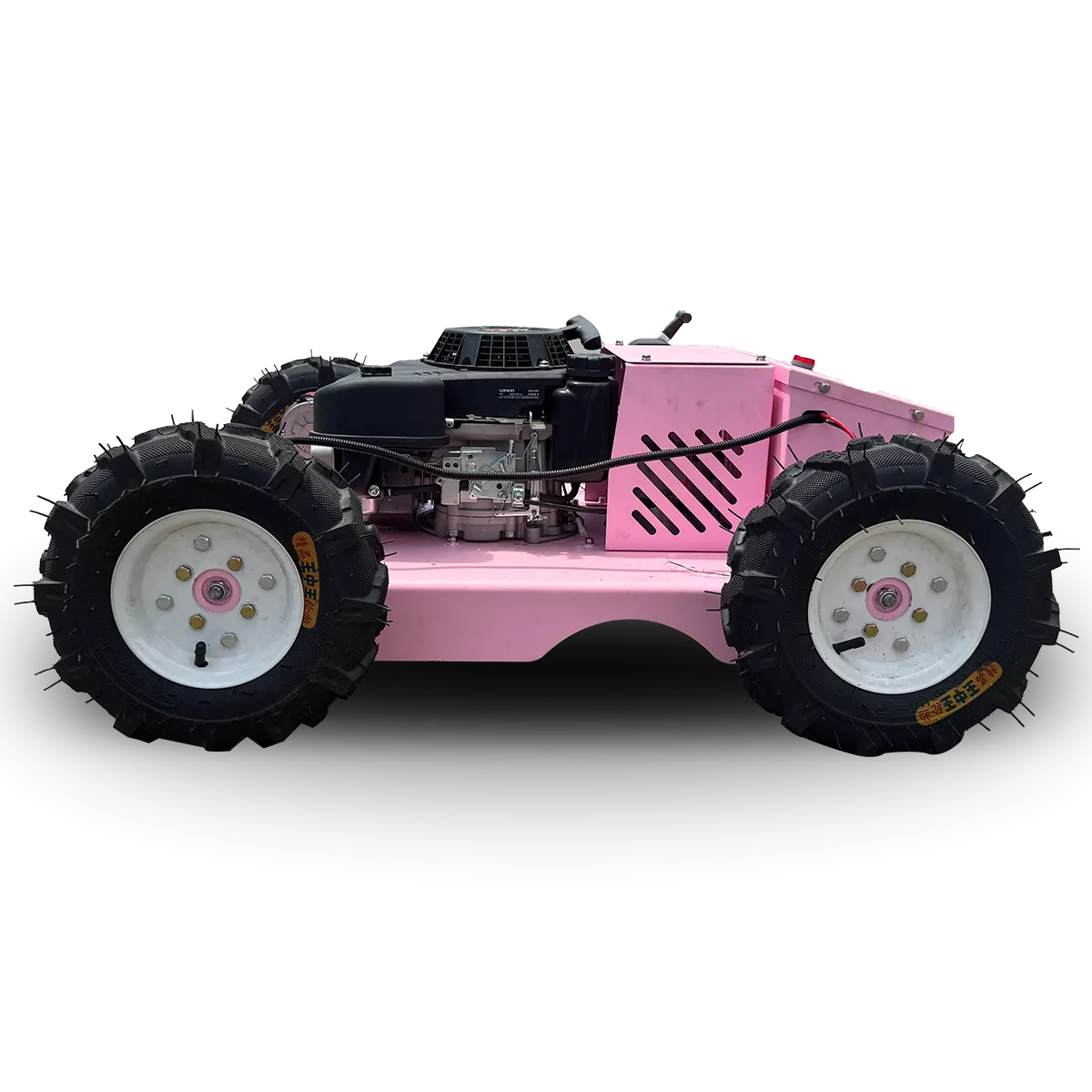
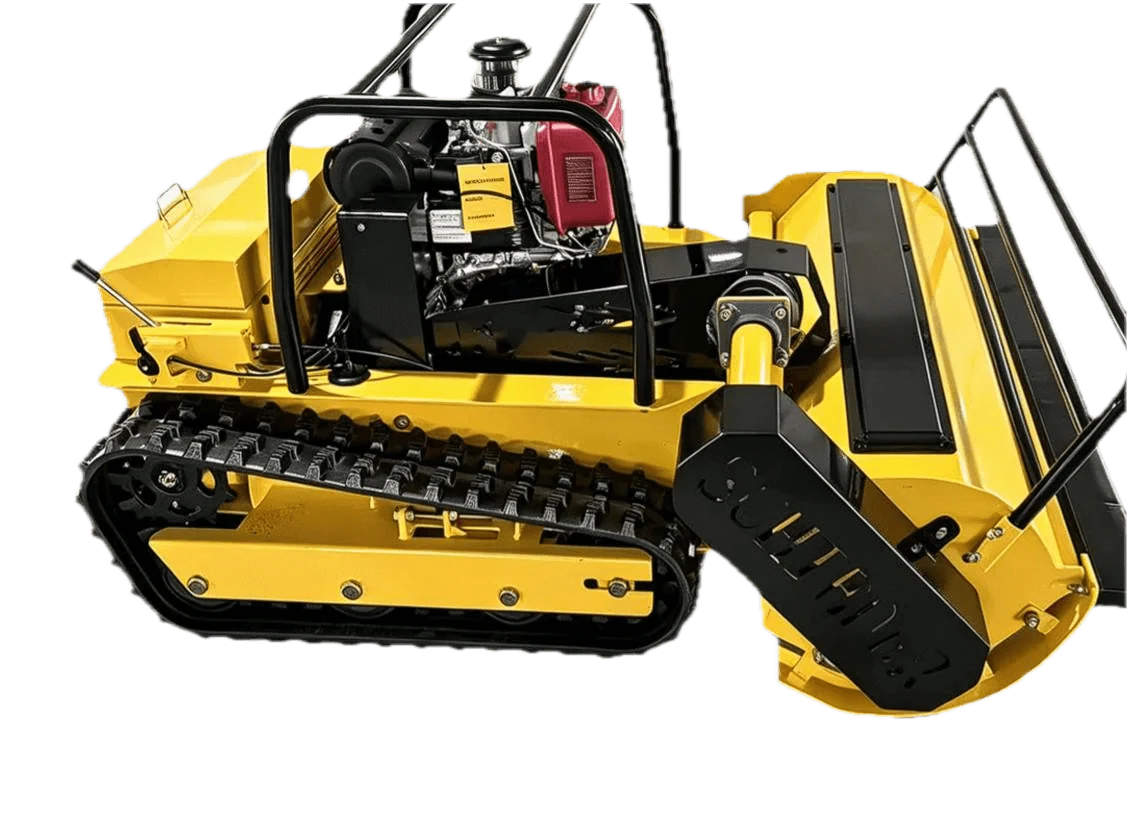
A mower is an assembly: deck, controls, drive system, and engine. The engine may come from a different manufacturer than the mower, and that engine maker publishes its own oil-level instructions. Super Mowers' catalogue includes petrol remote-controlled machines, but the catalogue listing alone does not confirm which engine series, dipstick design, or oil capacity applies to a specific unit. Those details have to be verified per machine.
This matters because the reading method is engine-specific. One manufacturer may instruct the reader to screw a cap in before reading; another may instruct the opposite. If a technician applies the wrong method, a correct oil level can look wrong, or an overfill can look normal. Neither outcome is useful.
What to capture before anyone judges the level
Build the record from documents and labels rather than memory. Useful identifiers include:
- Engine manufacturer, model, and type or serial number from the engine label.
- The machine's own model and serial number, since the same engine can appear in different installations.
- The manual revision or publication date that the site is actually using, not just the manual title.
- The dipstick or fill-cap type: screw-in cap, push-in cap, or another arrangement described in the manual.
- The oil quantity stated for that engine, and the unit in which it is stated.
- The oil product used, with its viscosity grade and container details.
If the manual cannot be located, that is itself a finding to record. A service desk that receives "oil looks high, no manual on site" has a documentation problem as well as a possible oil problem.
Documentation questions to confirm
| Record field | Why it matters | Status on a typical call |
|---|---|---|
| Engine make, model, type/serial | Selects the correct manual | Often missing; ask for a label photo |
| Manual revision in use | Different revisions can describe different checks | Usually unknown; confirm before advising |
| Dipstick or cap design | Determines how the level is read | Rarely reported; ask explicitly |
| Stated oil quantity and unit | Supports a fill-history check | Sometimes known from the last service |
| Oil product and viscosity | Distinguishes a quantity issue from a product issue | Often recorded on service sheets |
| Date and conditions of the reading | A reading without conditions is hard to interpret | Usually absent |
None of these fields tells you whether the engine is overfilled. Together they tell the qualified person which instructions apply and whether the reported reading was taken the way that engine's manual requires.
Describe manufacturer-documented overfill indications and alternative causes without diagnosing from smoke alone
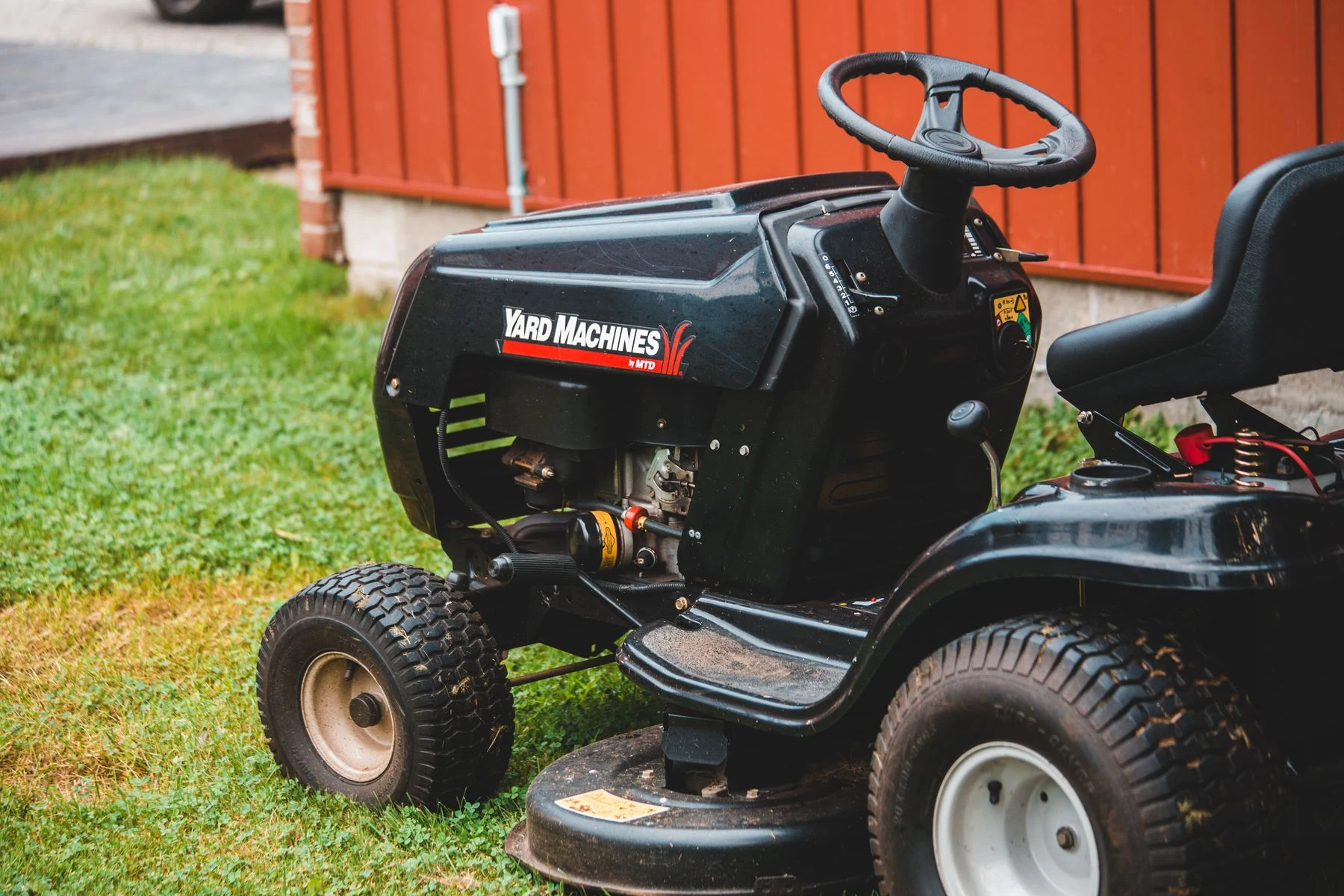
Smoke is a reason to record, not a conclusion. Engine makers list overfilling among several possible causes of white or blue smoke, and the same visible symptom can arise from other conditions. A record that says "blue smoke, therefore overfilled" closes off the investigation too early.
What the engine-maker sources actually say
Briggs & Stratton's support material on oil changes addresses oil level and overfilling, and its FAQ on white or blue smoke lists overfill among multiple possible causes. That is a list of possibilities, not a diagnostic test. It does not establish that any particular machine is overfilled, and it does not authorize a repair procedure.
Honda's walk-behind manual gives an overfill indication for its named equipment. That indication belongs to that equipment and its manual. It is not a Super Mowers specification and cannot be transferred to a different engine.
An Australian lawn equipment article on too much oil in a lawn mower describes symptoms in similar territory. Its value here is descriptive: symptoms are not certain diagnoses. Two articles describing the same visible sign do not turn that sign into proof.
Turning a symptom report into usable evidence
When a caller reports smoke or a high reading, the record should separate observation from interpretation. Ask for:
- What was seen: smoke colour as described by the observer, not as classified by the service desk.
- When it appeared: at start-up, after warm-up, under load, or after a specific event such as a recent oil top-up.
- Where the machine was: level ground, a slope, or an uneven surface, since the reading conditions matter to interpretation.
- Whether the engine was running, recently stopped, or cold, as described by the observer.
- What was done immediately before: oil added, machine transported, machine tipped or stored at an angle, or a service completed.
- Who observed it and who else can confirm the account.
Record the observer's words alongside the service desk's summary. "Smoke on start-up, cleared after a minute" and "smoke continuously" are different reports even if both get shortened to "smoking" in a ticket.
Keep alternative causes open
The Briggs smoke FAQ lists overfill among several causes. That framing is the correct one for a service record: the ticket should carry a list of candidate explanations rather than a single verdict. The qualified person can then test the candidates against the engine manual and the machine's history.
This is also why a service desk should avoid telling a caller that the engine is overfilled and should avoid instructing a caller to remove oil. The desk does not have the machine, may not have the correct manual revision, and cannot see the reading conditions. Its proper output is a complete record and a referral.
A symptom record template
| Observation | What to write down | What not to conclude |
|---|---|---|
| Smoke colour and timing | Observer's description, first appearance, duration | That overfill is confirmed |
| Dipstick reading | Reading, cap type, surface, engine state as reported | That the level is wrong until the manual method is applied |
| Recent oil added | Product, quantity, unit, who added it, when | That the quantity was the cause |
| Recent service | Date, provider, tasks recorded | That the service was faulty |
| Machine position | Level ground, slope, transport, storage angle | That position explains the reading without checking |
| Prior occurrences | Dates and descriptions of earlier reports | That the pattern is harmless |
Compare named Briggs and Loncin dipstick instructions without transferring either to another unit
The dipstick comparison is the clearest example of why engine identity comes first. Two named manufacturers describe reading the oil level differently, and neither description can be applied to a third engine without checking that engine's own manual.
Application review
Discuss your mowing application.
Share the working condition, target market, product family and project scope.
The Briggs & Stratton description
Briggs & Stratton's UK support FAQ, dated February 2026, describes its screw-cap reading method. The cap is threaded, and the reading procedure is tied to that design. The same FAQ sits alongside the manufacturer's broader oil-change guidance on oil level and overfilling.
The scope of that description is the Briggs & Stratton engines it covers. It is not a general rule for screw-cap engines from other makers, and it is not evidence about any particular Super Mowers unit. A technician who reads "screw the cap in" on one engine and applies it to another may get a different reading than the second engine's manual intends.
The Loncin description
An older Loncin G-series engine manual, covering roughly the 6.5–15 hp range, describes reading the oil level without screwing the dipstick in, on page 15 of that document. That is a different instruction from the Briggs screw-cap method, and it produces a different reading for the same actual oil quantity.
The limits of this source are important. It is an older manual for a named series, and the exact engine series and revision used on any current Super Mowers machine is not confirmed here. The Loncin description is useful as a contrast, not as an instruction for a machine whose engine has not been identified.
What the contrast proves, and what it does not
The contrast proves one practical point: dipstick procedure is not universal. It does not prove that either method is correct for a given mower, and it does not establish an oil capacity for any engine. Capacity is a separate figure stated per engine, and it should be taken from the manual for that engine rather than inferred from horsepower, series name, or another machine's specification.
| Source | Engine scope | Reading description | Transferable to another engine? |
|---|---|---|---|
| Briggs & Stratton UK oil-change FAQ (February 2026) | Briggs & Stratton engines covered by that FAQ | Screw-cap reading method described | No; check the target engine's own manual |
| Loncin G-series manual (older, 6.5–15 hp range, p.15) | That Loncin series and manual revision | Read without screwing the dipstick in | No; series and revision on current machines unconfirmed |
| Honda walk-behind manual | That named Honda equipment | Overfill indication given for that equipment | No; not an SM specification |
A service desk can use this table to explain why it asks for the engine label before discussing a reading. It should not use the table to pick a method for a caller.
Questions the record should answer before handover
- Which engine manual, by revision, applies to this machine?
- Does that manual describe a screw-in cap, a push-in cap, or another arrangement?
- Was the reported reading taken according to that description?
- What oil quantity does that manual state, and in what unit?
- Has the machine's oil product changed since the last recorded service?
If any answer is missing, the record is incomplete rather than wrong. Marking it incomplete is more useful than filling the gap with an assumption.
Hand unresolved overfill and service history to the qualified provider

The handover is the deliverable. A well-built record lets a qualified technician or authorised service provider apply the correct manual, check the machine, and decide what action is appropriate. The service desk's job ends at a complete, honest package.
What belongs in the handover package
Include the engine and machine identifiers, the manual revision the site holds, the symptom record, the oil product and quantity history, and the names of the people who observed or reported the issue. Add any earlier related tickets, including previous smoke reports or oil top-ups, so the provider can see the pattern rather than a single event.
Also state what has not been done. If nobody has checked the level using the correct method, say so. If the machine has been parked pending review, record that. If the machine is still in service, record that too, along with who made that decision.
Responsibilities at a glance
| Step | Fleet supervisor or service desk | Qualified service provider |
|---|---|---|
| Identify engine and manual revision | Collects label details and manual reference | Confirms the applicable manual and scope |
| Record symptoms and readings | Records observations, times, and conditions | Interprets against the engine manual |
| Record oil product and quantity history | Compiles service sheets and top-up notes | Checks against the stated capacity and product |
| Decide on continued use | Escalates and records the interim decision | Advises on the machine's condition |
| Carry out any corrective work | Does not instruct or perform it | Performs work within its competence and the manual |
Using the site's existing oil references
Two published Super Mowers articles support the surrounding maintenance conversation. The comparison of SAE 30 vs 10W30 lawn mower oil helps a fleet standardise which product it stocks, and the guide to a commercial lawn mower oil change interval supports planning service cycles. Neither article substitutes for the engine manual when a specific machine's level or capacity is in question.
For teams reviewing which machines are in the fleet, the Super Mowers product catalogue lists the available ranges. Engine series, dipstick design, and oil capacity still need to be confirmed per unit before any maintenance record is treated as complete.
A short escalation checklist
Before closing the ticket, confirm that the engine is identified, the manual revision is recorded, the reading conditions are described, the symptom account is in the observer's words, the oil history is attached, and the provider has been told what remains unchecked. A ticket that meets those points gives the provider something to work with. A ticket that says only "oil too high, smoking" gives them a phone call to make.
FAQ

Does smoke alone prove an engine is overfilled?
No. Briggs & Stratton's FAQ on white or blue smoke lists overfill among multiple possible causes, so smoke is a reason to record conditions and check the engine manual, not a diagnosis. The record should describe the smoke and the circumstances and leave the conclusion to a qualified person.
Does every mower use the same dipstick procedure?
No. The Briggs & Stratton UK FAQ dated February 2026 describes a screw-cap reading method, while an older Loncin G-series manual describes reading without screwing the dipstick in. Each description applies to the engines it covers, and neither can be transferred to a different engine without checking that engine's manual.
Is the required oil quantity the same for all engines?
No. Quantity is stated per engine in its own manual, and it should not be inferred from horsepower, series name, or another machine's specification. Record the figure and unit from the applicable manual, and note the manual revision, because the site's copy may not match the engine on the machine.
Conclusion
Record the engine, the manual revision, the reading conditions, and the symptom account, then hand the package to a qualified provider. That record, not a guess about smoke, is what makes the next service decision reliable.
Video: Fix a Lawn Mower that was Over-Filled with Engine Oil (How to Mower Repair) Smokes! | Easy Solution
