
 By Anna
You are comparing remote-controlled mower quotes, and one supplier leads with a big cc figure while another lists rated power at a stated speed. The numbers look comparable, but they may not describe the same thing. This guide turns lawn mower engine displacement, rated power, and configuration into procurement fields you can check.
Engine displacement is the swept volume of the engine's cylinders, usually written in cc. It is not a power rating. Rated power is an output figure that should come with a speed and a measurement basis. Compare both, plus the exact engine model and the mower configuration, before treating any quote as more capable.
Lawn mower engine displacement: What engine displacement describes
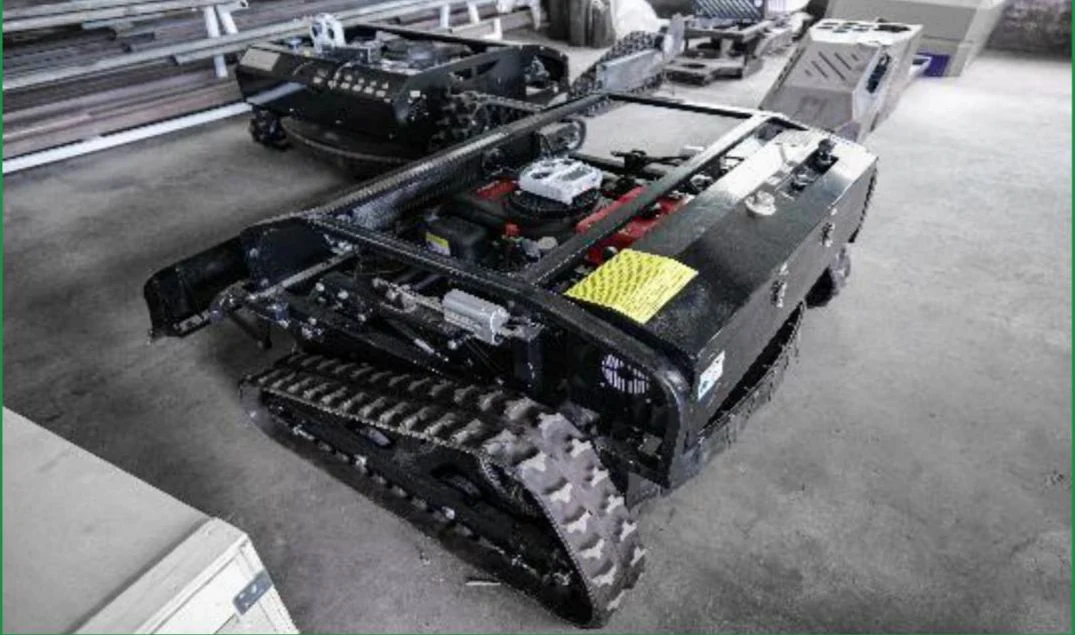
Displacement answers a geometry question: how much volume the piston or pistons sweep as the engine turns through its cycle. Kawasaki's homeowner guide to lawn mower engine specifications presents displacement, often in cc, as one of the basic engine specifications a buyer will see alongside other figures. That framing is useful because it sets the right expectation. Displacement describes engine size, not the work the machine will do.
For a dealer, importer, or fleet buyer, the practical consequence is simple. A cc number belongs in your comparison sheet, but it belongs in a column labelled "engine size," not in a column labelled "performance." Two engines with similar displacement can differ in design, fuel system, governor setting, rated speed, and the conditions under which output was declared. None of those differences can be read from the cc figure alone.
Read cc or cubic centimetres as an engine specification
Cubic centimetres are a unit of volume. In engine literature, the same displacement may appear as cc, cm³, or litres, and you may see it rounded. When a quote says "420 cc" and a specification sheet says "0.42 L," those can describe the same displacement, but you should confirm rather than assume, because rounding and different engine variants make silent conversions risky.
Displacement also does not tell you the engine's configuration. A single-cylinder engine and a multi-cylinder engine of the same total displacement are different machines with different characteristics. For small remote-controlled mowers, single-cylinder gasoline engines are common, but the point stands: record what the document states and do not fill gaps with assumptions.
Identify the exact engine and specification sheet
A displacement figure is only useful when it is tied to an identifiable engine. Ask for the engine manufacturer, the full model designation, and the specification sheet or declaration that the figure comes from. "Loncin gasoline engine" identifies a brand and a fuel type, not a complete engine model. The Super Mowers DY-550D product page lists a Loncin gasoline engine and electrically driven tracks, but the complete engine model, displacement, and power conditions for that machine need separate confirmation from model-specific documentation.
That is not a criticism of the listing; it is the normal gap between a product overview and an engineering record. Your job as a buyer is to close it before you compare machines. A specification sheet that names the engine family and revision lets you check the same engine across suppliers and avoids comparing a headline figure from one variant with a different variant elsewhere.
Compare displacement with rated power and measurement conditions
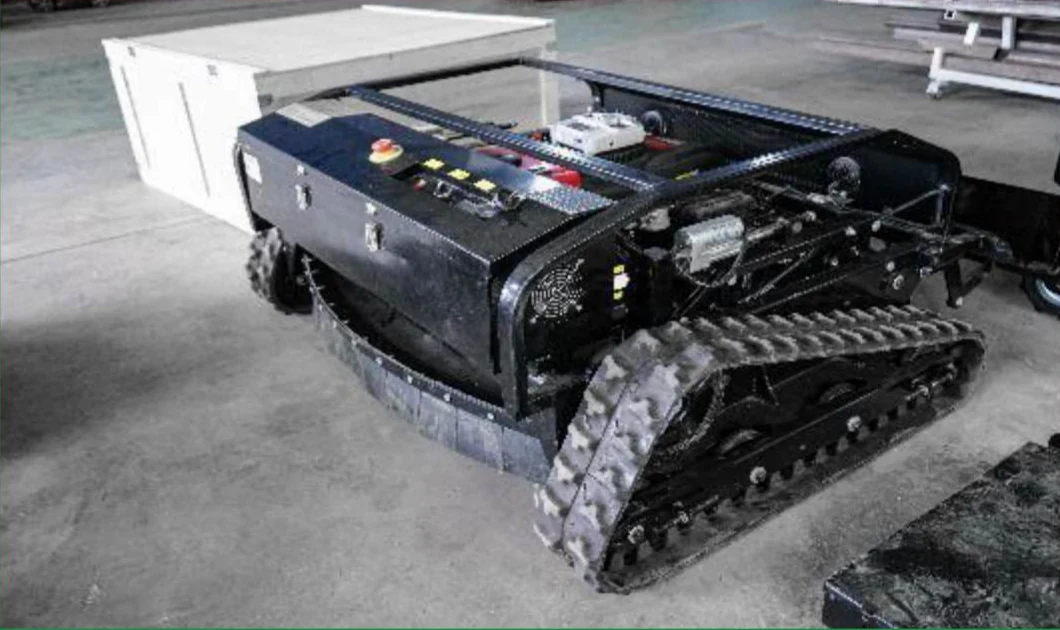
Rated power is an output claim, and output claims need context. Briggs & Stratton's guidance on mower power measurement explains that power figures depend on how and where they are measured, and that consumers should look carefully at what a given number represents. That is the core procurement lesson: a power number without a stated basis is an incomplete number.
When you compare two mowers, put displacement and power side by side but do not merge them into one score. Displacement tells you the engine's size class. Rated power tells you what the engine is declared to produce under stated conditions. The mower's drive system and cutting attachment then determine how that output is used. Each layer answers a different question.
Record power, rated speed and the stated test standard
Build a field set for every engine in your comparison. At minimum, capture the power value and its unit, the speed at which it is rated, and the standard or test method the supplier cites. If a document gives power in kilowatts and another in horsepower, record both as published and note the unit; do not convert silently and present the result as the supplier's figure.
| Field to record | What it tells you | Why it matters in a quote comparison |
|---|---|---|
| Engine make and full model | Identifies the exact engine variant | Prevents comparing different engine variants as if they were the same |
| Displacement as published (cc, cm³ or L) | Engine swept volume | Places the engine in a size class; does not state output |
| Rated power and unit (kW or hp) | Declared output figure | Must be read with its speed and measurement basis |
| Rated speed | The speed at which power is declared | A power figure without speed is incomplete |
| Test standard or method cited | The basis of the power claim | Lets you check whether two figures are comparable |
| Drive system | How the machine moves | Separate from engine output; affects how work is delivered |
| Cutting attachment details | What does the cutting | Not implied by engine displacement |
| Documentation status | Whether the figure is confirmed for the delivered model | Flags open questions before purchase |
Treat any blank cell as a question to send back to the supplier, not as a zero or an average. A table with honest gaps is more useful than one filled with guesses.
Avoid a universal cc-to-horsepower or output conversion
There is no reliable universal formula that turns cc into horsepower. Engine design, aspiration, fuel system, compression, governed speed, and the standard used for the rating all affect output. A conversion factor borrowed from one engine family can be badly wrong for another, and presenting a converted figure as if the supplier had declared it misstates the quote.
This matters especially for remote mower engine specifications, where the engine may be governed for a specific duty and paired with a hydraulic or electrical drive. If a supplier gives only cc, ask for the rated power and its basis. If a supplier gives only horsepower, ask for displacement and the engine model. Neither request is unreasonable; both are normal specification questions.
Connect the engine record to the delivered mower

The engine is one subsystem of a working machine. A remote-controlled mower also has a drive system, a cutting attachment, a control arrangement, and a chassis. A strong engine record that is not tied to the delivered configuration is only half a specification. Kutter's commercial lawn guidance is a reminder that commercial mowing decisions involve the whole machine and the job, not a single engine figure.
For the buyer, the discipline is to keep the layers separate in your own documents. Engine output is one layer. Drive system is another. Cutting attachment is a third. When a supplier's quote mixes them into a single claim such as "high power for tough conditions," split the claim back into checkable parts.
Separate engine output, drive system and cutting attachment
The DY-550D page illustrates why this separation helps. It lists a Loncin gasoline engine and electrically driven tracks. Those are two different facts about two different subsystems. The engine provides power; the tracks provide movement through a drive arrangement the page describes as electric. Neither fact tells you the cutting width, the cutting height range, the slope limit, or the productivity of the machine, and none of those should be inferred from the engine brand or the track type.
Application review
Discuss your mowing application.
Share the working condition, target market, product family and project scope.
When you compare remote-controlled machines, record the drive type, the cutting attachment description, and the control arrangement as separate fields. Then note which of those fields are confirmed by model-specific documentation and which are still open. This is also the right place to record whether the machine is remote-controlled as described, rather than assuming any additional automation.
Ask for actual model and configuration documentation
A precise request gets a precise answer. Instead of asking "what engine does it have," ask for the engine manufacturer, full model, displacement, rated power with unit, rated speed, and the standard or method behind the power figure. Ask for the same details for the delivered configuration, not a sister model. If the supplier publishes a specification sheet, request the revision that applies to your order.
| Question to send | Document you are asking for |
|---|---|
| Which exact engine model is fitted? | Engine specification sheet or model designation |
| What displacement is published, and in which unit? | Engine specification sheet |
| What rated power is declared, at what speed? | Power declaration or specification sheet |
| Which standard or method supports the power figure? | The cited standard or test method reference |
| What drive system and cutting attachment are included? | Model-specific configuration list |
| Which document revision applies to my order? | Dated specification or order confirmation |
If a supplier cannot answer these questions for the model being quoted, that is itself useful information for your sourcing decision. It does not automatically disqualify the machine, but it means the performance claims remain unverified for your purposes.
Build a comparison for the intended commercial job

A comparison table is only as good as its columns. For a commercial fleet or dealer purchasing decision, build columns that match the questions you will actually ask after delivery: what engine is fitted, what output is declared and on what basis, what drive and cutting configuration is supplied, and what remains unconfirmed. Then compare suppliers on those columns rather than on a single headline number.
This approach also protects you from a common trap. A larger displacement figure can look like a stronger machine, but the quote may not tell you the rated power, the speed, the cutting attachment, or the conditions of the claim. A smaller-displacement engine with a clearly documented power rating and a suitable configuration may be the more defensible choice for your job, or it may not be; the point is that the decision should rest on documented facts, not on the cc figure alone. If you are still weighing fuel types at this stage, the site's comparison of gasoline and diesel remote-control mowers and of electric versus gas remote-control mowers covers that separate question.
Compare published facts with open questions by supplier
Use a two-part structure: confirmed facts and open questions. Confirmed facts are statements you can trace to a supplied document for the exact model. Open questions are everything else. This keeps the comparison honest and makes follow-up easy.
| Comparison item | Supplier A | Supplier B | Status |
|---|---|---|---|
| Engine make and full model | As published | As published | Confirm for delivered model |
| Displacement and unit | As published | As published | Confirm unit and rounding |
| Rated power and unit | As published | As published | Confirm basis |
| Rated speed | As published | As published | Confirm |
| Test standard or method | As cited | As cited | Confirm comparability |
| Drive system | As published | As published | Confirm configuration |
| Cutting attachment | As published | As published | Confirm configuration |
| Documentation revision | As stated | As stated | Confirm applies to order |
Fill this with what the suppliers actually publish, and leave blanks where they do not. Do not average, estimate, or convert to make the table look complete.
Do not infer slope, area per hour or fuel use from cc alone
Displacement cannot tell you the maximum slope a mower can handle, the area it will cover per hour, its fuel consumption, or its traction. Those depend on the whole machine, the site, the vegetation, the operator, and the conditions of use. Any slope limit or productivity figure must come from model-specific documentation and the applicable manual, not from an engine size.
This is especially important for remote-controlled equipment, where the control arrangement does not by itself establish a safe slope angle, working distance, braking behavior, or terrain capability. If a supplier's marketing implies that a large engine means steep-slope capability, ask for the model-specific limit and its source. If no such document exists, treat the claim as unverified.
Frequently asked questions

Does more engine displacement always mean a more productive mower?
No. Displacement describes engine size, not the work completed per hour. Productivity depends on the cutting attachment, drive system, site conditions, vegetation, and operating practice, as well as engine output. A larger-displacement engine may be paired with a configuration that suits your job, or it may not. Compare documented configuration and rated power, and treat area-per-hour figures as claims that need a stated basis.
Is cc the same measurement as horsepower?
No. cc measures swept volume; horsepower is a unit of power. They describe different properties and cannot be treated as interchangeable. A power figure also needs a speed and a measurement basis to be meaningful. If a quote gives only one of the two, ask for the other along with the engine model and the standard behind the power claim.
Which information should a buyer request when rated power is unclear?
Ask for the engine manufacturer and full model, the rated power with its unit, the speed at which it is rated, and the standard or test method cited. Also request the model-specific configuration list for the delivered machine, including drive system and cutting attachment, and the revision date of the documents. If the supplier cannot provide these for the quoted model, record the gap and factor it into your sourcing decision.
Conclusion

Compare displacement as engine size, rated power as a declared output with a basis, and configuration as the rest of the machine. Request model-specific documents and keep unknowns visible.
Video: How Much Horse Power Is Enough For A Mower?
