


 By Anna
You are preparing a first remote-control mower order and the supplier's minimum order quantity (MOQ) is one line in a longer quotation. The number matters, but it rarely answers the real question: what exactly must you commit to, in which configuration, and under which delivery and service terms?
Treat the remote mower dealer minimum order quantity wholesale conversation as a set of conditions, not a single figure. Ask separately about sample units, production quantity, mixed-model orders, branding or configuration changes, spare parts, packaging, lead time, and delivery basis, and get each answer in writing for the exact model you intend to sell.
This article is for US-based remote-control equipment dealers and importers comparing wholesale terms. It does not publish Super Mowers MOQs, prices, discounts, or lead times, because those depend on the model, configuration, and order you discuss. Instead, it gives you a structure for comparing offers so that one supplier's tier is not mistaken for an industry standard.
Remote mower dealer minimum order quantity wholesale: Define a first dealer order

A first dealer order is a commercial decision with several separate parts. Before you compare any supplier's number, write down what you are actually trying to buy and why. A dealer testing a new product line has different needs from an importer filling a container or a distributor adding a second brand to an existing catalogue.
Start with the purpose of the order. Are you buying one unit to evaluate the product, a small batch to place with selected customers, or a production quantity for stock? Each purpose usually maps to a different supplier conversation, and possibly a different price and term sheet. Mixing them in one enquiry tends to produce an answer that fits none of them.
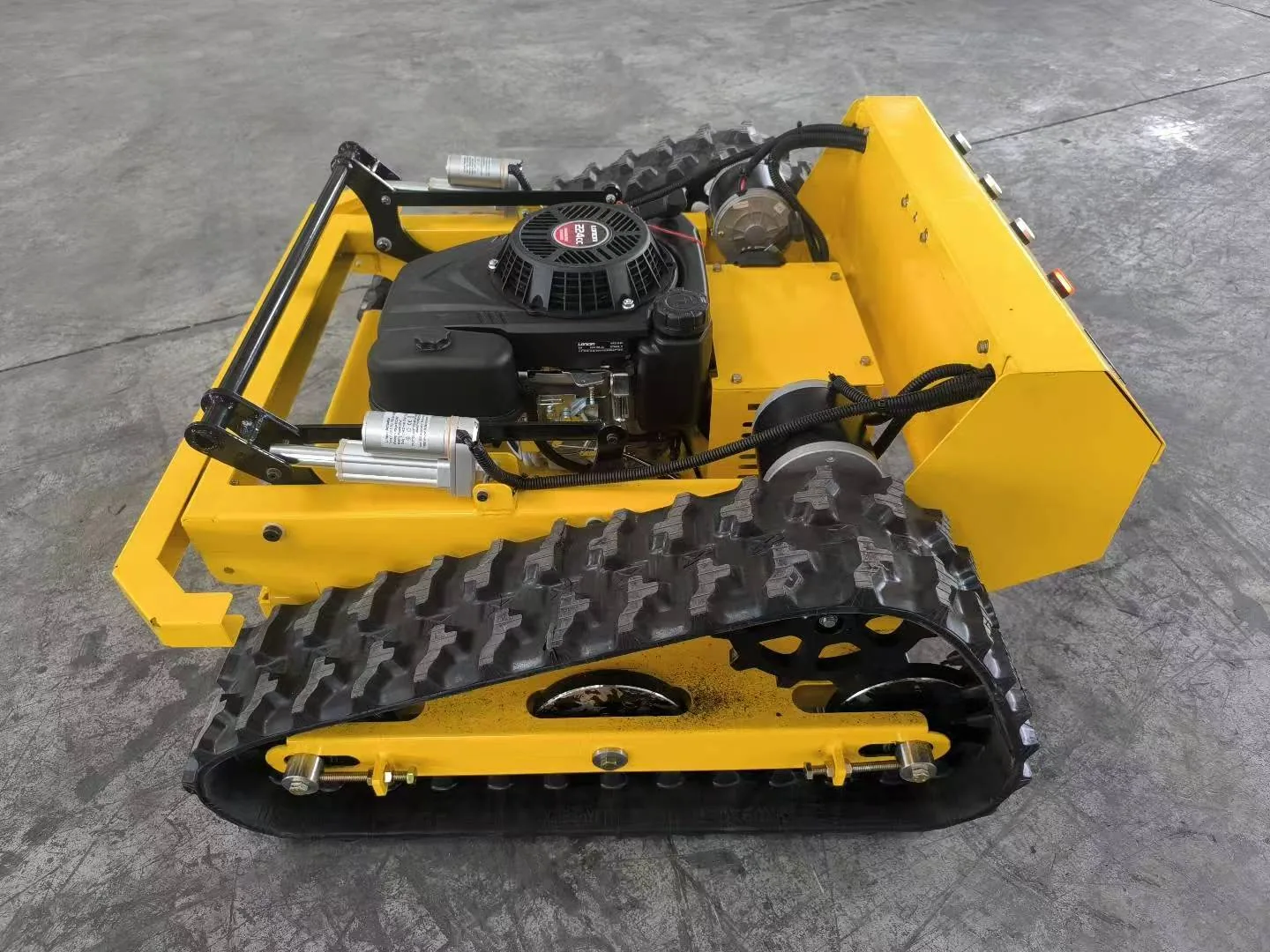
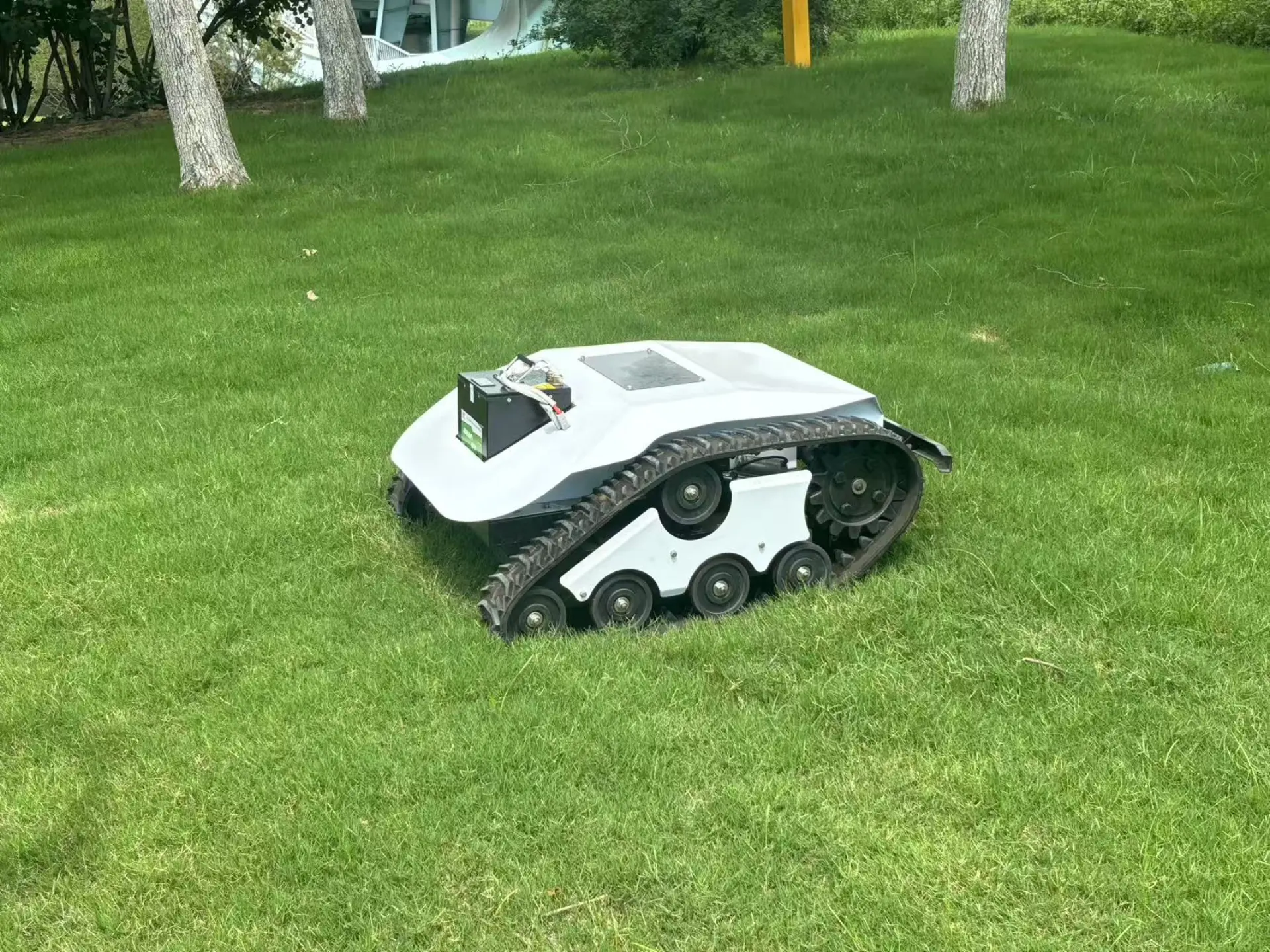
Then define the product itself. Remote-control mowers are not a single specification. Tracked and wheeled formats, flail and rotary cutting systems, engine options, control configurations, and attachments all change what is being quoted. A quantity quoted against a general product family is not the same as a quantity quoted against a specific model and configuration.
Finally, define your own obligations. A dealer order usually involves more than paying for units: you may need to hold spare parts, provide product information to customers, arrange receiving and storage, and plan how warranty and service questions will be handled. The MOQ conversation is easier when you already know which of these you can support.
Separate sample, production, mixed models and branding
Suppliers commonly treat these as different order types, even when the same product is involved. Keep them apart in your notes:
- Sample or trial unit. A single unit, or a very small number, bought to inspect build, packaging, and documentation. The purpose is evaluation, not resale volume.
- Production order. A quantity of one model in one configuration, intended for stock or resale.
- Mixed-model order. Several models or configurations combined in one purchase, where the question is whether quantities are counted per model or across the whole order.
- Branding or configuration change. A request to alter labelling, documentation, controls, attachments, or other specification elements. This is where a sample quantity and a customization quantity often diverge.
A supplier may accept a single sample unit but require a larger quantity before changing branding or specification. That is a common commercial pattern, not a rule. The only reliable approach is to ask which order type each quoted quantity applies to, and to record the answer against that specific line.
Read supplier-specific examples

Published dealer and product pages are useful for seeing what questions suppliers put in front of buyers, and how differently they present their terms. They are not evidence of a market-wide MOQ, and they are not evidence of Super Mowers terms.
Two named examples in the supplied references illustrate the range. MERI's dealer page is a dealer-application entry point, which suggests that dealer onboarding is a structured process rather than an open catalogue purchase. A Made-in-China product listing from Leichuang presents a specific tracked flail mower configuration with an engine option in a wholesale listing format. Each page describes that supplier's own presentation; neither establishes a number that another supplier must follow.
Two dealer-oriented guides in the references discuss supplier selection more broadly: a Gold Supplier blog post on remote mowers and OXplo Machinery's dealer checklist. They are worth reading for the categories of questions dealers ask, but a checklist is a prompt for your own enquiry, not a source of binding quantities.
Record the actual offer and do not generalize its tier
When you read a supplier page or receive a quotation, record what was actually stated and under what conditions. A practical note might capture:
| What to record | Why it matters |
|---|---|
| Supplier and page or quotation date | Terms change; an undated note cannot be checked later |
| Exact model and configuration quoted | A family-level figure may not apply to your chosen specification |
| Order type (sample, production, mixed, branded) | The same supplier may quote different quantities for each |
| Quantity stated and unit of counting | Per model, per configuration, or per total order |
| What is included (unit only, accessories, spares, packaging) | A quantity figure alone does not define the obligation |
| What is excluded (freight, duties, documentation) | Delivery basis changes the real cost |
| Whether the figure is an offer or an example | A published example is not a commitment to you |
This record does the work that a copied number cannot. If a supplier later quotes a different quantity for a different configuration, you can see whether the change is explained by the order type rather than assuming inconsistency.
Compare total order obligations

Two quotations with the same unit quantity can place very different obligations on a dealer. Compare the whole package, not the headline number. The useful question is not "who has the lowest MOQ" but "which offer gives me a workable first order with clear responsibilities on both sides."
Build the comparison around four areas. First, product scope: exactly which model, configuration, and included items the quantity refers to. Second, commercial terms: price basis, payment arrangement, validity period, and what happens if quantities change. Third, logistics: packaging, transport arrangement, delivery basis, and who handles import formalities. Fourth, after-sales: spare parts availability, documentation, and the process for reporting a problem.
A lower quantity threshold can still produce a harder first order if it comes with no spare-parts path, unclear packaging, or a delivery basis that leaves you arranging more than expected. Equally, a higher threshold may be reasonable if it includes dealer support you would otherwise have to build yourself. Neither outcome is universal; the point is to see the trade-off before you commit.
Use a responsibility matrix to make the comparison visible:
| Decision area | Question to put to each supplier | Your side of the responsibility |
|---|---|---|
| Sample unit | Is a single evaluation unit available, and at what terms? | Inspection, documentation review, internal sign-off |
| Production quantity | What quantity applies to this exact model and configuration? | Stock planning and customer commitments |
| Mixed models | Are quantities counted per model or across the order? | Range planning and parts coverage |
| Branding or configuration | What quantity applies before a change is accepted? | Artwork, label, and documentation input |
| Spare parts | What is the initial parts recommendation and ordering basis? | Parts storage and service planning |
| Packaging | What packaging is standard, and what changes with quantity? | Receiving, storage, and resale presentation |
| Lead time | What is the stated lead time from which starting point? | Launch timing and customer communication |
| Delivery basis | Which Incoterm or delivery arrangement is quoted? | Import clearance, duties, and inland transport |
Application review
Discuss your mowing application.
Share the working condition, target market, product family and project scope.
For spare-parts planning specifically, Super Mowers publishes a dealer parts list. Use it as a reference for the kind of parts information a dealer may need to plan, and confirm the applicable model and terms directly with the supplier.
Check parts, packaging, lead time and delivery basis
These four items are where first orders most often become unclear, because each can be quoted in more than one way.
Parts. Ask whether the quoted quantity includes any spare parts, whether parts are ordered separately, and how parts are identified for your model. A parts list is not a commitment that every part is in stock. Confirm the ordering basis and any minimum that applies to parts as distinct from machines.
Packaging. Ask what the standard export packaging is, whether it changes with quantity, and whether any branding affects the packaging. If you plan to resell, packaging condition on arrival matters, so clarify what is standard rather than assuming.
Lead time. A lead time is only meaningful with a starting point. Ask whether it runs from order confirmation, deposit receipt, or approval of branding and documentation. Ask what happens to the lead time if the configuration changes after the order is placed.
Delivery basis. Confirm the named delivery term and location. A quoted price without a delivery basis is incomplete, because it does not tell you who pays for main carriage, insurance, import clearance, or inland transport. Ask for the term in writing and check that it matches what you assumed when comparing suppliers.
Send an itemized inquiry
A structured enquiry gets a more comparable answer than a general request for a wholesale price list. Write it as a numbered list so that each answer can be matched to a question, and ask for the response in writing.
A workable enquiry covers: the models and configurations you are considering; the purpose of the order (evaluation, first stock, or production); the quantities you have in mind for each model; whether you want to combine models in one order; any branding or configuration change you are considering; your spare-parts expectations; your packaging and delivery requirements; and your target timeline. Close by asking the supplier to state which terms are firm offers and which are indicative.
Keep your own assumptions visible. If you ask for "a container of mixed models," say which models and in what proportions. If you ask about branding, say what you want changed. Vague enquiries tend to produce vague answers, and a vague answer is difficult to compare with a specific one.
Ask for quantities and terms by configuration in writing
Use a table in your enquiry so the supplier can answer line by line. This also creates a record you can compare across suppliers without re-reading prose.
| Enquiry line | What you ask the supplier to state |
|---|---|
| Model and configuration | Exact model designation and included specification |
| Sample quantity | Availability, terms, and whether it counts toward a later order |
| Production quantity | Minimum quantity for this configuration, and any quantity tiers |
| Mixed models | Whether models can be combined, and how quantities are counted |
| Branding or configuration change | Minimum quantity before the change is accepted, and any setup requirements |
| Spare parts | Initial parts recommendation, ordering basis, and any separate minimum |
| Packaging | Standard packaging and any quantity-dependent change |
| Lead time | Stated lead time and its starting point |
| Delivery basis | Named delivery term and location |
| Validity | How long the quoted terms remain open |
When the answers arrive, check them against the supplier's published material. If a published page and a quotation differ, ask which applies to your order. Do not assume the more favourable figure is the operative one.
For Super Mowers product ranges and configuration enquiries, start from the product pages and send a structured request through the quote contact form. State your models, quantities, and configuration questions so the reply can address them specifically.
FAQ
Does a sample order set the MOQ for customization? Not automatically. A sample unit is usually an evaluation purchase, while customization involves changes to specification, labelling, or documentation that a supplier may handle under separate terms. Ask directly what quantity applies before your requested change is accepted, and record the answer for that configuration.
Can different models be mixed in one order? Some suppliers may allow it and others may count quantities per model. The supplied references do not establish a general rule. Ask whether mixed-model orders are accepted, how the quantity is counted, and whether each model must meet its own threshold.
Does the MOQ include spare parts or shipping? Usually these are separate questions. Ask whether any spare parts are included in the machine quantity, what the parts ordering basis is, and which delivery term applies. A machine quantity figure on its own does not tell you what freight, duties, or parts will add to the order.
Conclusion

Compare remote mower wholesale offers by configuration, order type, and total obligation, not by a single quantity figure. Send one itemized written enquiry and keep every answer attached to the model it describes.
Next, list your intended models and quantities, then request written terms for each configuration.
Video: Remote Controlled Tracked Slope Mower for Dealers | EZTRAVIA Wholesale
