

 By Anna
You have delivered remote control mowers across several models and engine options, and now the after-sales questions begin: which parts fit which machine, what should sit on the shelf, and what can be ordered only when needed. This remote control mower spare parts planning list gives dealers, importers, and rental fleet buyers a traceable way to ask.
Start from the machine as delivered, not from a model name alone. Build one parts row per configuration, tie it to the serial number, and require the supplier to confirm the part reference and compatibility in writing before you commit stock or promise a repair date.
The approach below is a planning framework, not a parts catalogue. Super Mowers’ public pages list remote control mower categories and describe fleet spare parts and service documents as working conditions in application planning, but specific part availability, stock levels, lead times, and warranty terms are not verified here. Treat every part number, price, and delivery date as something to confirm with your supplier.
Remote control mower spare parts: Start with the delivered configuration
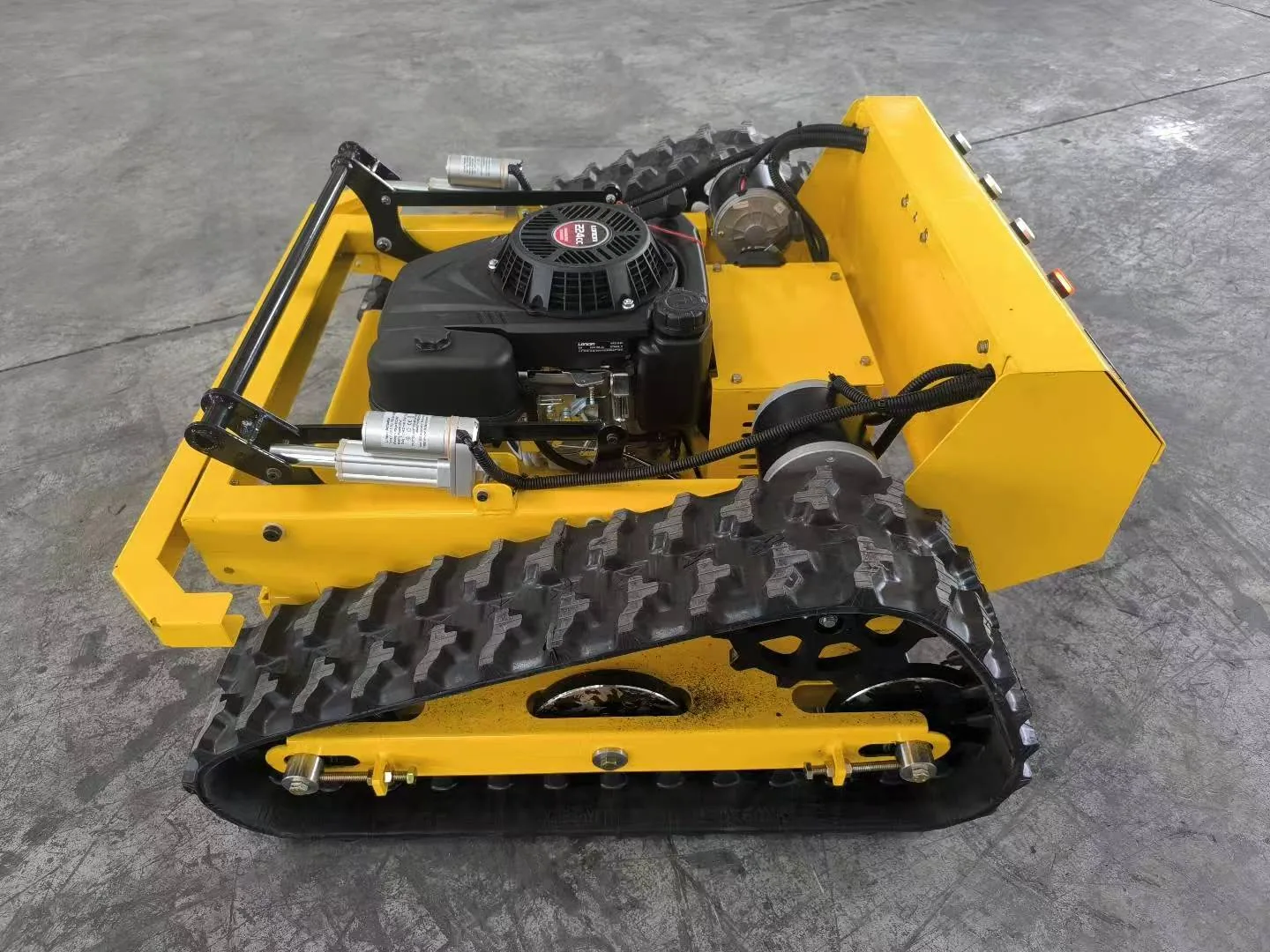
A remote control mower is not a single specification. The same model family can ship with different engines or power systems, different control configurations, and different attachments, and those differences change which parts fit. Before you request a spare parts list, assemble the identity of each machine you actually hold. That record becomes the anchor for every later parts question.
Dealers often inherit this problem at handover: a customer buys a machine, a part fails months later, and the only reference is a model name on an invoice. A configuration record built at delivery prevents that gap. It also helps when a rental fleet mixes machines bought at different times, from different production runs, or with different engine options.
Record model, serial and engine or power system
For each unit, capture the information that distinguishes it from its siblings. At minimum, record the model designation exactly as printed on the machine and its documents, the serial number, and the engine or power system fitted. Add the control arrangement and any installed attachments, because a part that fits one build may not fit another.
Record where each detail came from: the machine plate, the delivery paperwork, the manual, or a supplier statement. If two sources disagree, note the conflict rather than choosing silently. A serial number is the most useful single identifier because it lets a supplier trace the build, but only if the supplier actually offers that traceability — ask.
Collect current parts and service documents
Gather the documents that shipped with each unit: the operator manual, any parts list or exploded diagrams, service information, and the delivery or handover record. Note the revision or date on each document, because a later manual revision may supersede an earlier one.
If a document is missing, record it as missing and request it. Public resources from other remote mower brands show that model-specific manuals and parts resources exist in this equipment category — SPIDER Mower USA, for example, publishes operations and parts manuals by model on its resources page, and MERI publishes remote mower parts and support information on its support page. Those pages are brand-specific: they do not establish what Super Mowers or any other supplier stocks, and their part numbers must not be copied into your list.
| Record field | What to capture | Why it matters for parts |
|---|---|---|
| Model designation | Exact text from machine and documents | Narrows the parts family |
| Serial number | Full serial, plus source | Lets supplier trace the build |
| Engine or power system | Make, model, configuration as delivered | Engine-side parts differ by option |
| Control configuration | Transmitter/receiver arrangement as supplied | Control parts are build-specific |
| Installed attachments | Type and fitment noted at delivery | Attachments change wear parts |
| Document set | Manual, parts list, revisions, dates | Shows what is officially documented |
| Document gaps | Missing or superseded items | Becomes a supplier request |
Separate parts by planning purpose

Not every part deserves shelf space. A dealer’s parts plan works better when items are grouped by why you would hold them: routine wear that you expect to replace on a schedule, and failure response for parts that fail unpredictably. The two groups justify different stock decisions and different conversations with the supplier.
This grouping also protects cash. Holding a deep inventory of every possible part ties up money in items that may never move; holding nothing means a rental fleet waits weeks for a single component. The right balance depends on how many units you support and how quickly your customers expect a repair.
Distinguish routine wear from failure response
Routine wear items are the parts you expect to replace during normal use — cutting components, belts, filters, and similar consumables, depending on the machine. Failure-response items are parts that usually last the life of the machine but stop it dead when they fail, such as control components or structural parts.
Ask the supplier which items they classify as wear parts and what inspection guidance applies. Do not invent replacement intervals: if the manual does not state one, record the interval as unknown and ask. For wear items, a small buffer stock is often easier to justify; for failure-response items, the question is usually whether the supplier can ship quickly rather than whether you should stock deeply.
Avoid assuming all configurations share a part
A common and expensive mistake is assuming that a part listed for one model fits every unit of that model. Engine options, control configurations, and running changes can all create fitment differences. A part list that does not state which configuration it covers is incomplete for planning purposes.
When a supplier sends a list, check whether it identifies the configuration each part applies to. If it does not, ask for that mapping before you order. Where a part appears to be shared across configurations, ask the supplier to confirm it explicitly rather than inferring from appearance or from a photo.
| Planning group | Typical examples (confirm per model) | Stock question to ask |
|---|---|---|
| Routine wear | Cutting components, belts, filters | Which items does the manual treat as service items, and at what inspection point? |
| Failure response | Control components, structural parts | What is the supplier’s response time when one fails? |
| Configuration-specific | Engine-side parts, attachment fitments | Which build does this part reference cover? |
| Consumables with shelf life | Lubricants, seals, rubber items | Does the supplier state storage limits? |
Build a supplier-confirmed parts matrix

The core deliverable is a matrix: one row per part per configuration, with the reference, the evidence of compatibility, the owner of the confirmation, and your own planning inputs. The matrix is a working document, not a catalogue. Its value comes from showing clearly what has been confirmed and what is still an open question.
Application review
Discuss your mowing application.
Share the working condition, target market, product family and project scope.
Keep the matrix in a shared location that after-sales staff and purchasing can both reach. When a machine is added to the fleet or a new model is delivered, add rows rather than editing old ones, so the history stays visible.
Record part reference, compatibility evidence and owner
For each row, record the part reference exactly as the supplier states it, the configuration or serial range it applies to, and the evidence behind the compatibility claim — a supplier email, a manual page, or a parts diagram with a revision date. Note who at your organisation confirmed it and when.
If the evidence is a verbal statement, record it as verbal and ask for written confirmation. If the supplier provides a diagram, note the diagram’s revision. This discipline matters when a part fails and you need to show what you ordered and why.
Keep quantity and lead time as buyer-supplied inputs
Quantity and lead time are your inputs, not the supplier’s promises, until the supplier confirms them. Record the quantity you plan to hold based on your fleet size and service commitments, and record the lead time you were quoted with the date it was quoted. If no lead time has been confirmed, leave the field blank and mark it as pending rather than filling it with an estimate.
This keeps the matrix honest. A blank lead-time field is a prompt to follow up; a guessed number becomes a planning assumption that can fail silently.
| Matrix column | Filled by | Status to record |
|---|---|---|
| Configuration / serial range | Dealer | Confirmed from machine record |
| Part reference | Supplier | As stated, with date |
| Compatibility evidence | Supplier / dealer | Written, diagram, or verbal |
| Confirmation owner | Dealer | Named person and date |
| Planned quantity | Dealer | Buyer decision |
| Quoted lead time | Supplier | Quoted date, or pending |
| Replacement responsibility | Dealer / supplier | Agreed in writing |
Turn the matrix into a replenishment request

A matrix becomes useful when it drives an actual order or stocking decision. The replenishment request should state the configuration, the part references you need confirmed, the quantities you are considering, and the questions you need answered before you commit. It should also state who is responsible for what.
Send the request as a structured document rather than a chat message, so the supplier can respond point by point. Ask for confirmation of each part reference against the serial numbers you supply, and ask the supplier to flag any item that is not available or not recommended for your configuration.
Prioritize against operating use and support coverage
Prioritise by how much downtime a missing part causes and how many machines depend on it. A part used across many units and tied to a frequent service task deserves earlier attention than a part used on one machine. Rental fleets, which cannot afford long downtime, may justify holding more than a dealer serving occasional users.
Also consider your support coverage: if you promise customers a repair window, your parts plan must be able to meet it, or the promise needs to change. Record the reasoning behind each stocking decision so it can be reviewed when the fleet changes.
Link the separate belt-identification article where relevant
Belts are a common wear item and a common source of mis-identification. The step-by-step process of identifying a belt by number is covered separately; this article does not repeat it. When a belt appears in your matrix, link to that identification guidance and record the confirmed reference in the matrix rather than relying on a visual match.
For broader background on remote control mower categories and fleet planning, see the commercial remote control lawn mower page and the remote control mower TCO discussion. These are background references; they do not confirm part availability or compatibility.
FAQ

Which information is needed to identify a remote mower part?
The model designation, serial number, engine or power system as delivered, control configuration, and the exact part reference or diagram position. A photo alone is rarely enough. Provide the supplier with the configuration record and ask them to confirm the reference against the serial number.
Does a part list cover every engine option?
Not necessarily. A parts list may cover one build or a range of serial numbers. Check what the list states about configuration coverage, and ask the supplier to confirm fitment for each engine or power option you hold. Do not assume a shared part across options without written confirmation.
How should a dealer handle an unknown lead time?
Record it as pending, state the date you asked, and follow up in writing. Do not fill the field with an estimate. If a customer repair depends on the part, tell them the lead time is unconfirmed rather than promising a date the supplier has not given.
Conclusion

Build the configuration record first, then the matrix, then the replenishment request. Confirm every part reference and lead time with your supplier in writing before you stock or promise a repair date.