


 By Anna
You are pricing a snow blade for a remote-controlled tracked mower, and the quote lists a blade, a mount, and a lift as three separate lines. Before you sign, you need to know which carrier the blade was designed for, what the mount bolts to, and whether the lift is included or extra. This remote control mower snow plow attachment buying guide is built around that single question: does this blade, on this machine, with these parts, actually work as a documented combination?
A snow blade is a carrier-specific attachment, not a universal one. Confirm the exact carrier model and revision, the mounting end and interface, the lift method and its power source, the blade dimensions and travel, and every included versus separately priced part in writing before you order.
This guide is a purchasing checklist for dealers and facility-maintenance contractors. It does not claim that any Super Mowers model accepts a snow blade. It shows how to build an evidence trail from named manufacturer sources, then how to turn that evidence into a quote you can compare.
Remote control mower snow plow attachment buying guide: Identify the carrier and attachment

Start with two documents: the carrier's identification plate or order confirmation, and the attachment's own model designation. A snow blade listing that says "fits tracked mowers" is a category, not a fitment. Compatibility is a statement about one carrier model and one attachment model, and it usually depends on a mount that was designed for that pairing.
Write down what you actually own or intend to buy. If the carrier is already in your fleet, photograph the identification plate and the front and rear of the chassis. If you are buying both together, treat the carrier and blade as a single configuration and ask the supplier to quote them as one system.
Record exact models, revisions and mounting end
Model names are not enough. Record the full model designation, any revision or serial prefix, the year of manufacture, and the installed options that affect the chassis, such as a cab, weights, or an existing hydraulic circuit. A blade that fits an early revision may not fit a later one if the frame or mounting points changed.
The mounting end matters just as much. A front-mounted blade and a rear-mounted blade place different loads on the machine, use different brackets, and may require different lift arrangements. MERI's discussion of front versus rear snow plows for remote mowers treats the two as distinct configurations rather than interchangeable options, which is the right way to read any fitment claim: the position is part of the specification.
Create a carrier record before you request pricing:
| Item to record | Why it matters | Where to get it |
|---|---|---|
| Full carrier model designation | The attachment must name this exact model | Identification plate, order confirmation |
| Revision, serial prefix or build year | Mounting points can change between builds | Plate, manual cover, supplier confirmation |
| Mounting end (front or rear) | Determines bracket, blade and lift layout | Supplier's fitment statement |
| Existing attachments and options | May occupy or alter the mounting interface | Your own inspection, dealer records |
| Control configuration | The lift must be operable from the supplied controls | Manual, supplier confirmation |
| Intended use and surface | Affects blade width, skid shoes and edge choice | Your site plan |
If any row is blank, you do not yet have enough to judge compatibility. Ask the supplier to fill it in writing rather than assuming the answer from a photograph.
Check the required mounting and lift parts
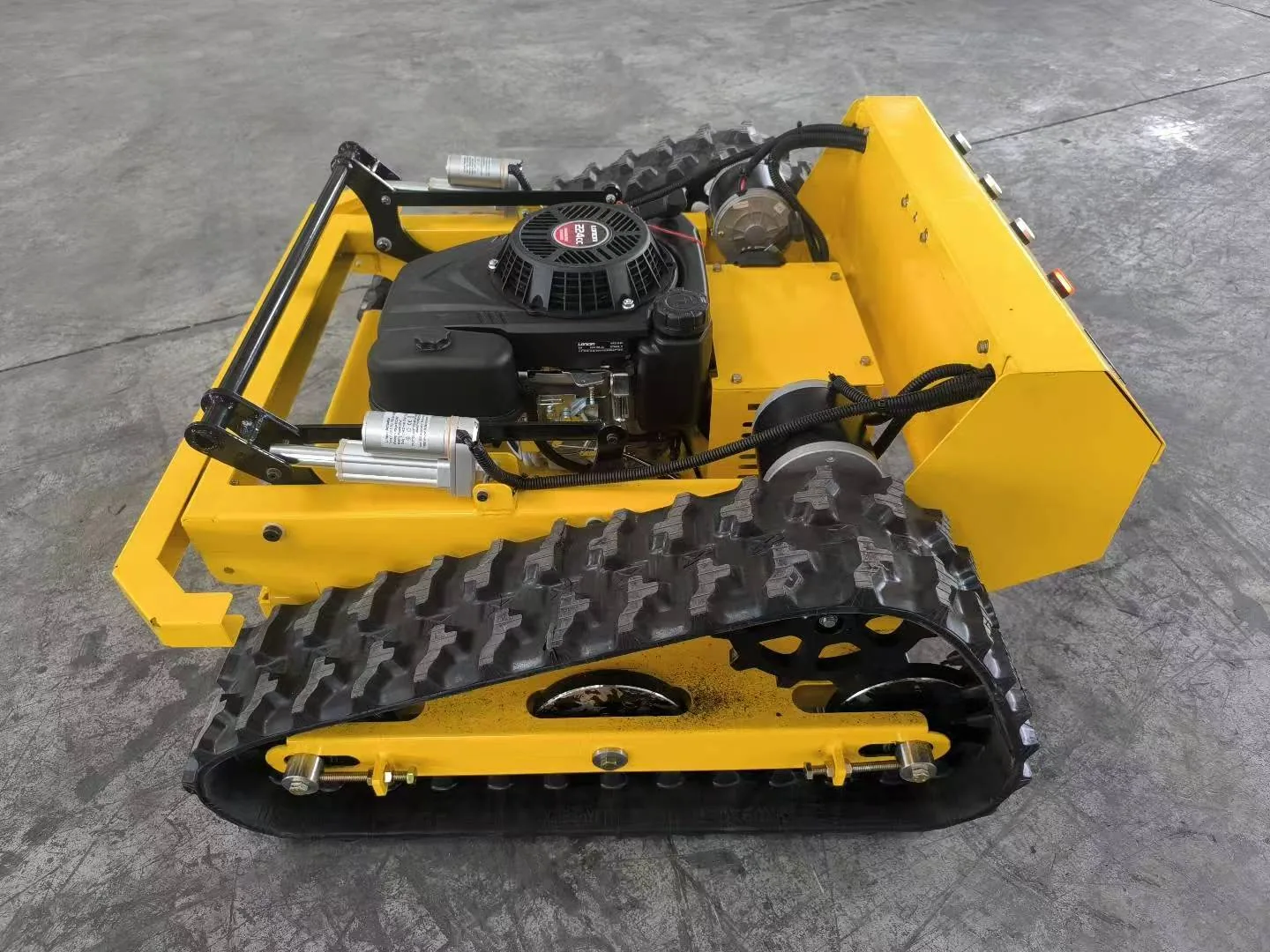
A snow blade needs a structural interface to the carrier and a way to raise and lower it. Those are two separate purchasing questions. The mount is the bracket or plate that transfers blade loads into the chassis. The lift is the mechanism that raises the blade, and it may be manual, electric, or powered from the carrier's own system.
Ask for the part numbers of every component between the blade and the chassis. A complete answer names the mount, any adapter plate, the lift actuator or linkage, the control interface, and the fasteners that are specific to the combination. If the supplier cannot name these parts, the fitment is not yet documented.
Compare two named manufacturer examples
The two reference sources in this brief illustrate why you cannot generalise from one brand to another. TracMow's snow blade page describes a 53-inch blade intended for its named 70EVO and 80EVO models and states a rear power lift requirement. That is a model-specific statement: it tells you which carrier models the blade is offered for and what lift arrangement the manufacturer specifies. It does not tell you that the same blade fits any other tracked mower, and it does not establish a blade size or lift requirement for a different machine.
MERI's article compares front-mounted and rear-mounted snow plows on remote mowers. Its value here is conceptual: it confirms that mounting position is a real design choice with different implications, not a cosmetic preference. It is not a fitment list, and it should not be read as one.
| Source | What it actually supports | What it does not support |
|---|---|---|
| TracMow snow blade page | A 53-inch blade offered for the named 70EVO and 80EVO models, with a stated rear power lift requirement | Fitment to any other carrier; blade size or lift rules for other machines |
| MERI front vs rear snow plow article | Front and rear plow configurations are distinct approaches on remote mowers | A compatibility list; a recommendation for a specific carrier |
| Super Mowers product and quote pages | Public remote-equipment range and an enquiry route | Any statement that a Super Mowers model accepts a snow blade |
Use this table as a template for your own evidence file. For each candidate blade, write the source, the exact claim it makes, the carrier model named, and the date you recorded it. A claim with no named carrier belongs in the "does not support" column until the supplier confirms otherwise.
Verify dimensions and operating limits

Application review
Discuss your mowing application.
Share the working condition, target market, product family and project scope.
Dimensions decide whether the combination works on your sites, not just whether it bolts together. Blade width relative to the carrier's track width affects how the machine handles edges, gateways and tight sidewalk sections. Blade height and lift travel affect how much snow the blade can carry and how high it can be raised for transport or stacking.
Ask for the blade's overall width, height, and weight, plus the carrier's dimensions with the blade installed. Then ask how the combination changes the machine's footprint: overall length, overall width, and the clearance needed to turn. For commercial sidewalk work, a combination that is wider than the gate or the path is a practical failure even if the bracket fits.
Operating limits are a separate question from dimensions. Do not assume a slope, speed, or surface limit from a photograph or a demonstration video. If the carrier manual states limits for the base machine, ask the supplier whether those limits change with the blade fitted, and get the answer in writing. Where the supplier has published no figure, record it as unconfirmed rather than filling the gap with an estimate.
Ask for written specifications for the exact combination
A written specification should describe the combination, not the blade in isolation. Request a document that names the carrier model and revision, the blade model, the mount part number, the lift part number, and the resulting dimensions. Ask specifically whether the carrier's stated limits are affected by the attachment, and whether any derating applies.
A useful request lists the questions in numbered form so the supplier can answer each one. Keep the reply with the quote. If a sales representative answers by phone, ask for the same points by email before you order; a written record is what protects both sides if a part arrives that does not match the machine.
Compare complete quotes

Quotes are hard to compare when one includes the mount and the other does not. Normalise every quote to the same structure: carrier, blade, mount, lift, controls, fasteners, freight, and any installation or commissioning support. Then compare line by line.
Ask each supplier to state explicitly what is included in the base price and what is priced separately. A blade quoted without its mount is not a complete price for a working combination. A lift quoted as an option may be mandatory for the blade to function as described, which changes the real cost.
List included and separately priced parts
Use a single comparison sheet for every supplier. The rows below are the minimum; add any part the supplier names that is not already listed.
| Quote line | Supplier A | Supplier B | Question to resolve |
|---|---|---|---|
| Carrier model and revision confirmed | To confirm | To confirm | Does the quote name your exact machine? |
| Blade model and width | To confirm | To confirm | Is the width stated for this carrier? |
| Mounting bracket / adapter part number | To confirm | To confirm | Included or extra? |
| Lift mechanism and power source | To confirm | To confirm | Mandatory for this blade? |
| Control interface and wiring | To confirm | To confirm | Operable from supplied controls? |
| Fasteners and hardware kit | To confirm | To confirm | Carrier-specific or generic? |
| Blade edge, skid shoes, wear parts | To confirm | To confirm | Included in first delivery? |
| Documentation and manual | To confirm | To confirm | Covers the combination, not just the blade? |
| Freight, duties and delivery terms | To confirm | To confirm | Who arranges and who pays? |
| Installation or commissioning support | To confirm | To confirm | Available, and at what cost? |
Treat every "to confirm" as an open item. A quote is only comparable once the same rows are answered for each supplier. If one supplier cannot answer the mount and lift rows, that is itself useful information about the maturity of the offer.
Super Mowers publishes its remote-equipment range on the products page and takes enquiries through its quote contact route. Those pages are an enquiry channel, not evidence that a snow blade is offered for any particular model; the same written-confirmation discipline applies. For background on choosing between throwing and pushing snow on commercial routes, the site's comparison of snow blowers and snow plows for commercial sidewalks sets out the route-level tradeoffs that sit upstream of this fitment question.
Frequently asked questions

Does a snow blade fit every tracked mower?
No. Fitment depends on the specific carrier model, its revision, the mounting end, and whether a matching mount and lift are offered. The TracMow example names two carrier models for one 53-inch blade; that is a model-specific offer, not a universal standard. Confirm fitment for your exact machine in writing.
Is a lift always included?
Not necessarily. Lift arrangements vary between manual, electric, and carrier-powered systems, and a quote may price the lift separately or require it as a condition of the blade working as described. Ask whether a lift is mandatory for the blade on your carrier and whether it is included in the quoted price.
What should a compatibility quote specify?
The carrier model and revision, the blade model and dimensions, the mount and adapter part numbers, the lift mechanism and power source, the control interface, the fastener kit, wear parts, documentation, freight terms, and any installation support. It should also state whether the carrier's published limits change with the blade fitted.
Conclusion

Build the evidence file before you build the quote. Name the carrier, name the blade, list every part between them, and get the supplier to confirm the combination in writing.
Next step: send your carrier details and the checklist rows above to each supplier and ask for a written, line-item quote.
Video: Remote Control Tracked Lawn Mower Turns Into a Snow Plow | 8 Inches of Snow Test
