


 By Anna
You are preparing to place a remote control mower on the European Economic Area market, and the supplier has sent a folder of files with a CE logo on the cover. The practical question is narrower than "is it certified?": does the documentation in front of you actually describe the machine, controller and configuration you are buying?
Remote control mower CE marking is not a single certificate that covers every product a supplier sells. It is a declaration of conformity with the applicable EU rules, supported by technical documentation and issued under the manufacturer's responsibility. Your job as importer or distributor is to match the documents to the exact delivered configuration, record gaps, and escalate legal or technical determinations to a qualified reviewer.
This article is a document-matching workflow, not a certification claim. Super Mowers presents remote control mowing equipment to dealer, importer and OEM projects; nothing here should be read as evidence that any Super Mowers model holds CE documentation or meets a particular market requirement. The checklists below follow public European Commission guidance on CE marking and are meant to help you ask better questions before an order is confirmed.
Remote control mower CE marking: Identify the exact machine and destination market
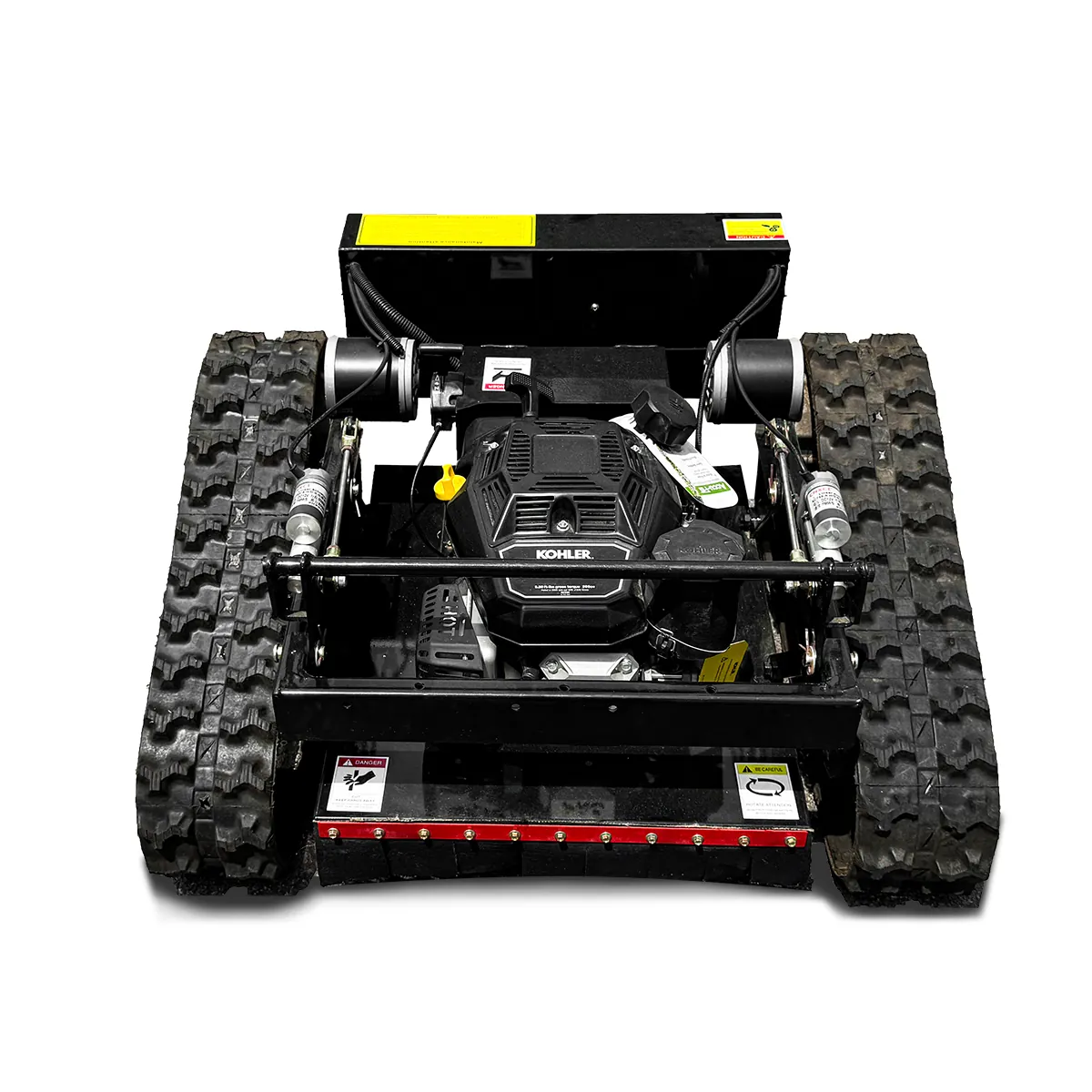
Before you read a single declaration, write down what you are actually importing. Most documentation problems start with a vague purchase description such as "remote control mower, 800 mm" that could map to several builds, revisions or accessory sets. A declaration can only be checked against something specific.
Record model, configuration, manufacturer and intended placement
Build a machine identity record from the order confirmation, nameplate and supplier datasheet, and keep it separate from the marketing brochure. The record should capture the commercial model designation, any factory or build code, the cutting configuration, the power system, the fitted attachments, and the identity of the legal manufacturer as stated on the product and in the documents. Note the destination country or countries within the EEA, because the applicable rules and any national market expectations depend on where the machine is placed on the market and when.
| Identity field | Where to find it | Why it matters for document matching |
|---|---|---|
| Commercial model name and code | Order confirmation, nameplate, datasheet | Declarations often cite a model family; you need the exact delivered designation |
| Legal manufacturer name and address | Nameplate, declaration, packaging | The declaration is issued under the manufacturer's responsibility, so the issuer must be identifiable |
| Importer or authorised representative | Contract, packaging, accompanying documents | Importer details may need to appear on the product or documents depending on the rules in force |
| Build or revision identifier | Nameplate, supplier statement | A later revision may not be covered by an older document set |
| Fitted attachments and options | Order confirmation, packing list | Attachments can change the applicable requirements and the scope of a declaration |
| Power system and voltage | Datasheet, nameplate | Relevant to which directives or regulations apply; confirm rather than assume |
| Destination EEA country and date of placement | Your own commercial plan | Rules and guidance change; record the version you checked |
| Controller model and serial | Controller label, packing list | The controller is a supplied component that must be traceable to the machine |
Treat every blank cell as a question, not as a field you can fill from memory. If the supplier's quotation uses a family name and the nameplate uses a different code, that discrepancy belongs in your open-questions log before shipment, not after customs clearance.
Separate the complete machine from its controller and supplied components
A remote control mower is delivered as a set: the mower itself, a hand-held or console controller, batteries or power supply, chargers, and sometimes a spare transmitter or receiver module. Buyers routinely file one declaration and assume it covers the whole set. That assumption deserves testing.
Record the controller as its own line item with its model number, serial number, radio characteristics as stated by the supplier, and the machine or machine family it is paired with. Then ask the supplier to confirm, in writing, whether the declaration and technical file cover the controller as part of the machine or as a separate supplied item, and whether any radio equipment requirements apply to the transmitter and receiver. You do not need to resolve the technical answer yourself; you need the supplier's statement on record so a reviewer can check it.
The same logic applies to chargers, battery packs and any optional implement. Each item that carries its own marking, model number or documentation should be listed in your configuration record with a cross-reference to the document that covers it.
Understand the role of CE marking and the declaration

CE marking indicates that a product placed on the EU market complies with the applicable harmonisation legislation, and the EU declaration of conformity is the document in which the manufacturer states which rules apply and confirms conformity. The European Commission's Your Europe guidance on CE marking and the Commission's single market page on CE marking are the reference points for this article, and both are worth reading in their current version rather than relying on a saved PDF from an earlier year.
Use European Commission guidance on manufacturer and importer responsibilities
Under the EU product rules described by the Commission, the manufacturer prepares the technical documentation, carries out the conformity assessment procedure that applies to the product, draws up the EU declaration of conformity, and affixes the CE marking. Importers and distributors have their own obligations: they must act with due care, check that the manufacturer has carried out the required steps, ensure the product carries the required marking and documents, and keep information traceable. When an importer places the product on the market under its own name or trademark, or modifies it in a way that affects compliance, the importer can take on manufacturer obligations.
That last point matters for OEM and private-label projects. If your brand appears on the machine or packaging, ask explicitly who is the legal manufacturer for the purposes of the declaration and who signs it. Do not assume the answer is the factory, and do not assume it is you.
Do not treat a logo or a generic certificate as proof for every model
A CE logo on a brochure, a scanned certificate with no model list, or a supplier's statement that "all our products are CE certified" is not a document match. Three common patterns deserve scrutiny:
- A certificate from a third-party body that is not the EU declaration of conformity. Voluntary certificates, test reports and quality-system certificates can be useful supporting evidence, but they do not replace the declaration the manufacturer must draw up.
- A declaration that names a product family but not the delivered variant. Family-level declarations exist and can be legitimate, but you need the supplier to confirm in writing that your configuration falls within the declared scope.
- A document with no issuer, no date and no revision. Without these, you cannot tell whether it applies to the machine in your container or to a design from several years ago.
None of these observations is a legal conclusion. They are reasons to ask for a clearer document, and to record that you asked.
Check the documents against the supplied configuration
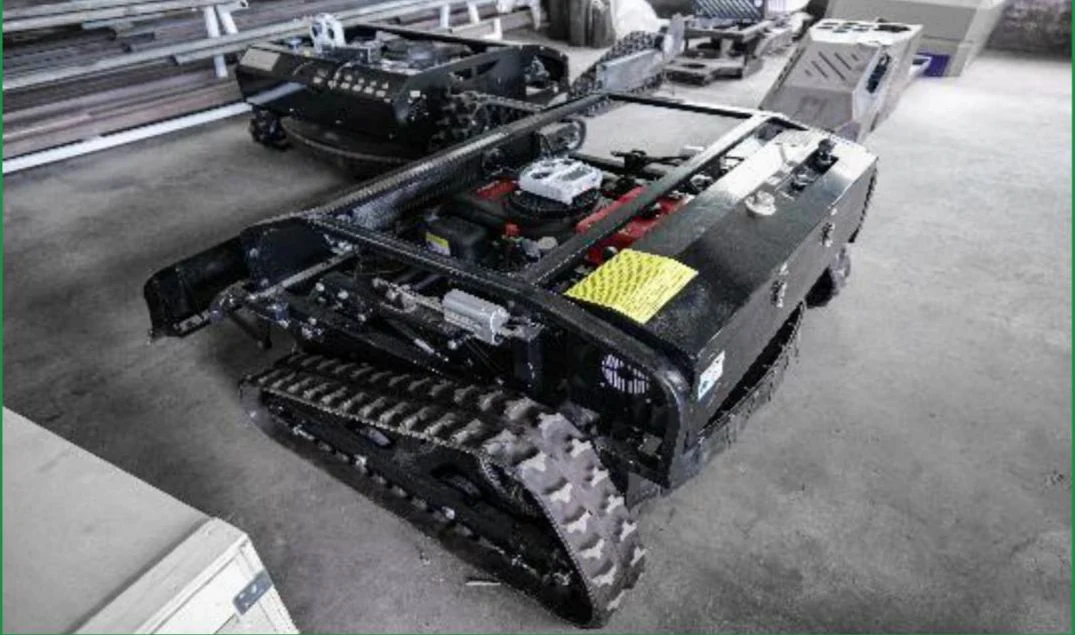
This is the working part of the task. Set up a comparison in which the left column is your machine identity record and the right column is what the documents actually say. Do the comparison line by line, and write down the result rather than a general impression.
Compare model identity, document issuer, scope and revision
Use a document register with one row per file you have received. For each file, record what it is, who issued it, what product it names, what rules or standards it cites, its date or revision, and whether it matches your configuration.
Application review
Discuss your mowing application.
Share the working condition, target market, product family and project scope.
| Document or item | What to verify | Typical gap to log |
|---|---|---|
| EU declaration of conformity | Issuer is the identified manufacturer; model and variant match; applicable legislation cited; date and revision present; signatory identified | Family-level scope with no variant list; no revision; issuer differs from nameplate |
| Nameplate and marking on the machine | Model, manufacturer, serial, marking as required for the product | Marking not visible in supplied photos; serial range not stated |
| Controller documentation | Controller model and serial linked to the machine; radio aspects addressed by the supplier | Controller not mentioned in the declaration; no pairing record |
| Battery, charger and power components | Model numbers, marking, documentation cross-reference | Charger supplied as a generic accessory with no document link |
| Technical file availability | Supplier confirms a technical file exists and can be made available to the market surveillance authority | Supplier has not stated where the file is held |
| Instructions and safety information | Language and content appropriate to the destination market, as confirmed by the supplier | Manual language or model coverage unclear |
| Importer and manufacturer contact details | Present on product, packaging or accompanying documents as applicable | Importer details not yet agreed in the contract |
| Revision history | Documents dated after the last design change you were told about | No change log; unclear which revision shipped |
Two columns in that table do most of the work: issuer and scope. A declaration signed by a trading company that is not identified as the manufacturer, covering a model family that does not list your variant, is a document you cannot close out on your own.
List unresolved documents and ask the supplier for clarification
Keep a single open-questions log with an owner and a date for each item. Write questions that a supplier can answer with a document or a yes/no statement, not questions that invite reassurance. For example:
- Please confirm whether the EU declaration of conformity dated [date] covers model [code] with [attachment] fitted, and state the revision it applies to.
- Please confirm the legal manufacturer named on the declaration and explain any difference from the name on the nameplate.
- Please provide the controller model and serial range supplied with this order and confirm how it is covered in the technical documentation.
- Please confirm which languages the accompanying instructions are supplied in for [destination country].
- Please state where the technical file is held and who the contact point is for authority requests.
A supplier who answers these questions precisely is easier to work with than one who sends a logo. If answers do not arrive before the order is confirmed, record that as a known gap and decide commercially whether to proceed.
Record open questions for the responsible reviewer

Some questions in this workflow are commercial and some are legal or technical. Keep them apart. You can decide to order a machine with a documentation gap on record; you should not decide on your own that the gap does not matter.
Check current applicable rules and official sources for the product and date
Rules, guidance and harmonised standards change. Record the date on which you checked the European Commission's CE marking pages and any sector-specific guidance, and note the version of each document you relied on. If your compliance file cites a standard or a directive, record its exact designation and year as the supplier stated it, and do not silently update it to a newer edition. Where the supplier cites a standard you do not recognise, ask for the full designation rather than accepting an abbreviation.
For machinery such as a remote control mower, the applicable legislation and the conformity assessment route depend on the product's characteristics and its intended use, and on the rules in force at the time of placement. That determination belongs with the manufacturer and with your qualified reviewer, not with a blog post.
Escalate legal or technical determinations to a qualified reviewer
Set a simple rule inside your team: document matching is a purchasing and compliance-administration task; determining whether a product complies, which legislation applies, or whether a marking is correctly affixed is a determination for a qualified professional, whether in-house counsel, a regulatory consultant or the manufacturer's own compliance function. Record who made each determination and when.
| Question type | Who should answer | What to record |
|---|---|---|
| Does this declaration cover the delivered variant? | Manufacturer, confirmed in writing | Supplier statement, date, document revision |
| Which legislation applies to this product and market? | Qualified reviewer, using current official sources | Reviewer name, date, sources checked |
| Is the marking correctly applied and visible? | Importer's receiving team, with photos; escalate if unclear | Photos, receiving checklist, escalation note |
| Can we ship before a gap is closed? | Commercial owner, with the gap on record | Decision, rationale, date |
| Who is the legal manufacturer for our private-label build? | Contractual negotiation with the supplier, reviewed legally | Contract clause and declaration issuer |
This division keeps the workflow moving without pretending that a purchasing team has made a legal judgement it is not equipped to make.
FAQ
Does a CE logo alone establish that all supplied configurations are covered? No. The logo indicates a claim of conformity, but coverage comes from the declaration and technical documentation. Ask the supplier to confirm in writing that your specific model, variant and fitted attachments fall within the declared scope, and record the document revision you relied on.
Should the controller and the complete machine be checked as separate items? Yes, as separate lines in your record even if the supplier treats them as one product. Record the controller model and serial, confirm how it is covered in the documentation, and ask whether any radio equipment requirements apply to the transmitter and receiver. The supplier should state the position; you should not infer it.
What should an importer do when the declaration does not identify the delivered model? Log the gap, request a declaration or written confirmation that names the delivered model and revision, and hold the file open until the supplier responds. If the answer is still unclear, escalate to your qualified reviewer before placing the machine on the market, and record the decision and its rationale.
Conclusion

Match every document to the machine, controller and configuration you actually receive, and log every gap. Then ask the supplier precise questions and let a qualified reviewer settle the legal and technical calls.
Start by building the machine identity record and document register for your next remote control mower order; the Super Mowers remote control mower range and product pages show the kind of configuration details worth capturing, while the European Commission's CE marking guidance and single market CE marking page are the official references to check in their current version.