

 By Anna
A hose has failed on a remote-controlled mower, or a fitting is weeping, and the parts desk needs to order the right replacement. Before anyone reaches for a catalogue, the connection has to be identified correctly — and JIC and NPT are the two families most often confused when hydraulic hose fittings JIC vs NPT identify thread equipment questions land on a dealer's spare-parts desk.
JIC and NPT differ in how they seal. A JIC connection uses a 37-degree flare seat and straight threads; an NPT connection uses tapered pipe threads that seal on the thread itself. Apparent fit proves nothing. Identify the sealing surface, record the part safely, and let a trained parts specialist confirm the exact replacement and its pressure rating.
Hydraulic hose fittings JIC vs NPT identify thread equipment: Separate a JIC flare seat from an NPT tapered thread

The practical question behind most mis-orders is simple: does this connection seal on a machined seat, or on the threads? Answer that first, and the rest of the identification becomes a matter of recording what you see rather than guessing from what threads together.
Identify the sealing surface rather than relying on apparent fit
SIG Hydraulics' fitting identification article, which was opened for this brief on 4 November 2026, sets out the features that separate common hydraulic connector families: the sealing face, the thread form, and whether the thread is straight or tapered. That framing is more useful than a visual resemblance test, because two connectors can start to engage and still be incompatible.
A JIC connector is a flare-type connection. The male half carries a conical seat, commonly described as a 37-degree flare, and the threads are straight rather than tapered. Sealing happens at the metal-to-metal seat when the nut is drawn up, not along the thread flanks. That is why the thread alone does not tell the whole story: the seat angle and the condition of the cone matter as much as the thread count.
An NPT connector is a tapered pipe thread. The thread itself is intended to tighten and seal as it engages, which is why the taper and the thread pitch are central to identification. A tapered thread changes diameter along its length; a straight thread does not. If you can see the fitting clearly and safely, that difference in shape is one of the most reliable first clues.
Neither observation is a green light to install anything. The point of identification is to describe the part accurately enough that a qualified person can match it against the correct specification. For background on why pressurised hydraulic leaks need to be handled as a reporting and repair-coordination matter rather than a quick fix, the site's article on engine oil leak fleet reporting covers the record-keeping side of fleet fluid issues.
Recognize the RYCO guide’s stated connector conventions
The RYCO thread and connector identification chart, also opened for this brief on 4 November 2026, is the kind of reference a parts desk keeps to hand. It presents connector conventions as a set of distinguishing features — thread type, seat or sealing method, and the standard the connector follows — rather than as a single measurement.
That structure is worth copying into your own notes. When a dealer's spare-parts staff describe a fitting, they should describe it the same way the reference chart does: what the thread looks like, where the seal is made, and which connector standard the part is believed to follow. A description that says only "it looks like the one on the other machine" gives the supplier nothing to verify against.
It is also worth being clear about what a chart can and cannot do. A printed guide helps a trained person narrow the possibilities. It does not certify that a particular fitting on a particular mower is the correct part, and it does not establish a pressure rating for the assembly. Those answers come from the machine's documentation and the supplier.
Collect the information a trained parts specialist needs
A replacement order succeeds or fails on the quality of the description attached to it. The goal is not for the person at the machine to make the final call; it is to hand over a record complete enough that the specialist can make it without a second site visit.
Machine model and original hose or fitting identity
Start with the machine. Record the model, serial number if it is available, and the location of the hose on the machine — for example, which hydraulic circuit or which lift function it serves. Configuration matters: the same model may be built with different options, and an optional feature can change what is installed.
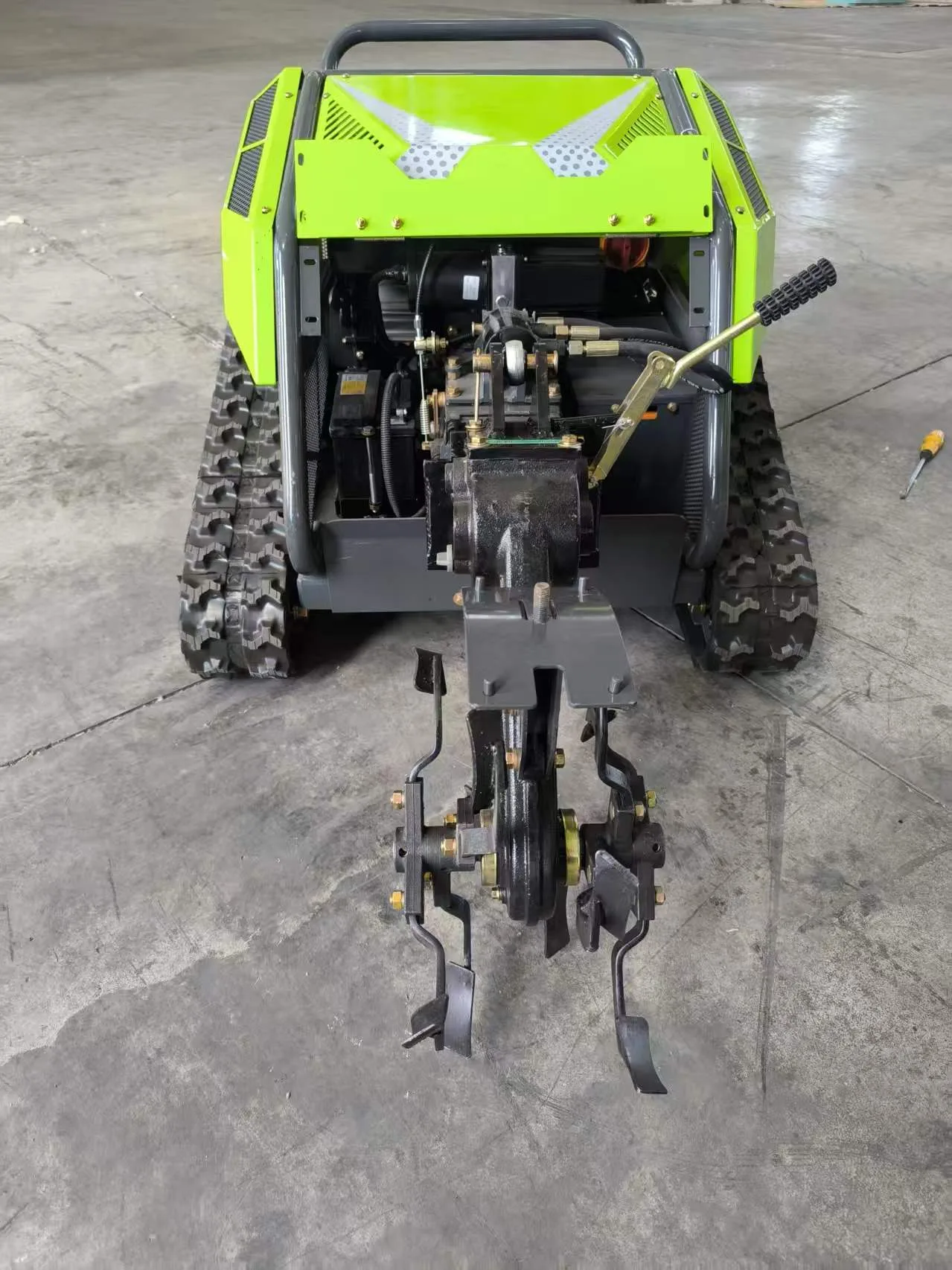
Super Mowers' public product pages, observed on 5 November 2026, list the Remote 50 gasoline mower and describe an optional hydraulic lift configuration. That page listing is the limit of what this article can say. It does not confirm which fitting family is used on that lift, what the hydraulic circuit contains, or what any other model carries. Treat the product page as a starting point for a model enquiry, not as a parts specification.
Next, capture the identity of the original part. If the hose or fitting still carries a manufacturer marking, a printed part number, or a tag from a previous replacement, photograph it and transcribe it exactly. Do not clean off a marking before recording it, and do not assume a number found on an old invoice refers to the same position on the machine today.
A short written record beats a memory. The table below shows the kind of entry that helps a parts specialist, and marks clearly where the answer is a question rather than a fact.
| Record field | What to enter | Status if unknown |
|---|---|---|
| Machine model and serial number | From the machine plate or manual | Confirm with the owner or dealer records |
| Hose location and function | Circuit or function served | Ask the technician who removed it |
| Original part markings | Transcribed exactly, photographed | Do not substitute a guess |
| Connector family as observed | Flare seat or tapered thread | Mark as "to be confirmed" |
| Thread details | Only from a safely available, unpressurised part | Leave blank rather than estimate |
| Required pressure rating | From machine documentation or supplier | Never infer from appearance |
| Quantity and handedness | How many, and which end of the hose | Check both ends separately |
Pitch, diameter and seat information only from a safely available part
Thread pitch and diameter are useful identification data, but only when they can be taken from a part that is already removed and not under pressure. This is a boundary, not a formality. Measuring or test-fitting a connection on a pressurised machine, or on a circuit that could be energised, is not an identification task and should not be treated as one.
Where a part is safely available, a thread pitch gauge and a caliper can give a trained person the numbers a supplier needs. Record what instrument was used and what it read, rather than converting the reading into a conclusion. "Measured with a pitch gauge, reading recorded" is useful; "it is definitely JIC" is not, unless the person recording it is qualified to make that determination.
Application review
Discuss your mowing application.
Share the working condition, target market, product family and project scope.
The seat is the other half of the record. For a flare-type connection, note the condition and apparent angle of the cone as observed, and whether the seat shows damage, galling, or contamination. For a tapered thread, note whether the thread appears tapered and whether there is evidence of sealant or tape residue. These observations help the specialist understand why the joint failed as well as what to supply.
Keep the record with the machine's service history. When a fleet hands over between seasons or between operators, a fitting record that names the model, position, and confirmed part number saves the next person from starting over.
Confirm the exact replacement and pressure rating with the supplier

The final decision belongs with the supplier and the qualified person maintaining the machine. Your job is to make that decision easy and to avoid actions that create a safety problem or a wrong order in the meantime.
Do not test-fit under pressure or force mismatched threads
A fitting that begins to screw on is not evidence of compatibility. Threads of different forms can engage for a turn or two before binding, and forcing them damages both parts and can leave a joint that looks assembled but cannot seal or hold rated pressure. The same applies to using sealant or tape to compensate for a mismatch: it hides the problem rather than solving it.
Equally, do not loosen, tighten, measure, or trial-fit a hydraulic connection while the machine is running or the circuit is pressurised. Hydraulic systems store energy, and a joint that is disturbed under pressure is a hazard, not a diagnostic opportunity. If a leak is active, the correct action is to stop, isolate according to the machine's instructions, and escalate to the person responsible for hydraulic repair.
When a part is offered as a replacement, check that the supplier has confirmed the connector family, the thread details, and the pressure rating against the machine's specification — not merely against a photograph. Ask what the rating is based on. A supplier who can point to the part's specification is giving you something a visual match cannot.
Do not infer a specific SM fitting family
It is tempting to reason from a machine's origin, or from one model's published options, to a conclusion about the fittings on the machine in front of you. Resist that. Country of manufacture does not determine connector standard, and a product page describing an optional configuration does not specify the fittings used in that configuration.
For Super Mowers equipment, the public product listing at supermowers.com/products/ and the Remote 50 gasoline mower page are the references available for this article. Neither is a parts catalogue. Any fitting family, hose assembly, or pressure rating for a specific machine must be confirmed through the model's documentation and the supplier before an order is placed.
Frequently asked questions

Do fittings that start to screw together necessarily match?
No. Partial engagement can happen between incompatible thread forms, and it says nothing about whether the seat will seal or the assembly will hold its rated pressure. Treat any trial assembly as inconclusive and confirm the part against the specification.
Does a JIC flare seal in the same way as NPT?
No. A JIC connection seals at a machined flare seat, with straight threads drawing the two halves together. An NPT connection relies on tapered threads that tighten and seal along the thread. The sealing method is the main thing to identify.
Can a machine’s connector standard be inferred from its country of manufacture?
No. Origin does not determine which connector standard a machine uses. Confirm from the model's documentation and the supplier, and record the part identity from the machine itself where it is safely available.
Conclusion

Identify the sealing surface, not the apparent fit. Record the model, position, and any original markings, keep measurement to safely removed parts, and let a qualified supplier confirm the exact replacement and its pressure rating before ordering.