

 By Anna
You are comparing flail mowers for a site with woody growth, and the brochures give you numbers like 3/4 inch, 2 inch, and 3 inch. Before you put any of those figures into a specification or a purchase order, you need to know what each number actually describes.
Flail mower brush cutting capacity is a model-specific, configuration-specific claim, not a universal flail mower rating. Three published examples show brush limits of 3/4 inch, 2 inch, and 2 or 3 inches depending on knife type, so the model, the cutting equipment, the vegetation, and the maker's stated conditions must all be read together.
Flail mower brush cutting capacity: Start with the brush task

Before you read any capacity figure, write down what you are actually asking the machine to cut. "Brush" is not one material. A stand of seedling saplings, a hedgerow of mature stems, and scattered woody regrowth on a right-of-way differ in stem diameter, density, flexibility, and how much material returns after cutting. A capacity claim that fits one of those tasks may not describe another.
A practical starting record has four fields: plant type, typical and maximum stem diameter, site density and distribution, and the exact equipment model you are considering. Add the terrain and access conditions if they affect how the machine reaches the growth, but keep those separate from the cutting claim itself. The capacity figure answers a cutting question; it does not answer a slope, reach, or transport question.
Record plant type and diameter, site density and equipment model
Diameter alone is a weak specification. A single 2-inch stem standing apart is a different workload from a dense patch of 2-inch stems, and a flexible 2-inch shoot is different again from dry, hard wood. Record the species or at least the growth habit if you know it, the diameter range you expect, and how the stems are distributed across the work area. Then record the model exactly as the maker lists it, including any attachment or variant designation.
This record does two things. It lets you compare a supplier's claim against your actual vegetation rather than against a general impression of "brush." It also gives you something concrete to send the supplier when you ask whether the claim applies to your site.
Separate brush diameter from mower width or cutting height
Flail mower listings contain several numbers that are easy to mix up. Cutting width describes how wide a pass the machine makes. Cutting height describes how tall the finished cut is set to leave the vegetation. Brush diameter describes the thickness of woody material the maker states the machine can handle. These are different quantities with different units, and none of them substitutes for another.
A wide mower is not automatically a high-capacity brush mower, and a low cutting height setting does not increase the diameter of stem a machine can process. When you build a comparison sheet, give each figure its own column and its own unit so that a width in inches or centimetres never gets read as a stem diameter.
Read the actual wording and configuration

The useful comparison is not "flail mowers cut brush up to some size." It is a side-by-side reading of what named makers publish for named products, with the cutting equipment and the stated vegetation kept attached to each figure. Three published examples make the point.
| Source product | Stated brush-related capacity | Cutting equipment stated with the claim | Vegetation wording | Test conditions disclosed in the supplied material |
|---|---|---|---|---|
| Loftness 72M/90M flail mower (PTO product page) | Up to 3/4 inch | Not established in the supplied excerpt beyond the product listing | Grass, weeds, and brush | Not disclosed |
| Diamond tractor flail mower attachment | Up to 2 inch | Not established in the supplied excerpt beyond the attachment listing | Brush | Not disclosed |
| Ibex TX52 flail mower | 2 inch with Y blades; 3 inch with hammers | Y blades versus hammers, stated separately | Brush size field on the product page | Not disclosed |
Read the table as three separate product statements, not as a ranking. Each row belongs to its own machine and its own published wording. Nothing in the supplied material shows that the three makers tested the same vegetation, the same density, the same moisture, or the same operating technique.
Loftness 72M/90M and Diamond tractor attachment claims
The Loftness 72M/90M product page describes the machine's work in terms of grass, weeds, and brush, with a stated capacity up to 3/4 inch. That is a modest figure, and it is attached to a specific model family. It should not be read as Loftness's capacity for every flail mower the company makes, and it should not be read as a statement about other brands.
The Diamond tractor flail mower attachment page states brush capacity up to 2 inch. This is an attachment listing for a tractor-mounted implement, which means the claim sits inside a system: the tractor supplies power and control, and the attachment does the cutting. The supplied material does not describe the tractor conditions, the knife configuration, or the vegetation used to arrive at 2 inch, so treat the figure as the maker's published claim for that attachment rather than as a tested guarantee for your site.
Ibex TX52: Y blades and hammers have different stated maxima
The Ibex TX52 page is the clearest illustration of why configuration matters. Its maximum brush size field states 2 inch for Y blades and 3 inch for hammers. Same machine family, different cutting equipment, different published maximum.
That single example rules out a lazy reading in which "the TX52 cuts 3-inch brush." It cuts what the maker states for the configuration fitted. If you are specifying, quoting, or accepting a delivery, the knife type belongs in the same sentence as the diameter. It also means a capacity figure copied from one configuration cannot be carried over to another configuration of the same machine without the maker's confirmation.
Compare only what each document supports

A fair comparison keeps four things visible for every claim: the material being cut, the machine configuration, the exact wording of the capacity statement, and whether the test or operating conditions are disclosed. When any of those is missing, the comparison is incomplete, and the gap should be recorded as a question rather than filled with an assumption.
In the three examples above, the material is stated in brush terms, and the configuration is stated at least at the level of machine model, with Ibex going further and separating knife types. What is not disclosed in the supplied material is the test or operating conditions: stem species, density, moisture, ground conditions, forward speed, power source, and how many passes were needed. Those unknowns are not a criticism of the makers. They are simply the limits of what the published pages support.
Identify the material and configuration, and unknown test conditions
Build your comparison with an explicit "not stated" column. If a page says brush up to 2 inch but does not say what brush, what density, or what knife, write "not stated" rather than guessing. That habit protects you in two ways. It stops an optimistic reading from becoming a purchase assumption, and it gives the supplier a precise question to answer.
Application review
Discuss your mowing application.
Share the working condition, target market, product family and project scope.
It also keeps you honest about what a capacity figure means. A published maximum is the maker's statement about the upper end of the material the machine is intended to handle in the configuration described. It is not a promise that every stem at that diameter will cut cleanly in every stand, and it is not a statement about productivity, finish quality, or how the machine behaves in dense regrowth.
Wright comparison lists cutting capacity but does not define brush in that field
A published comparison of Wright flail mowers lists cutting capacity across several models from the same maker. That is useful for seeing how one manufacturer positions its range, but the cutting capacity field in that comparison is not defined as a brush diameter in the supplied material. It should not be converted into a brush limit and placed alongside the Loftness, Diamond, and Ibex figures.
This is a common trap in equipment research. A field labelled "cutting capacity" can refer to vegetation type, material thickness, or an application class depending on the document. Before you compare it with a brush diameter, confirm what the field measures. If the document does not say, the honest entry in your comparison is "definition to confirm."
Ask before specifying

Once you have the published figures and the gaps recorded, the remaining work is a supplier conversation. The goal is not to get a bigger number. It is to establish whether the maker's current documentation supports the claim for the exact model, knife set, and vegetation on your site, and whether any conditions attach to it.
Prepare the questions in writing and send them with your site record. Written answers give you something to keep with the quotation and the handover file, and they make it easier to notice if a claim changes between an early enquiry and a final order.
| Item to confirm | Why it matters | What a useful answer looks like |
|---|---|---|
| Current model and revision | Product pages and specifications change over time | The exact model designation and the date or revision of the specification being quoted |
| Knife or blade configuration | Ibex shows different maxima for Y blades and hammers | The stated capacity for the specific knife set offered, not a family-wide figure |
| Vegetation type and stem diameter | "Brush" covers many materials | The maker's description of the vegetation the figure applies to |
| Density and site conditions | Dense stands differ from scattered stems | Any stated limits on density, terrain, or operating method |
| Test or operating conditions | The supplied pages do not disclose them | Whatever the maker can share about how the figure was established |
| Operating limits in the manual | The manual governs use of the delivered machine | The relevant manual section for the model supplied |
Check current model, knives, vegetation and the maker's operating limits
Ask for the current specification rather than relying on a page you read earlier. Ask which knife set the quoted capacity belongs to. Ask what vegetation the figure describes and whether the maker places any conditions on it. Finally, ask for the manual or the relevant operating-limit section for the model you will receive, because the manual for the delivered machine is the document that governs its use.
If the answers are vague, record that. A vague answer is information: it tells you the claim is not documented at the level your specification needs. You can then decide whether to seek a written clarification, choose a different configuration, or plan the work differently.
Do not infer SM capacity or attachment compatibility
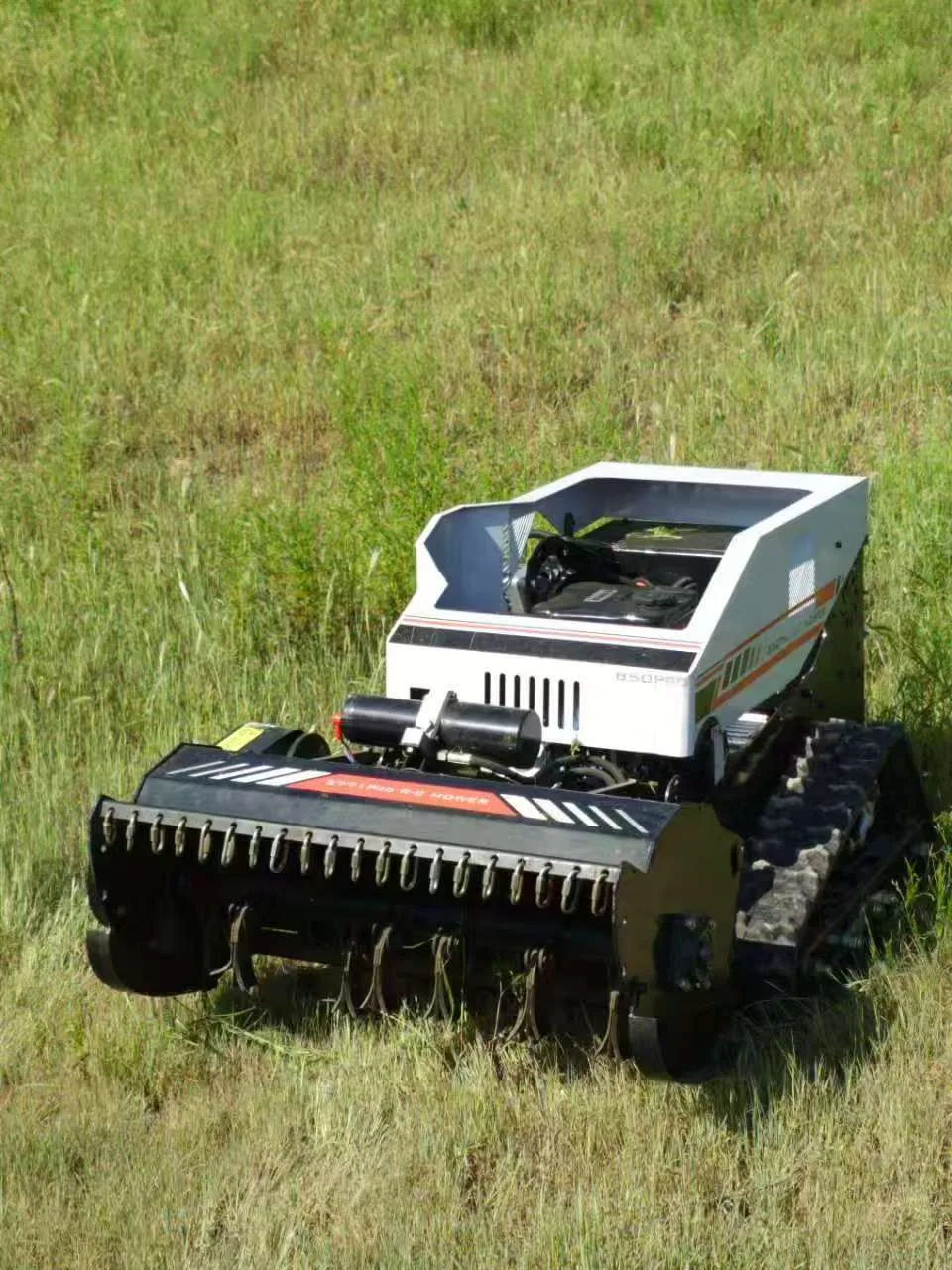
Super Mowers' Remote 50 is publicly described as a remote-controlled mower with a vertical flail blade system. That description tells you the cutting arrangement. It does not establish a brush diameter capacity, and the supplied material does not show that the machine has been assessed against the Loftness, Diamond, or Ibex figures above. Those figures belong to those products.
Equally, nothing in the supplied material establishes that the tractor-mounted attachments discussed here are compatible with any Super Mowers machine, or that a capacity stated for one attachment transfers to another machine. Compatibility and capacity are separate questions, and both need the maker's confirmation for the exact combination you intend to use. For readers planning vegetation work along corridors, the site-planning considerations in utility and right-of-way mowing are a useful companion to this specification reading, and the Remote 50 product page is the place to check the published configuration of that machine.
FAQ

Does every flail mower have the same maximum brush diameter?
No. The three published examples in this article state 3/4 inch, 2 inch, and 2 or 3 inches depending on knife type. Those are separate claims for separate products and configurations, and they were not established under shared test conditions. Treat every brush diameter figure as belonging to the exact model and cutting equipment named with it.
Can a blade type alone establish a mower's brush limit?
The Ibex TX52 example shows that knife type changes the stated maximum on the same machine, so blade type is clearly relevant. But blade type alone is not enough. The model, the maker's published wording, the vegetation described, and any stated operating conditions all belong to the claim. A knife description without a model-specific capacity statement does not establish a brush limit.
Conclusion

Read brush capacity as a claim attached to a model, a knife set, and a stated vegetation type. Record the gaps, then confirm the current specification and manual limits with the maker before you specify.