 By Anna
Utility right-of-way mowing is only one part of vegetation management along power lines, pipelines, and other infrastructure corridors. A remote-control mower may be considered for approved grass or brush-cutting segments, but a machine quotation does not authorize tree work, chemical treatment, excavation, or operations near utility assets. Commercial buyers need a defined mowing scope and owner-approved boundaries before selecting equipment.
This guide provides a utility corridor mowing scope sheet for vegetation contractors, utility procurement teams, and remote mower distributors. It shows which site measurements to collect, how to separate mowing from other work packages, what to request from suppliers, and which questions must go back to the infrastructure owner. It is a procurement document, not an electrical safety procedure, work permit, or authorization to operate machinery in a right of way.
Define the utility right-of-way mowing boundary first
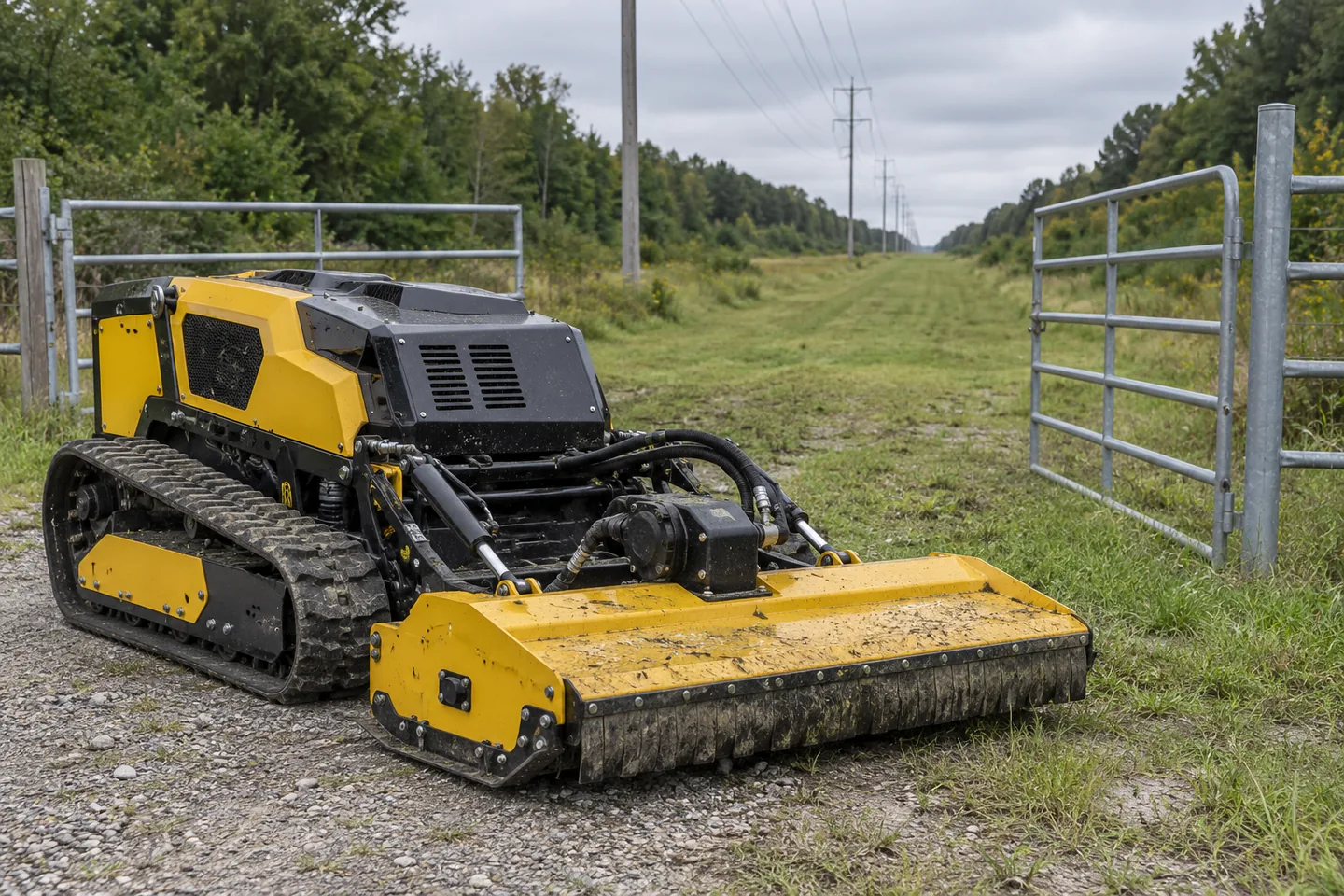
A right of way (ROW) is not simply an open strip of grass. It may contain overhead conductors, buried services, towers, guy wires, poles, pipelines, monitoring points, access roads, drainage features, and environmental restrictions. The applicable authority depends on the corridor owner and the work being proposed.
For example, the Tennessee Valley Authority describes wire zones and border zones within its transmission rights of way, with different compatible vegetation. The Bonneville Power Administration emphasizes utility-directed vegetation management around transmission lines. These examples show why a buyer needs the actual owner’s segment map and vegetation rules rather than a generic mowing width or height.
Pipeline corridors are a separate case: the Pipeline and Hazardous Materials Safety Administration describes pipeline ROW markers and encroachment concerns. Do not use an electric transmission corridor scope to make decisions about buried pipeline assets, and do not assume ordinary mechanical mowing includes ground-disturbing activity.
Three questions before requesting a machine quote
- Who owns and authorizes the work? Record the utility or asset owner, contract administrator, and current easement or access requirements.
- What vegetation is assigned to mechanical mowing? Identify approved grass and any specific light brush that the contract and proposed mower attachment are designed to handle.
- What is excluded or awaiting review? Separate tree clearance, chemical programs, utility-asset tasks, restricted sections, and any work requiring a different qualified team.
Procurement boundary: A remote mower specification is not permission to work near energized equipment, buried utilities, public traffic, or restricted ecological areas. Those limits must be established by the owner and applicable qualified authorities.
Utility corridor mowing scope sheet: record each segment
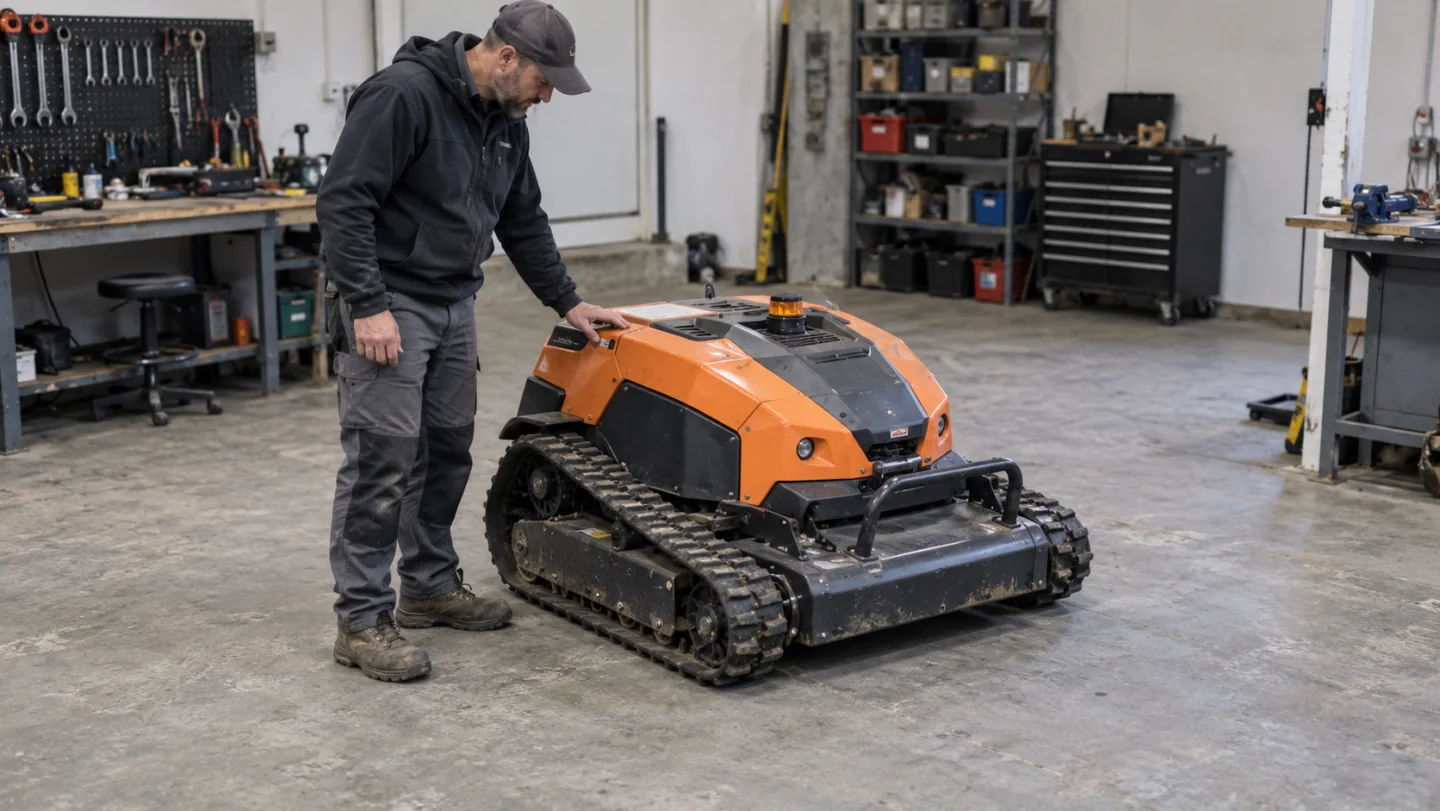
Complete the following table for every corridor segment or work package before comparing manufacturers. The owner or qualified field team should supply the authoritative site information; a dealer should not invent access, clearance, or operating limits.
| Scope field | Data to provide with the RFQ | Why a mower supplier needs it |
|---|---|---|
| Corridor type and owner | Electric transmission or distribution, pipeline, communications, or another ROW; responsible owner and approval contact | Identifies which rules and work boundaries govern the proposed task |
| Segment ID and extent | Map, start/end markers, line miles, estimated mowable acres, and property access rights | Defines the actual workload and mobilization assumptions |
| Vegetation to be cut | Grass height and density, approved brush category or stem limits if defined, cut frequency, and finish target | Supports deck and attachment selection without assuming every mower cuts brush |
| Terrain and ground condition | Owner-measured slopes, cross slopes, ditches, wet spots, ruts, rocks, drainage channels, and seasonal changes | Allows comparison with model-specific manufacturer limits and access needs |
| Access and transport | Gate clear openings, narrow paths, bridge or crossing restrictions, trailer access, staging areas, and permitted turnaround points | Checks total machine dimensions and transport logistics, not cutting width alone |
| Infrastructure and obstacles | Poles, towers, guy anchors, fences, pads, culverts, markers, monitoring points, and buried asset references | Flags obstacles and owner-defined exclusion or clearance requirements |
| Owner-approved work limits | Approved mowing map, no-entry areas, required authorizations, and restricted or hold points | Prevents the equipment quotation from being mistaken for work approval |
| Public and road exposure | Road shoulders, trails, crossings, adjacent properties, pedestrian areas, and traffic-control responsibility | Determines whether separate traffic or public-access planning is required |
| Environmental windows | Owner or agency rules for nesting, protected vegetation, erosion, fire, water, noise, and seasonal access | Changes timing and potentially the permitted method of maintenance |
| Service and production goals | Mowing cycle, expected hours, segment productivity target, transport frequency, and maintenance support location | Supports equipment sizing, uptime planning, and lifecycle cost comparisons |
| Acceptance and closeout | Cut-height requirement, permitted residue handling, inspection or photo format, defect reporting, and sign-off owner | Gives contractors and suppliers measurable deliverables |
Use Not verified for missing owner information. A blank or unknown exclusion-zone field is not evidence that mowing is authorized. Keep the latest corridor map, field notes, and governing document revision with the RFQ.
Separate mechanical mowing from tree, chemical, and infrastructure work
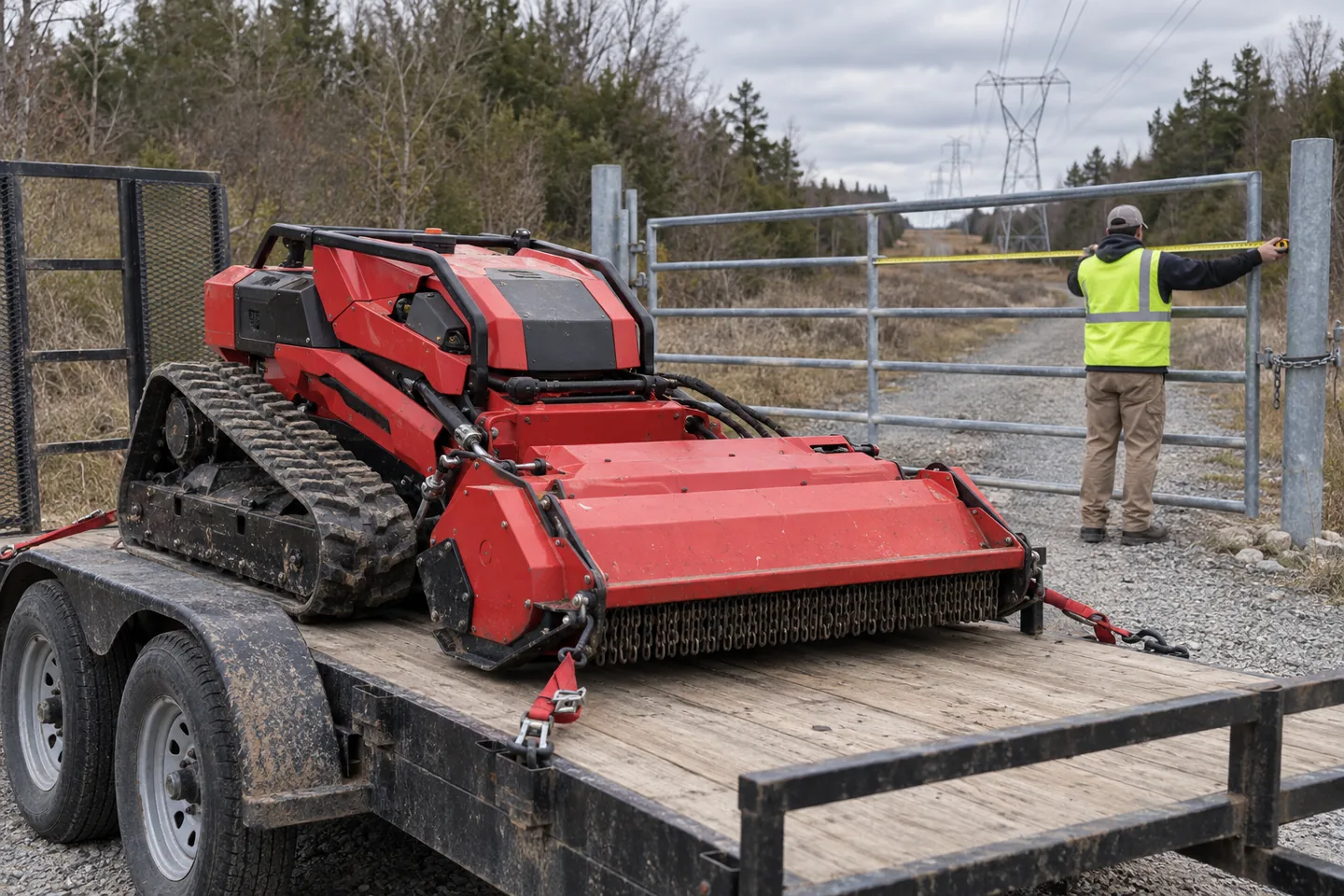
Use an explicit scope decision for every activity. The categories below are examples for procurement routing, not statements that the work is approved at a particular site.
| Proposed work item | RFQ routing | Required confirmation |
|---|---|---|
| Grass mowing in mapped, accessible segments | Potential mower scope | Owner authorization, deck requirement, finish and access specification |
| Light brush cutting | Conditional mower scope | Defined vegetation class plus exact manufacturer attachment capability and owner approval |
| Working near poles, guy wires, markers, pads, or fences | Owner boundary review | Approved work area, asset map, clearances, and any special work controls |
| Pruning or removing trees near electric supply lines | Separate qualified work package | Utility-specific authorization and applicable line-clearance work requirements |
| Herbicide or growth-regulator application | Separate chemical program | Owner’s vegetation-management plan, qualified applicator and applicable product requirements |
| Excavation, grading, trenching, fence repair, or drainage reconstruction | Separate infrastructure work | Relevant owner permissions, utility locating, and work-specific requirements |
| Road shoulder closures or public crossing control | Separate traffic/public-access plan | Responsible traffic-control authority and approved arrangements |
| Restricted areas, unconfirmed buried assets, or missing permission | Hold pending clarification | Written owner decision before including the segment in the executable work scope |
Application review
Discuss your mowing application.
Share the working condition, target market, product family and project scope.
Tree clearance deserves particular care. The OSHA electric power generation, transmission, and distribution standard contains provisions addressing certain line-clearance tree-trimming operations and qualifications. Whether those provisions apply depends on the work and personnel involved; this buying guide does not determine an electrical approach distance or substitute for a qualified safety review.
Translate the scope sheet into remote mower specifications
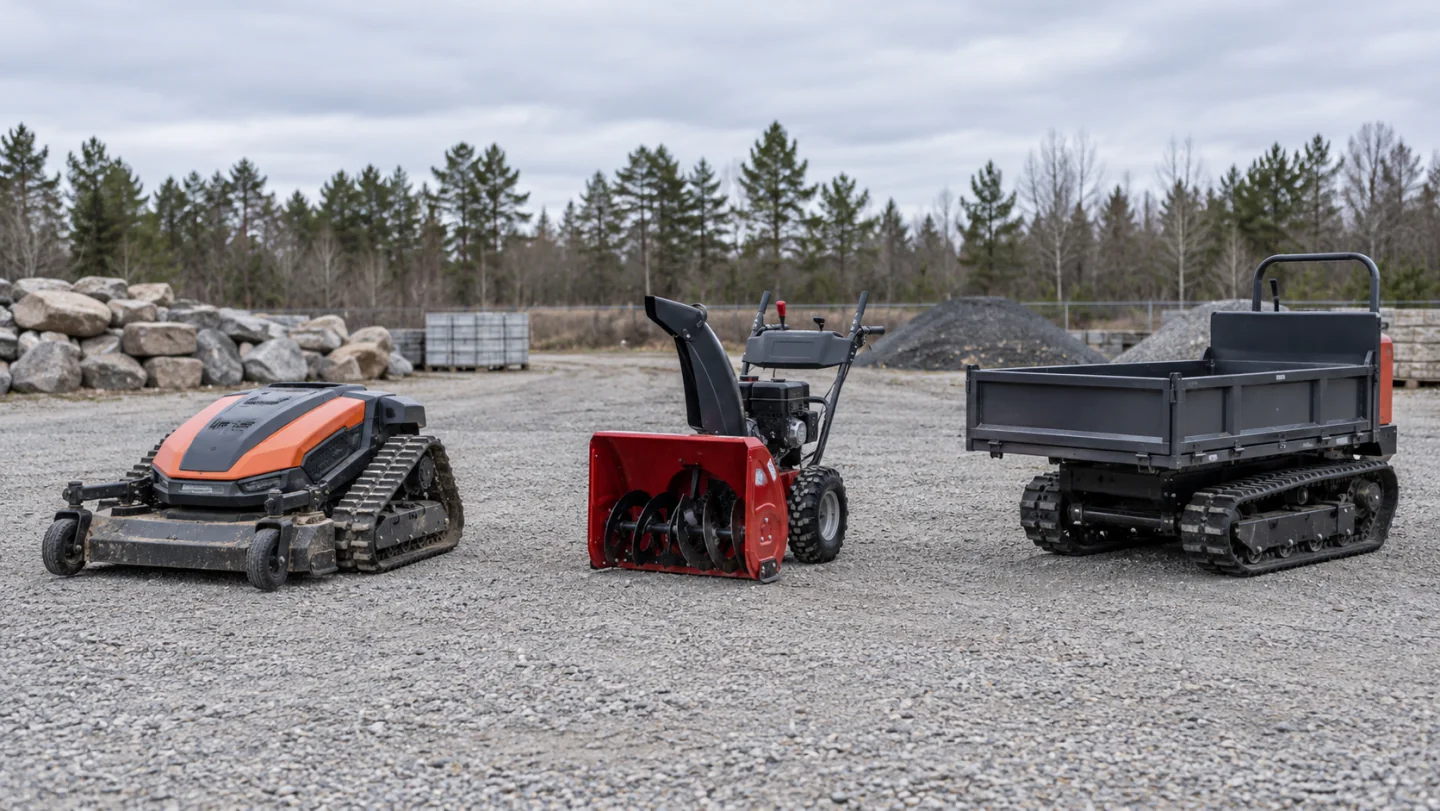
Once the owner has defined where and what may be mowed, ask suppliers for a model-specific response. Avoid vague phrases such as “utility rated,” “all-terrain,” or “works on any slope” unless they are backed by the actual manufacturer’s manual and configuration.
Cutting system and vegetation fit
Request the deck type, rated cutting width, cutting-height range, and manufacturer limits for the intended vegetation. A flail deck, rotary deck, or other mowing attachment may have different cut results and permitted material. Confirm whether the attachment and guarding proposed in the quote are the same as those covered by the manufacturer’s documentation.
Machine width, access, and transport
Cutting width describes the mower’s working swath; it does not prove the complete machine fits a gate. Compare outside width in the required mowing and transport configurations, total weight, loading requirements, and restrictions identified in the segment inventory. Ask the dealer to document the exact dimensions of the quoted unit.
Ground conditions and model limits
Request the operating manual’s slope and terrain limitations, ground-condition requirements, track or tire configuration, and any restrictions affecting drainage ditches or uneven surfaces. Do not turn a brochure slope claim into a site-specific safety threshold. Site suitability must be reviewed by the owner and qualified personnel in the context of the exact machine and planned work.
Remote controls and service continuity
Verify the transmitter package, manufacturer-documented safety-stop and signal-loss functions, operator training offered by the supplier, scheduled service intervals, and parts availability in the project region. Ask whether the mower is a dedicated unit or a multi-attachment tracked carrier; for a carrier, request mowing-head-specific compatibility, guarding, stability, and maintenance documentation.
Do not merge snow equipment and non-mowing tracked platform specifications into the mowing bid. Those products have distinct working attachments, performance criteria, and operating documentation.
Supplier questions and procurement verification checklist
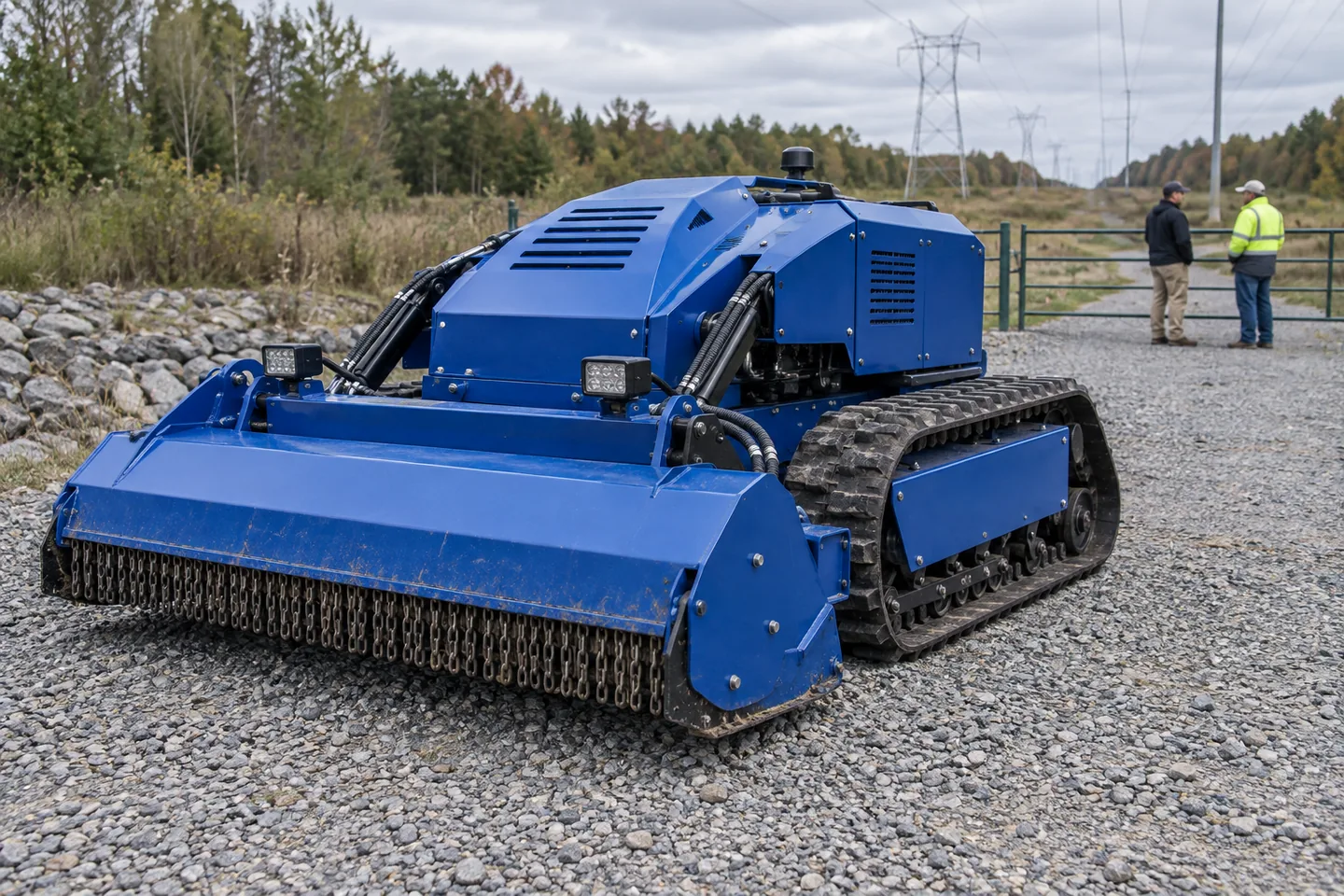
Include these questions with the RFQ so every bidder addresses the same scoped mowing job:
- What exact mower, deck, attachment, and accessory configuration is being quoted?
- What documented vegetation types, cutting height, cutting width, and ground conditions does that configuration support?
- What are the manufacturer’s current limits and instructions relevant to the recorded slopes, access routes, and surface conditions?
- What are the outside machine dimensions and transport requirements for the complete quoted configuration?
- Which transmitter functions, safety-stop features, and operator training are documented for this model?
- How will the supplier support maintenance, spares, dealer service, and response times during the mowing season?
- What work is explicitly excluded from the mower quotation, including tree work, chemical treatments, excavation, traffic management, and site restoration?
- Which owner approvals, maps, or permits are missing and must be obtained separately before any relevant work is scheduled?
For internal review, give each bid line one of three procurement statuses: Included and documented, Excluded and separately assigned, or Pending owner confirmation. This keeps unresolved access or infrastructure issues visible instead of quietly absorbing them into the mower specification.
Prepare a quote that can be reviewed segment by segment
Attach the completed ROW scope sheet, annotated map, vegetation descriptions, access measurements, required finish, current owner-issued restrictions, and a list of unresolved questions to your equipment inquiry. Ask suppliers to return a model-specific datasheet and a matrix showing where their proposed mower meets the recorded requirements, where it does not, and where more information is needed.
A defensible utility right-of-way mowing quote starts with a defined mowing boundary. The remote mower can then be evaluated for the sections actually assigned to mechanical cutting. Clearance decisions, energized or buried asset work, chemical programs, and infrastructure repairs remain with the appropriate utility owner and qualified work packages.
Video: Remote Control Mower Tackles Overgrown Right of Way — Green Climber of North America
