


 By Anna
A customer's remote-controlled mower stops working, and the first question is usually "who pays?" Before anyone answers, a dealer needs the right paperwork in one place. Warranty outcomes depend on the contract, the failure, and the responsible party — not on how the call is framed.
A commercial mower warranty is a contractual statement about defects in materials or workmanship, limited by time, use, maintenance and exclusions. Dealers should document purchase evidence, model and serial number, symptoms, maintenance history and the correct authorized recipient before a claim is reviewed.
This article is written for dealers, importers and commercial fleet service leads handling remote-control mower equipment. It does not state Super Mowers warranty terms, periods or claim outcomes; those must come from the specific contract and supplier. Instead, it explains how to read warranty language, why responsibilities can be split, what to collect, and which decisions must stay with the supplier.
Commercial mower warranty: What a warranty statement actually covers

A warranty statement is narrower than many buyers assume. It typically describes what the manufacturer promises, under which conditions, for how long, and what it will do if a covered defect appears — repair, replacement or another remedy defined in the document. It is not a general promise that the machine will never fail, and it is not a service-level agreement unless the contract says so.
Dealers should treat the warranty as one document among several. The purchase agreement, order confirmation, delivery documents, the operator's manual and any separate engine or component documentation may each carry relevant terms. When these conflict, the contract and applicable law matter more than a summary on a website.
Separate manufacturer defect language, wear, misuse and exclusions
Most warranty documents distinguish between a defect and a condition. A defect is generally a fault attributable to manufacturing or materials. Wear parts — blades, belts, filters, tires and similar consumables — are commonly treated differently, though the exact list belongs to the specific document. Misuse, unauthorized modification, operation outside the manual's limits, and damage from accidents or transport are usually addressed as exclusions or limitations.
For a dealer, this means the first review is descriptive, not argumentative. What failed? How was the machine used? Was it maintained as the manual requires? Is the failed item named as covered, excluded, or unaddressed? A claim file that answers these questions plainly is more useful than one that asserts the outcome.
Read the actual contract and applicable jurisdiction
Warranty rights can vary by country, state and the channel through which the machine was sold. Consumer protection rules may add rights that a commercial buyer does not have, or the reverse. A dealer selling to a business fleet is often dealing with commercial terms, but that should be confirmed rather than assumed.
Read the document that applies to the specific sale: the version in force at purchase, the destination market, and the entity that issued it. Keep the dated version in the file. If a customer asks whether a term is legally enforceable, that is a question for the supplier and, where needed, qualified legal advice — not something a dealer should settle from a website page.
| Document | What it can establish | What it cannot establish on its own |
|---|---|---|
| Signed purchase agreement or order confirmation | The parties, model, options, price and any negotiated terms | Whether a specific failure is a covered defect |
| Warranty statement in force at purchase | Scope, duration, exclusions and stated remedy | That a claim will be approved |
| Operator's manual for the exact model | Required operation and maintenance instructions | A universal service interval for every site |
| Engine or component documentation | Separate coverage or handling for that component | That the mower manufacturer administers it |
| Service and maintenance records | What was done, when and by whom | Proof that a claim will be accepted |
| Delivery and handover records | Condition at handover and accessories supplied | Fault attribution after months of use |
Why engine, mower and accessories can have different terms

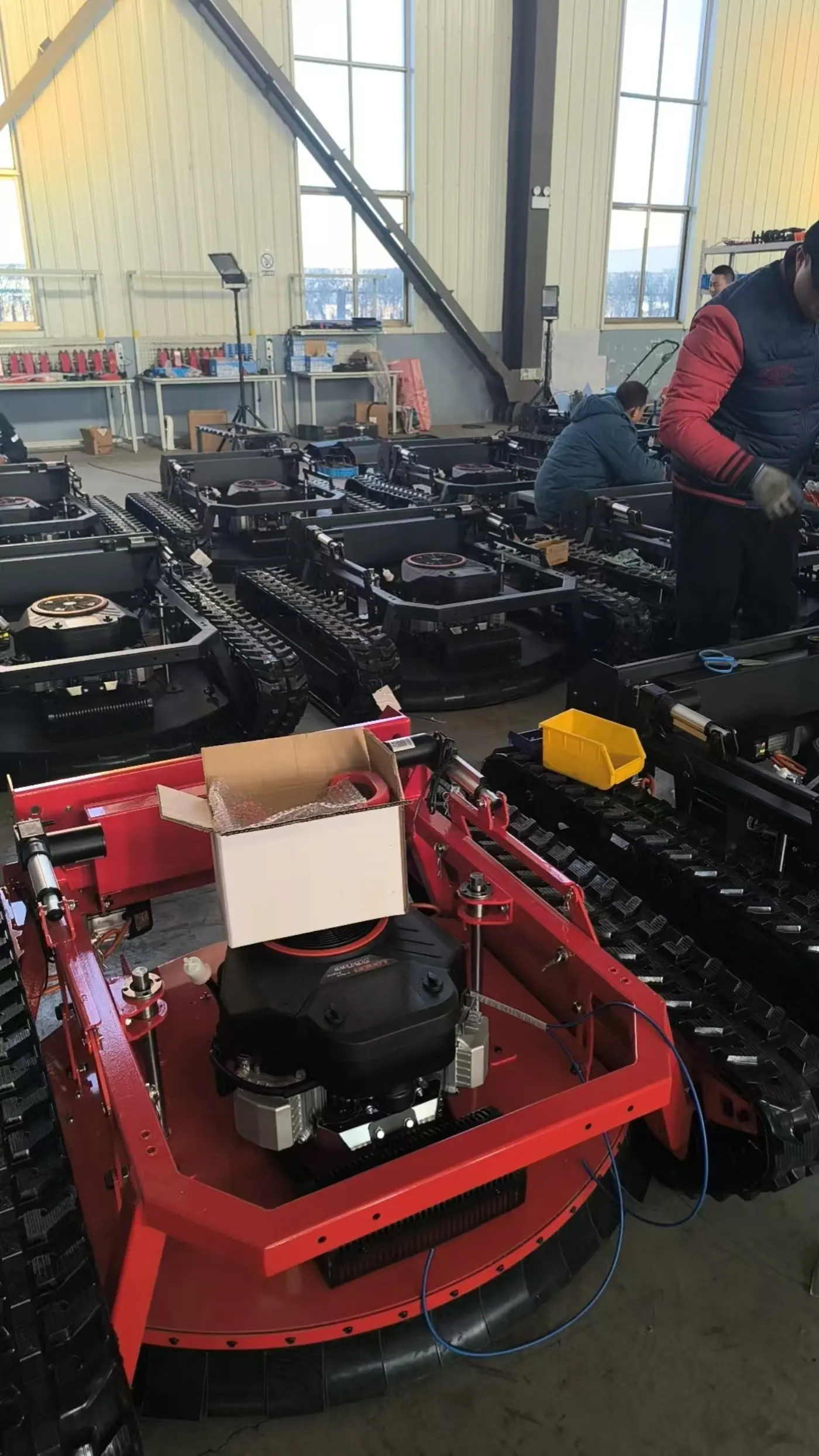
A remote-control mower is an assembly of systems: the mower structure and cutting deck, the power unit, the track or wheel drive, the remote-control system, and any attachments. Different parts of that assembly may be warranted by different entities, with different periods and different claim routes.
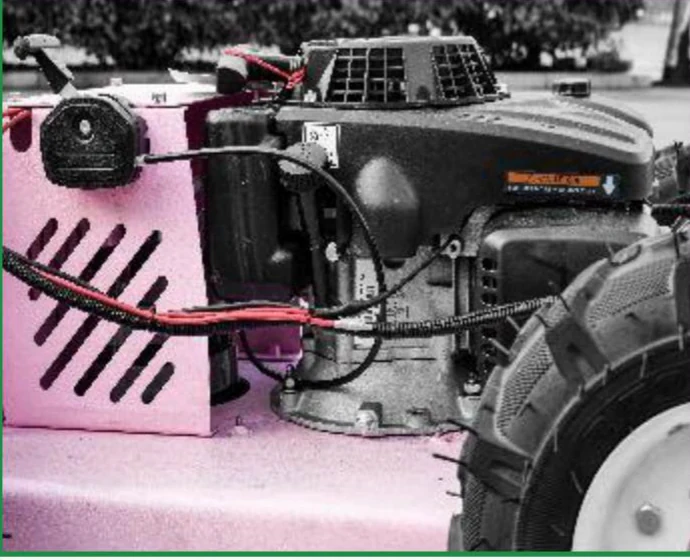
The engine is the clearest common example. Engine manufacturers often publish their own warranty and administer claims through their own authorized service network. The mower manufacturer may pass that coverage through, coordinate it, or handle it differently. Attachments and accessories may be covered by their own supplier or excluded from the base machine warranty. None of this can be assumed from the machine's brand name alone.
Use RC Mowers and SPIDER only as named examples
The task materials include two US-facing public warranty references: RC Mowers' warranty page and SPIDER USA's warranty FAQ. They are useful as examples of how published warranty information can be structured — for instance, describing coverage scope and directing customers through authorized dealers, or distinguishing machine and engine warranty handling.
They are not evidence of Super Mowers terms, and they are not evidence of what any other brand does. Their statements are limited to those companies, their named models and their stated markets. A dealer comparing suppliers should read each supplier's own current documentation rather than generalize from these examples.
Do not assume every brand allocates responsibility the same way
Responsibility allocation is a commercial and contractual choice. One supplier may require all claims to pass through its authorized dealer network. Another may allow direct contact with an engine service center for engine issues. Another may require the importer to act as the first point of contact. These differences affect who receives the claim, who inspects the machine, and who authorizes work.
For a dealer, the practical step is to map the chain before a failure happens: who sold the machine, who is the authorized recipient for each subsystem, and what documentation each party requests. Record that map in the dealer's own files. It is an internal planning tool, not a statement of the supplier's obligations.
| Subsystem | Typical question to resolve | Where the answer must come from |
|---|---|---|
| Mower structure and deck | Who inspects and authorizes repair? | The mower supplier's warranty document and dealer agreement |
| Engine | Is coverage separate, and who administers it? | The engine manufacturer's documentation and the supplier's instructions |
| Drive and track system | Is it treated as part of the machine or as a wear item? | The specific warranty statement |
| Remote-control system | What is covered, and what is excluded as consumable or damage? | The specific warranty statement and manual |
| Attachments | Are they covered by the base warranty or separately? | The attachment supplier's terms and the order documents |
Prepare a claim for review

A claim is a request for a decision, not a decision. The dealer's job is to present the facts accurately and completely so the responsible party can evaluate them. That means gathering evidence at the point of failure, before parts are replaced or the machine is moved, where it is safe and practical to do so.
Start with the customer's description in their own words, then verify what can be verified. Photographs of the failed component, the machine's identification plate, and the surrounding conditions help. If the machine is still under the supplier's control, avoid actions that would destroy evidence unless the manual or the supplier directs otherwise.
Collect purchase evidence, model, serial, symptoms and maintenance history when requested
A practical claim file usually includes the following. The exact list belongs to the supplier's process, so treat this as a preparation checklist rather than a submission requirement.
Application review
Discuss your mowing application.
Share the working condition, target market, product family and project scope.
- Purchase evidence: invoice or order confirmation showing date, seller, model and configuration.
- Machine identification: model and serial number from the plate, plus engine serial if separately recorded.
- Operating hours: if the machine records them, note the reading at failure.
- Symptom record: what happened, when, under what conditions, and whether it recurred.
- Photographs or short video: the failed part, the identification plate, and relevant surroundings.
- Maintenance history: service dates, tasks performed, parts used, and who performed them.
- Operator account: a brief statement of use consistent with the manual.
- Prior communication: any earlier reports of the same issue.
Maintenance records are often the most contested item. They show that required service was performed, but they do not by themselves prove a claim will be accepted. A missing record is a gap to explain; a complete record is evidence to weigh.
Identify the correct authorized recipient
Sending a claim to the wrong party delays it. Before submitting, confirm from the supplier's documentation who receives claims for the specific subsystem and market. If the machine was bought through an importer, the importer may be the required channel. If an engine has separate coverage, the engine documentation may name a different route.
Record the recipient, the date sent, the reference number and the response. If the supplier asks for additional information, log the request and the reply. This record protects both the dealer and the customer if the timeline is later questioned.
Decisions that remain with the supplier
Some questions cannot be answered by the dealer, however complete the file. Whether a failure is a covered defect, whether an exclusion applies, what remedy is offered, who performs the work, and who bears transport costs are decisions that belong to the party issuing the warranty, subject to the contract and applicable law.
A dealer can explain the process and prepare the file. A dealer should not tell a customer that a claim "will be approved" or that a repair is "covered" before the responsible party has confirmed it in writing.
Record approvals, exclusions, transport and service responsibilities only when documented
When a decision arrives, write it down in the same file: what was approved, what was declined and why, who authorized it, what the reference number is, and what happens next. If transport or service labor is part of the arrangement, record who arranged it and on what basis. Verbal approvals should be confirmed in writing where the supplier's process allows.
This record matters for fleet operators too. A commercial fleet may need to show an auditor or insurer why a repair was handled in a particular way. A clear, dated decision trail is more useful than a recollection.
Do not promise reimbursement or a turnaround time
Reimbursement, credit and repair timelines depend on the supplier's process and the specifics of the case. A dealer who promises a date or a refund before authorization creates a problem that the warranty document may not solve. Instead, state what has been submitted, what has been acknowledged, and what the supplier has confirmed.
If a customer needs the machine back quickly, that is an operational conversation about service options, not a warranty promise. Keep the two separate in writing.
| Decision | Who decides | What the dealer should record |
|---|---|---|
| Whether the failure is a covered defect | The warranty issuer, per the contract | The stated decision and reference number |
| Whether an exclusion applies | The warranty issuer | The exclusion cited and the reason given |
| Remedy: repair, replacement or other | The warranty issuer | The authorized remedy in writing |
| Who performs the work | Per the supplier's authorized network | The named service provider and authorization |
| Transport and labor responsibility | Per the contract and the supplier's decision | Who arranged it and on what basis |
| Timing | The supplier's process | Acknowledgment dates, not promised dates |
FAQ
Does a mower warranty cover normal wear?
Usually not in the same way as a manufacturing defect, but the answer belongs to the specific warranty document. Wear parts such as blades, belts and filters are commonly addressed separately or excluded. Check the exact list and wording for the model and market rather than assuming a general rule.
Can an engine have a separate warranty?
It can. Engine manufacturers often publish and administer their own warranty, and the claim route may differ from the mower manufacturer's. Whether that applies to a particular machine depends on the engine documentation and the supplier's instructions. Confirm the recipient before submitting.
Does routine maintenance prove a claim will be accepted?
No. Maintenance records show that service was performed and can support a review, but acceptance depends on the warranty terms, the nature of the failure and the issuer's decision. Records are evidence, not a guarantee.
Conclusion

Document the purchase, the machine, the symptoms, the maintenance history and the correct recipient before submitting a commercial mower warranty claim. Then record the supplier's decision in writing. For remote-control equipment planning, see Super Mowers' commercial remote-control mower overview and the remote-control mower TCO discussion.