
 By Anna
A commercial mower blade sharpening schedule works best when it combines the mower manufacturer’s maintenance instructions, operating hours, cut-quality checks, and a crew log. There is no dependable fleet-wide rule to sharpen every set number of hours. The right inspection and service triggers depend on the specific mower, cutting deck, blade set, and conditions on the route. Use the correct operator’s manual to set the baseline, then record what crews observe and what a qualified maintainer decides.
For busy commercial mowing crews, the practical goal is simple: know when a blade set needs checking, identify poor cutting performance early, and keep a record of the action taken. The template below can be used in a spreadsheet, fleet system, or paper service log.
Safety and scope: This article is a scheduling guide, not a blade-removal or sharpening procedure. Follow the current manufacturer instructions for the exact machine and deck. Physical blade inspection, servicing, balancing, and replacement must be performed by appropriately trained personnel using the specified safety procedures.
How often should commercial mower blades be sharpened?

Check the machine’s manual first; use cut quality and blade condition to decide whether service is needed sooner. Manufacturer articles may give useful examples of operating-hour ranges, but those examples are not universal specifications for every mower.
Even guidance published by the same brand can vary:
| Published manufacturer guidance | Sharpening or inspection guidance | How a commercial crew should use it |
|---|---|---|
| Exmark: Mower Troubleshooting & Service Tips | General sharpening advice at 8–10 operating hours | Example of a relatively frequent service recommendation; not a specification for an unidentified machine |
| Exmark: Maintaining Your Cutting Edge | Daily blade/deck checks and sharpening/balancing at 10–50 hours depending on conditions | Illustrates why daily inspection and sharpening intervals are different controls |
These are general Exmark publications, not two instructions that should be averaged into a new interval. The correct maintenance document for the machine, its serial range, and its fitted blade/deck configuration takes priority. A manufacturer service bulletin specific to that configuration may also affect the decision.
Why operating hours alone are not enough
A clean, frequently mowed lawn and a sandy roadside contract can expose blades to very different wear. Deck design, blade type, cutting mode, dust, debris, previous impacts, and the history of each blade set can also affect the result. A crew that sharpens every blade automatically at the same fleet-wide hour count may miss premature damage on one route while performing unnecessary work on another.
Cut appearance helps flag problems. The University of Minnesota Extension’s mowing guidance explains that dull rotary blades can tear grass instead of cutting cleanly, leaving frayed or brown tips. However, an uneven finish, clumping, or missed strips may have other causes, so poor cut quality should prompt a check—not an automatic diagnosis of dull blades.
Which blade sharpening interval applies to your mower?

For each machine, identify the actual source of the maintenance requirement before entering an interval into the schedule. Use this order when general advice conflicts:
- Current manufacturer operator or maintenance manual: Match the model, serial number, cutting deck, and blade configuration.
- Applicable manufacturer service bulletins: Check for updates affecting the deck or blade set.
- Configuration-specific dealer or distributor instructions: Keep the document date and source with the record.
- Internal crew history: Use observed wear and cut-quality trends to plan earlier checks where permitted; do not use fleet experience to override mandatory manufacturer requirements.
Write down whether the document calls for inspection, sharpening, balancing, or replacement. They are not interchangeable actions. For example, an instruction to inspect after a set number of operating hours does not automatically authorize sharpening every time the inspection comes due.
If you cannot confirm which manual revision applies to the machine, mark the interval as unverified and obtain the correct documentation before adopting a recurring service target. Manufacturers, including Scag, provide model-specific manuals or parts resources for this purpose.
How to build a commercial mower blade sharpening schedule

Step 1: Identify the machine, deck, and blade set
Assign an ID to every mower and every interchangeable blade set. Record the make, model, serial number, deck type, blade part number, and the current manual reference. If the operation rotates spare blades between units, track the blade sets separately so sharpening history does not get lost during a swap.
Step 2: Record operating hours against the correct item
When the manual specifies an operating-hour trigger, use the mower’s hour meter as directed. Do not substitute calendar days or crew shift length for operating hours. Record the meter reading when a blade set is fitted, removed, inspected, or serviced.
Simple calculation: If a mower’s meter was at 304 hours when a blade set was installed and reads 316 hours when that set is removed, the set accumulated 12 hours on that mower during that installation. If the same blade set is later used on another machine, add its actual recorded service hours from that installation as well. This is a bookkeeping example, not a recommended 12-hour sharpening interval.
Step 3: Collect route and cut-quality observations
Operators can record visible results after mowing and report unusual behavior promptly. Use consistent descriptions across the fleet:
- Cut finish: clean or frayed grass tips, missed strips, and uneven appearance.
- Discharge: unusual clumping or a noticeable change in clipping flow.
- Route: sandy soil, dry dusty ground, leaves, sticks, thick growth, or unusually wet conditions.
- Machine behavior: new vibration, abnormal noise, or a suspected impact with an object.
- Maintainer findings: nicks, deformation, cracks, heavy wear, and the outcome of any authorized inspection.
Application review
Discuss your mowing application.
Share the working condition, target market, product family and project scope.
Do not reach beneath a deck or physically examine a cutting blade unless the machine has been made safe exactly as the manufacturer requires and the person is authorized to do the work. If there is a suspected impact, new vibration, or visible blade damage, stop operation and refer the machine for a qualified assessment rather than assuming sharpening will solve it.
Step 4: Apply a consistent service decision
| Observed trigger | Crew status | Next action |
|---|---|---|
| Manual inspection point reached; no abnormal cutting reported | Inspection due | Schedule the prescribed inspection; document the finding before deciding on blade work |
| Frayed tips or declining cut quality before the planned check | Early review | Record route conditions and request a qualified cut-quality/blade assessment |
| Suspected impact, new vibration, bent or cracked blade, or serious wear | Stop and refer | Remove the mower from service pending evaluation under the manufacturer’s instructions |
| Acceptable cut; no required inspection or other trigger outstanding | Continue and log | Keep the existing plan and record any changed site conditions |
Step 5: Review the pattern by route and season
At regular fleet reviews, compare machines operating in similar conditions. If one route repeatedly produces early wear, consider a more frequent inspection plan where appropriate. Record the reason and approval for any change. Do not reduce required checks or exceed manufacturer replacement limits to meet a productivity target.
Commercial mower blade maintenance log: fields for each crew
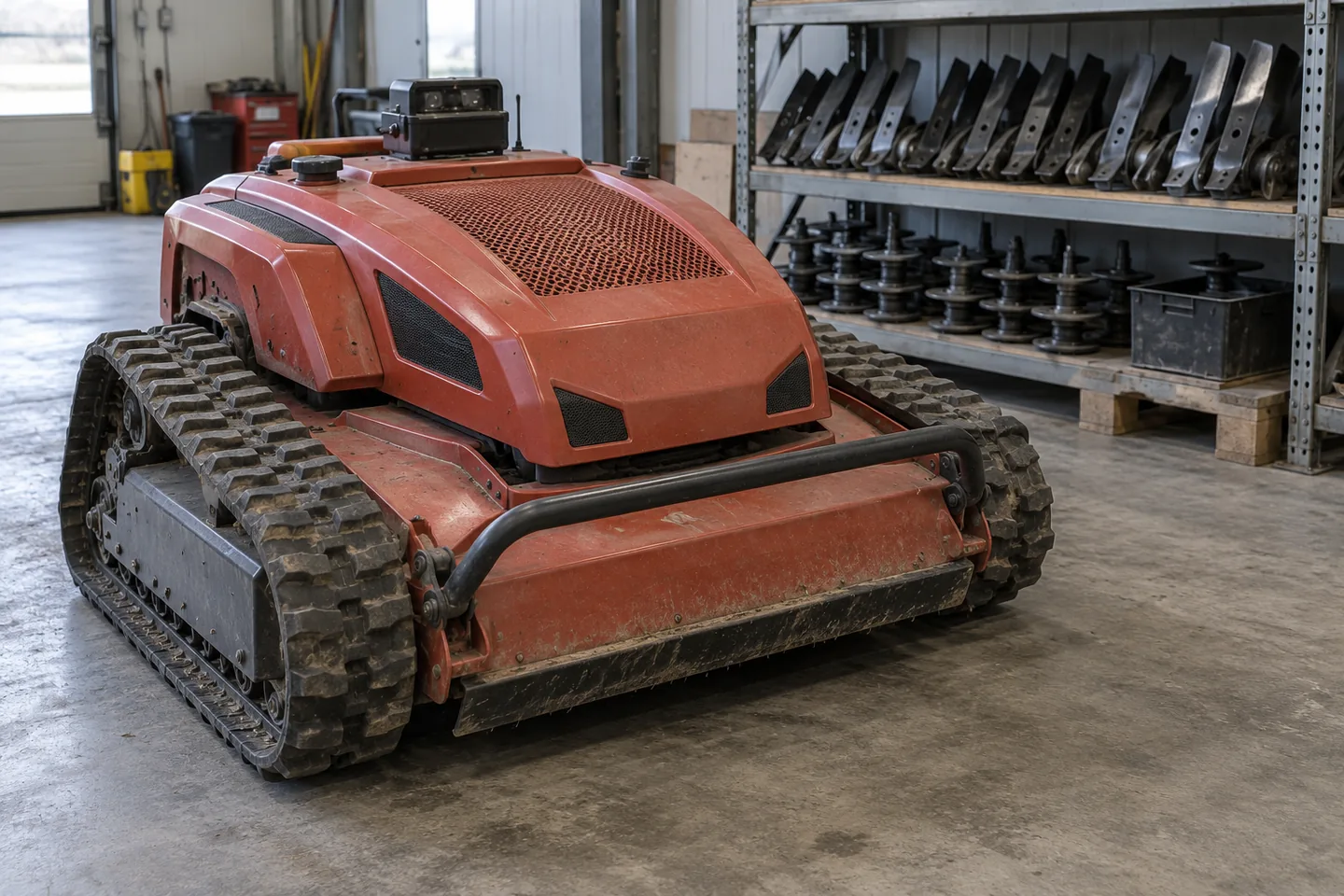
Use one inspection or service entry per blade set so the next crew can see what happened. The log should separate an operator’s observation from a maintainer’s decision and confirm when the mower is cleared to return to work.
| Log field | What to enter | Why it belongs in the record |
|---|---|---|
| Date and crew | [Date / route / crew ID] | Links the observation to a shift |
| Mower identity | [Unit ID / make / model / serial] | Identifies the machine covered by the manual |
| Deck and blade set | [Deck / blade part number / set ID] | Tracks rotating or replacement blade sets |
| Hour-meter readings | [Current meter / at installation / at removal] | Supports hour-based inspection and usage records |
| Blade-set hours | [Recorded hours since last service, if applicable] | Avoids confusing a machine’s lifetime hours with one blade set’s use |
| Route conditions | [Normal / sandy / dusty / debris / wet] | Provides context for early wear |
| Manual trigger | [Required check or service / section / revision] | Shows which instruction controls the action |
| Operator observation | [Cut acceptable / frayed / streaking / discharge change / vibration] | Captures field evidence without diagnosing the cause |
| Maintainer finding | [Inspected / acceptable / dull / damaged / other finding] | Separates inspection results from crew reports |
| Decision and status | [Continue / inspect / sharpen / replace / out of service] | Tells dispatch whether the mower can be assigned |
| Completed work | [Action / date / service reference] | Records what actually happened |
| Next check and approval | [Trigger / responsible person / sign-off] | Closes the task and makes the next review visible |
Illustrative entry: Unit M-07, blade set B-02, meter at 418 hours; the operator reports frayed grass tips after a sandy route. Status: early review. The maintenance lead checks the current manual, assesses the machine, and records either clearance, authorized service, or replacement. The 418-hour reading is an example log entry, not a prescribed service interval.
Daily and end-of-route blade schedule checklist

- Confirm the mower and blade-set IDs on the route sheet.
- Check whether the manufacturer-required inspection or service trigger is due.
- Record the hour-meter reading at the required checkpoint.
- Note changes in route conditions, especially sand, dust, debris, or impacts.
- Record cut-quality problems using the same terms across crews.
- Report vibration, impact, or suspected blade damage immediately and follow the manufacturer’s stop-use instructions.
- Make sure a qualified maintainer records the inspection result and any sharpening, balancing, or replacement.
- Confirm the next inspection trigger and who approved the mower’s return to service.
A brief end-of-day review of unresolved entries prevents a mower marked “needs checking” from appearing on the next morning’s route as if it were cleared.
Questions for commercial mowing buyers and distributors

For fleet managers and maintenance leads
- Do we have the correct operator’s manual for each machine’s model and serial range?
- Which checks are required by operating hours, and which are condition-based?
- Can we follow individual blade sets when spares rotate between machines?
- Which contracts produce repeated cut-quality complaints or early blade wear?
- Who can assess blade damage, authorize service, and clear a mower for the route?
For parts departments and equipment suppliers
- Confirm model, serial number, deck configuration, and blade part number before recommending a replacement set.
- Provide the applicable manual and documented maintenance requirements with the quote.
- Clarify whether the proposed blades are approved for the intended cutting mode and application.
- Ask for route conditions and fleet utilization before discussing spare blade inventory.
For a scoped commercial mower inquiry, share the number of machines, deck and blade configurations, typical weekly operating hours, prevailing turf and debris conditions, and service documentation needs. Those details make it easier to compare equipment and spare-parts support without assuming a generic sharpening schedule fits every job.
Keep rotary mower blade schedules separate from other equipment
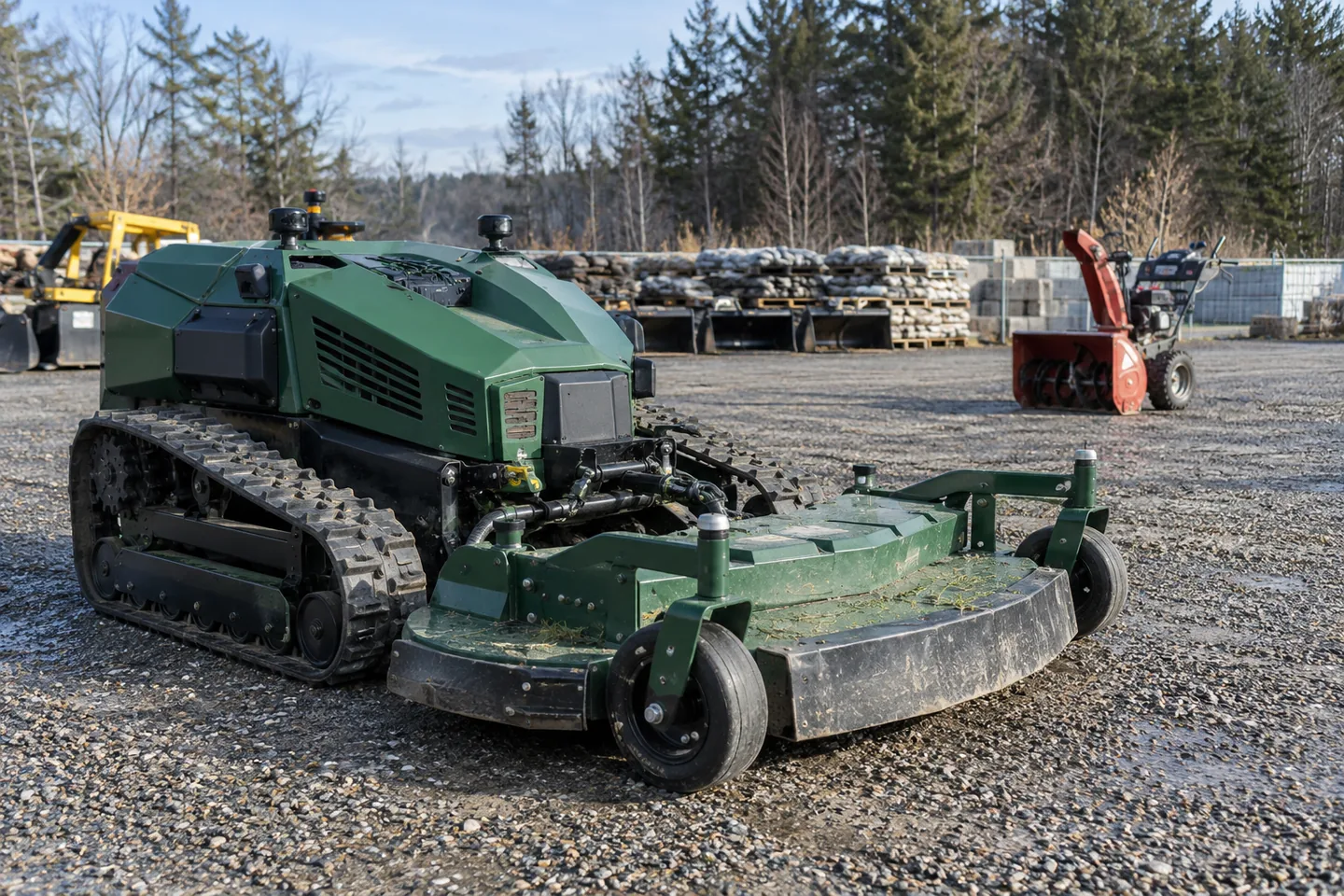
This schedule applies to rotary mowing blades on the specific mower and cutting deck. A mower that uses tracks for propulsion still needs the correct blade maintenance guidance for its mowing deck; its track system is a separate maintenance item. Reel mowers, snow-removal cutting edges, and non-mowing tracked equipment require their own service plans and qualified assessments.
Bottom line: Build the commercial mower blade sharpening schedule around the correct manual, a defined inspection trigger, visible cut-quality evidence, and a complete crew log. Treat manufacturer hour ranges as context—not as permission to skip required checks or sharpen a damaged blade.
Manufacturer and extension references
- Exmark — Mower Troubleshooting & Service Tips: general blade sharpening and balancing guidance.
- Exmark — Maintaining Your Cutting Edge: daily inspection and condition-dependent maintenance guidance.
- Scag — Manuals and Parts Lists: starting point for finding model-specific instructions.
- University of Minnesota Extension — Mowers and Mowing Safety: effects of dull blades and general mowing safety guidance.
Reference scope: General manufacturer articles illustrate differences in published guidance; they are not substitutes for the current service documentation for a particular mower, serial number, blade set, or cutting deck.
Video: Evaluating Worn Mower Blades — Magna-Matic Corporation (third-party)
