

 By Anna
Your crew stops a commercial mower with the emergency-stop button, then reaches toward the deck to clear a blockage. That single habit is where two very different safety functions get confused. Stopping a machine for a moment is not the same as isolating it for servicing, and the difference matters to employers, fleet maintenance leads, and safety officers who write the procedures.
An emergency stop is an operator control that halts machine motion in an emergency. An energy-isolating device is a mechanical means used under a hazardous-energy control program to separate a machine from its energy sources for servicing. One does not replace the other, and a stopped mower is not automatically an isolated mower.
This article explains the distinction using OSHA's own definitions, shows why a named mower manual's key or battery guidance is model specific, and sets out the questions a workplace must answer before anyone services a mower. It does not provide isolation steps, because the correct sequence depends on the exact machine, its energy sources, and the rules that apply to your site.
Lawn mower lockout tagout maintenance: Identify the servicing task and potentially hazardous energy sources for the actual machine
Before anyone debates buttons or locks, the workplace needs a clear picture of what the servicing task actually involves and what could release energy while it is done. A blade change, a deck inspection, a hydraulic repair, and a battery service are not the same job, and they do not expose a person to the same hazards. The starting point is the task, not the tool.
Identify servicing and energy sources
OSHA's hazardous-energy control page frames the problem in terms of energy that can harm a worker during servicing or maintenance. For mowing equipment, the relevant sources are not limited to the engine or motor. A machine may store energy in ways that are not obvious from the operator's seat: raised components that can fall, springs under tension, pressurized fluid, rotating parts that coast after shutdown, and electrical storage. Which of these exist, and where, is a question for the specific machine's documentation, not for a generic checklist borrowed from another product.
A practical way to organize the review is to list each servicing task and, beside it, the energy sources the machine documentation identifies for that task. That list becomes the basis for the workplace's written process. It also shows why "we always just switch it off" is not an adequate answer: switching off addresses only the energy the switch controls.
| Servicing task (example) | Question to answer from machine documentation | Why it matters |
|---|---|---|
| Blade or deck work | Which drive and stored-energy sources does the manual identify for this area? | Rotating and raised components may retain energy after shutdown |
| Hydraulic or fluid system work | Does the documentation identify pressure or stored fluid energy? | Pressurized fluid is a hazardous energy source, not just a spill risk |
| Electrical or battery service | What disconnection or isolation does the manual specify for this model? | Electrical storage may remain present after the machine stops |
| Routine inspection only | Does the task require isolation, or only a stopped machine? | Over- and under-isolation are both planning errors |
Treat every cell as a question to confirm from the actual manual and workplace rules, not as a completed answer. The table is a planning aid, not a procedure.
Check the equipment and workplace documentation
The second half of the review is documentary. The employer needs the machine-specific manual for the exact model and configuration in the fleet, including any installed attachments, because attachments can add energy sources or change what servicing involves. Alongside it, the workplace needs its own written hazardous-energy control process, which is where the applicable legal requirements and site rules live.
These two documents answer different questions. The manual tells you what the manufacturer says about the machine. The workplace process tells you what your organization requires, and how it applies the law that governs your site. Neither one substitutes for the other, and a manual statement about a key or a battery is not automatically a complete workplace procedure. If the fleet includes several models, the review has to be repeated per model rather than averaged across the fleet.
Compare an emergency-stop control with an energy-isolating device using OSHA definitions

The confusion between an emergency stop and isolation is not a matter of opinion; it comes down to what each device is defined to do. OSHA's hazardous-energy control material and the text of 29 CFR 1910.147 give the terms specific meanings that a workplace can apply directly when writing its procedures.
Read the OSHA energy-isolating-device definition
In OSHA's standard for the control of hazardous energy, an energy-isolating device is defined as a mechanical device that physically prevents the transmission or release of energy. The definition lists examples such as a manually operated electrical circuit breaker, a disconnect switch, a manually operated switch by which the conductors of a circuit can be disconnected from all ungrounded supply conductors, a line valve, a block, and similar devices. The same definition states that push buttons, selector switches, and other control-circuit-type devices are not energy-isolating devices.
That last sentence is the hinge of this whole topic. A control that signals the machine to stop is, by this definition, not the same class of device as one that physically separates the machine from its energy. The definition is about physical prevention of energy transmission, not about whether the machine appears to be off.
Distinguish control buttons and emergency stop
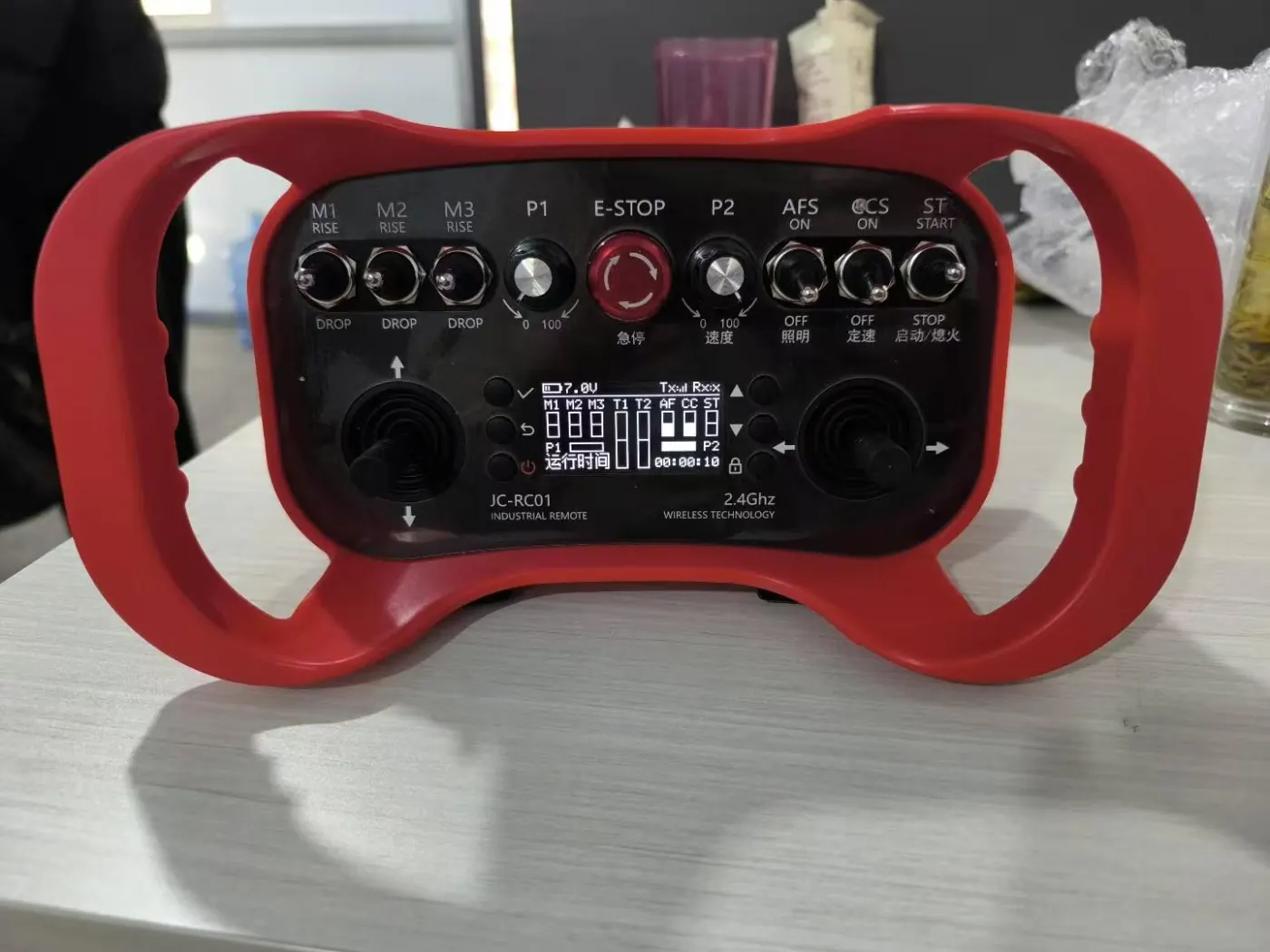
An emergency stop is a control. Its purpose is to stop the machine quickly in an emergency, and it belongs to the operating phase of the machine's life. It is not designed, and should not be treated, as the means of securing the machine for servicing. A mower that has been stopped by an emergency-stop control may still hold stored energy, and the control itself may be reset by someone else.
Isolation serves a different purpose. It is part of a servicing process that separates the machine from energy sources and keeps it separated while work is done, under the workplace's hazardous-energy control program. The two functions can coexist on the same machine, and confusing them creates two opposite errors: assuming a stopped machine is safe to service, or treating an emergency stop as if it were a lockout point.
| Feature | Emergency-stop control | Energy-isolating device |
|---|---|---|
| Primary purpose | Halt machine motion in an emergency | Physically prevent transmission or release of energy for servicing |
| Phase of use | Operation | Servicing and maintenance |
| OSHA 1910.147 status | Control-circuit-type device; not an energy-isolating device | Mechanical device that physically prevents energy transmission or release |
| Typical examples named in the standard | Push buttons, selector switches | Manually operated circuit breaker, disconnect switch, line valve, block |
| What it does not establish | That the machine is isolated for servicing | That the machine is safe to operate or that all hazards are removed |
This comparison is about definitions and purpose. It is not a statement that any particular mower has or lacks a given device; that has to be confirmed from the machine and its documentation.
Explain that the safety key or battery procedure in a named mower manual is model specific

Mower manuals often include instructions about a safety key, a battery disconnect, or similar steps before maintenance. Those instructions are useful, but they are written for a particular machine, and their scope is narrower than many readers assume.
Name the equipment whose example is used
Consider the Husqvarna self-service maintenance guidance for lawn mowers, which is a consumer-oriented support page rather than a commercial fleet procedure. It illustrates the kind of model-specific instruction owners encounter: steps tied to that product family, written for the person maintaining that machine. It is not a template for a commercial remote-controlled mower, and it does not establish what any other model requires.
Application review
Discuss your mowing application.
Share the working condition, target market, product family and project scope.
That is why this article does not reproduce a step sequence. A procedure copied from one manual onto a different machine can miss energy sources the second machine has, or apply steps in an order that does not fit its design. The correct reference is the manual for the exact model and configuration being serviced, read in full for the relevant task.
Do not infer that a safety key satisfies every workplace rule
Removing a key or following a battery step may be part of what a manual instructs. It does not follow that doing so satisfies a workplace's hazardous-energy control obligations. OSHA's standard is a workplace program requirement, and it addresses matters such as written procedures, employee training, and the devices used to isolate energy, which a manual's maintenance note does not purport to cover.
A manual is manufacturer guidance about the machine. A workplace procedure is the employer's documented process for controlling hazardous energy at that site, consistent with the law that applies there. The two should agree, and where the manual is silent or the workplace rule is stricter, the workplace process governs how the job is organized. A safety key is a machine feature; it is not a substitute for a written, machine-specific isolation process.
Check the applicable workplace standard, authorized personnel and written machine-specific process

Once the task, the machine, and the definitions are clear, the remaining questions are about jurisdiction and responsibility. These are the questions a safety officer or fleet maintenance lead should be able to answer before any servicing begins.
Determine the applicable jurisdiction and work scope
OSHA's general industry standard for the control of hazardous energy, 29 CFR 1910.147, applies in the United States within its scope, and it is the reference used in this article. Whether and how it applies to a specific operation depends on the workplace, the industry, and the task, and other requirements may also apply. A university environmental health and safety page on lockout/tagout, such as the University of Chicago's, is a useful example of how an institution translates the requirement into its own written program; it is not a substitute for the rule itself or for your own site's process.
Scope also has a practical dimension. The same mower may be used for mowing, for transport, and for servicing, and the workplace process needs to say which tasks count as servicing for its purposes. A quick visual check between jobs is not the same activity as a blade change, and the process should make the boundary clear so that crews are not guessing.
Leave procedures to authorized personnel
OSHA's standard uses the concept of authorized employees for lockout/tagout activity, and the practical implication is straightforward: the people who perform isolation are the people the employer has designated and trained for it. This article deliberately does not describe how to isolate a mower, because a generic sequence would be unsafe and would not match any particular machine. What a manager can do is make sure the written process exists, that it is specific to each machine in the fleet, that the people doing the work are authorized under it, and that the manual and the process are available where the work happens.
For the operating side of the same fleet, the pre-operation inspection and operator training articles on this site cover checks and training that belong to the operating phase rather than to servicing. Keeping those phases distinct in your documentation is itself a useful control.
| Question for the employer or safety lead | Why it needs a documented answer |
|---|---|
| Which legal requirements apply to this site and task? | Determines the standard the written process must meet |
| Which employees are authorized to perform isolation? | Defines who may carry out the servicing procedure |
| Where is the machine-specific manual and written process kept? | Makes the correct reference available at the point of work |
| How are new models and attachments added to the process? | Prevents a fleet change from outrunning the procedure |
| How is the distinction between operating controls and isolation communicated? | Reduces the chance of treating a stop button as a lockout |
These are management questions, not instructions for hands-on work. Answering them is the employer's responsibility under the applicable rules.
FAQ

Is an emergency-stop pushbutton an energy-isolating device?
Under OSHA's 1910.147 definition, no. The definition states that push buttons, selector switches, and other control-circuit-type devices are not energy-isolating devices. An emergency stop is a control used to halt the machine; isolation is a separate function performed under a hazardous-energy control program.
Does removing a battery automatically satisfy every lockout requirement?
No. A battery step in a manual may be part of what the manufacturer instructs for a given model, but it does not by itself satisfy a workplace's hazardous-energy control obligations. Those obligations come from the applicable standard and the employer's written process, which address written procedures, authorized personnel, and the devices used to isolate energy.
Which manual and workplace rules govern the task?
The manual for the exact model and configuration being serviced, together with the employer's written hazardous-energy control process as required by the law that applies to the site. Where the two differ, the workplace process governs how the job is organized, and the manual remains the reference for the machine itself.
Conclusion

A stopped mower is not an isolated mower. Confirm the task, the machine's energy sources, and your written process before servicing, and keep emergency controls in the operating phase where they belong.
Video: Supervision in Manufacturing - Guards and Lockout (2 of 2)
