

 By Anna
A dealer has delivered a remote-control mower, signed the paperwork, and left. Weeks later a new operator is on the controls, and nobody can say which manual revision they were trained against, who signed off, or what was still unresolved. This plan helps you close that gap.
Build one handover record per machine and per trainee. It should link the exact model and configuration, the current manual revision, the training topics drawn from approved documents, the person responsible for training and acceptance, the completion evidence, and every open question. The matrix organizes the handover; it does not replace hands-on training.
Remote control mower operator training: Identify the actual machine and trainee
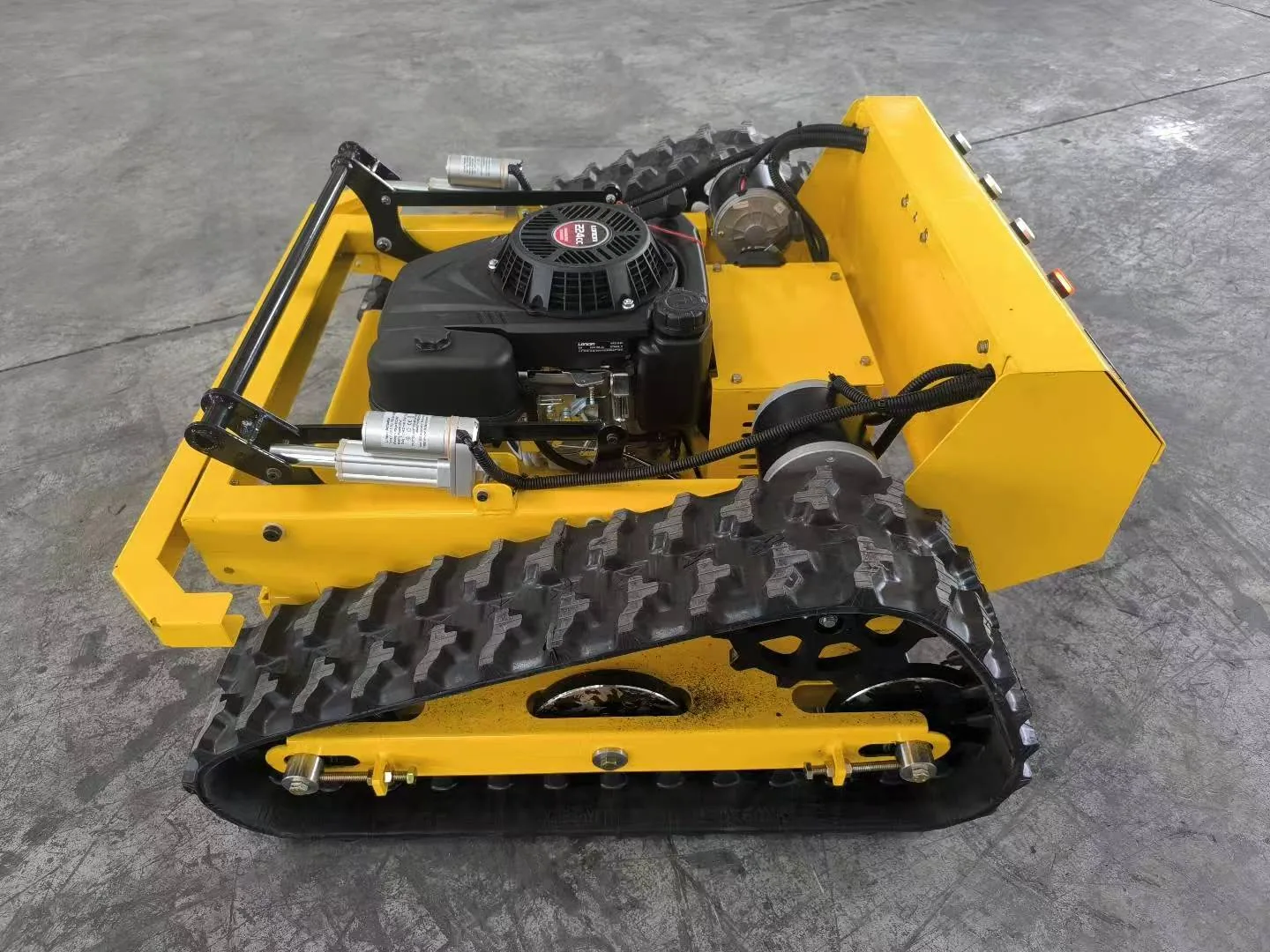
A training handover fails quietly when it is written for a product family instead of a specific machine. Two mowers that share a model name can differ in attachments, control layout, tire set, or manual revision, and a trainee who learned on one may not have seen the other. Start by fixing the identity of both sides of the handover: the machine as delivered and the person who will actually operate it.
For the machine, record the model designation, serial number, installed attachments, and the manual revision supplied with the unit. For the trainee, record name, role, prior experience with remote-control equipment, and the site or sites where they will work. This is administrative work, but it is what makes later evidence meaningful. A signature against an unidentified machine proves very little.
Record configuration and current manuals
Treat the delivered documentation as a controlled set. Note the manual title, revision or publication date, and language, and confirm that it matches the unit in front of you. Where the manufacturer publishes model-specific documents, use those rather than a generic brochure. The SPIDER ILD01G operator manual, for example, is tied to a specific model, serial range (2474 onward) and 2019 revision — a reminder that manuals are versioned documents, not interchangeable background reading. That manual belongs to a different manufacturer and is cited here only as an example of how model and revision are scoped; it is not a Super Mowers document and does not describe Super Mowers machines.
Configuration details matter because they change what the operator must know. An attachment, a different control console, or a changed tire set can alter the topics that need coverage. Record what is actually fitted, and flag any difference between the delivered configuration and the configuration described in the manual you were given.
Separate remote operation from autonomous modes
Remote control and autonomy are not the same thing, and training records should not blur them. Remote control means the operator directs the machine through a control arrangement described in the supplied documentation. It does not, by itself, establish autonomous navigation, obstacle detection, unattended operation, or any other automated function. Our background article on remote-control and robotic mower modes explains the distinction; use it as orientation, then confirm the actual functions of your unit against its own manual.
If a machine does have automated functions, they need their own training topics and their own evidence. If it does not, the record should say so plainly, so that a later reader does not assume capabilities that were never demonstrated. Write down what the machine is, not what the category name suggests.
| Handover field | What to record | Source to check | Status |
|---|---|---|---|
| Model and serial number | Exact designation and unit serial | Machine plate, delivery paperwork | Confirm on arrival |
| Configuration | Attachments, control layout, tire set as delivered | Delivery inspection, manual parts list | Compare with manual |
| Manual set | Title, revision/date, language, quantity | Document pack in the cab or folder | Confirm current revision |
| Control type | Remote control, and any automated functions actually fitted | Model manual | Do not infer from marketing name |
| Trainee | Name, role, sites, prior remote-control experience | Employer records | Confirm before session |
| Training provider | Internal supervisor or external provider, with scope | Provider confirmation | Record name and scope |
| Open questions | Missing documents, unclear functions, unresolved site issues | This record | Escalate before operation |
Assign training responsibility

Handover records go wrong when everyone assumes someone else owns the training. The dealer may see delivery as the end of the transaction; the contractor supervisor may assume the dealer covered it; the operator may assume the machine is self-explanatory. Name the responsible person for each part of the handover in writing, and make clear which parts are still unassigned.
Responsibility is not the same as legal liability, and this plan does not attempt to allocate either. It simply makes the practical arrangement visible: who provides training, who accepts that training as complete, who keeps the record, and who answers questions afterward. Where local rules, insurance requirements, or customer contracts impose additional obligations, those belong in the record too, cited to their actual source rather than assumed.
Clarify supplier, supervisor and operator roles
A simple split works for most fleets. The supplier or dealer confirms what was delivered and which documentation accompanies it. The fleet supervisor or training lead defines the site risks, selects trainees, and accepts completion. The operator attends, asks questions, and confirms understanding. Each role produces a different piece of evidence, and the record should show which pieces exist.
Be careful not to overstate what a supplier has promised. Dealer training arrangements vary by model and by supplier, and a general statement that “dealers provide training” is not a commitment for a particular machine. The SPIDER Mower USA FAQ, for instance, indicates that dealer training varies by model; that is a statement about one company’s arrangements, not a Super Mowers offer and not a US legal requirement. Ask your own supplier what is included, in writing, and record the answer.
Record model-specific training provider and scope
When training comes from outside the company, capture the provider, the course or session title, the date, and — most importantly — the scope. A course built around one machine type may cover transferable principles such as pre-use checks, communication, and exclusion zones, but it does not automatically certify competence on a different model with different controls.
The Lantra remote-control mower course is a useful example of format: it shows that structured remote-control mower training exists as a defined task with defined content. It is a UK course, cited here as evidence of training format, not as US licensing law and not as a Super Mowers course. If you use an external provider, check that the syllabus matches your machine and site, and record any topics the provider did not cover.
| Role | Responsibility in this handover | Evidence produced |
|---|---|---|
| Dealer / delivery staff | Confirm model, configuration, and document pack | Signed delivery checklist |
| Fleet supervisor or training lead | Select trainees, define site topics, accept completion | Training plan and sign-off |
| Operator | Attend, ask questions, confirm understanding | Signed attendance and acknowledgement |
| External provider (if used) | Deliver stated scope; identify what was not covered | Course outline and attendance record |
| Maintenance or service contact | Answer document and configuration queries | Written response or note |
Map competency evidence

A training record is only useful if it shows what was actually covered and how completion was judged. The trap is copying a generic topic list from another machine or another site. Instead, derive the topics from the approved documents for this unit and the actual conditions where it will work, then record which topics were covered, by whom, and with what evidence.
Application review
Discuss your mowing application.
Share the working condition, target market, product family and project scope.
This is also where honesty about gaps pays off. A record that lists ten topics as “complete” when three were never discussed is worse than a record that shows seven complete and three open, because the open items can still be resolved. The matrix below is a starting structure; fill it from your own manual and site assessment rather than treating the example rows as content.
Identify controls, stop procedures and site risk topics from approved documents
Draw the topic list from the model manual and the site’s own risk assessment. Typical headings include control familiarization, stopping and shutdown as described in the manual, pre-use checks, communication and exclusion arrangements, terrain and ground conditions, and transport or movement between areas. The exact content and any limits must come from the manual for that machine — this article does not set operating limits, slope figures, or stopping distances, and no generic list should be read as doing so.
Site risk topics belong to the site, not the brochure. Access routes, public or colleague exclusion, overhead hazards, ground conditions, and the sequence of work are all local questions. Record who assessed them and when, and note that conditions change seasonally. A training record signed in spring may need revisiting after a site layout change.
Record gaps without prescribing a live test
Where a topic is not yet covered, write it down as open with an owner and a target date. Do not invent a practical test to close the gap, and do not describe a live demonstration as if this article prescribed it. Whether a practical assessment is appropriate, and what it should contain, is a decision for the responsible supervisor using the manual and any applicable local requirements.
Some gaps are documentary rather than operational: a missing page, an outdated revision, an unclear attachment reference. Others are competence-related: an operator who has not yet worked with a particular control arrangement. Separating the two helps you route each item to the right person. A documentary gap goes back to the supplier; a competence gap goes to the training lead.
| Topic area | Source for the topic | Covered? | Evidence held | Open item / owner |
|---|---|---|---|---|
| Control familiarization | Model manual | To confirm | Attendance note | — |
| Stopping and shutdown | Model manual | To confirm | Attendance note | — |
| Pre-use checks | Model manual | To confirm | Checklist | — |
| Site access and exclusion | Site risk assessment | To confirm | Site briefing record | — |
| Terrain and ground conditions | Manual plus site assessment | To confirm | Briefing record | Limits to confirm in manual |
| Transport between areas | Model manual | To confirm | Attendance note | — |
| Automated functions (if fitted) | Model manual | To confirm | Provider scope | Confirm whether fitted |
Maintain the handover record

A handover record is a living document for as long as the machine is in service, not a one-time delivery form. New operators join, sites change, manuals get revised, and equipment is transferred between depots. Each of those events should update the record rather than start a parallel one, so that anyone picking up the file can see the current state.
Decide where the record lives and who may edit it. A shared fleet folder with a clear naming convention — machine serial plus document type — is usually easier to audit than individual email threads. Keep the signed originals, and note where they are held. If the machine moves to another site or lessee, the record should move with it.
Document attendance, evaluator and refresh conditions
For each training session, record the date, the attendees, the person who delivered the session, and the person who accepted it as complete. Those may be the same person or different people; either way, name them. Add the manual revision used, so that a later revision can be flagged as requiring a refresher.
Refresh conditions should be written down while the handover is fresh. Common triggers include a new operator, a significant change in configuration, a revised manual, a new site or changed site layout, and a long gap since the operator last used the machine. Set the trigger, not a guessed interval: this article does not supply training validity periods, and any interval should come from your own policy, insurer, contract, or the manufacturer’s documentation.
Escalate missing instructions before operation
If the manual is missing, incomplete, in the wrong language, or clearly for a different revision, escalate before the machine is put to work. The same applies to unclear configuration, an unexplained control, or a function nobody can source in the documentation. The right response is a written query to the supplier, with the machine serial and the specific gap, and a hold on that machine until the answer arrives.
Escalation is not an admission of failure; it is the control that makes the rest of the record trustworthy. Note the date of the query, who sent it, and what response was received. If the answer changes the training content, update the matrix and re-brief affected operators. Our application planning page lists operator handover for rental fleets and current service documentation among the planning items for applications; it is background for this task, not a promise of a training service. The product catalogue shows public model categories, which is useful for orientation but not proof of every configuration — always confirm against the delivered unit.
FAQ

Does a remote mower operate autonomously?
Not by definition. Remote control means the operator directs the machine through the control arrangement described in its documentation. Autonomous navigation, obstacle detection, and unattended operation are separate functions that must be confirmed for the specific model and configuration. Check the manual and the delivered unit, and record what is actually fitted.
Does a generic certificate cover every model?
No. A certificate or course record shows what was taught on a particular machine type or in a particular format. It does not automatically establish competence on a different model with different controls, attachments, or site conditions. Record the scope of any external course and identify topics it did not cover.
What if the delivered manual is missing?
Escalate in writing to the supplier before operation, quoting the model and serial number and describing exactly what is missing. Hold the machine from work until the documentation is resolved, and record the query and response in the handover file so the gap is visible to the next reader.
Conclusion

Build one record per machine and trainee, tie every topic to the current manual and the real site, name who trains and who accepts, and escalate gaps before work starts. Then update the file whenever the machine, operator, or manual changes.