


 By Anna
A customer reports that the snow blower fan is rubbing the housing, or a driver notes weak throwing on one unit. Before anyone quotes a repair, the service coordinator needs a record that a technician can act on. The record should identify the machine, describe the symptom precisely, and point to the exact manufacturer document that governs that model.
Record the model, serial number, attachment configuration, exact symptom, and the manual page you checked. Do not record a clearance number unless the manufacturer document for that machine supplies one. The Summit SBX60 manual asks for an impeller-to-housing clearance check during gearbox assembly, but the page provided does not state a universal value, so the fleet record should carry the snow blower impeller clearance question forward to professional service.
Snow blower impeller clearance impeller housing wear adjustment: Identify the snow blower and symptom
Clearance complaints arrive in loose language: "the fan is hitting," "it doesn't throw far," "something is bent." None of these is a record yet. The first job is to tie the complaint to one machine and one observable condition, so a technician can compare it with the correct manual instead of a generic internet figure.
Record the machine and the exact symptom
Start with identifiers that survive a workshop visit: make, model, serial number, hour meter reading, attachment type, and whether the unit is a tractor-mounted front attachment, a walk-behind, or another configuration. Note the date and the person reporting. If the machine has been modified, note that too, because a non-standard impeller or housing changes what any manual statement means.
Then capture the symptom in the reporter's own words, followed by what can actually be seen or heard. Useful entries include:
- A rhythmic scraping or rubbing noise, and whether it changes with engine speed or with load.
- Visible marks on the impeller or housing, and where they appear.
- Vibration, unusual noise at start-up, or noise only when snow is being thrown.
- Reduced throwing distance compared with the same unit's normal performance.
- Any recent repair, blade or impeller replacement, or housing work.
Keep observation separate from diagnosis. "Operator reports rubbing noise at low idle; no inspection performed" is a record. "Impeller worn out" is a conclusion the coordinator is not yet entitled to write. The same discipline applies to throwing distance: a shorter throw may reflect snow conditions, engine speed, or discharge chute position, not necessarily an impeller gap. The related Super Mowers article on impeller diameter and throwing distance explains why those two specifications should not be conflated.
A simple intake form keeps the fleet consistent across depots and shifts:
| Field | What to enter | Why it matters |
|---|---|---|
| Machine identity | Make, model, serial number, hour meter | Ties the record to the correct manual revision |
| Configuration | Attachment type, mounting, any modification | A manual statement applies to a defined build |
| Symptom | Reporter's words plus observed noise, marks, vibration | Separates observation from diagnosis |
| Operating context | Snow type, engine speed, chute position, load | Explains performance complaints that are not clearance faults |
| Document checked | Manual title, revision, page number | Shows what the fleet actually verified |
| Clearance value | Only if the exact manual states one | Prevents invented specifications entering the record |
| Action | Inspect, monitor, refer to service | Defines the next responsible step |
Explain the impeller and housing roles

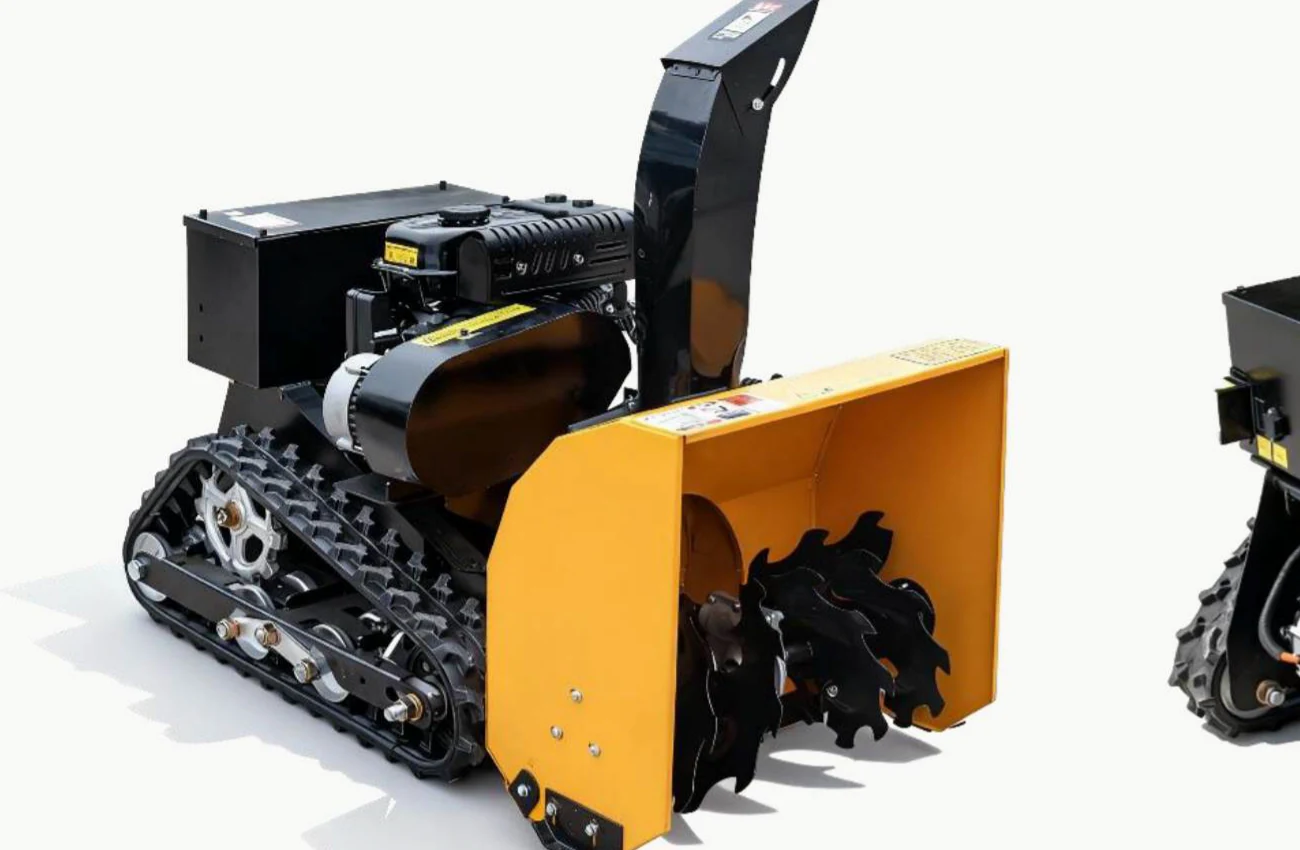
The impeller, sometimes called the fan, rotates inside a housing and moves snow out through the discharge chute. The gap between the impeller's outer edge and the housing is a build and wear dimension. It is not a performance rating, and a number copied from another machine tells you nothing reliable about this one.
Distinguish clearance from visible damage
Clearance is a measurement question; damage is an inspection question. They overlap, but they are not the same entry in a service record.
A clearance concern usually means someone believes the gap is too large, too small, or uneven around the circumference. Confirming that requires the manufacturer's specified measurement method, reference points, and acceptance value for that model. Without those, a coordinator can record the concern but cannot judge it.
Visible damage is different. Bent impeller blades, cracked welds, deformed housing sections, missing fasteners, or fresh rub marks are observations that can be described without a specification. They still do not prove a clearance fault, and they do not authorize a repair procedure. What they do is justify referral.
A third category is modification. Some owners fit aftermarket impeller kits or add-on blades to change throwing behavior. A repair-shop article on impeller kit installation discusses clearance in that modification context. That is a different subject from a manufacturer's assembly check, and its recommendations should not be entered in a fleet record as a factory specification. A forum thread on fan and impeller clearance adjustment shows the same trap: it concerns a particular Allied Farm King machine, and the measurements and advice posted there are user contributions, not manufacturer standards. Neither source should be generalized to a fleet of mixed equipment.
For the record, the practical distinction looks like this:
| Record type | Example entry | What it does not establish |
|---|---|---|
| Clearance concern | "Operator reports uneven gap; not measured" | That the gap is out of specification |
| Visible damage | "Rub marks on housing at one location; photo attached" | The cause or the correct repair |
| Performance complaint | "Throw distance reduced in wet snow" | An impeller or housing fault |
| Modification note | "Aftermarket impeller kit fitted by owner" | Any factory clearance value |
| Manual reference | "SBX60 manual p. 48 (printed p. 46) checked" | That the same value applies to another model |
Check the exact manufacturer document

The only defensible source for a clearance value is the document for that machine, at the revision that matches its build. Fleet records go wrong when a coordinator pulls a number from a similar model, a forum post, or a parts diagram and treats it as universal.
Application review
Discuss your mowing application.
Share the working condition, target market, product family and project scope.
Read the Summit SBX60 assembly note
The supplied first-party reference is the Summit SBX60 manual. On PDF page 48, printed page 46, the gearbox assembly instructions require checking the impeller outside diameter against the housing clearance. That is the useful fact for this article: a named manufacturer, in a named document, at a named page, treats impeller-to-housing clearance as a check during gearbox assembly.
Just as important is what the page does not provide in the material supplied here: a universal clearance figure that could be lifted and applied elsewhere. The instruction is tied to that machine and that assembly context. It is not a fleet-wide specification, and it is not a Super Mowers specification.
That distinction matters for two reasons. First, assembly-time checks and in-service wear checks can have different purposes even when they concern the same gap. Second, a manual statement is written for a defined build with defined components. Once an impeller, housing, or gearbox has been replaced or modified, the original statement may no longer describe the machine in front of you.
A workable document check for each record:
- Confirm the manual matches the machine's make, model, and revision.
- Locate the section that addresses the impeller, fan, or housing, not just the assembly overview.
- Note the page number in both PDF and printed numbering, since they often differ.
- Record whether the document states a value, a measurement method, or only a check requirement.
- If no value is stated, record that fact explicitly rather than leaving the field blank.
That last step is what stops an invented number from entering the fleet history. "Manual checked; check required; no value stated on the referenced page" is a complete and honest entry.
Prepare professional service handoff

The coordinator's job is not to set clearance. It is to hand a technician a record complete enough to inspect the right machine against the right document, with the customer's complaint and the fleet's observations clearly separated.
Request model-specific professional review
A good handoff answers the questions a technician would otherwise have to chase: Which unit? What exactly was reported? What has already been checked? Which document was consulted, and what did it say? Has anything been modified?
A handoff note can follow a short structure:
- Machine: make, model, serial, hours, attachment configuration.
- Complaint: the operator's words, date reported, operating conditions.
- Observations: noise, vibration, visible marks, photos, any measurement attempts and their method.
- Document check: manual title, revision, page, and whether a value or only a check requirement was found.
- Modification history: impeller, housing, or gearbox work, including non-original parts.
- Request: inspection and recommendation against the manufacturer document for this model.
Two cautions belong in the handoff itself. First, do not ask a technician to "set it to the standard gap" unless the standard for that model has been identified. Second, do not present a forum figure or an aftermarket kit instruction as the target. If the customer has already fitted a modification, say so, because it changes the baseline.
For fleet planning, it also helps to separate units that are safe to keep in service from units that should be parked pending inspection. That decision belongs to the responsible service professional and the operator's own procedures, not to a generic article. What the coordinator can do is make the decision timely by flagging rubbing noise, visible contact marks, or vibration as priority items rather than routine ones.
Frequently asked questions

Is there one clearance value for every snow blower? No. Clearance depends on the machine's design, impeller and housing geometry, and the manufacturer's specification. The Summit SBX60 page supplied here requires a clearance check during gearbox assembly but does not give a universal figure. A value from one model should not be applied to another.
Does a clearance complaint prove the impeller is worn? No. A complaint is a report, not a measurement. Rubbing noise, reduced throwing distance, or vibration can have several causes, and confirming wear requires inspection against the correct document. The record should capture the symptom and leave the diagnosis to professional service.
Does the Summit example apply to an SM machine? No. The Summit SBX60 is another manufacturer's tractor-mounted attachment. Its manual page illustrates that manufacturers can require an impeller-to-housing clearance check, and that such a check may appear in an assembly context without a stated universal value. It says nothing about Super Mowers machines, and it is not a specification for them.
Conclusion

Record the machine, the exact symptom, and the manual page you checked. Leave the clearance value blank unless that model's document states one, then hand the file to professional service.