


 By Anna
You have three properties due Friday, one trailer, two crews, and a remote mower that is already booked solid. The obvious move looks like buying another machine. Before you sign, you need to know whether the machine is the constraint or whether transport, staffing, or service time is holding the schedule together.
Remote mower fleet planning for landscaping contractors starts with the bottleneck, not the machine count. Build a shift-by-shift picture of jobs, crews, trailers, and service capacity. If adding a mower does not free the constraint, it adds cost without adding completed work.
This article gives you a worksheet structure, a worked example built on stated assumptions, and a quotation checklist. It does not promise a model, output rate, or return. Every number below is illustrative unless it is labeled as something you must measure yourself.
Remote mower fleet planning landscaping contractors: Map the real jobs and time windows

Start with the work you have already sold, not with the equipment catalog. For each property, record the access, the vegetation, the terrain, the completion window, and who is responsible for the site on the day. A fleet plan built on total acreage hides the conflicts that actually cause late finishes: two jobs that must happen in the same morning, one gate code that arrives late, one slope that needs a different approach.
A useful first pass is a job register. List every recurring and one-off site for the next four to six weeks. Then mark which jobs can float within a week and which are fixed by the client, a contract window, or a weather-sensitive task.
Record terrain, workload and completion requirements
Terrain and workload belong in the same row as the completion window, because they interact. A site with steep ground, dense growth, or narrow access may need more time and a different machine configuration than an open lawn of similar size. Do not convert those conditions into a single acre-per-hour figure unless you have measured them on that site with that machine and that operator.
Use the register to capture, per site:
- Access width, gates, overhead clearance, and where a trailer can park.
- Ground conditions: slope, wet areas, ditches, obstacles, and surfaces that affect travel.
- Vegetation: grass height, density, brush, and whether cutting is routine or a one-time clearance.
- Completion requirement: fixed date, fixed window, or flexible within a period.
- Who confirms completion, and what evidence the client expects.
- Any site rule that limits when equipment can run.
For remote-controlled equipment, add the control position. Where will the operator stand, and does that position have line of sight to the work area? The control arrangement described in a supplier's material does not by itself establish a safe slope limit, working distance, or stopping behavior. Those questions belong to the specific model's manual and to the responsible operator's training.
Turn the register into a demand line
Once the register is complete, convert it into demand by half-day or shift. The goal is not precision; it is to see where two jobs compete for the same resource. A simple demand line might read: "Thursday AM — two sites need a remote mower, one needs a trailer, both need the same operator." That sentence is more useful than a monthly total.
Keep the assumptions visible. If you estimate that a site takes a morning, write "assumed" next to it and replace the assumption with a measured time after the first visit. The plan improves as the register improves.
Compare machines, crews and transport

A remote mower is one resource in a chain. The chain usually includes an operator or supervisor, a tow vehicle, a trailer, a loading and unloading window, a fuel or charging arrangement, and a service backup. Fleet sizing fails when the plan counts machines and ignores the rest of the chain.
Build a resource list with capacity per shift, not per month. For each resource, note how many jobs it can support in a half-day, what it cannot do, and what happens when it is unavailable. Then compare that capacity against the demand line from the previous section.
| Resource | What to record | Typical conflict it reveals | Question to confirm |
|---|---|---|---|
| Remote mower | Model, configuration, attachments, condition, booked shifts | Two fixed jobs needing the same unit | Which model and configuration is quoted, and what does its manual state? |
| Operator | Trained staff, certification or internal authorization, availability | One trained operator for two simultaneous sites | Who is authorized to run this control arrangement? |
| Tow vehicle | Vehicle, towing capacity, availability, driver | Truck committed to another route | Does the vehicle and hitch match the trailer and load? |
| Trailer | Size, loading method, ramps, securement, booking | One trailer for two jobs in different directions | Can the load be secured and unloaded safely at each site? |
| Service capacity | Who services, parts access, turnaround | A breakdown with no backup unit | What is the model-specific service and parts path? |
| Site access | Gate, parking, turn-around, unloading area | Trailer cannot enter or park | Has the access been measured, not assumed? |
Treat the right-hand column as questions, not answers. A supplier page or a competitor article can tell you what to ask; it cannot tell you what your site allows.
Identify concurrent jobs and shared trailer conflicts
The most common hidden constraint in a small fleet is the trailer. One trailer can serve one loaded movement at a time. If two jobs start at 7 a.m. in opposite directions, a single trailer forces a choice: stagger the starts, use a second transport resource, or move one job to another day.
Map concurrency explicitly. For each shift, write down which jobs overlap and which shared resources they need. Then mark the overlap as one of three types:
- Machine conflict — two jobs need the same mower.
- People conflict — two jobs need the same operator or supervisor.
- Transport conflict — two jobs need the same trailer or tow vehicle.
Each type has a different fix. A machine conflict may justify another unit. A transport conflict may be solved by a second trailer, a different route order, or a site that can be served without moving the machine mid-day. A people conflict may be solved by training another operator, which is often cheaper than a machine but takes time.
Check the service and backup side
A fleet plan that assumes every machine is available every day is optimistic. Record how a breakdown would be handled: is there a backup unit, a dealer or service contact, a parts path, and a decision rule for rescheduling? The relevant manual and the supplier's service information are the sources for model-specific maintenance and parts questions. Do not invent an interval or a repair procedure to fill a gap in the plan.
Test an illustrative schedule

Application review
Discuss your mowing application.
Share the working condition, target market, product family and project scope.
The fastest way to test a fleet decision is to schedule one realistic week on paper. The example below uses invented numbers for a fictional contractor. It is a method demonstration, not a benchmark, and the times are assumptions to be replaced with your own records.
Assume a contractor has two remote mowers, one trailer, two trained operators, and five fixed-window jobs in one week. Each job is assumed to need one machine for one half-day, and each job is assumed to need one trailer movement. The contractor is considering a third mower.
| Day and shift | Job A | Job B | Job C | Constraint observed |
|---|---|---|---|---|
| Monday AM | Mower 1, Operator 1 | Mower 2, Operator 2 | — | None |
| Monday PM | Mower 1, Operator 1 | — | Mower 2, Operator 2 | Trailer needed twice |
| Tuesday AM | Mower 1, Operator 1 | Mower 2, Operator 2 | — | None |
| Tuesday PM | — | Mower 1, Operator 1 | Mower 2, Operator 2 | Trailer needed twice |
| Wednesday AM | Mower 1, Operator 1 | Mower 2, Operator 2 | Job D (fixed) | Machine and operator short |
In this illustration, Wednesday morning is the pinch point. A third mower would not help unless a third trained operator and a transport arrangement are also available. The cheaper test is to move Job D to Wednesday afternoon, or to move one of the other jobs, and see whether the week still completes. If the conflict persists after rescheduling, the case for another machine is stronger.
Separate adding a mower from changing routes or staffing
When a schedule fails, there are usually four levers, and they are not interchangeable:
- Add a machine. This helps when the machine is the binding constraint and operators and transport already exist.
- Change route order. This helps when travel time or trailer movement is the constraint.
- Add or train an operator. This helps when people are the constraint, but only if a machine and transport are free.
- Add transport capacity. This helps when one trailer or tow vehicle is serving simultaneous jobs.
Test each lever against the same week. Write down what changes and what does not. If adding a mower still leaves a trailer conflict, the purchase does not fix the bottleneck. If rescheduling removes the conflict without hurting client windows, the purchase may be premature.
Keep the test honest by labeling assumptions. "Assumed half-day per job" is a placeholder. After two weeks, replace it with actual start and finish times from the crew's records.
Request a model-specific quotation
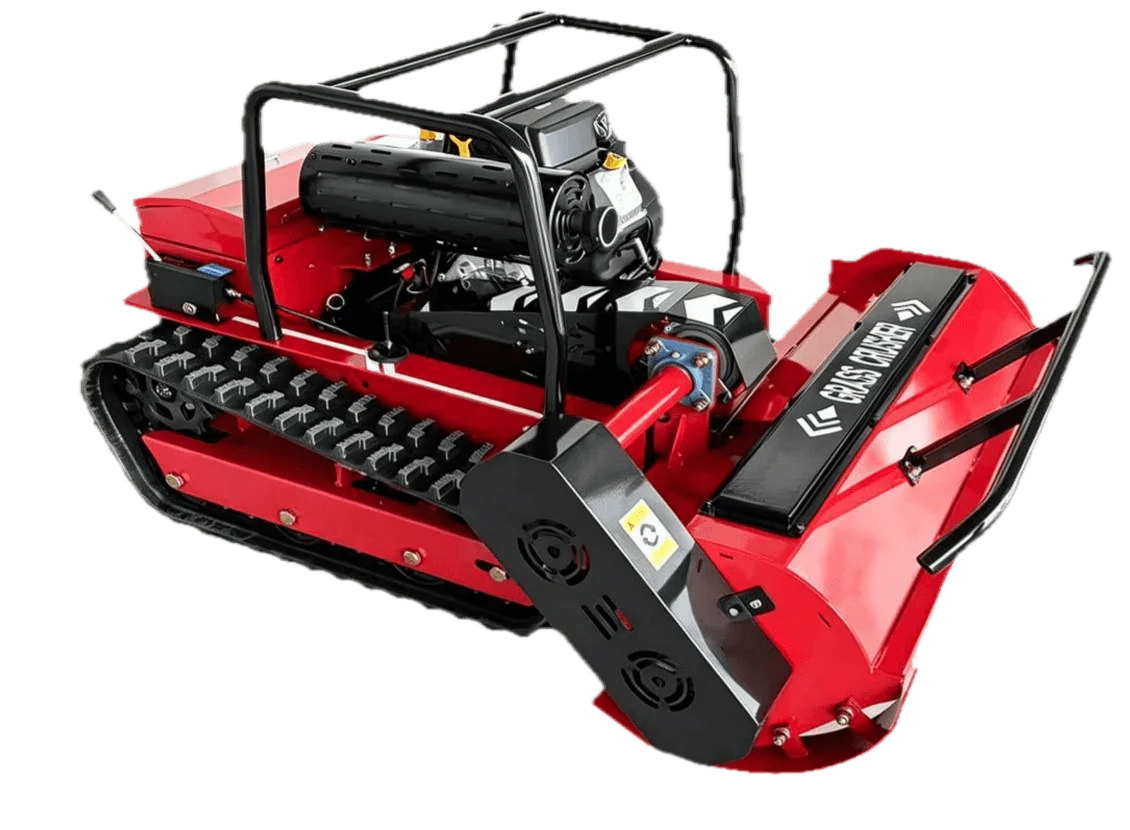
Once the bottleneck is clear, the quotation request should describe the job, not just the machine. A supplier cannot quote responsibly against "a remote mower for landscaping" because the configuration, attachments, transport, and service needs vary by model and site.
Use the worksheet to write a short brief. Include the number of sites, the terrain and vegetation types, the access constraints, the completion windows, the number of trained operators, and the transport arrangement. Then ask for a quotation against a named model and configuration. Super Mowers lists its remote-controlled equipment and quotation entry points at supermowers.com/products/ and supermowers.com/contact/#quote.
For transport planning, the site's own guide to moving equipment between jobs is at remote-control-mower-transport-fleet-move-plan. For the cost side of the decision, see commercial-mower-cost-per-operating-hour. Both are planning aids; neither replaces a model-specific manual or a site assessment.
Include service, backup and measured site data
A quotation request is stronger when it includes the questions you need answered. Ask about the model's manual, the recommended maintenance path, the parts and service route, and what information the supplier needs to confirm compatibility with your intended use. Ask what the quotation assumes about configuration and attachments.
| Quotation item | What to send | What to ask for |
|---|---|---|
| Model and configuration | Intended jobs, terrain, vegetation, access | Named model, configuration, attachments, manual reference |
| Operating boundaries | Site conditions and control position | Manual-stated limits and any conditions of use |
| Transport | Trailer type, tow vehicle, loading method | Dimensions, weight, securement and loading information |
| Service | Location, in-house capability, backup plan | Maintenance path, parts access, service contact |
| Training | Number of operators, current authorization | Operator information and handover requirements |
| Commercial terms | Volume, timing, delivery location | Price, lead time, warranty and delivery terms as quoted |
Do not accept a generic capacity claim as a substitute for a model-specific answer. If a supplier cannot confirm a limit from the manual, treat it as unconfirmed and plan around it.
FAQ

Does more acreage always mean another mower? No. Acreage is a workload indicator, not a capacity decision. A fleet can absorb more area by changing route order, reducing travel, extending the working window, or adding an operator. Another mower helps when the machine is the binding constraint across the same shifts, and when operators and transport are already available to use it.
How should downtime be recorded? Record the date, machine, site, start and end time, the reason (weather, access, breakdown, waiting for transport, operator unavailable), and what work was displaced. Keep the record at the shift level so it can be compared with the schedule. A pattern of transport waiting points to a different fix than a pattern of mechanical stoppages.
Can one trailer serve simultaneous jobs? Only if the jobs do not both need the trailer at the same time. One trailer carries one load per movement, so two jobs starting in different directions at the same hour create a conflict. The options are to stagger the starts, add transport capacity, or reschedule one job. Confirm the towing, loading, and securement arrangement for the specific trailer and machine before relying on it.
Conclusion

Find the constraint before you add a machine. Build the shift-level register, test the week on paper, and quote against a named model with your measured site data. Then decide.