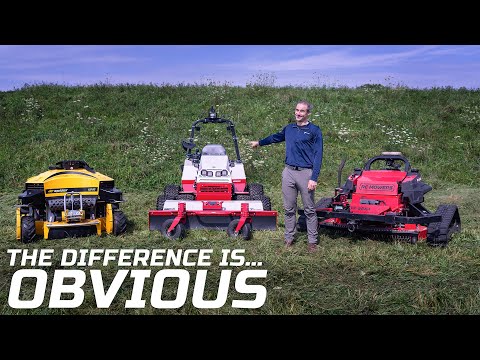
By Anna
You have a slope or rough-ground contract coming up, a used remote mower listing in front of you, and a new-machine quote beside it. The two numbers are not comparable yet. This guide turns both into one worksheet covering the same job, the same machine class, documented condition, and the support each seller actually offers — the only sound basis for a new vs used remote control mower buying cost comparison.
A used remote control mower is cheaper only when its documented condition, configuration, transport, and support costs are compared against a new quote for the same job and holding period. Price alone decides nothing, and two different models are never interchangeable without checking specifications.
New vs used remote control mower buying cost: Start with the same job and machine class

Before you compare money, fix the job. A used listing for one machine and a new quote for another only make sense if both could plausibly do the same work under the same access and terrain conditions. If they cannot, you are comparing two purchases, not two prices.
Write down the site first. Note gate widths, trailer access, turning space, the slope or bank you need to maintain, the vegetation type and height, and how often the area is cut. Then note the machine class each offer belongs to: cutting width, power source, control arrangement, and the attachments included. A remote-controlled machine is defined here by its control arrangement only; that tells you nothing by itself about slope limits, braking, range, or productivity.
Record access, cutting, workload and time horizon
Use a single job record for both offers so neither side is judged against a different task. The table below is a working template; fill it from your own site notes and from each seller's documents, not from assumptions.
| Job field | What to record | Why it matters to the comparison |
|---|---|---|
| Access | Gate width, trailer length, unloading space, path to the work area | A machine that cannot reach the slope has no value on this job |
| Terrain | Measured slope or bank, surface type, wet or dry conditions, obstacles | Manual limits must be checked per model, not assumed from the class |
| Vegetation | Grass type, typical height, brush or saplings, cutting frequency | Cutting requirements differ; confirm each model's stated capability |
| Workload | Area per visit, visits per season, seasons in the holding period | Sets the hours the machine will actually accumulate |
| Holding period | Expected years of ownership and planned disposal point | Determines whether support and parts matter more than purchase price |
| Operator arrangement | Who controls the machine, who supervises the area | Affects training, exclusion zones, and staffing cost |
The holding period deserves particular attention. A contractor planning to keep a machine for many seasons should weigh parts availability, service access, and documentation more heavily than a buyer who expects to resell within a short window. Neither preference is wrong; they simply produce different worksheets.
Read a real used listing and a new-machine quote
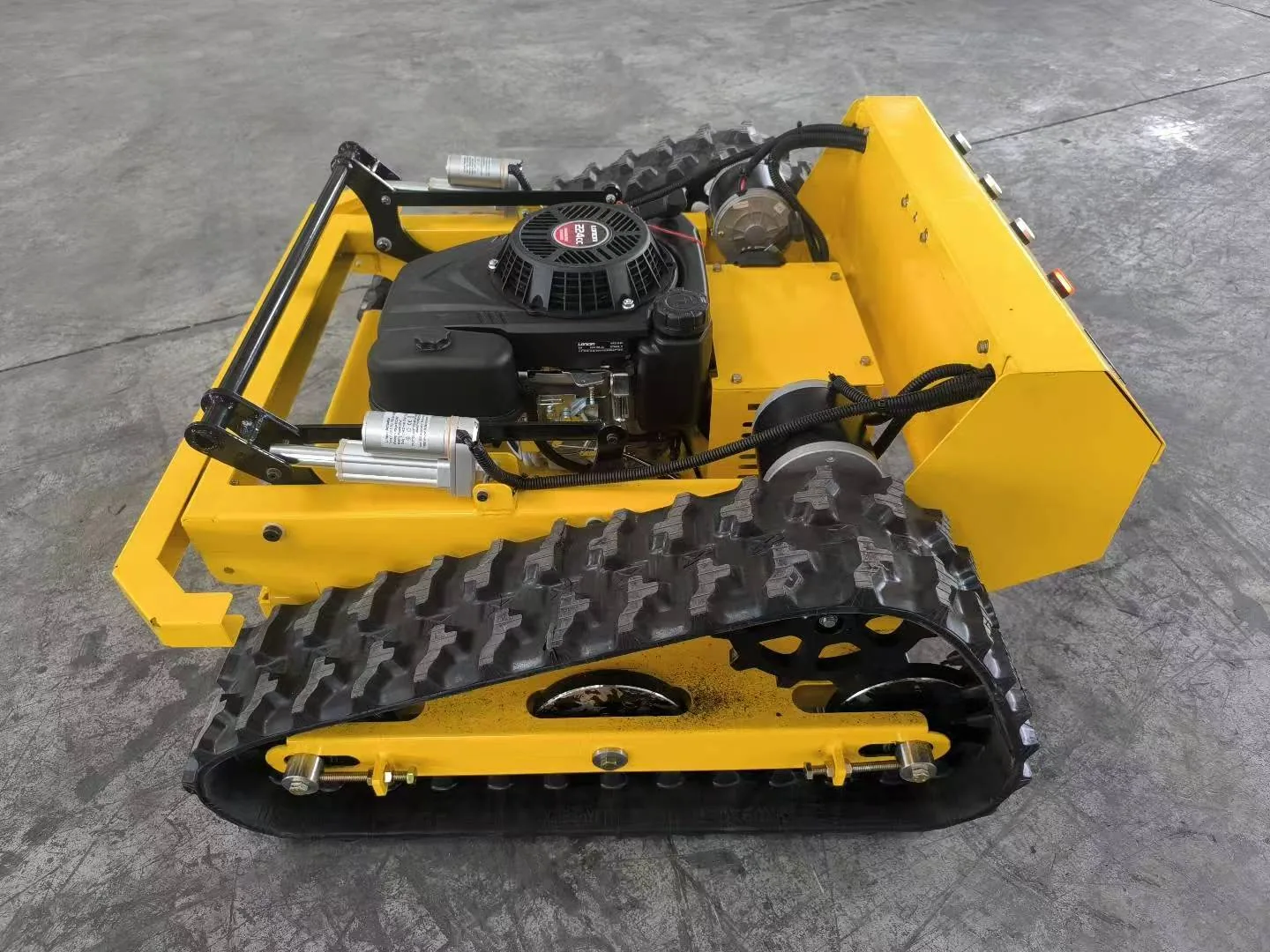
The useful discipline is to read both documents the same way: extract facts, mark gaps, and refuse to fill gaps with optimism. Public used-equipment pages, such as the RCM Mowers used equipment listing at https://www.rcmowersusa.com/used-equipment/, show how a dealer presents inventory. A new-inventory example, such as the Bobcat of York listing for an R-60 GEN 5.0 remote operated slope mower at https://www.bobcatofyork.com/New-Inventory-RC-Mowers-Commercial-Mowing-R-60-GEN-5-0-Remote-Operated-Slope-Mower-No-Display-16515389, shows how a new machine may be advertised with a model name and configuration note. These pages are examples of how offers are presented; this article does not confirm current stock, price, hours, or condition for any specific unit, and those details must be re-verified with the seller at the time of purchase.
That distinction matters. A listing page is a starting point for questions, not a condition report. Treat every field as unconfirmed until the seller supplies it in writing or you observe it during a controlled demonstration arranged by qualified personnel.
Separate hours, condition, configuration and included support
Four things get tangled in used listings, and each needs its own line.
Hours are a usage indicator, not a condition verdict. A machine with low recorded hours may have sat unused, may have an inaccurate meter, or may have been worked hard in short bursts. Ask for the hour reading, how it was recorded, and whether service records align with it.
Condition covers the structure, guards, controls, cutting components, and any visible damage or repair. Ask for photographs of specific areas and a description of known faults. Do not accept "good condition" as a field value.
Configuration covers the attachments, control equipment, display or no-display setup, and any options that affect the job. A listing that notes "No Display" is telling you the configuration differs from a display-equipped unit; confirm whether that changes the work you intend to do.
Included support covers warranty transfer, dealer servicing, spare parts availability, manuals, and training. These are frequently the largest hidden difference between a new quote and a used offer.
| Field | Used listing | New quote |
|---|---|---|
| Model and serial number | Ask the seller to state both in writing | Confirm model and configuration on the quote |
| Hours | Request the reading and how it is recorded | Typically new; confirm |
| Condition evidence | Photos, inspection notes, known faults | Pre-delivery condition and handover checks |
| Configuration | Attachments, controls, display options | Specify exactly what is included |
| Warranty | Ask whether any remains and whether it transfers | Confirm the stated terms in writing |
| Parts and service | Ask about local parts and service support | Ask the same question of the seller |
| Documentation | Manuals, service history, prior repair records | Manuals and handover documents |
| Price basis | Asking price and what it excludes | Quoted price and what it excludes |
Compare acquisition and support costs

Build one cost sheet with both offers side by side. The goal is not a single magic number but a transparent record of what each path commits you to. The Super Mowers cost overview at https://supermowers.com/remote-control-mower-tco/ explains general ownership-cost thinking; use it as a framework, then insert your own verified figures.
Start with the acquisition line: purchase price, taxes, delivery, and any fees. Then add the costs that follow the machine: inspection before purchase, any immediate repairs, transport to and from the site, consumables, scheduled servicing, insurance if applicable, storage, and operator time. Finally, record a residual assumption as an explicit assumption, not a fact. Do not apply a depreciation rate borrowed from another machine, another region, or another article. If you have no reliable resale evidence, mark residual as unknown and test how the comparison changes if it is zero.
Application review
Discuss your mowing application.
Share the working condition, target market, product family and project scope.
A simple sensitivity check helps here. If the used machine needs one significant repair in the first season, does the saving survive? If the new machine's delivery slips by a month, what does that cost the schedule? These are planning questions, not predictions.
Record inspection, repairs, transport and residual assumptions
Use a line-item worksheet so nothing hides inside a total.
| Cost line | Used offer | New offer | Status |
|---|---|---|---|
| Purchase price | Seller's asking price | Seller's quoted price | Confirm in writing |
| Taxes and fees | Ask what applies | Ask what applies | Confirm |
| Delivery or collection | Quote from transporter | Included or quoted | Confirm |
| Pre-purchase inspection | Cost of qualified inspection | Pre-delivery checks | Confirm scope |
| Immediate repairs | Estimate from inspection findings | Not expected; confirm | Mark as estimate |
| Consumables and blades | Ask about remaining life | New | Confirm |
| Scheduled servicing | Based on manual and local labor rates | Same basis | Confirm |
| Transport per job | Same for both if machine class matches | Same | Confirm |
| Warranty value | Ask what remains | Stated terms | Do not monetize without evidence |
| Residual assumption | Your assumption, labelled | Your assumption, labelled | Keep separate from facts |
Two habits keep this honest. First, never mix a verified figure with an estimate in the same cell; add a status column. Second, keep the residual line clearly labelled as an assumption so nobody later reads it as a quoted value. Super Mowers does not sell used machines and does not guarantee residual values; any resale figure is your own planning input.
Verify the offer before a decision

Verification is where most of the real work sits. For a used machine, ask the seller for the serial number, the model designation, the hour reading, service records, manuals, and any warranty documentation. Check that the serial number on the machine matches the paperwork. For a new machine, confirm the exact model, configuration, included attachments, delivery date, and the terms that apply after handover.
Where the two offers differ in model, do not treat the comparison as equivalent. A different model may have different dimensions, cutting specifications, control arrangements, and manual limits. If the used machine is a different model from the new quote, either find a like-for-like comparison or record the differences as separate decision factors rather than pretending they cancel out.
A controlled demonstration is the strongest single check available to a buyer. Ask the seller to arrange one, run by qualified personnel, following the exact manual for that machine. Observe the controls, the stopping behavior described in the manual, the condition of guards and cutting components, and how the machine handles the kind of ground you actually maintain. Do not ask for or accept a demonstration that bypasses safety devices, and do not operate the machine outside the limits stated in its manual.
Request documents and a controlled demonstration
A short document request list keeps the conversation concrete:
- Model and serial number, confirmed on the machine itself.
- Hour meter reading and how hours were accumulated.
- Service and repair records, with dates and work performed.
- The operator's manual for that exact model and revision.
- Warranty terms, including whether any coverage transfers.
- Parts availability information for common wear items.
- Demonstration arrangements, including who will operate and under what conditions.
If a seller cannot supply a document, record that as a gap rather than assuming the best. A missing manual, for example, is not proof of poor maintenance, but it does mean you cannot confirm the machine's stated limits from the source that matters.
FAQ

Do low hours prove a used mower is reliable? No. Hours are one indicator among several. Low hours can reflect light use, long storage, or an inaccurate meter, and they say nothing about how the machine was treated. Reliability comes from documented service history, a physical inspection, and a controlled demonstration, not from the hour figure alone.
Does a used listing guarantee warranty and parts? No. A listing describes what is for sale; it does not establish warranty coverage or parts availability. Ask the seller in writing whether any warranty remains, whether it transfers to you, and where common wear parts can be sourced. Treat unclear answers as open risks in your cost sheet.
Can two different models be treated as identical? No. Different models can differ in dimensions, cutting specifications, control arrangements, and manual limits. Comparing a used unit of one model with a new quote for another is a comparison of two different purchases. Either match the models or record the differences as explicit decision factors.
Conclusion

Compare a used remote mower with a new quote only on the same job, machine class, and holding period, with condition and support documented. Build the worksheet, verify the serial number and records, and arrange a controlled demonstration before committing.
To discuss a new remote-controlled machine configuration, request a quote at https://supermowers.com/contact/#quote or review the range at https://supermowers.com/products/.
Video: Remote Control Mower Comparison | Which should I buy?