


 By Anna
A dealer service desk hears "it just clicks" or "nothing happens" several times a week. Lawn mower starter solenoid symptoms are easy to repeat and hard to pin down, so before anyone orders a starter solenoid, the parts coordinator needs to know which solenoid the machine actually uses and where it sits in the starting circuit. Clicking is a clue, not an identification.
Record the symptom, then confirm the machine, engine and starting-circuit document before naming any part. A click does not prove a starter solenoid has failed, and a parts diagram may label more than one solenoid on the same machine.
Lawn Mower Starter Solenoid Symptoms: Describe the Starting Symptom and Confirm the Actual System
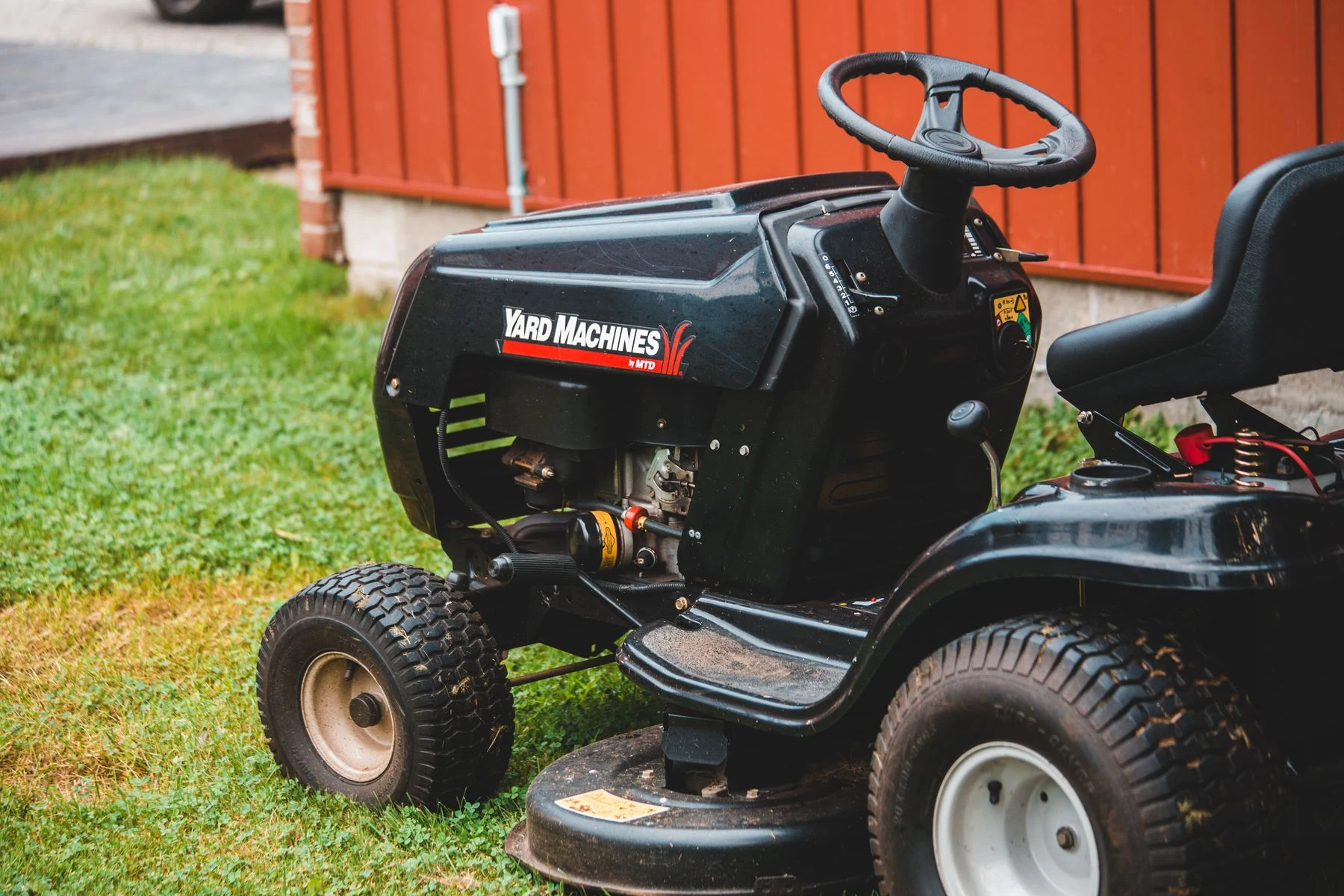
The first job is description, not diagnosis. Ask what the operator did, what they heard, and what the engine did in response. Write those observations in neutral language: no response, a single click, repeated clicking, slow cranking, normal cranking without starting. Each of these points toward a different part of the starting circuit, and none of them identifies a failed component on its own.
This matters for a fleet parts desk because a wrong guess creates a return, a second downtime event, and a customer who no longer trusts the estimate. A short, consistent intake script keeps every counter person recording the same fields.
Record response, click and cranking without naming a failed part
Use observable terms. "Turned the key, heard one loud click from the engine area, engine did not rotate" is useful. "Solenoid is bad" is not, because it closes the investigation before it starts. The same distinction applies to remote-controlled machines: record what the operator commanded and what the machine did, without assuming which component refused to act.
Ask these questions at intake:
- Was the response nothing at all, a single click, repeated clicks, or slow cranking?
- Did the click come from the dash area, the engine compartment, or somewhere the operator could not locate?
- Did the engine rotate at all, and if so, did it rotate slowly or at normal speed?
- Did the condition appear suddenly or gradually?
- Was the machine hot, cold, wet, recently washed, or stored outdoors?
- Did anything else change first, such as a battery replacement, a new attachment, or recent service?
Battery condition, cable connections, safety interlocks, ignition switch, relay and starter motor all sit in the same chain. Automotive symptom guides such as AutoZone's starter solenoid article describe similar click and no-crank patterns, but that is passenger-car context with different mounting arrangements. It supports the vocabulary, not a diagnosis for a mower.
Find the machine, engine and starting documentation
Before any part is discussed, establish identity. The machine model and serial number, the engine model and type code, and the parts-document revision are the three anchors. A dealer who has only the mower brand and a symptom is guessing.
| Record field | Why the parts desk needs it | Typical source |
|---|---|---|
| Machine make, model, serial | Confirms which parts diagram applies | Machine plate or dealer record |
| Engine model and type/spec code | Separates engine-side parts from machine-side parts | Engine plate or engine manual |
| Parts-document number and revision date | Prevents ordering from an outdated diagram | Manufacturer parts catalog |
| Starting-circuit diagram reference | Shows which solenoid is in the cranking path | Service or electrical manual |
| Symptom description in observable terms | Gives the technician a starting point | Intake record |
| Battery and connection condition | Rules out the simplest causes first | Inspection record |
If the machine is a Super Mowers unit, the spare-parts dealer list page explains that spare parts are checked against machine and supplier documents. That is the correct principle for any brand: the document, not the symptom, identifies the part.
Distinguish Named Parts and Manual Labels

A named part in a manufacturer's catalog and a label on an electrical diagram are two different kinds of evidence. The catalog entry tells you a part exists and what the manufacturer says it does. The diagram tells you where a component sits in a circuit. Neither one tells you that two similarly named parts are interchangeable, and neither one confirms what is installed on a particular machine.
This is the central confusion behind many "starter or solenoid?" questions. Owners and counter staff see the word solenoid in more than one place and assume it means one component. On small engines, that assumption can send the wrong part to the customer.
Read the named Briggs 691656 starter-solenoid description
The Briggs & Stratton product page for part 691656 describes it as a starter solenoid that controls the starter motor. That is a useful, specific statement: the part's role in the catalog is to switch the starter motor. It gives the parts desk a reference point for what a starter solenoid does in a small-engine starting circuit.
It does not establish that 691656 fits a given mower, engine or electrical configuration. The product page is a catalog entry for one named part; fitment has to be confirmed separately against the machine's own documentation. Treat the description as a definition, not a compatibility statement.
A practical rule for the counter: when a customer asks for "the solenoid," ask which circuit they mean and pull the diagram. If the diagram shows a component in the cranking path to the starter motor, that is the starter solenoid candidate. If it shows a component on a fuel or carburetor circuit, it is something else with a similar name.
Application review
Discuss your mowing application.
Share the working condition, target market, product family and project scope.
The 7800107 diagram also labels a carburetor-solenoid connection; do not infer interchange
The Briggs & Stratton manual numbered 7800107 (PDF dated 2020-05-27) is a concrete example of why labels matter. On pages 20–21, the illustration and the accompanying list separately identify a solenoid and a carburetor-solenoid connection. Both use solenoid terminology; they are not the same function.
That single document shows the risk clearly. A reader who searches a diagram for the word "solenoid" and stops at the first match may be looking at a fuel-circuit component rather than the cranking-circuit component. The correct approach is to read the item number, the list entry and the circuit position together.
| Evidence type | What it can tell you | What it cannot tell you |
|---|---|---|
| Named catalog part (e.g. 691656) | The manufacturer's stated function of that part | That it fits a specific machine or engine |
| Parts diagram item and list | Where a component appears and its listed name | That two same-named items are interchangeable |
| Electrical schematic | Circuit position and connections | That the installed machine matches the drawing |
| Operator symptom report | What was observed | Which component failed |
The 7800107 manual and the 691656 catalog entry are separate named documents. Nothing in the supplied material shows they belong to the same machine, and they should not be treated as a matched pair. Do not assume a part shown in one document is installed on a machine described by the other.
Prepare a Qualified Service Handoff
The parts desk's deliverable is not a repair. It is a clean, complete handoff that lets a qualified technician start work without repeating the intake interview. A good handoff reduces diagnostic time, prevents wrong-part orders, and gives the customer a realistic expectation.
Write the handoff in three blocks: what was observed, what documents were checked, and what remains unknown. Keep the third block honest. "Not confirmed whether the click originates at the starter solenoid or the starter motor" is a legitimate entry and far more useful than a confident wrong answer.
Record model, parts-document revision and event timing
Timing details often separate one circuit problem from another. A no-crank that appears only when the engine is hot differs from one that appears only after rain or only on the first start of the day. Record when it happened, how often, and under what conditions.
A workable handoff template:
| Section | Content to include |
|---|---|
| Machine identity | Make, model, serial, engine model and type code |
| Documents consulted | Parts catalog number and revision, electrical diagram reference, manual date |
| Observed symptom | Exact response, click location if known, cranking behavior, frequency |
| Conditions | Hot or cold engine, weather, storage, recent service or battery work |
| Checks already done | Visual inspection, battery condition noted, connections observed |
| Open questions | Which circuit the click belongs to, whether the diagram matches the installed build |
| Requested action | Diagnosis by a qualified technician, or part confirmation against the diagram |
For fleet work, keep the same template across machines so that recurring patterns become visible. If three units of the same model show the same click pattern in the same season, that is a fleet signal worth passing to the service manager, not a reason to stock a particular solenoid.
Do not provide bypasses, live testing or repair steps
This article deliberately stops at identification and handoff. Jumping a starter, probing live terminals, or disassembling the starting circuit belongs to a qualified technician working from the machine's own service manual with the correct procedures and protective measures. Forum threads on mower starting problems often contain bypass suggestions; those replies are not a procedure and should not be passed to a customer.
A Reddit thread in r/fixit illustrates the demand side of this problem: an owner asking whether the issue is the starter or the solenoid. The thread is useful evidence that the confusion is common. It is not evidence for any diagnostic method, and the replies should not be adopted as guidance.
The service desk's boundary is clear. Identify the machine, identify the document, record the symptom, and route the work. That is a complete and defensible job.
FAQ

Does a click prove the solenoid is bad? No. A click is an observation, not a diagnosis. It can come from several points in the starting circuit, and the same sound can occur with a healthy solenoid and a weak battery or a poor connection. Record where the click came from and what the engine did, then let a qualified technician test the circuit.
Are the starter solenoid and the starter motor always one unit? No. Automotive sources note that solenoids are mounted in different ways depending on the design, and small-engine equipment varies too. The parts diagram for the specific machine shows whether the solenoid is a separate item or part of an assembly. Do not assume a combined or separate design without checking the document.
Do all solenoids shown on a diagram do the same job? No. The 7800107 manual lists a solenoid and a carburetor-solenoid connection as separate entries on the same pages. Same word, different circuit. Always read the item number, the list entry and the circuit position together before ordering.
Can I order the solenoid from the symptom alone? Not reliably. Order from the machine's parts diagram after confirming the model, serial number and document revision. A symptom narrows the search; it does not identify the part.
Conclusion

Record the symptom in plain terms, confirm the machine and document revision, and read every solenoid label in context. Then hand the job to a qualified technician with a complete record.
Explore related mowing information from Super Mowers.
Video: Lawnmower No Start Just Clicks Easy DIY Fix Works On Most Mowers. Battery, Solenoid or Starter?
