


 By Anna
A dealer or fleet service coordinator is comparing a directional valve on a mower's hydraulic circuit and finds two ports that look like they could both serve the next component: one labelled power beyond, one labelled tank or return. The labels are short, the drawings are often missing, and the wrong assumption can send oil to the wrong place.
The hydraulic power beyond port versus return port question comes down to function. A power beyond port is intended to carry pressurized flow onward to a downstream valve; a return port carries low-pressure oil back to tank. They are not interchangeable by name, and the correct function must be confirmed against the specific valve model and the equipment maker's circuit diagram.
This article is for people who handle parts enquiries and fleet documentation, not for people designing hydraulic circuits. It explains how to read the two port functions, how to tie labels to a valve model, why similar names do not prove compatibility, and what records to send a qualified supplier. It does not provide a hose-routing procedure, a pressure setting, or a valve substitution plan. Those decisions belong with the equipment manufacturer or a qualified hydraulic specialist who has the actual circuit.
Hydraulic power beyond port versus return port: Identify the two port functions

Start with the flow path, not the label. On a directional control valve, oil enters under pressure, is directed to a work port to move an actuator, and then must leave the valve. The question is where each leaving path goes and at what pressure it operates. A downstream supply port and a tank return port both move oil out of the valve, but they serve different parts of the circuit and are held to different expectations.
Muncie Power's guide to directional control valves describes power beyond as a way to supply flow to a downstream valve, and it treats the return path to tank as a separate connection. That distinction is the practical core of this topic: one port continues the pressure circuit, the other ends it. When a dealer or fleet coordinator is matching a valve to an attachment, the first job is to establish which port is which on that exact valve, not on valves in general.
Identify downstream supply and return
A power beyond port, sometimes called a carryover port, is the point where an upstream valve passes pressurized oil to a downstream valve. The downstream valve then controls its own function. This arrangement lets one pump supply more than one valve section or valve bank in sequence, which is why the port is associated with multi-valve circuits rather than with a single isolated function.
A tank return port is where oil that has done work, or oil that has been routed through the valve's internal passages, goes back to the reservoir. It is not a supply point for another working valve. Treating it as one would mean asking a low-pressure return path to carry pressurized flow, which is a circuit question, not a labelling question.
For a mower attachment context, the practical difference shows up in what the downstream component expects. A lift function, a steering circuit, or an attachment valve may need a supply connection; the return side needs a path back to tank. The two cannot be decided from the shape of the fitting or the colour of a cap. Record what the drawing shows, and if the drawing is missing, record that it is missing.
| Port function | What it does in the circuit | What it is not | What to confirm |
|---|---|---|---|
| Power beyond / carryover | Passes pressurized flow onward to a downstream valve | Not a tank return, and not proven present on every valve | Exact valve model, port label, and the maker's circuit description |
| Tank / return | Carries oil back to the reservoir | Not a supply point for a working downstream valve | Return path shown on the equipment drawing; any backpressure limits stated by the maker |
| Work port | Sends oil to an actuator such as a cylinder or motor | Not a carryover or return connection | Cylinder or motor identification and the valve section it belongs to |
This table is a reading aid, not a wiring or hose plan. The right-hand column is deliberately a list of things to confirm, because the port arrangement differs between valve families and between equipment builds.
Read the valve maker's circuit description
The valve maker's documentation is the first place to look, and the equipment maker's drawing is the second. A generic article, a forum reply, or a parts listing can tell you that a port type exists, but it cannot tell you what a particular valve body does with oil at that port. Muncie Power's selection and specification guide is useful because it frames directional valves as a family with different configurations, which is exactly why the model matters.
When reading the description, look for the flow path rather than a single sentence about the port. Ask: where does oil enter, which internal passage connects to the power beyond port, and under what condition is that passage open or closed? The answer often depends on the valve's centre condition and on whether the valve is intended to feed another valve. Our existing article on open-centre versus closed-centre valve systems explains why the centre path changes what happens to flow when the valve is in neutral; that background helps you read the maker's description without guessing.
A second source, Hydraulics Supermarket's page on power beyond, describes the port in the context of supplying a downstream circuit. Use it to understand the concept and the vocabulary, then return to the valve maker's document for the specific body. The two roles are different: one explains the idea, the other defines the part.
Attach the port labels to the correct valve model
A label only has meaning when it is tied to a model, a revision, and a drawing. The same word on two valves can describe different internal arrangements. Before you pass information to a customer or a technician, build a small record that links the equipment, the valve, and the source of the label.
- Record the equipment make, model, and serial or build reference as shown on the machine plate or the fleet record.
- Record the valve maker, valve model, and any revision code stamped or printed on the valve body.
- Note where each port label came from: the valve maker's document, the equipment maker's drawing, a label on the machine, or a parts listing.
- Note the date and version of each document you used.
- Mark any port whose function is not stated in a supplied document as unconfirmed rather than filling the gap from memory.
This is deliberately administrative work. It is also the part that prevents a wrong part being ordered and a wrong hose being made up. A dealer who can send a supplier a clean record with the valve model and the drawing reference is in a much stronger position than one who sends a photograph and a description.
Do not infer interchangeability from labels

Two ports can be described with similar words and still have different pressure expectations, different internal connections, and different consequences if they are confused. The phrase "power beyond" tells you the intended circuit role; it does not tell you the thread, the fitting, the flow capacity, the pressure rating, or whether the valve body is machined to support that role at all. Those are properties of the specific part.
This is why a parts enquiry that begins with "it has a power beyond port" is incomplete. The useful enquiry begins with the valve model and the equipment drawing. The same caution applies to return ports: a port described as a tank return on one valve may have a different allowable backpressure or a different internal path on another. The equipment maker's circuit is the authority for how the machine is built.
There is also a documentation trap. A forum thread can show that other readers have asked the same question, and that is useful as a signal that the confusion is common. It is not a technical source. The OrangeTractors thread on power beyond versus tank ports is an example of a real reader question, and it should be treated as a prompt to go and check the valve maker's document, not as an answer.
Application review
Discuss your mowing application.
Share the working condition, target market, product family and project scope.
Similar labels do not establish compatibility
Similar names do not establish that two ports can be swapped, joined, or used for the same hose. Compatibility depends on the valve body, the circuit, and the equipment build. A supplier who is asked to match a part needs the model, not a description of the label. A fleet coordinator who is asked to approve a repair needs the drawing, not a recollection of how another machine was set up.
| Question to ask | Why it matters | Acceptable evidence |
|---|---|---|
| Which valve model and revision is fitted? | Port arrangement and internal passages vary by model | Valve body marking, maker's document, equipment parts record |
| What does the equipment drawing show at this port? | The machine build defines the circuit | Equipment maker's diagram with a version or date |
| Is the port described as supply or return in that document? | The two functions are not interchangeable | The maker's own wording, quoted with the document reference |
| Is any pressure or backpressure limit stated? | A return path and a supply path are held to different expectations | Maker's specification for that valve, not a generic figure |
| Is the information complete enough for a supplier to quote? | Missing data leads to wrong parts and repeat enquiries | A record with equipment, valve, drawing, and gaps marked |
If any row cannot be completed, the honest entry is "not confirmed". That is more useful to a supplier than a guess, and it protects the dealer from passing on an assumption as a fact.
Record the information for a qualified supplier

The goal of the record is to let a qualified supplier or the equipment manufacturer answer the question without guessing. You are not asking the supplier to design a circuit; you are asking them to identify a part or confirm a connection against the documents you have. That distinction keeps the enquiry inside the supplier's role and keeps the technical decision with the people who hold the machine's design.
A good record has four parts: the equipment identity, the valve identity, the source documents, and a clear list of what is missing. The missing list is not a weakness. It tells the supplier where to focus and it creates a written trail if the answer later depends on a document that was not available at the time.
Send the circuit diagram to the manufacturer
When you contact the equipment manufacturer or an authorised parts channel, send the circuit diagram or the relevant page of the parts and service documentation with the enquiry. State the machine model and serial, the valve model, and the port in question. Ask a specific question: what function does this port serve on this build, and what does the maker's documentation say about connecting to it? Avoid asking for a generic opinion about power beyond ports, because a generic answer will not resolve a specific machine.
If the diagram is not available, say so and ask the manufacturer to supply the correct drawing for the build. Do not reconstruct the circuit from a similar machine. Do not ask a supplier to confirm a hose route from a photograph alone. And do not treat a supplier's informal comment as a substitute for the maker's document when the question is about how the machine is built.
For fleet work, keep the record with the machine file so the next person does not repeat the enquiry. A short note with the date, the documents used, the answer received, and the person who confirmed it is enough. That note becomes the reference for the next service interval and for any future parts order.
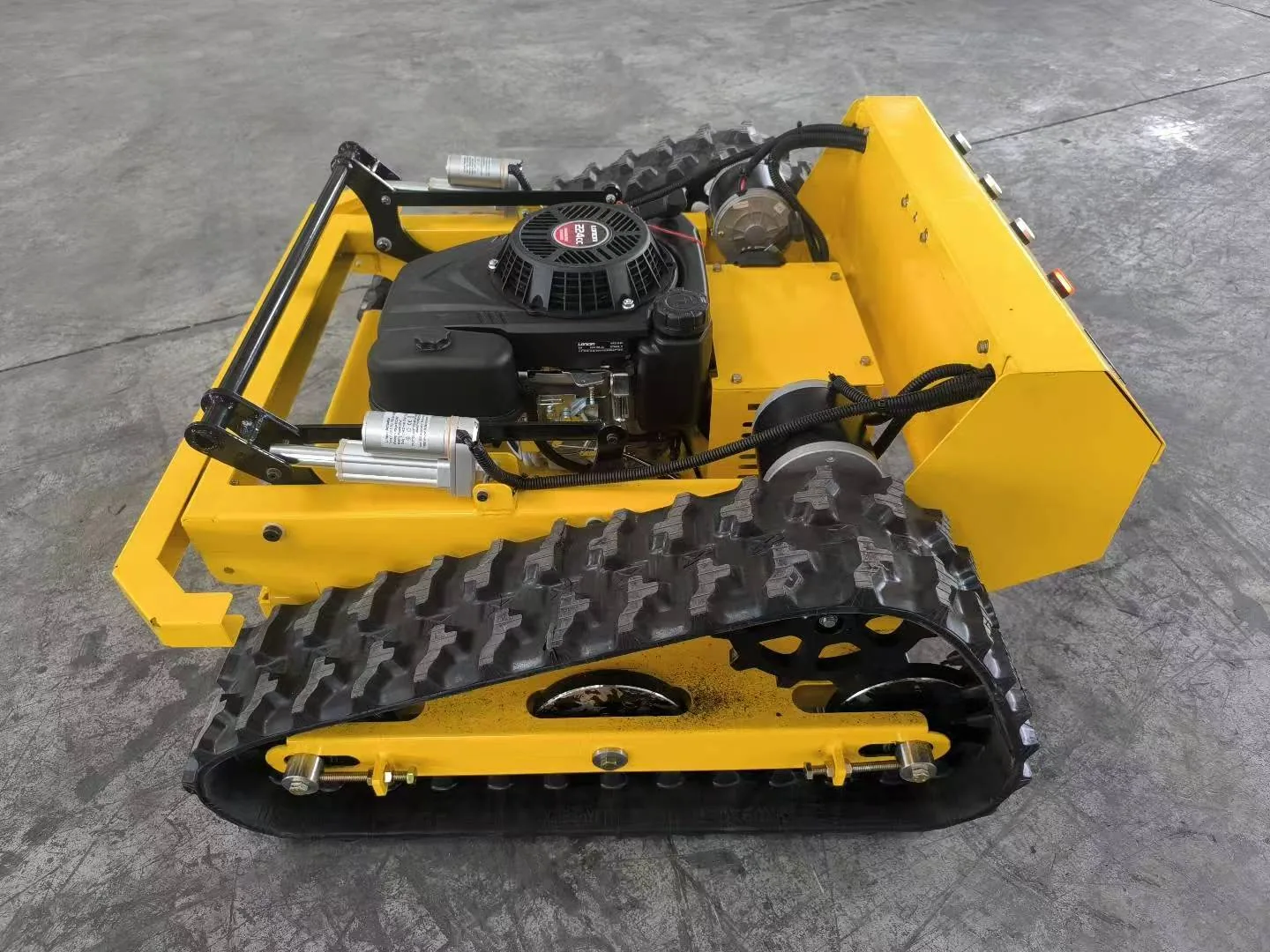
Super Mowers publishes remote-controlled mower equipment and hydraulic lift scenarios; this article does not claim that any Super Mowers machine is fitted with a power beyond port. The port functions described here are general hydraulic concepts, and the specific configuration of any machine must be confirmed from its own documentation.
FAQ

Is power beyond the same as a return line?
No. A power beyond port is intended to pass pressurized flow to a downstream valve, while a return line carries oil back to the reservoir. They serve different roles in the circuit, and the maker's documentation for the specific valve should be used to confirm which port is which.
Does every directional valve have power beyond?
No. Power beyond is a feature of some valve configurations, not a universal one. Whether a particular valve has that port, and how it is arranged internally, depends on the valve model and its intended circuit. Check the valve maker's description for the exact model rather than assuming the port is present.
Can the ports be swapped by name?
No. Similar labels do not establish that two ports are interchangeable. The function, pressure expectations, and internal connections are properties of the specific valve body and the equipment circuit, so the equipment maker's drawing and the valve maker's documentation should be used to confirm the connection.
Conclusion

Power beyond feeds a downstream valve; a return port goes back to tank. Confirm both against the exact valve model and the equipment drawing before ordering parts or approving a connection.
Video: How to Identify the Power Beyond Port
