

 By Anna
Mower cleaning between sites helps grounds crews reduce the risk of carrying soil, invasive plant seeds, and plant debris from one property to another. The physical cleaning method matters, but so does the handoff: before a mower leaves a site, someone needs to record what was checked, what material was found, whether the approved cleaning process was completed, and whether the next crew may receive the machine.
This guide provides a cross-site mower cleaning checklist and crew handoff log for commercial landscapers, parks teams, and fleet managers. It focuses on inspection records, responsibility, and release decisions. It does not prescribe water pressure, chemicals, dismantling steps, protective equipment, or a universal procedure; use the correct mower manual and applicable landowner, contract, and local requirements for those details.
Why cleaning mowing equipment between sites matters
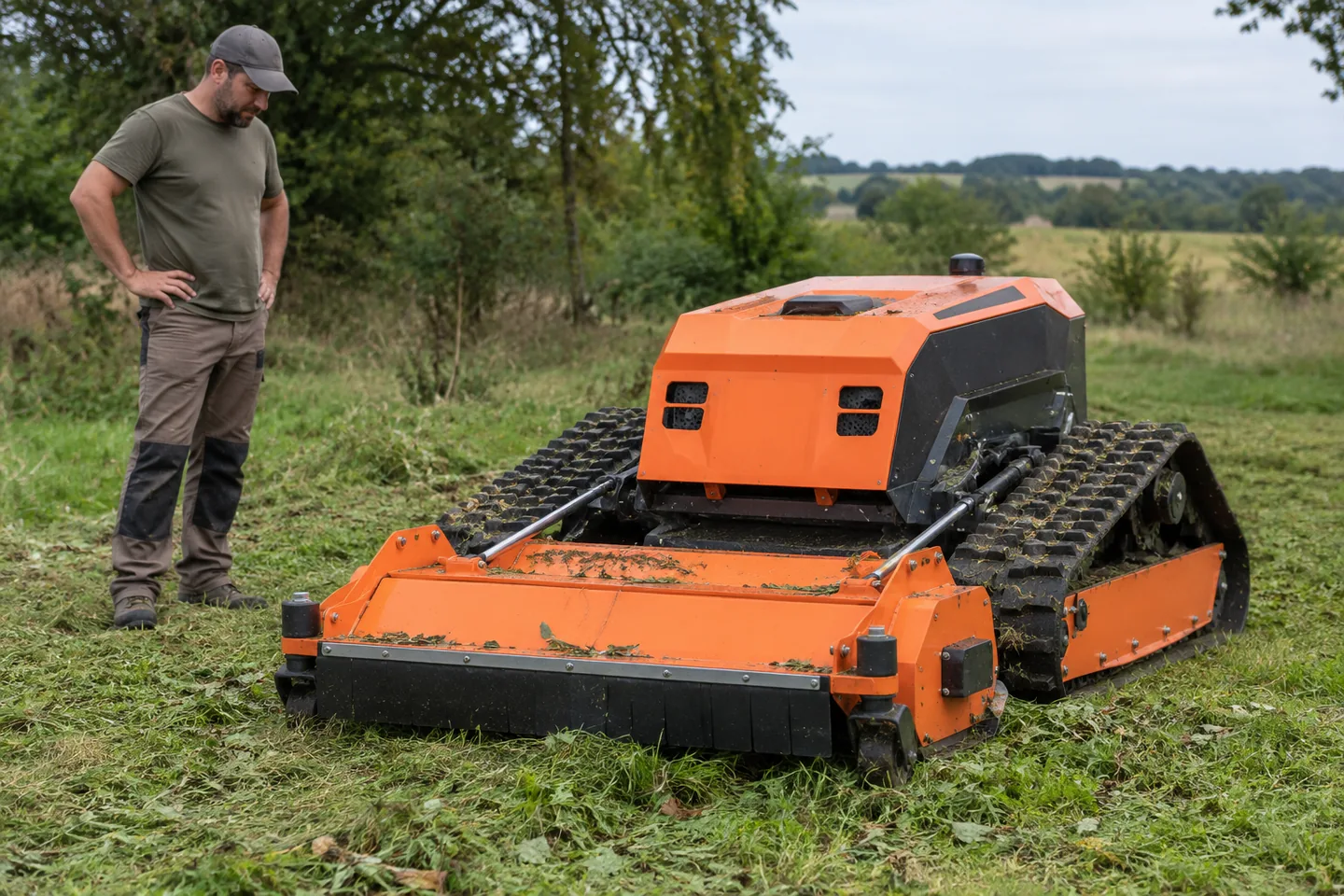
Plant material and soil can remain on mowing equipment after a job. If the same machine moves to another property, those materials may travel with it. The USDA Animal and Plant Health Inspection Service (APHIS) advises cleaning equipment, tires, and gear after working a site to reduce the movement of seeds, insects, and other unwanted material.
A shared cleaning record is especially useful when:
- A contractor services several client properties in one day.
- A site has known or suspected invasive vegetation and the next property has different management requirements.
- A parks agency, land manager, or maintenance contract requires documented equipment cleaning.
- A mower is transferred between crews, depots, trailers, or service routes.
- A supervisor needs to explain why a machine was held back from the next assignment.
Visible residue should be recorded factually. Not every piece of grass or soil can be identified as carrying an invasive seed, and a mower that looks clean cannot automatically be described as seed-free. The point of the log is to document that the approved process and review took place.
Identify the mower-specific inspection points

The inspection list must match the machine. Depending on the model and its operator manual, areas where soil and vegetation may collect can include the mower deck, discharge area, wheel or track surfaces, frame recesses, and approved-access undercarriage areas. The manual determines how trained personnel may safely access and inspect these locations.
| Equipment category | Record in the log | Important distinction |
|---|---|---|
| Wheeled commercial mower | Model-specific mower inspection points, wheels, tires, and any approved-access debris areas | Use the actual deck and wheel configuration |
| Tracked remote-control mower | Mower inspection points plus track and undercarriage areas listed by the manufacturer | A tracked mower is still a mower; its track system needs relevant fields |
| Non-mowing tracked carrier | A separate carrier or attachment inspection plan | Do not assume mower-deck fields describe other attachments |
| Snow-removal equipment | A separate snow-equipment inspection plan | Road grit, deicing materials, and snow attachments require different controls |
Do not inspect beneath an energized mower or remove guards to reach debris. The machine must be secured and any access or cleaning performed by authorized personnel following the exact operator’s manual and site procedure.
Mower cleaning between sites: crew handoff log template

Use one entry for each site-to-site movement that requires a hygiene review. The fields below can be copied into an electronic fleet log, route sheet, or paper checklist. They are recordkeeping fields, not instructions for performing the cleaning itself.
| Log field | What the crew records | Why it matters |
|---|---|---|
| Date and departure time | [Date / time of review] | Links the check to the route change |
| Site being left | [Property / route / job number] | Identifies where residue may have been collected |
| Next destination | [Next property / entry conditions] | Identifies the receiving site and any special requirements |
| Mower ID | [Make / model / unit or serial number] | Links to the correct operator’s manual |
| Operator and crew | [Names or staff IDs] | Assigns the initial inspection record |
| Required procedure | [Manual section / contract rule / site procedure and revision] | Shows which controls apply to this move |
| Areas inspected | [Approved deck / chute / wheels or tracks / undercarriage points] | Shows which model-specific locations were checked |
| Visible material observed | [None visible / soil / vegetation / suspected seed-bearing debris / location] | Describes observations without guessing species identification |
| Approved action completed | [Procedure reference / completed or incomplete] | Records action without substituting the worksheet for the procedure |
| Waste or residue handling | [Approved location / collection or disposal record, if required] | Accounts for material after removal |
| Release status | [Released / Hold / Exception—supervisor review] | Prevents an unresolved unit from entering the next route |
| Open issue and next action | [What remains / assigned person / expected follow-up] | Creates a clear exception owner |
| Review and receiving confirmation | [Supervisor / receiving crew / time / work-order reference] | Completes the handoff trail |
Illustrative entry: Mower RM-04 leaves Site A for Site B. The operator notes visible plant debris near a manufacturer-listed inspection point and marks the unit Hold. A qualified person completes the applicable cleaning review, records the result, and changes the status only when the authorized release conditions are met. This is an example of how to document responsibility, not a claim that a particular cleaning method removes every seed.
How crews complete the cleaning handoff

Application review
Discuss your mowing application.
Share the working condition, target market, product family and project scope.
- Confirm the next site. Check whether the next property has entry restrictions, invasive-species controls, or a contract-required record.
- Identify the applicable procedure. Match the mower model, fitted accessories, owner’s manual, and current site or agency instructions.
- Make the unit safe for inspection. Follow the manufacturer’s shutdown, isolation, and access requirements; only authorized staff perform physical checks.
- Document the observations. Record visible soil or vegetation by location without claiming to identify an unseen seed or pest.
- Record completion of the approved controls. Include only actions authorized for that equipment and site, including any required handling of collected material.
- Assign a release status. If the process is incomplete or conditions cannot be verified, hold the unit and identify who must review it.
- Notify the receiving crew. Share the entry, status, and outstanding limitations before the mower is dispatched.
When planning multi-site routes, ask the land manager whether work order or site order can reduce movement from known infested areas to clean areas. For example, Minnesota DNR’s project guidance describes planning work in non-infested areas before infested areas. This is an example of site-specific prevention planning, not a universal route mandate.
Released, hold, or exception: what each status means

| Status | What the record indicates | Next crew action |
|---|---|---|
| Released | Authorized personnel recorded completion of the applicable local inspection and cleaning requirements for this move | Check that the receiving site’s entry conditions are also met |
| Hold / Not released | The required review or cleaning process is incomplete, or a known condition prevents release | Do not dispatch until the assigned authority resolves and records the issue |
| Exception—supervisor review | A question remains about material, equipment access, a site rule, or the required procedure | Escalate to the designated supervisor or land manager; document the decision |
Release is a documented decision, not a seed-free guarantee. It records that the authorized process was completed for that movement. It does not establish that every seed, insect, soil particle, or plant fragment has been removed, and it does not override the receiving property’s rules.
A form should never allow an unresolved exception to be silently treated as a release. If a supervisor approves a different disposition under an authorized policy, record the specific decision, source, and responsible person rather than changing the status without explanation.
Supervisor checklist for multi-site mowing crews

- Does every mower have a unit ID and current, model-specific inspection reference?
- Are the site being left and the next destination documented?
- Does the crew know the current contract, owner, or agency requirement for each property?
- Are tracked mower inspection points included when the unit uses tracks?
- Is visible residue described by location rather than assumed to be a specific invasive species?
- Can the crew record incomplete cleaning, inaccessible points, or uncertain findings without marking a pass?
- Who is authorized to decide the exception and inform the receiving property?
- Does the dispatch sheet prevent a held mower from being reassigned prematurely?
- Are any required evidence, disposal records, and sign-offs kept with the work order?
For landscaping firms serving multiple clients, the Minnesota DNR’s business guidance on jumping worms specifically encourages clean arrivals and departures and addresses cleaning vehicles, equipment, and gear between work areas. It is useful background for building a management process, but the exact measures for a contract must still be checked locally.
Verify the local cleaning rules before field use
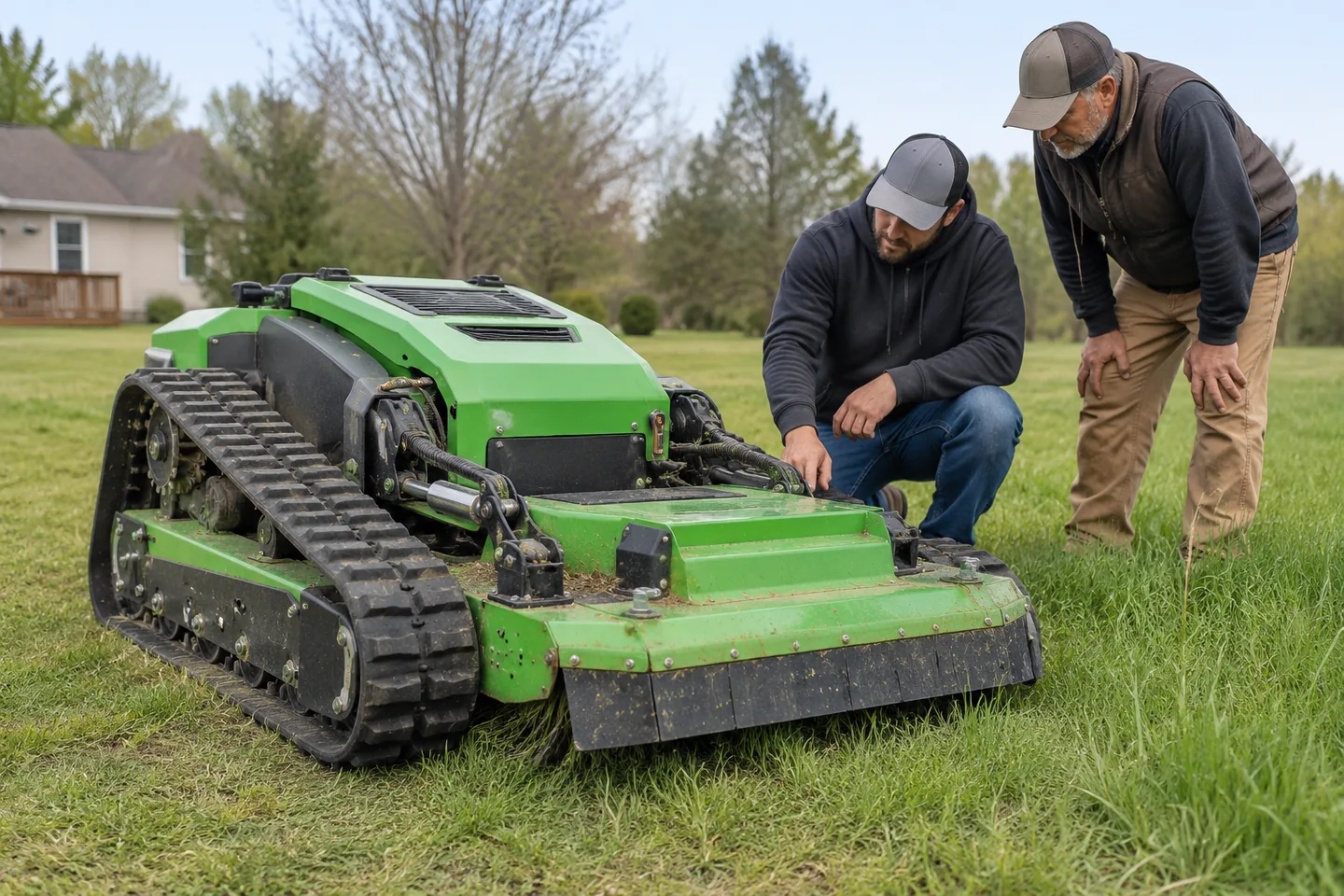
Grounds crews should verify the applicable requirements for the properties they actually visit. Official guidance supports preventing the movement of soil and plant material, but it does not create one cleaning method or release threshold for every mower, state, species, and work site.
- Equipment instructions: Use the current operator manual for permitted access, cleaning, maintenance, and protection of electrical or mechanical components.
- Site and contract terms: Confirm landowner, municipal, parks-agency, or customer-specific entry and departure requirements.
- Local invasive-species controls: Check the current county or state guidance and any transport restrictions relevant to the identified species or material.
- Collected material: Follow the authorized handling and disposal procedure; do not assume debris can be transported to the next job or left wherever the mower is cleaned.
- Record retention: Use the required work-order, inspection, or evidence format and the current retention rule if one applies.
For procurement teams comparing commercial mower fleets, include cross-site hygiene logging in the equipment evaluation: accessible manufacturer-designated inspection areas, unit identification, manual availability, and a way to link cleaning exceptions to the service history may all matter. These are questions to verify with the supplier, not claims that a particular mower is automatically suitable for invasive-species management.
Official references for equipment hygiene planning
- USDA APHIS — How to Stop Invasive Pests: general prevention guidance on equipment, soil, and plant material moving between locations.
- Minnesota DNR — Jumping Worm Information for Businesses: multi-site landscaping and equipment-cleaning context.
- Minnesota DNR — Contract, Grant and Permit Requirements: an example of agency-specific prevention planning and contract controls.
- University of Minnesota Extension — Cleaning Tractors and Farm Machinery: background on cross-field contamination and equipment-cleaning considerations.
Verification note: These sources support the prevention rationale but do not replace the current equipment manual, site procedure, or legally applicable requirements. This article is a handoff-log template, not an approved cleaning or compliance certification procedure.