


 By Anna
You are drafting remote control mower municipal procurement specifications for a public fleet, and the hardest part is not choosing a brand. It is turning scattered site notes into requirements a supplier can answer and you can verify. Two published tender documents show how other agencies structured that work.
A workable specification separates three things: what the site demands, what the machine must document, and what the supplier must deliver in training, manuals, parts and acceptance support. Published tender examples are a structural reference, not a template you can copy — every requirement must be re-checked against your own sites, your current procurement rules and the evidence a bidder actually supplies.
This article uses two named historical US public procurement documents — a New Jersey Department of Transportation remote-control mower RFQ and a 2024 City of Lewiston, Maine remote-controlled slope mower specification — as examples of how requirements are organized. Both solicitations have closed. Their contents are cited here as historical examples only; nothing in them establishes an industry standard, a safe operating limit, or a Super Mowers product capability.
Remote control mower municipal procurement specifications: Define the municipality’s work and site constraints
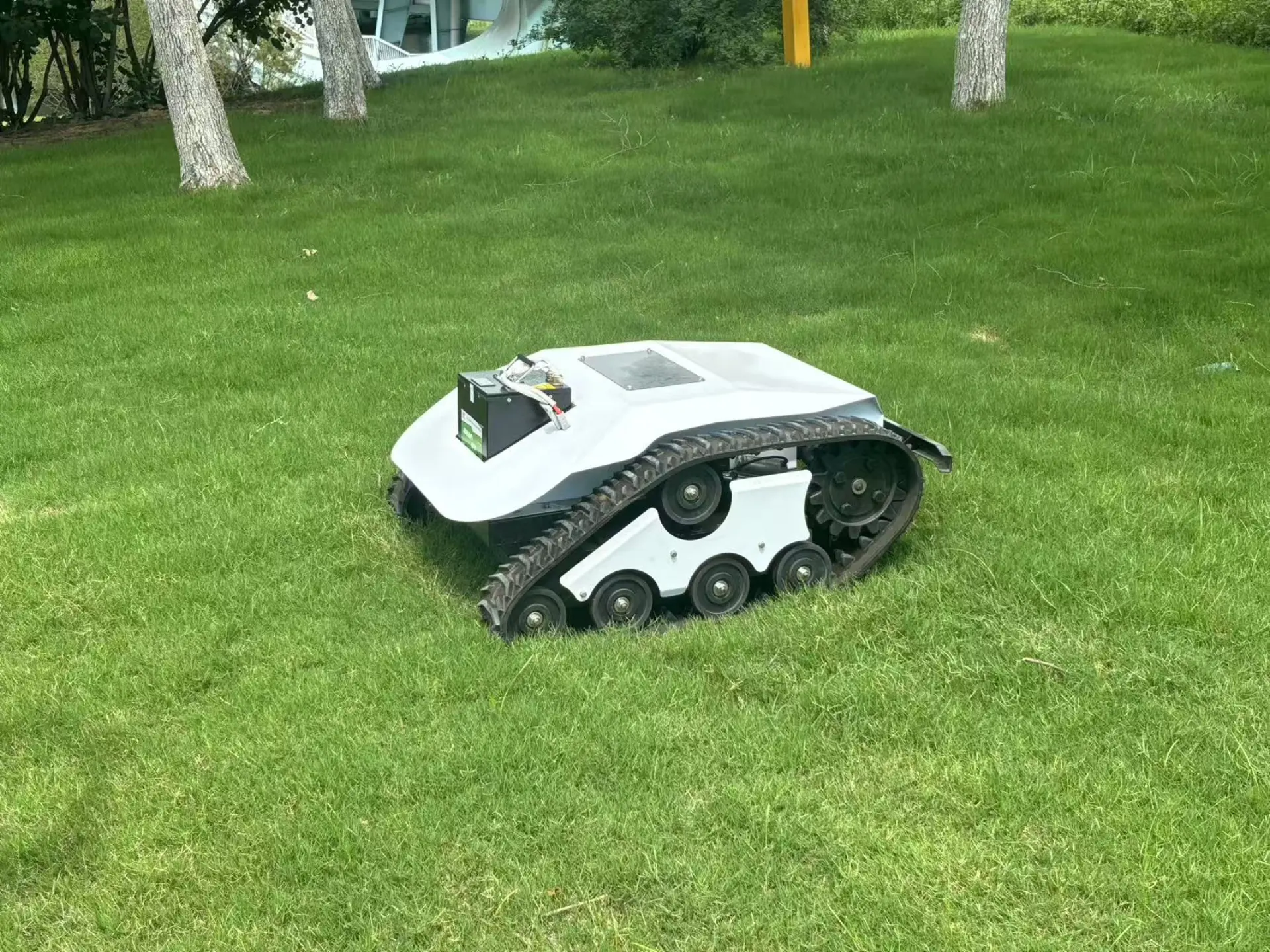
Before any specification language is written, the purchasing team needs a defensible description of the work. A remote-control mower is bought to cut specific vegetation on specific ground under specific access conditions, and a specification that omits those details invites bids that cannot be compared. Start with the sites, not the equipment.
Record areas, vegetation, access and fleet needs
Build a site record for each location where the mower will work. The point is not to produce a perfect survey; it is to give bidders enough information to state what their machine can and cannot do, and to give your evaluation team a basis for checking those statements later. Useful fields include:
- Area and shape: approximate acreage or square footage, plus whether the work is open field, narrow verge, ditch bank, or irregular boundary.
- Vegetation: grass type and typical height, brush or sapling presence, and how often growth is cut back.
- Ground and terrain: slope presence and how it is measured, surface type (turf, gravel, compacted soil), wet areas, and obstacles such as guardrail, poles, headstones, or drainage structures.
- Access: gate widths, path surfaces, trailer or truck turning space, and whether the machine must be transported between sites.
- Operating context: whether staff or the public are nearby, hours of work, noise or debris sensitivity, and who supervises the machine.
- Fleet fit: existing equipment, storage, charging or fueling arrangements, and who performs maintenance.
Two cautions matter here. First, describe slope in the unit and method your agency actually uses, and keep that method consistent through the document; do not silently convert between degrees and percent grade. Second, treat any slope figure as a site description, not as an instruction. Whether a particular mower may be operated on a given slope is a question for that model's manual and the responsible operator, not for a purchasing narrative.
Fleet needs also shape the commercial sections. If the mower must be towed by an existing trailer, the transport configuration becomes a requirement. If the agency has no technician trained on remote-control systems, training and documentation become requirements rather than optional extras.
Compare two named historical procurement examples

Both example documents are publicly posted solicitations. They are useful because they show different drafting choices, not because either represents a model specification. The NJDOT document is a request for quotation for a remote-control mower; the Lewiston document is a specification attached to a 2024 bid for a remote-controlled slope mower. Reading them side by side shows how much of a tender is commercial and documentary rather than purely mechanical.
Separate machine requirements from service and delivery
A recurring weakness in draft specifications is mixing machine attributes, delivery obligations, and post-award support into one undifferentiated list. When that happens, bidders respond unevenly and evaluators cannot tell which promises are binding.
A cleaner structure groups requirements into four blocks:
- Machine and configuration: the equipment itself, its control arrangement, cutting function, and any attachments or accessories included in the price.
- Documentation: operator manuals, maintenance information, parts identification, and any declarations or labels the agency requires.
- Delivery and handover: where and when the unit is delivered, what condition it arrives in, and what receiving checks apply.
- Support: training, warranty terms, spare-parts availability, and the supplier's response arrangements.
Historical tenders often blend these. Your specification does not have to copy that. Splitting them makes each requirement answerable with a specific document or commitment, which is exactly what an evidence matrix needs.
Build a specification and evidence matrix

A specification tells bidders what you want. An evidence matrix tells you how you will confirm they can meet it. Building both at once prevents the common failure where a requirement is written in a way that no document can verify.
Application review
Discuss your mowing application.
Share the working condition, target market, product family and project scope.
Mark mandatory, desirable and unverified fields
For each line in the specification, record three things: the requirement, its status, and the evidence you will accept. Status should be one of mandatory, desirable, or to be confirmed. Evidence should name a document type — for example, the manufacturer's manual for the exact model, a published specification sheet, a declaration, or a written statement from the bidder.
The table below is a working structure, not a set of verified values. Every cell marked as a question must be answered from your own sites and from bidder documents.
| Specification area | Example requirement wording | Status | Evidence to request | Notes |
|---|---|---|---|---|
| Control arrangement | Machine is remotely controlled; describe control method and operator position | Mandatory | Manufacturer specification for the offered model | Confirm the control type precisely; remote control does not imply autonomous operation |
| Cutting function | Cutting width and height range for the offered configuration | Mandatory | Model specification sheet | Record as offered; do not assume a family-wide figure applies |
| Slope capability | State the manufacturer's documented operating limit and its conditions | Mandatory | Exact-model manual or published limit | Keep units and conditions as published; do not convert or generalize |
| Transport | Dimensions and weight for transport planning | Mandatory | Model specification sheet | Match against your trailer and access routes |
| Manuals | Operator and maintenance manual supplied with the unit | Mandatory | Sample manual or contents list | Confirm language and revision |
| Spare parts | Parts list and identified consumables for the offered model | Desirable | Parts documentation | Confirm how parts are identified and ordered |
| Training | Handover briefing on controls and routine checks | Desirable | Written description of handover | Scope to be agreed in the contract |
| Warranty | Warranty terms and exclusions | Mandatory | Warranty document | Compare like for like across bids |
| Delivery | Delivery point, condition and receiving checks | Mandatory | Bidder delivery statement | Align with your receiving procedure |
| Test or demonstration | Demonstration conditions and who attends | To be confirmed | Bidder proposal | Define conditions before award, not after |
The matrix does more than organize paperwork. It exposes requirements that sound firm but cannot be checked, and it forces the agency to decide in advance whether an unverified claim is acceptable. Where a bidder offers an exception, the matrix gives you a place to record it rather than losing it in correspondence.
If your agency also buys mowing as a service rather than as equipment, the cemetery mowing bid checklist covers scope-of-work questions for that different contract type.
Plan acceptance and supplier questions

Acceptance is where a specification either holds together or quietly dissolves. Decide before the bid closes what will be checked on delivery, who performs the check, and what happens if an item does not match the offer.
Record test conditions, manuals, support and exceptions
If a demonstration or trial is part of acceptance, write down the conditions: the site, the vegetation and ground state, who operates the machine, who observes, and what constitutes a pass. A demonstration on a flat, dry field does not verify performance on a ditch bank, and a photograph of a machine on a slope does not establish an operating limit. Keep the record factual and tied to the conditions actually used.
Manuals deserve their own acceptance line. Confirm that the manual supplied matches the delivered model and configuration, that it covers the control system and routine maintenance, and that the revision is recorded in your fleet file. This matters later when maintenance questions arise and staff need the correct document.
Support questions to put to every bidder, in writing:
- Which documents will be supplied for the exact offered model, and in what language?
- How are spare parts identified, and what information is needed to order them?
- What does handover include, and who delivers it?
- What are the warranty terms, and what is excluded?
- If the offered configuration differs from a line in the specification, how will the exception be stated?
Record every exception in the matrix with the bidder's wording and your evaluation decision. An exception that is accepted informally tends to become a dispute at delivery.
FAQ
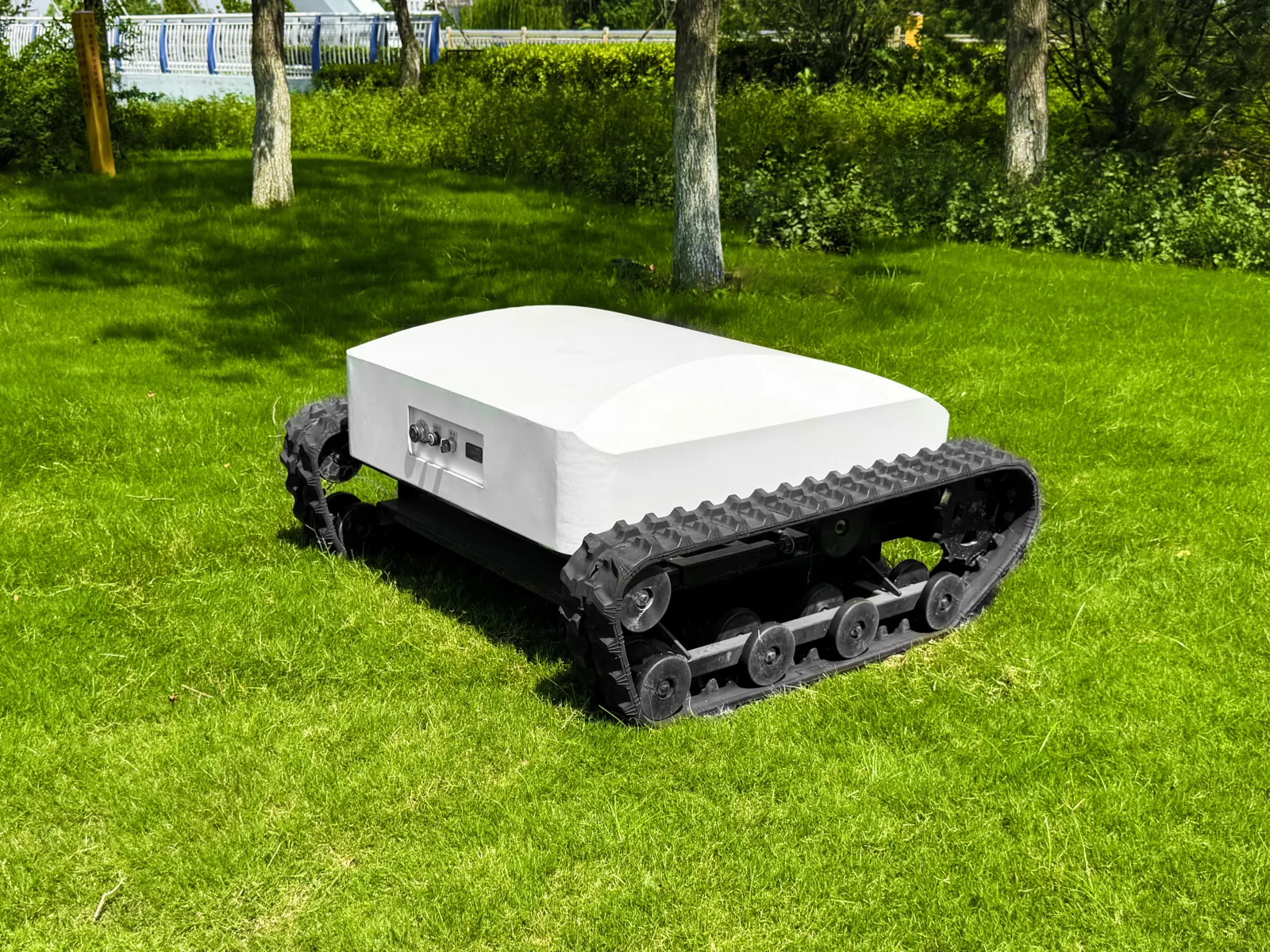
Can a past tender be reused as a current requirement? No. A published tender reflects one agency's sites, rules and date. Both example documents here have closed and are cited only as structural examples. Re-check every requirement against your current sites, your procurement rules and the evidence available for the model you are offered.
How should equipment exceptions be recorded? In writing, against the specific specification line, using the bidder's own wording. State whether the exception is accepted, rejected, or accepted with a condition, and keep the record with the evaluation file so it can be compared at delivery.
Does a published rating prove suitability for the site? No. A published figure describes a model under stated conditions. Suitability depends on your vegetation, ground, access and operating arrangements, and on the exact model and configuration offered. Treat ratings as claims to verify, not as proof.
Conclusion

Write the site record first, then the requirement, then the evidence you will accept. Use historical tenders for structure, never as proof of capability. For remote-control equipment options, see Super Mowers products or send a quotation enquiry.