


 By Anna
You have a year of invoices, fuel or charging receipts, and hour-meter readings, but no single figure that tells you what an hour of actual mowing costs. The gap is usually the denominator: machine-on hours are not the same as billable, productive hours.
Build the estimate from your own records: add ownership, energy and maintenance costs for one period, then divide by productive hours rather than engine hours. The same cost divided by machine-on hours gives a lower figure that can mislead pricing and fleet comparisons.
This article is for commercial mowing contractors and fleet dispatch supervisors who need a defensible internal number, not an industry benchmark. Every dollar figure below is a stated assumption used to show the method. None of them is a Super Mowers price, a quotation, or a measured result from any fleet.
Commercial mower cost per operating hour: Define ownership, operation and labor boundaries

The first decision is what belongs in the numerator. If ownership costs and labor costs are mixed into one hourly figure, the result cannot be compared with another machine, another period, or a rental rate. Keep three boundaries separate and label them in your worksheet.
Ownership costs are the costs of having the machine whether or not it cuts grass. Depending on how your business accounts for equipment, this can include the purchase price or finance charge allocated over the planned holding period, insurance, registration or licensing where applicable, storage, and depreciation. Depreciation is an accounting choice; state the method you use so a later reader of the record understands the number.
Operating costs are the costs triggered by use. Energy is the obvious one: gasoline, diesel, or electricity for a battery machine. Maintenance and repair parts, consumables such as blades, oil and filters, and wear items belong here too. So do the direct costs of keeping the machine serviceable, such as scheduled inspections recorded against the unit.
Labor, transport and overhead are usually excluded from an equipment cost-per-hour figure, and that exclusion must be written down. Operator wages, benefits, travel between sites, trailer and truck costs, fuel for transport, insurance claims handling, and office overhead are real costs, but they are not equipment costs. If you want a fully loaded job cost, build it as a second layer on top of the equipment figure rather than hiding labor inside it.
A practical way to keep the boundaries visible is a simple cost-category table that you fill in once per period and reuse.
| Cost category | Examples | In the equipment hourly figure? | Record source |
|---|---|---|---|
| Ownership | Purchase or finance allocation, insurance, storage | Yes, if you choose to include it | Invoice, finance schedule, policy |
| Energy | Gasoline, diesel, electricity | Yes | Fuel or charging receipts |
| Maintenance and parts | Blades, filters, oil, repairs | Yes | Service invoices, parts receipts |
| Labor | Operator wages, benefits | No, unless stated separately | Payroll |
| Transport | Truck, trailer, transport fuel | No, unless stated separately | Transport log |
| Overhead | Office, administration | No, unless stated separately | Accounts |
Two published discussions of mower running costs make the same point in different ways. GUS frames zero-turn running costs around the components that recur during use, while Toro's total-cost-of-ownership discussion treats purchase and ownership as part of the picture rather than fuel alone. Neither source supplies a figure you can copy into your own books; they support the structure of the calculation.
Separate engine, productive and available time
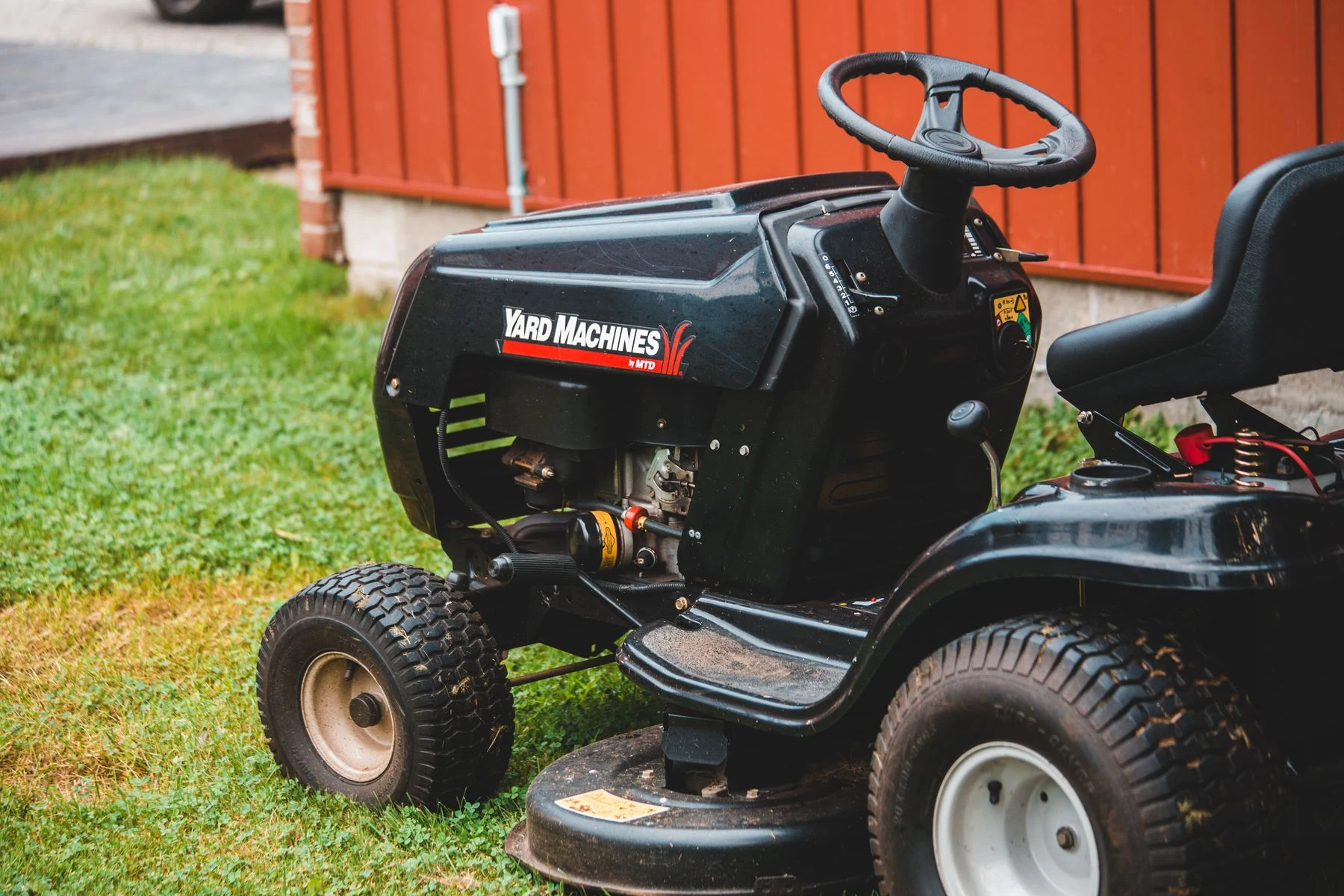
The denominator matters as much as the numerator. A mower can be switched on for 300 hours in a season while cutting grass for far fewer. If you divide total cost by the larger number, you understate the cost of the hours you can actually bill.
Three time measures are worth keeping apart:
- Machine-on hours come from the hour meter or the machine's own run log. They include idling, warm-up, moving between cuts, and time spent on tasks that are not mowing.
- Productive hours are the hours the machine is actually cutting to the required standard on a billable or planned task. These are the hours your customers pay for, or the hours your internal work order counts.
- Available hours are the hours the machine could have been scheduled but was not, because of weather, crew shortages, breakdowns, or an empty dispatch board. Available time is useful for utilization analysis but is not a cost driver in the same way.
The difference between machine-on and productive time is where many estimates go wrong. Idling, travel across a large property, re-cutting, and waiting for a crew to clear an area all consume machine hours without producing billable output. Recording them separately turns a vague feeling that "the machine costs a lot" into a specific, checkable number.
A time-category log can be as simple as this:
| Time category | What it captures | Typical record |
|---|---|---|
| Machine-on | Meter or run-log hours | Hour meter reading at start and end of period |
| Productive | Hours cutting to standard on a billable task | Job ticket or dispatch record |
| Non-productive machine time | Idling, travel, rework, waiting | Dispatcher note or operator log |
| Available but unused | Scheduled capacity not used | Dispatch board |
| Down for repair | Machine unavailable due to fault | Service record |
If your crew does not yet log productive hours, start with the job ticket. Most contractors already record which property was cut and on what day; adding start and finish times for the mowing pass is a small change that makes the cost calculation possible. Do not estimate productive hours from machine hours with a fixed percentage unless you say clearly that it is an assumption and check it against a sample of job tickets.
Calculate a hypothetical cost per productive hour

Here is the method with a transparent example. The figures are invented for illustration only: ownership costs of $2,400, energy of $400, and maintenance of $200 in the same period, giving $3,000 in total equipment cost. The machine ran 300 hours on its meter and produced 240 productive hours.
Dividing $3,000 by 300 machine-on hours gives $10.00 per machine-on hour. Dividing the same $3,000 by 240 productive hours gives $12.50 per productive hour. Both are correct for their own denominator; they answer different questions. The $10 figure describes what it costs to keep the machine running. The $12.50 figure describes what it costs to deliver an hour of billable mowing with that machine.
Hypothetical $3,000: $10 per 300 machine-on hours versus $12.50 per 240 productive hours; excludes labor and other unlisted costs
That heading is the whole point of the exercise. The two numbers differ by 25% because 60 machine hours produced no billable output in this example. If you quote or budget from the $10 figure while your crews actually bill productive hours, you leave that gap uncovered.
To build your own version, follow these steps in order:
- Choose the period. A season, a quarter, or a full year works, as long as ownership, energy, maintenance and time all cover the same dates.
- List ownership costs for that period using your own accounting treatment, and note the method.
- Add energy costs from receipts or charging records for the same machine.
- Add maintenance and parts from service invoices and parts receipts.
Application review
Discuss your mowing application.
Share the working condition, target market, product family and project scope.
- Total the equipment costs and confirm that labor, transport and overhead are excluded or listed separately.
- Record machine-on hours from the meter or run log at the start and end of the period.
- Record productive hours from job tickets or dispatch records.
- Divide the total by each denominator and label both results.
The output is a small table you can update each period and compare across machines.
| Line item | Your figure | Notes |
|---|---|---|
| Ownership costs | To confirm | State the allocation method |
| Energy costs | To confirm | Fuel or electricity receipts |
| Maintenance and parts | To confirm | Service and parts invoices |
| Total equipment cost | Sum of the above | Excludes labor, transport, overhead |
| Machine-on hours | To confirm | Meter or run log |
| Productive hours | To confirm | Job tickets or dispatch |
| Cost per machine-on hour | Total ÷ machine-on hours | Label clearly |
| Cost per productive hour | Total ÷ productive hours | Label clearly |
This is deliberately narrower than a full job-costing model. The Green Industry Pros discussion of recovering equipment costs treats hourly equipment cost as one input into pricing rather than the whole price. Use your figure as an input to pricing and fleet decisions, not as a substitute for a complete bid.
Test utilization and energy scenarios

A single cost-per-hour figure is a snapshot. The more useful question is how the figure moves when utilization or energy assumptions change, because that is what fleet decisions actually depend on.
Utilization. If the same $3,000 in equipment cost is spread over more productive hours, the cost per productive hour falls; if productive hours drop, it rises. In the example, 240 productive hours gave $12.50. At 200 productive hours the same cost would give $15.00, and at 300 productive hours it would give $10.00. Those are arithmetic consequences of the assumption, not forecasts. The practical lesson is that a machine with low productive utilization carries a higher cost per billable hour even if its purchase price was modest.
Energy. Energy is only one part of the numerator, and its share varies by power source and by how the machine is used. A gasoline machine's energy cost depends on consumption per hour and the price paid at the pump; a battery machine's depends on electricity price and charging efficiency. Rather than importing a consumption figure from another fleet, record your own for a sample period and state it as an assumption. If you do not have a measured figure, mark it as a question to confirm rather than filling the cell with a guess.
A scenario table keeps the assumptions visible:
| Scenario | Total equipment cost | Productive hours | Cost per productive hour | What changed |
|---|---|---|---|---|
| Base example | $3,000 (assumed) | 240 (assumed) | $12.50 | Starting assumptions |
| Lower utilization | $3,000 (assumed) | 200 (assumed) | $15.00 | Fewer billable hours |
| Higher utilization | $3,000 (assumed) | 300 (assumed) | $10.00 | More billable hours |
| Higher energy cost | To confirm | 240 (assumed) | To confirm | Energy line only |
| Lower maintenance | To confirm | 240 (assumed) | To confirm | Maintenance line only |
Two cautions apply. First, changing one line while holding others fixed is a sensitivity check, not a prediction; real fleets change several things at once. Second, the scenario table does not tell you which machine to buy. It tells you how sensitive your cost per productive hour is to the assumptions you control, such as scheduling density and how much non-productive machine time you tolerate.
If you are comparing mower types or configurations, keep the comparison on the same cost boundary and the same time definition. A comparison between one machine's machine-on-hour cost and another's productive-hour cost is not a comparison at all. Super Mowers publishes product and application information at supermowers.com/products and supermowers.com/applications; use those pages for configuration questions, not as a source of cost figures.
FAQ

Is fuel the whole operating cost?
No. Fuel or electricity is one operating line. Maintenance, parts, consumables and wear items also belong in the operating portion, and ownership costs sit alongside them. A fuel-only figure understates the cost of running a mower, and it says nothing about the hours the machine sits idle or works without billing.
Can a cost figure from another fleet be used as a quotation?
No. Another fleet's cost per hour reflects its purchase terms, energy prices, maintenance history, terrain, and utilization. It can be useful as a structural example or a sanity check, but it is not your cost and not a price you can quote. Build your own figure from your own records, and label every assumption.
Conclusion

Track equipment cost against productive hours, not just machine-on hours, and label every assumption. Start with one machine and one period, then compare the two denominators before you price the next job.
Sources and further reading
- Toro: the true cost of owning a commercial mower
- Green Industry Pros: recovering equipment costs
- Super Mowers applications