


 By Anna
A dealer service writer receives a call about a “flail mower bearing grease point,” and the caller may mean the rotor, a rear leveler roller, or a drive-side shaft support. The words sound interchangeable, but the parts and their documentation are not. Good flail mower rotor bearing lubrication maintenance starts before anyone reaches for a grease gun: the machine, the component name, and the manual section must line up first.
The rotor bearing supports the rotating cutting assembly; a leveler or roller bearing supports a separate rear roller where one is fitted. Identify both in the exact model’s parts diagram and manual, then take the lubricant, interval, and access method only from that document. Never carry one brand’s figures to another machine.
This article is written for commercial flail equipment dealer service staff and fleet maintenance supervisors in the US who need to route a lubrication question to the right page, the right part, and the right person. It does not supply grease types, intervals, or torque values, because those must come from the manual for the specific unit in front of you.
Flail mower rotor bearing lubrication maintenance: Identify the flail rotor and any rear leveler

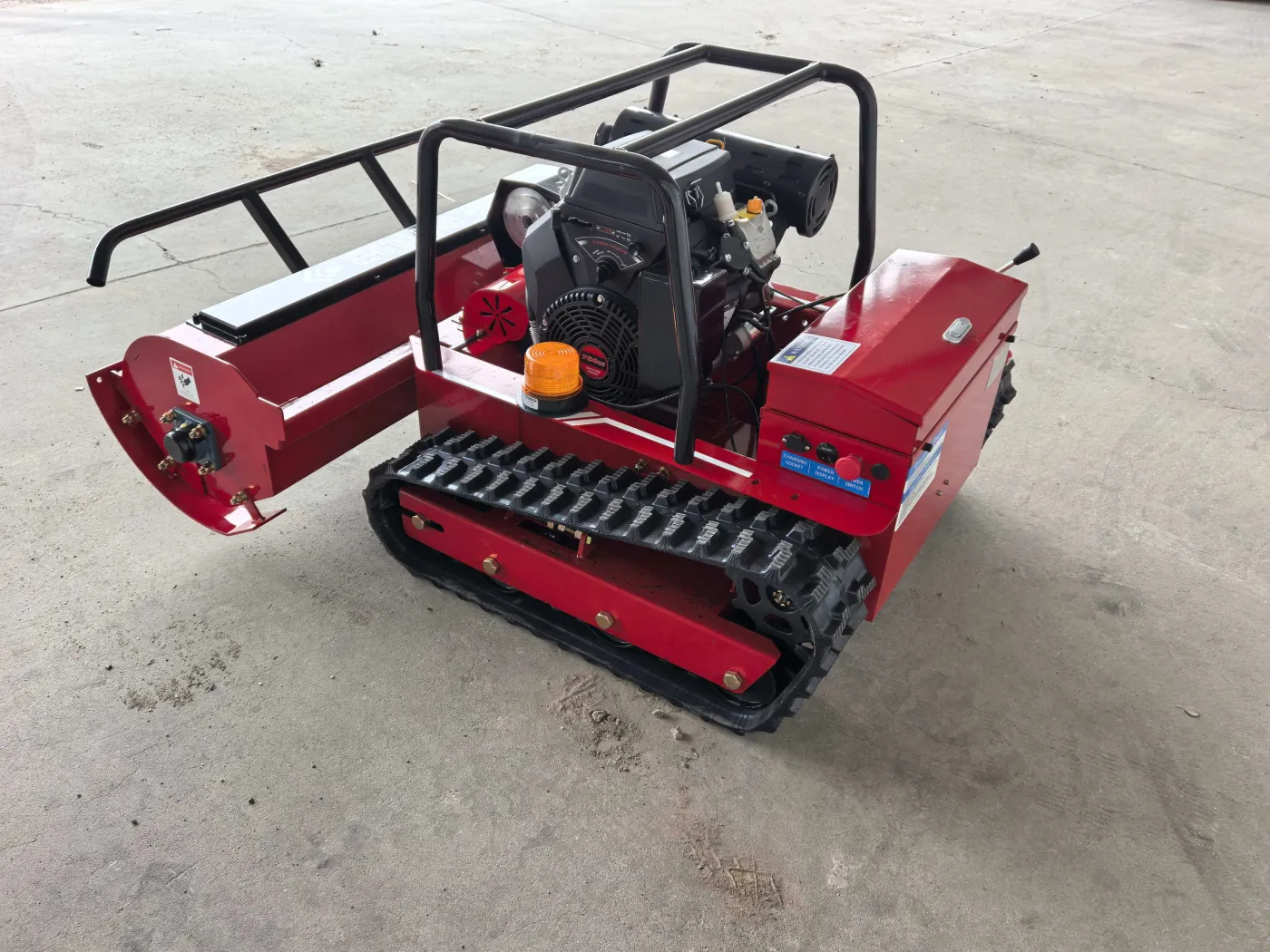
Start with what actually turns. On a flail mower, the rotor is the horizontal shaft that carries the cutting flails or hammers inside the housing. Its bearings sit at the ends of that shaft, in the side plates or bearing housings, and they carry the load of the spinning cutting assembly. That is the component most people mean when they say “rotor bearing.”
A rear leveler or roller is a different assembly. Where fitted, it is a roller behind the cutting housing that follows the ground and helps control cutting height and finish. Its bearings are separate parts in separate housings, and they do not share a function with the rotor bearings even when both appear on the same lubrication chart. Some machines have a rear roller; some do not. Some have adjustable leveling hardware that is not a roller at all. The only reliable way to know is the parts diagram for the unit.
Describe the rotating cutting assembly and the separate support or leveler where fitted
A useful description for a service ticket separates three things: the rotating cutting assembly (rotor plus flails), the bearings that support that rotor at each end, and any separate ground-following roller or leveler with its own bearings. Add the drive side as a fourth note, because belts, gearboxes, or drive shafts sit on one end and can be confused with bearing locations during a quick walkaround.
When a customer says “the bearing is dry,” ask which bearing and how they identified it. A noise from the rear of the machine may come from a roller, a leveler pivot, or a rotor end, and the repair path differs. Naming the assembly first prevents a technician from greasing a fitting that belongs to a different part of the machine.
Confirm the exact machine and parts diagram before naming components
Model names, series letters, and build years change component layouts. Two machines sold under similar descriptions can have different bearing arrangements, different numbers of grease points, and different access panels. Before quoting a part or a procedure, match the unit’s model plate, series, and serial range to the supplier’s parts diagram and manual revision.
If the plate is unreadable or the manual revision is unknown, treat the component name as unconfirmed. That is not a delay tactic; it is how a dealer avoids ordering the wrong bearing or sending a crew to grease a point that does not exist on that build. Record the machine identity on the ticket so the next person does not have to repeat the identification.
Compare bearing positions in named manuals

Published manuals are useful because they show how manufacturers organize the same general machine differently. The comparison below is about document structure and component naming, not about interchangeable parts or shared service values. Each example applies only to the named product line and manual.
| Documented example | What the manual separates | What that tells a service reader | Scope limit |
|---|---|---|---|
| Blue Diamond Standard Duty Tractor Flail Mower manual | Separate rotor bearing and leveler bearing lubrication sections | The manufacturer treats the cutting rotor and the leveler as distinct lubrication subjects | Applies to that named model and manual only |
| Betstco FH-EFGC Series flail mower manual | Bearing material alongside shaft and belt-side information for the series | Bearing identification sits within a wider drive and shaft context | Applies to the FH-EFGC series only |
| Wessex WFM 145–220 manual | Separate rotor bearing and roller bearing sections | Roller bearings are documented as their own subject, not folded into the rotor | Applies to the WFM 145–220 range only |
Use Blue Diamond’s separate rotor and leveler bearing sections as one documented example
The Blue Diamond Standard Duty Tractor Flail Mower manual is a clear example of a manufacturer splitting lubrication by assembly: it lists rotor bearings and leveler bearings in separate sections. For a dealer, that structure is the lesson. It confirms that at least one production manual expects the reader to treat the cutting rotor and the leveler as different lubrication subjects with their own instructions.
It does not confirm that every flail mower has a leveler, that the leveler uses the same grease as the rotor, or that the intervals match. Those details belong to the Blue Diamond manual for that model, and they stay there. If a customer’s machine is a different brand, the Blue Diamond page is a model for how to read a manual, not a source of values.
Use the Betstco bearing and lower-axle material within its named series
The Betstco FH-EFGC Series manual includes bearing information together with shaft and belt-side material. That placement is useful because it shows how bearing identification can be tied to the drive layout of a series: the reader sees bearings in the context of the shaft they support rather than as a standalone list.
Again, the scope is the series. A part number, bearing size, or access note from the FH-EFGC documentation cannot be assumed to fit another brand or even another Betstco series. When a fleet mixes models, the service writer should keep one manual reference per unit rather than building a single “flail bearing” sheet that blends sources.
Read lubrication instructions in their proper scope

A lubrication instruction has several parts, and they must be kept together: the location (which fitting or housing), the lubricant (type or specification), the interval or condition, and the access procedure (guard removal, panel, or fitting position). Manuals often present these across a diagram, a table, and a text note. Pulling one element out of that set is how errors start.
For a fleet supervisor, the practical rule is to copy the whole instruction block for the specific machine into the service record, not a summary line. If the manual says a bearing is lubricated at a stated interval under stated conditions, the record should preserve those conditions. If the manual is silent or unclear, the correct action is to ask the supplier, not to fill the gap with a neighboring model’s figure.
Application review
Discuss your mowing application.
Share the working condition, target market, product family and project scope.
Separate a bearing location from the lubricant, interval and access procedure
A location is a physical fact: a fitting, a housing, a plug, or a sealed bearing that is not serviceable by greasing. A lubricant is a specification. An interval is a schedule. An access procedure is a sequence that may involve guards or panels. These are four different pieces of information, and a dealer quote or work order should not merge them into one line.
This matters most when a machine has both a rotor bearing and a roller bearing. The two may sit close together, may use different fittings, and may have different service needs. A technician who greases “the bearing at the back” without confirming which assembly it belongs to can over-service one part and miss another. The manual’s own section headings are the best guide to which is which.
Keep grease type, interval and figures tied to the cited machine
No grease specification, interval, or quantity in this article is offered as a universal value, because the supplied sources do not support one. The Blue Diamond, Betstco, and Wessex manuals each describe their own machines. A figure from one is not evidence for another, and a generic “grease regularly” note is not a substitute for the manual’s instruction.
When building a fleet lubrication schedule, list each unit by model and serial range, then attach the manual reference that applies. Where the manual gives a condition rather than a fixed interval, record the condition. Where it gives a sealed bearing, record that no greasing is specified. This keeps the schedule honest and makes audits easier.
Hand the right information to service

A clean handover prevents most bearing-lubrication mistakes. The service team needs the machine identity, the assembly in question, the manual reference, and the customer’s description of the symptom. With those four items, a technician can open the right page and confirm the location before touching the machine.
For dealers, the handover also protects the parts counter. A bearing ordered from a generic description is likely to be wrong. A bearing ordered against a confirmed parts diagram entry for a confirmed serial range is far more likely to fit. The same logic applies to fittings, seals, and housings that may be replaced at the same time.
Match the unit, attachment and serial range to the supplier’s manual
Build a short identification block for every ticket: brand, model, series, serial number, attachment or configuration, and manual revision if known. Attachments matter because a rear roller or leveler may be part of a specific configuration rather than every unit. Serial ranges matter because manufacturers revise components during production.
If the customer cannot supply the serial number, note that the identification is provisional. Do not guess a manual revision from a model name alone. When the machine is a mixed-fleet unit with aftermarket parts, flag that too, because the supplier’s diagram may no longer describe what is installed.
Escalate uncertain components rather than applying another machine’s procedure
Some questions should go back to the supplier or the manufacturer’s service channel: an unreadable model plate, a bearing housing that does not match the diagram, a lubrication point the manual does not show, or a customer request to use a different grease. These are not failures of knowledge; they are normal boundaries of documented service information.
Escalating is cheaper than a wrong repair. A bearing damaged by an incorrect lubricant or an over-greased seal can take a machine out of service. The safe handover states what is known, what is unconfirmed, and what the supplier needs to answer. That record also supports any later warranty or parts discussion.
Frequently asked questions
Are rotor and rear roller bearings the same component?
No. The rotor bearing supports the rotating cutting assembly. A rear roller or leveler bearing supports a separate ground-following roller where one is fitted. Named manuals such as the Blue Diamond Standard Duty Tractor Flail Mower manual and the Wessex WFM 145–220 manual list rotor bearings and leveler or roller bearings as separate subjects. Confirm on the parts diagram for the exact machine.
Do all flail mowers have the same lubrication points?
No. Layout, fittings, and the presence of a rear roller or leveler vary by model and configuration. The Betstco FH-EFGC Series manual documents bearings within its own series context, and that does not transfer to other machines. Use the manual and parts diagram for the unit in front of you.
Can one brand’s grease interval be used for another mower?
No. A grease type, interval, or quantity belongs to the machine and manual that state it. The Blue Diamond, Betstco, and Wessex documents each cover their own products. Applying one brand’s figure to another machine is an unsupported assumption; ask the supplier for the correct instruction.
Conclusion

Identify the rotor and any separate leveler or roller first, then take lubricant, interval, and access steps only from the exact model’s manual. When the component or document is unclear, escalate rather than borrow another machine’s procedure. For fleet record keeping, pair this with the flail mower maintenance checklist.
Video: Perfect Flail Mower: Operation, Adjustment, Maintenance
