 By Anna
A commercial fleet operator sees dark exhaust from a gasoline remote-controlled mower, pulls it off the job, and needs to know what to write down before the unit reaches a technician. The temptation is to name a cause on the spot. The safer and more useful move is to capture the conditions.
Lawn mower black smoke is a symptom, not a diagnosis. Record the engine identity, when the smoke appears, what the machine was doing, and any other changes in sound, power, or smell. Then hand that record to an authorized technician instead of replacing parts on a guess.
That record is what this article builds. It covers what to observe, why several different causes can produce the same dark exhaust, where the service boundary sits, and how to package the finding so a technician can reproduce the symptom rather than start from zero.
Lawn mower black smoke: Describe the smoke and operating context
A black smoke report is only as good as its context. Two machines can both "blow black smoke" while one does it for a second at startup and the other does it continuously under load. Those are different observations, and they point a technician in different directions. Before anyone opens a panel, the fleet record should answer a short set of questions: which engine, which moment, which workload, and what else changed.
Write the description in plain, observable terms. Note the color as you actually saw it — dark gray, black, or a black puff mixed with lighter exhaust — rather than forcing it into a single label. Note whether the smoke was continuous or intermittent, whether it thinned out or thickened, and whether it appeared at idle, during engagement of the cutting system, on a slope, or after a fuel stop. Avoid adjectives that imply a cause, such as "running rich" or "flooding," unless a technician has already used those words.
Record engine identity, timing and other symptoms
The engine identity is the anchor for everything else. Fleet teams that run mixed brands and model years cannot rely on "the mower" as an identifier. Capture the unit number, the engine make and model as printed on the engine or in the delivered documentation, and the hour meter reading. If the machine has a specific configuration — attachments, control setup, or a recent engine-related service — note that too, because it changes what a technician will check first.
Timing matters as much as identity. A short checklist helps the person on the ground capture the same fields every time:
- When the smoke first appeared: date, time, and hours on the meter.
- What the machine was doing: transport, mowing, slope work, startup, shutdown, or refueling.
- Whether the smoke was continuous, intermittent, or a single puff.
- Whether engine speed or load changed the smoke.
- Any accompanying symptom: loss of power, rough running, hard starting, unusual noise, fuel smell, or a changed exhaust note.
- Ambient conditions that could matter: very cold start, dust, recent rain, or a long period of storage.
- Whether the operator stopped the machine, and why.
A photograph or short video of the exhaust under the same conditions can help, provided it is taken safely and does not require anyone to stand near moving parts or hot surfaces. The goal is a record a technician can compare against, not a clip that substitutes for inspection.
Distinguish observations from a confirmed fault
Fleet records often blur what was seen with what was concluded. "Air filter clogged" is a conclusion. "Black smoke at startup that cleared after two minutes, with no power loss, air filter last inspected at 240 hours" is an observation with a history attached. The second version lets a technician decide whether the filter is even relevant.
Keep the two columns separate in the record. Observations include color, timing, load, sound, smell, and operator actions. Conclusions include any diagnosis, and they should be attributed to whoever made them — an operator's hunch, a service desk note, or a technician's finding. When a symptom is handed off without that separation, the next person tends to inherit the first guess as if it were evidence.
| Record field | What to write | Why it helps |
|---|---|---|
| Unit and engine identity | Fleet number, engine make/model, hour meter | Ties the symptom to the correct documentation |
| Smoke description | Color as seen, continuous or intermittent, density change | Separates different symptom patterns |
| Operating condition | Startup, idle, load, slope, transport, refuel | Narrows the conditions to reproduce |
| Accompanying symptoms | Power loss, rough running, noise, smell, hard start | Shows whether the smoke is isolated |
| Recent history | Last service, fuel added, storage, prior complaints | Flags relevant context without diagnosing |
| Operator action | Stopped, continued, reported, isolated the unit | Documents the response and the machine's state |
| Open questions | What is unknown or unverified | Prevents assumptions from hardening into facts |
Understand possible causes

Black exhaust on a gasoline engine is commonly associated with an over-rich mixture — more fuel in the combustion chamber than the air can burn cleanly — but that description covers a family of possibilities rather than one failed part. Manufacturer support pages and small-engine repair references list several candidate causes, and they do not agree on a single first check because the right first check depends on the machine and the conditions. A fleet record should reflect that range without pretending to resolve it.
Use manufacturers' examples without assuming a single cause
Published manufacturer guidance is a useful starting point because it shows how the same symptom is framed by the companies that build the equipment. Husqvarna's US support material on black smoke from riding lawn mowers and Yard Force's support article on a petrol mower blowing black smoke both treat dark exhaust as something to investigate rather than a single labeled fault. Small-engine repair references, such as Wildwood Small Engine Repair's discussion of black smoke and Power Equipment's explanation of why a mower smokes, similarly present multiple contributing factors.
Those sources are examples of how the industry describes the symptom, not proof of what is wrong with a particular unit in your fleet. A page written for one model family or one market may list checks that do not apply to your engine, and a general repair article may describe conditions your machine does not have. Use them to build the questions you hand to a technician, not to justify a parts order. Where the supplied material does not establish a cause for your exact engine, the record should say so.
Separate intake, fuel condition and engine issues
A practical way to organize the possibilities is by system, while keeping each item as a question rather than a verdict:
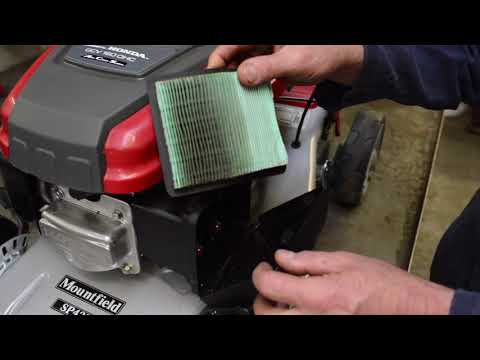
- Intake and air path. A restricted air path is one commonly cited contributor to a rich mixture. Whether the air filter, housing, or intake on your unit is actually restricted is an inspection finding, not something black smoke proves. Fleet records should note when the air filter was last checked and whether the machine has been working in dust or dry clippings.
- Fuel condition and delivery. Fuel that has aged, been contaminated, or been mixed or stored incorrectly is another commonly cited factor, as are fuel-system components that affect how much fuel reaches the engine. The record can note when fuel was last added, from which container, and whether the machine sat unused. It should not conclude that the fuel is bad.
- Engine condition and adjustment. Mechanical condition, carburetion settings, and other engine-level factors appear in repair guidance as further possibilities. These are technician territory. A fleet record that names a carburetor adjustment as the cause has skipped the inspection step entirely.
This grouping is deliberately coarse. Its purpose is to give the service desk a structured set of questions — intake, fuel, engine — so the technician can rule areas in or out in a sensible order. It is not a diagnostic sequence, and the order of checks belongs to the technician working from the engine documentation.
| System area | What the fleet can record | What the fleet should not conclude |
|---|---|---|
| Intake and air path | Last filter check, dust exposure, housing condition as seen | That the filter is blocked or is the cause |
| Fuel condition | Fuel age, container, recent refuel, storage period | That the fuel is contaminated or the cause |
| Fuel delivery | Any visible leaks or smell reported by the operator | Which component has failed |
| Engine condition | Power loss, rough running, noise, hard starting | That an adjustment or repair is needed |
| Documentation | Engine manual on file, model and revision | That a generic article applies to this engine |
Application review
Discuss your mowing application.
Share the working condition, target market, product family and project scope.
Set a safe service boundary

The boundary is simple to state and easy to blur in a busy yard: the fleet's job is to observe, record, isolate, and hand off. Anything beyond that — opening the engine, adjusting fuel or carburetion settings, or working around a hot exhaust — belongs to someone working from the correct manual with the right training. A black smoke report is a reason to stop and document, not a reason to start experimenting.
Follow the actual machine manual and escalate persistent symptoms
The manual that matters is the one delivered with the exact machine and engine, at its current revision. Super Mowers' product catalog includes gasoline-powered remote-controlled mowing equipment, and the engine documentation and fault guidance for a delivered unit should be checked against that unit's model rather than assumed from a family description. If the manual is missing, obtaining it is part of the handoff, not an optional extra.
Persistent or worsening symptoms should be escalated rather than monitored indefinitely. A single puff at startup that the operator notes and that does not recur is a different situation from smoke that continues under load, comes with power loss, or returns after a service. The fleet record should make that distinction visible so the service desk can decide urgency. Where the machine is still under warranty or a service agreement, the escalation route and the required records may be defined by that agreement, and the fleet should follow it.
Avoid hot-engine or fuel-system improvisation
A hot engine and an open fuel system are not places for improvised checks. Do not instruct operators to loosen, drain, or adjust fuel-system components, to test-run a machine with guards or covers removed, or to keep working while smoke continues in the hope that it clears. Do not treat a smoke symptom as permission to bypass a safety device or to run the engine outside its documented limits. These are not maintenance shortcuts; they are ways to turn a reportable symptom into an incident.
Equally, do not let a service deadline push a smoking unit back into the fleet. If the machine is needed for a contract, the honest options are to reassign it, substitute another unit, or wait for the technician's assessment. A record that documents why the unit was held is more valuable than a schedule that quietly absorbed a known symptom.
Prepare the service handoff

A handoff is a small document with a large effect. Done well, it lets a technician reproduce the symptom, check the right documentation, and avoid repeating questions the fleet already answered. Done poorly, it produces a machine in the yard with a sticky note that says "smoking" and a technician who starts from the beginning.
Record unit identity, symptom history and authorized technician
The handoff should carry the unit and engine identity, the symptom description and timing, the operating conditions, accompanying symptoms, recent service and fuel history, and the operator's actions. Add the name of the person who made the report and the date, so follow-up questions have a destination. Then name the authorized technician or service point receiving the unit, and note the date and method of transfer.
A short responsibilities split keeps the handoff honest:
| Step | Fleet or operator | Service desk or technician |
|---|---|---|
| Observe and stop | Record what was seen and isolate the unit | — |
| Document | Complete the symptom record and attach photos if safe | Review the record for missing fields |
| Verify documentation | Confirm the correct engine manual is on file | Confirm the manual revision matches the unit |
| Diagnose | Do not diagnose or adjust | Inspect and determine the cause |
| Decide return to service | Follow the technician's written assessment | State what was found and what was done |
| Close the record | File the outcome against the unit history | Provide the service note for the file |
Connect the finding to the correct engine documentation
The final link in the chain is documentation. The service note should reference the engine make and model, the manual or bulletin the technician worked from, and the finding in enough detail that a future reader can understand what happened. If the cause was an intake restriction, a fuel condition, or an engine adjustment, the note should say which, based on the inspection — not on the original smoke color.
That record then becomes useful beyond the single repair. Across a fleet, repeated black smoke reports on the same engine family, the same fuel supply, or the same duty cycle are a pattern worth reviewing with the service provider. The pattern is a question for the technician and the fuel or maintenance process, not a conclusion the fleet draws alone. Keeping the records consistent is what makes the pattern visible at all.
FAQ

Does black smoke always mean the air filter is blocked? No. A restricted intake is one commonly cited contributor to a rich mixture, but manufacturer and repair references list several possible causes, including fuel condition and engine-level factors. Black smoke alone does not identify which one applies to a given machine. Record the conditions and let an authorized technician inspect.
What information helps a technician reproduce the symptom? The engine make and model, hour meter reading, when the smoke appears, whether it is continuous or intermittent, what the machine was doing, and any accompanying symptoms such as power loss, rough running, or unusual smell. Recent fuel and service history helps too, as does a note on whether the smoke changed with load or engine speed.
Do electric mowers have engine exhaust smoke? No. Black exhaust smoke is a combustion-engine symptom. Battery-electric mowers have no engine exhaust in the sense described here, so a smoke report on an electric unit points to a different kind of investigation entirely and should be recorded as such.
Conclusion
Black smoke is a signal to document, isolate, and escalate — not to diagnose. Capture the engine identity, conditions, and accompanying symptoms, then hand the unit to an authorized technician with the correct manual. Start by adding these fields to your fleet's service record.
Video: What If I See Black Smoke? - Lawnmower Tips from Fraser C Robb