

 By Anna
A naturalized meadow beside a park path, a detention basin behind a property line, or a front-yard wildflower strip all raise the same question each season: mow it now, leave it, or mow part of it? Knowing when to mow a pollinator meadow depends on what the patch is meant to support, how old it is, and what local guidance applies.
There is no single nationwide mowing date for pollinator habitat. Decide patch by patch, using the habitat’s stage, the local flowering and seed period, the winter structure you intend to keep, and any site-specific rules. Confirm timing with local extension or conservation guidance rather than copying another region’s first-frost date.
This article is for people who manage naturalized grass and wildflower areas on campuses, parks, and properties, and for homeowners maintaining a small flower-and-grass habitat. It does not give a national month-by-month calendar, a universal cutting height, or a fixed share of habitat to leave uncut. Those numbers depend on the site and on sources this article does not have.
When to mow pollinator meadow: Define what the planted area is meant to support
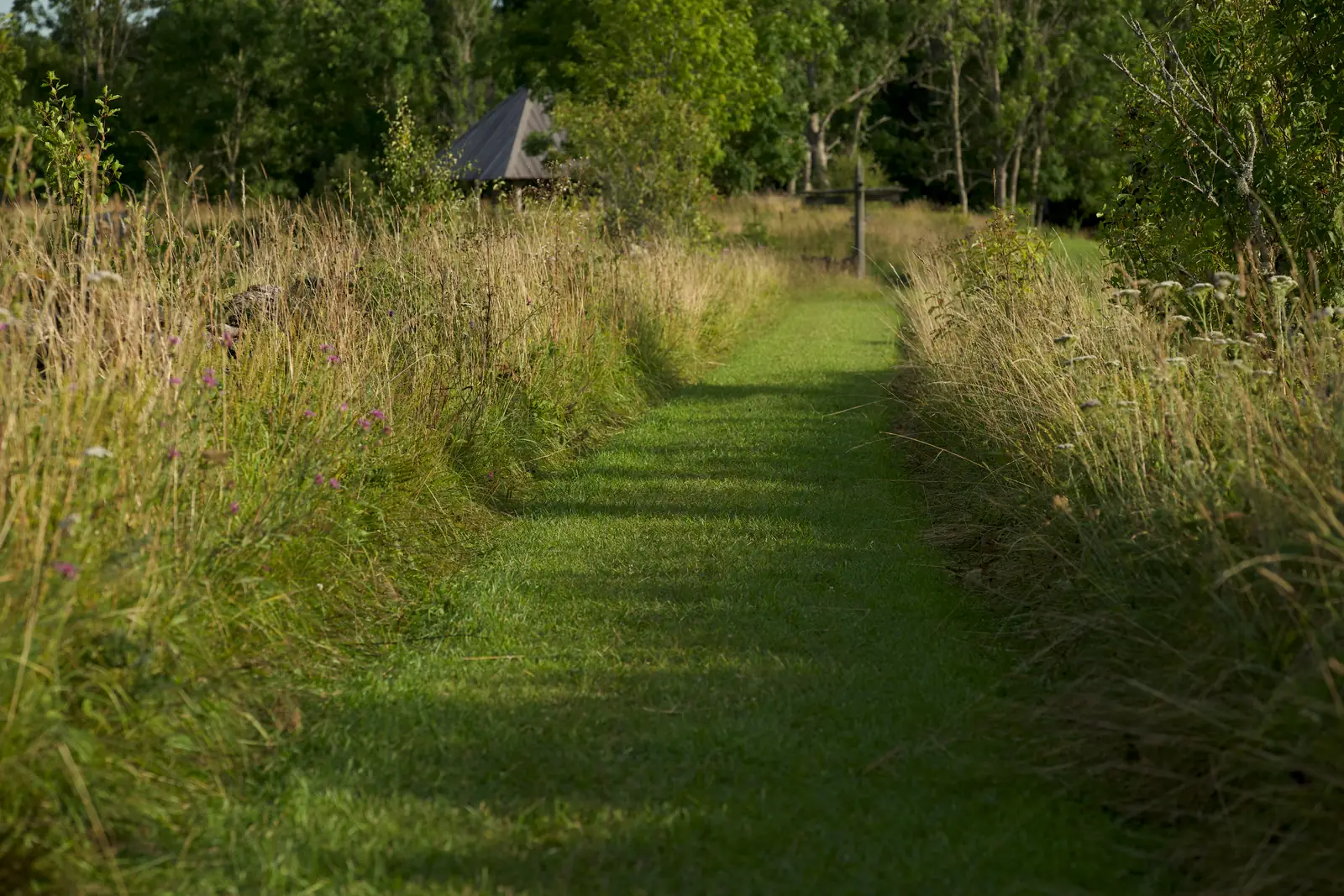
Before any mowing decision, write down what the area is for. A lawn, a wildflower meadow, and habitat for a particular species are three different management targets, even when they look similar in July.
A lawn is usually managed for even height, access, and appearance. A wildflower meadow is managed for flowering plants, seed production, and structural variety. Species-specific habitat is managed around the life cycle of particular insects or animals, which may need bare ground, stems, or a specific host plant. The same mowing pass can help one target and harm another.
Start with observation, not with the site’s name. A strip labeled “pollinator garden” on a plan may now be mostly cool-season grass; a plain grass verge may hold a diverse flowering mix. Record what is actually present:
- Dominant grasses and whether they form dense thatch
- Flowering species you can identify, and the approximate weeks they bloom
- Whether seed heads are forming, mature, or already shed
- Bare ground, stems, and brush piles that could serve as overwintering structure
- Woody seedlings and invasive plants moving in
- Site context: paths, roads, drainage, structures, and who else uses the area
A simple photo log taken from the same two or three points each month is enough to start. It gives you a record to compare with local guidance and to hand to an ecologist or extension office when you ask for advice.
| What the area is meant to support | Typical management focus | What to record before scheduling |
|---|---|---|
| Lawn or access verge | Even height, visibility, traffic use | Use level, desired height, any flowering strips to spare |
| Wildflower meadow | Flowering, seed set, structural variety | Bloom windows, seed maturity, thatch depth, woody encroachment |
| Species-specific habitat | Life cycle of target species | Which species, which life stages, which structures they use |
| Not yet defined | Clarify before mowing | Site owner’s goal, local guidance, any survey records |
If nobody can say which of these applies, that is the first item to resolve. Mowing a site with an unclear objective tends to lock in whatever is already dominant.
Keep establishment mowing separate
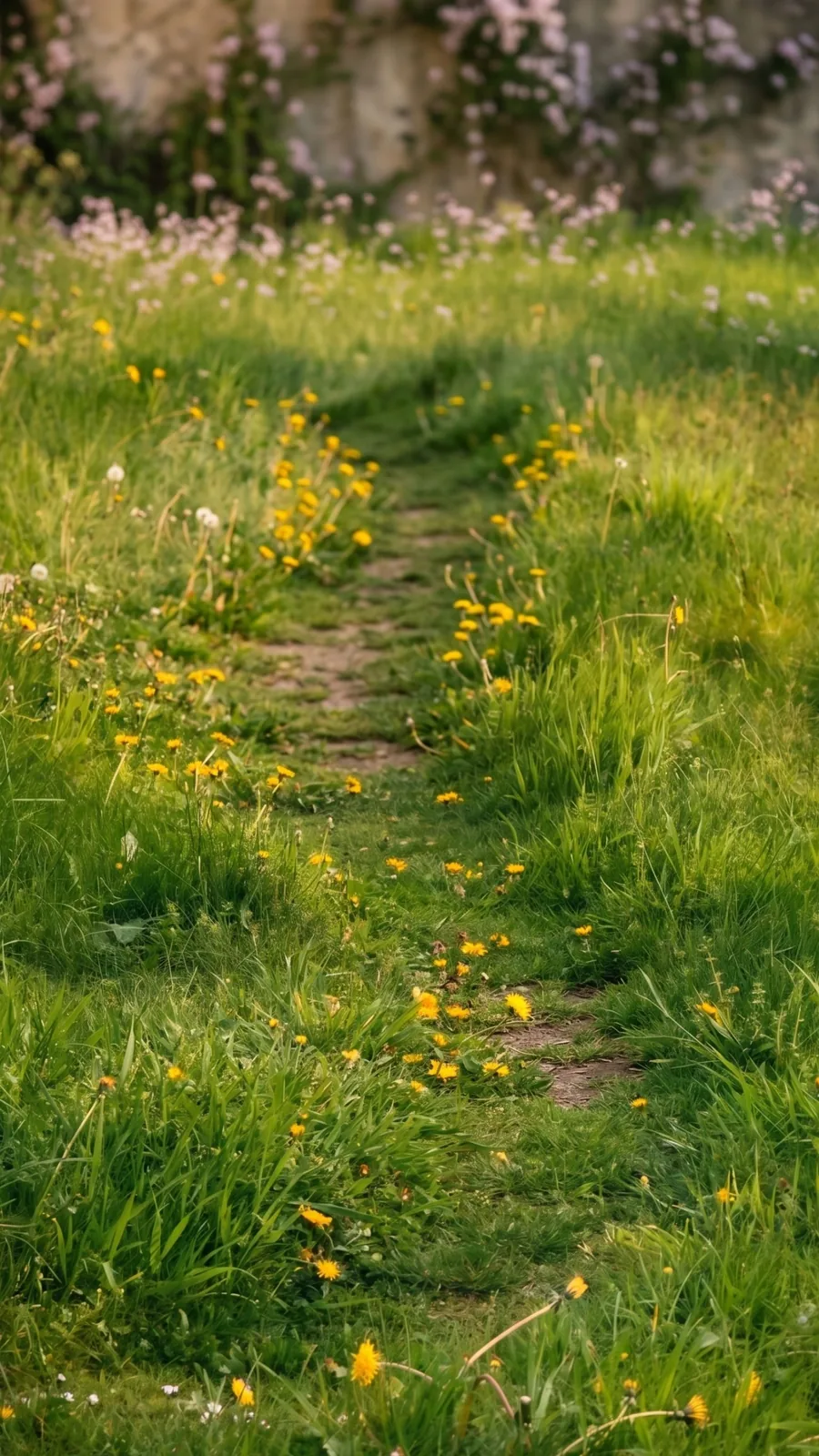
Newly seeded or planted habitat and mature habitat are managed for different reasons, and mixing the two schedules is a common source of trouble.
In the establishment phase, the usual concern is competition: fast grasses and weeds can crowd out slower wildflower seedlings. Management during this period is often about reducing that competition and giving planted species room, which is a different goal from managing a mature meadow for flowering and overwintering structure. Establishment work also tends to be more intensive and more dependent on the seed mix, soil, weather, and the advice of whoever specified the planting.
In a mature habitat, the concern shifts toward maintaining diversity over years: preventing any one grass from dominating, keeping some flowering and seed production, retaining winter structure, and rotating disturbance so that not everything is cut in the same season.
This article does not supply establishment mowing heights, intervals, or first-year schedules. Those depend on the seed mix, the site, and the planting plan, and they should come from the seed supplier, the planting specification, or local extension guidance. What this article can offer is a way to keep the two phases from being confused:
- Label each area by phase in your records: establishing, mature, or unknown.
- Keep separate notes. Establishment observations (germination, weed pressure, bare spots) should not be filed with mature-habitat observations (bloom timing, thatch, winter structure).
- Record open questions rather than guessing. If the planting plan does not state an establishment mowing approach, write “to confirm with seed supplier or extension” and leave the area unmanaged until you have an answer.
- Do not apply a mature-meadow rotation to a new planting on the assumption that less disturbance is always better; young plantings can be lost to competition.
| Phase | Main concern | What this article can confirm | What to confirm elsewhere |
|---|---|---|---|
| Establishing | Competition from grasses and weeds | That establishment and mature management differ | Seed supplier or planting specification; local extension guidance |
| Mature | Long-term diversity, flowering, winter structure | That management is expected, with rotation and life-cycle considerations | Local timing guidance; site-specific constraints |
| Unknown | Objective unclear | That the objective should be clarified first | Site owner, manager, or adviser |
Compare local timing guidance without merging dates

Two well-known sources frame the question differently, and that difference is the point.
The University of Maine Extension addresses a real reader question: whether a pollinator garden that has not been mowed for several years should be cut. Its discussion involves hard frost, seed, and overwintering habitat. That framing is regional and seasonal: it treats frost as a local event and connects mowing to whether seed has had a chance to mature and whether winter structure will be left.
The Xerces Society’s guidance on managing habitat for pollinators makes a broader point: pollinator habitat needs management, but that management should account for flowering periods, rotating patches, and the life history of rare species. It does not hand out one national date.
Read together, the two sources support a method rather than a calendar:
- Frost is local. A first-frost date is a fact about a place and a year, not a national trigger. Using a date from another region, or from last year, can cut a meadow before seed is viable or leave it too late for the work you intended.
- Flowering and seed set are observable. You can see whether flowers are still opening and whether seed heads are green, maturing, or shed. That observation is more useful than a fixed month.
- Winter structure matters. Stems, seed heads, and undisturbed litter can serve as overwintering cover. Whether to leave them, and how much, is a decision to make deliberately, not a by-product of mowing late.
- Rare species change the question. Where protected or rare species may be present, life-history details can override general timing, and the appropriate authority should be consulted.
| Consideration | What it depends on | Why a single national date fails |
|---|---|---|
| Frost timing | Latitude, elevation, local weather, year | First frost varies widely and shifts year to year |
| Flowering and seed | Species mix, planting date, season | Bloom and seed windows differ by species and site |
| Overwintering structure | Target insects and animals, site design | Some life cycles need stems or litter left in place |
| Rare species | Local surveys and species records | Life-history needs may override general advice |
| Site rules | Owner, manager, local authority | Visibility, fire, and safety requirements vary by site |
Application review
Discuss your mowing application.
Share the working condition, target market, product family and project scope.
A practical use of these sources is to build a local comparison sheet: for your site, note the observed first hard frost, the bloom windows of the main species, when seed heads mature, and what local extension guidance says. Then compare your notes with the general principles above, and record where your site differs.
Plan retained and managed patches

Rotational meadow mowing — cutting different parts of a habitat in different seasons or years — is the practical way to keep management going without removing all structure at once. Xerces’ guidance names patch rotation as part of habitat management; the specific rotation for your site is a local decision.
The tool below is an original planning format, not a prescription. It does not assume any particular share of the habitat should be cut or retained. Fill in the proportions and intervals only after local guidance and site review.
Patch maintenance map — fields to complete for each patch
| Field | What to record | Example entry format |
|---|---|---|
| Patch ID | A stable label used on the map and in records | P-03 |
| Area and location | Size and boundary description | 0.2 acre, north of path junction |
| Habitat phase | Establishing, mature, or unknown | Mature |
| Dominant vegetation | Grasses and main flowering species | Cool-season grass with goldenrod and asters |
| Bloom and seed window | Observed dates this year | Bloom early Aug–mid Sep; seed mid Sep–Oct |
| This season’s treatment | Mow, spot treatment, or no action | No action this season |
| Retained structure | What is being left, and where | Stems left along south edge |
| Reason for the choice | Link to objective and guidance | Overwintering structure; rotation from last year |
| Next review date | When to look again | Late winter, before new growth |
| Open questions | Anything unresolved | Confirm whether rare-species survey covers this patch |
A few rules of thumb for using the map, all of them about record-keeping rather than ecology:
- Number patches before the season starts. Decisions made in the field under time pressure tend to default to cutting everything.
- Record what you did, not only what you planned. The map becomes useful next year only if it reflects reality.
- Set a review date for every patch. A patch marked “no action” still needs a date to look again.
- Keep the reason next to the action. “Mowed because the contractor was on site” is a reason to question the schedule, not to repeat it.
- Leave the open-question column visible. Unresolved items are the ones to raise with an ecologist, extension office, or site owner.
If equipment availability affects which patches can be reached or how tall vegetation can be before cutting, check the relevant operator’s manual for the machine actually being used. A manual describes the machine; it does not establish that a particular cutting regime is ecologically appropriate. See the Super Mowers resources page for manual-related material.
Check species and site constraints before scheduling

Ecological timing is only one input. Before a patch is cut, several other constraints may apply, and most of them are decided by someone other than the mowing crew.
Rare and protected species. If a site may host protected plants or animals, general meadow guidance is not enough. Species records, survey reports, and the requirements of the applicable managing authority should be checked. This article cannot determine whether a species is present or what is permitted; that is a question for the responsible agency or a qualified ecologist.
Roadside and path visibility. Naturalized vegetation near roads, junctions, and paths can affect sight lines. Visibility requirements are usually set by the road or site authority, not by the habitat manager, and they may require cutting at times that are not ideal for the meadow.
Fire and fuel-load requirements. Some jurisdictions or property insurers set requirements about vegetation near structures or in fire-prone areas. These are local rules; confirm them with the authority or insurer that applies to your site rather than assuming a general practice is acceptable.
Drainage, utilities, and access. Buried services, drainage inlets, and emergency access routes may need to stay clear. Mark these on the patch map so they are not discovered during cutting.
Neighbors and site users. A naturalized area that looks unmanaged can attract complaints. A short note explaining the management plan, posted at the site or shared with adjacent users, often prevents a mowing request that would undo the season’s plan.
| Constraint | Who usually decides | What the habitat manager should do |
|---|---|---|
| Rare or protected species | Responsible agency, with ecological advice | Check records; ask before scheduling; record the answer |
| Road and path visibility | Road or site authority | Confirm required clearances; mark them on the map |
| Fire and fuel load | Local authority or insurer | Confirm applicable rules; keep written confirmation |
| Utilities and drainage | Utility owner or site engineer | Map locations; plan access before cutting |
| Public expectations | Site owner or manager | Share the plan; set a contact for questions |
None of these checks makes a site “compliant” in a general sense. Each one is a specific question for a specific authority, and the answer should be recorded with a date and a name.
Frequently asked questions

Does a pollinator meadow need mowing every year? Not necessarily every part of it every year. Xerces’ guidance describes habitat management that includes rotation, which implies that different patches may be treated in different years. Whether any given patch needs cutting in a given year depends on its phase, its vegetation, and local guidance. A mature meadow that is becoming dominated by one grass may need attention; a patch retained for winter structure may not. Record the decision and the reason either way.
Is the first frost a universal mowing trigger? No. The University of Maine Extension discussion treats hard frost as part of a local seasonal picture, alongside seed maturity and overwintering habitat. First-frost dates vary by location and year, so a date from one region should not be applied to another. Use your own site observations and local guidance.
Should the whole habitat be mown at once? Rotational, patch-by-patch management is the approach described in the Xerces guidance, and it is the reason this article recommends a patch map. Cutting an entire habitat in one pass removes structure and flowering across the whole area at the same time. How much to cut and how much to retain is a local decision that this article does not set.
Conclusion

Plan pollinator habitat mowing by patch, habitat phase, and local guidance — not by one national date. Map your patches, record what you observe, and confirm species and site constraints before cutting.
Video: Habitat Tip: Mowing Considerations
