
 By Anna
A solar farm remote control mower should be selected from measured PV-site conditions, not from a general claim that it can mow beneath solar panels. Before buying, compare the machine’s full height and width, cutting system, turning requirements, ground limits, and remote-control behavior with the actual panel rows, mounting structures, cables, and vegetation plan. A mower that fits an open grass area may not fit beneath a tracker or between densely equipped module rows.
This guide is for photovoltaic (PV) operations and maintenance teams, vegetation contractors, asset managers, and equipment distributors. It provides a site-fit checklist and supplier questions for commercial purchasing. It does not certify any particular Super Mowers model for a solar facility or replace the PV operator’s electrical safety procedures.
What makes solar farm mowing a separate equipment decision?
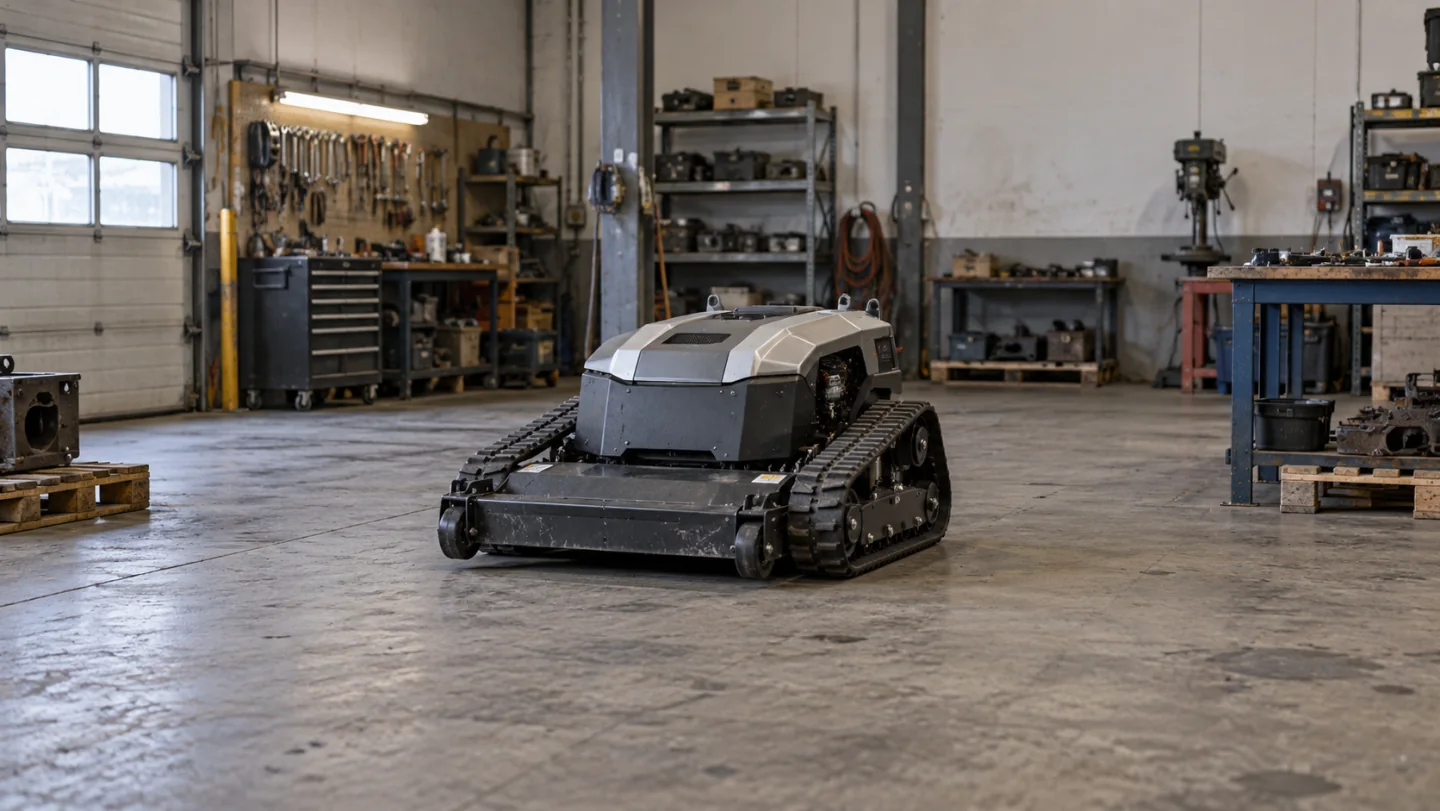
Ground-mounted solar arrays combine vegetation management with electrical equipment, structural supports, changing access conditions, and sometimes moving panel trackers. The objective is not simply to cut the largest area in the least time. Contractors also need to preserve approved access to PV assets and deliver the vegetation outcome specified by the site owner.
The U.S. Department of Energy’s solar operations and maintenance resources describe PV maintenance as an ongoing asset-management responsibility. Vegetation work should therefore be scoped against the current site operation and maintenance plan, not defined independently by an equipment brochure.
Keep the machine classes distinct:
- Remote-control mower: A mowing machine operated through its specified remote-control system. Its design and approved cutting configuration require model-specific review.
- Tracked carrier with a mowing attachment: A different equipment configuration that needs its own manufacturer-approved attachment, guarding, dimensions, and operating limits.
- Autonomous mower: A machine with separately documented navigation and task-control functions. An ordinary handheld transmitter does not, by itself, establish autonomy.
Snow equipment and non-mowing tracked platforms do not inherit a mower’s PV-site approval. Keep those applications in separate requests.
Step 1: Record the actual solar array clearance and access

Prepare one dated site brief for each materially different array block or vegetation-maintenance zone. Do not use nominal row pitch as a substitute for the narrowest usable travel corridor. Measurements should come from the PV owner, approved drawings, or an authorized site survey.
| Site input | What the buyer records | What needs confirmation |
|---|---|---|
| Lowest panel and support clearance | Minimum unobstructed height above the intended travel surface, including low module edges and support members | Full machine height with antenna, guards, and attachments in the proposed configuration |
| Fixed-tilt or tracker layout | Panel system type and owner-defined positions or movement restrictions affecting equipment access | Whether the proposed travel envelope remains valid for the documented array state |
| Usable corridor width | Narrowest opening between posts, foundations, modules, fencing, and permanent equipment | Outside machine width, not merely cutting width |
| Turning and row-end space | Available headland, obstacles, and owner-approved turnaround areas | Model-specific turning and maneuvering requirements |
| Ground and slope | Measured inclines, cross-slopes, uneven ground, erosion, soft areas, and surface transitions | Current machine manual limits and qualified site review |
| PV infrastructure | Module posts, exposed or protected cables, conduits, combiner boxes, inverter pads, grounding components, and anchors | Owner-defined exclusions and permitted work envelope |
| Vegetation | Plant type, density, seasonal height, protected planting, required cut result, and mowing cycle | Deck and discharge suitability for the specified vegetation task |
| Transport and staging | Gate widths, access roads, trailer routes, service areas, and storage arrangements | Full transport dimensions, mass, and approved loading equipment |
| Remote-control arrangement | Potential operator positions, obstacles to visibility, and the approved work zones | Manufacturer supervision, communication, and stop-control requirements |
Important: An under-panel dimension recorded at one moment may not describe every relevant tracker position or ground condition. The PV operator must define the applicable configuration and access restrictions. This worksheet does not authorize travel beneath modules or near electrical infrastructure.
Step 2: Match PV-site constraints to manufacturer evidence

For every proposed mower, create a side-by-side record showing the site value, the supplier’s documented figure, and the responsible reviewer. Do not treat a general statement about low height, strong traction, or obstacle avoidance as a substitute for an engineering drawing or current operator manual.
| Decision field | Evidence to request | Who resolves it |
|---|---|---|
| Machine-to-panel physical fit | Exact model dimensions and full installed configuration compared with approved clearance measurements | PV site owner and equipment supplier |
| Row and headland movement | Overall width, length, turning information, and mapped fixed obstacles | Site team and supplier |
| Ground and slope limitations | Manufacturer’s operating limits and conditions for the proposed machine | Qualified site reviewer and supplier |
| Cutting result and debris management | Deck type, height adjustment, discharge or collection arrangement, and published restrictions | Vegetation manager and supplier |
| Electrical equipment proximity | PV asset drawings, owner-approved work boundaries, and relevant electrical safety requirements | Qualified PV operations personnel |
| Remote-control and fault response | Manual sections on supervision, loss of signal, stop functions, and required training | Equipment supplier and employer |
| Service and commercial support | Maintenance schedule, replacement parts, warranty, destination-market support, and delivery configuration | Distributor and procurement team |
Comparison rule: Record unsupported or unavailable fields as Not verified. A model can remain under consideration while evidence is requested, but it should not be marked as suitable for a restricted PV zone until the responsible parties have completed their reviews.
Step 3: Request the exact mower documents before an equipment quote

A useful supplier response identifies one current model and configuration and attaches the relevant documentation. Ask for:
Application review
Discuss your mowing application.
Share the working condition, target market, product family and project scope.
- Model and build identification: Exact model designation, deck or attachment package, tracks or wheels, guards, antennas, and installed accessories.
- Dimension drawing: Working and transport widths, heights, overall length, ground clearance, and relevant protruding components.
- Operating limitations: Written restrictions on terrain, slope, vegetation, weather, cutting configuration, and any conditions not evaluated.
- Controls and supervision: The applicable transmitter and operator manual, including communication-loss and emergency-stop behavior.
- Cutting and discharge: Cutting width, height range, blade or deck type, debris handling, guarding, and relevant exclusions.
- Power and servicing: Fuel or battery configuration, maintenance intervals, service parts, and site-specific refueling or charging considerations.
- Support commitments: Training, delivery, warranty, local dealer support, replacement-part lead times, and escalation contacts.
- PV-related evidence: Any manufacturer-approved application notes, test reports, or written qualifications addressing the documented array layout.
Ask the supplier to cite the manual revision, technical bulletin, or drawing behind each material claim. Do not infer that a mower has cable detection, automated obstacle avoidance, certified electromagnetic compatibility for the site, or panel-impact protection unless the exact supplied configuration supports the claim.
Which decisions stay with the solar farm operator?
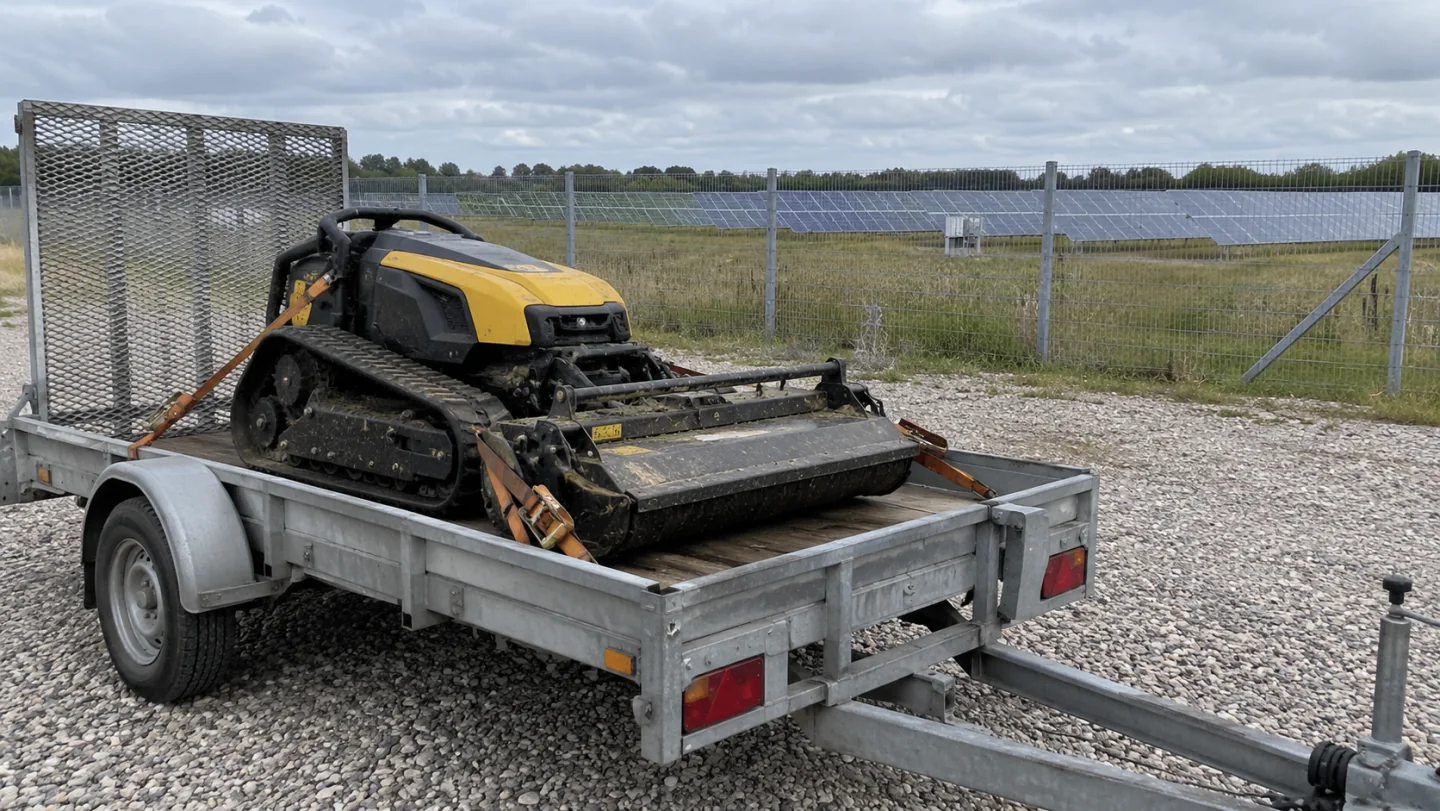
A mower supplier can document equipment capabilities, but the PV owner or qualified operations team controls access to electrical assets and determines which areas are approved for vegetation work. The U.S. Occupational Safety and Health Administration’s solar electrical-hazard guidance identifies electrical hazards associated with PV work; the applicable controls depend on the installation, task, and governing requirements.
Do not combine these separate approvals
- Vegetation authorization: Which rows, buffers, habitats, and maintenance windows may be mowed under the current site plan?
- Electrical work boundaries: Who identifies cables, energized equipment, restricted areas, and the conditions for work near them?
- Tracker and structure restrictions: Who determines acceptable array states, clearances, and protection of posts, foundations, and modules?
- Equipment suitability: Which manufacturer documentation confirms the selected machine and cutting attachment for the proposed task?
- Worksite supervision: Who approves personnel qualifications, access control, emergency arrangements, and operating procedures?
Questions about damaged wiring, electrical isolation, live-equipment approach, or the operation of moving trackers must be routed to qualified PV personnel. This article does not prescribe distances, isolation methods, or mower travel patterns around those assets.
Likewise, no universal reduction in staffing, vegetation-management cost, or panel-damage risk can be inferred from remote operation alone. Compare any proposed savings against actual labor logs, service frequency, equipment costs, and the site’s approved work scope.
PV-site questions for buyers, contractors, and distributors
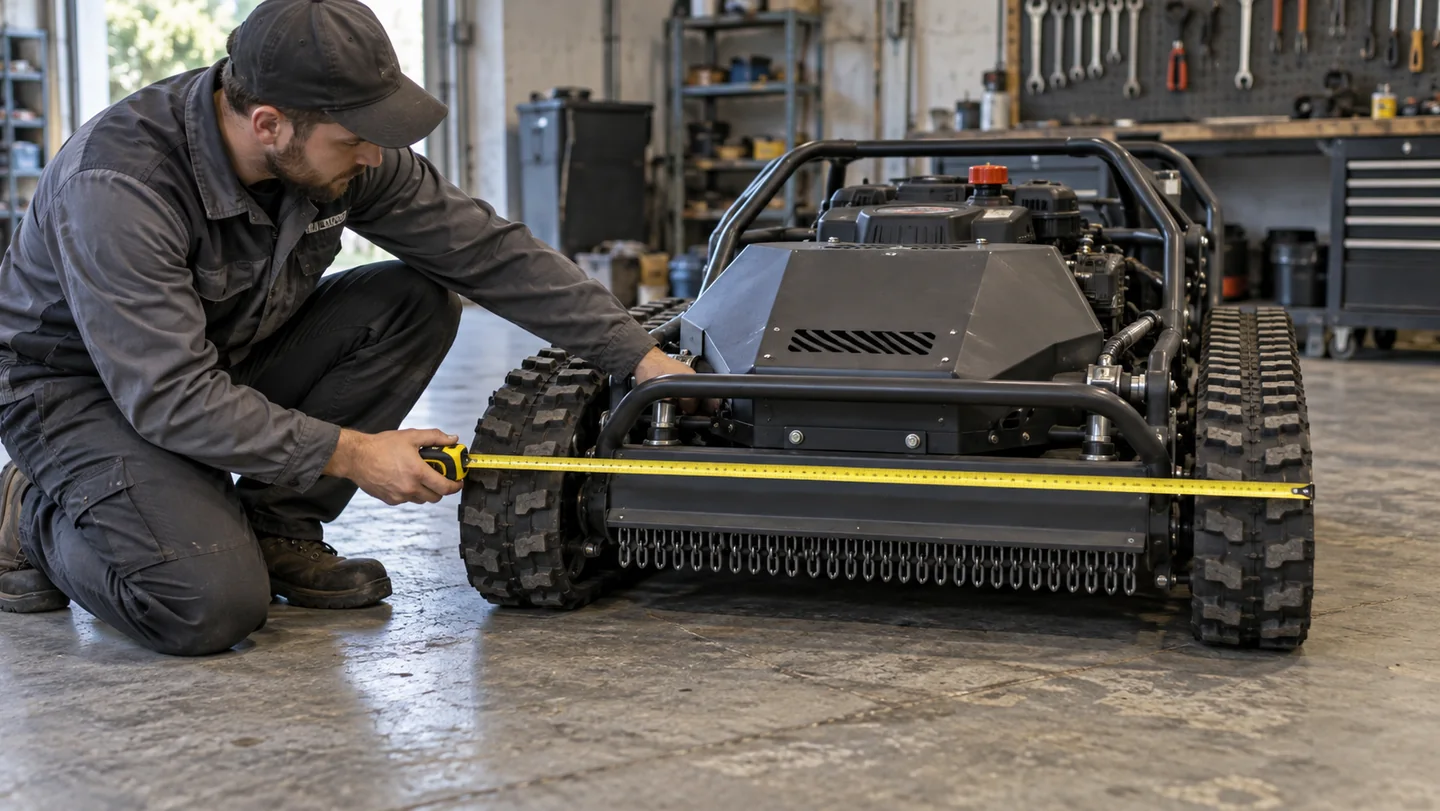
Questions for the PV asset owner and vegetation contractor
- Do we have a current, approved vegetation maintenance plan and defined mowing zones for this array block?
- Have we recorded the lowest applicable clearance, narrowest usable row, and actual headland constraints?
- Are tracker movement, support structures, exposed cables, and electrical exclusions documented on the work map?
- What ground conditions and seasonal changes must the equipment review consider?
- What cutting result, debris controls, inspection evidence, and completion records does the contract require?
- Who is authorized to sign off on the equipment-access review?
Questions for the remote mower manufacturer or distributor
- Which exact model and configuration are proposed for the measured site envelope?
- Can you supply current dimension drawings and the full operator manual before the quotation closes?
- Which written limitations or exclusions apply to the proposed mowing zones?
- What do the documented stop, loss-of-signal, and supervision requirements say?
- What vegetation and debris-handling capabilities are actually supported by the offered cutting system?
- Which site assumptions remain unverified, and what information is needed to resolve them?
- What parts, training, warranty, and field service can you provide in the destination market?
Prepare a solar farm remote mower inquiry that suppliers can evaluate
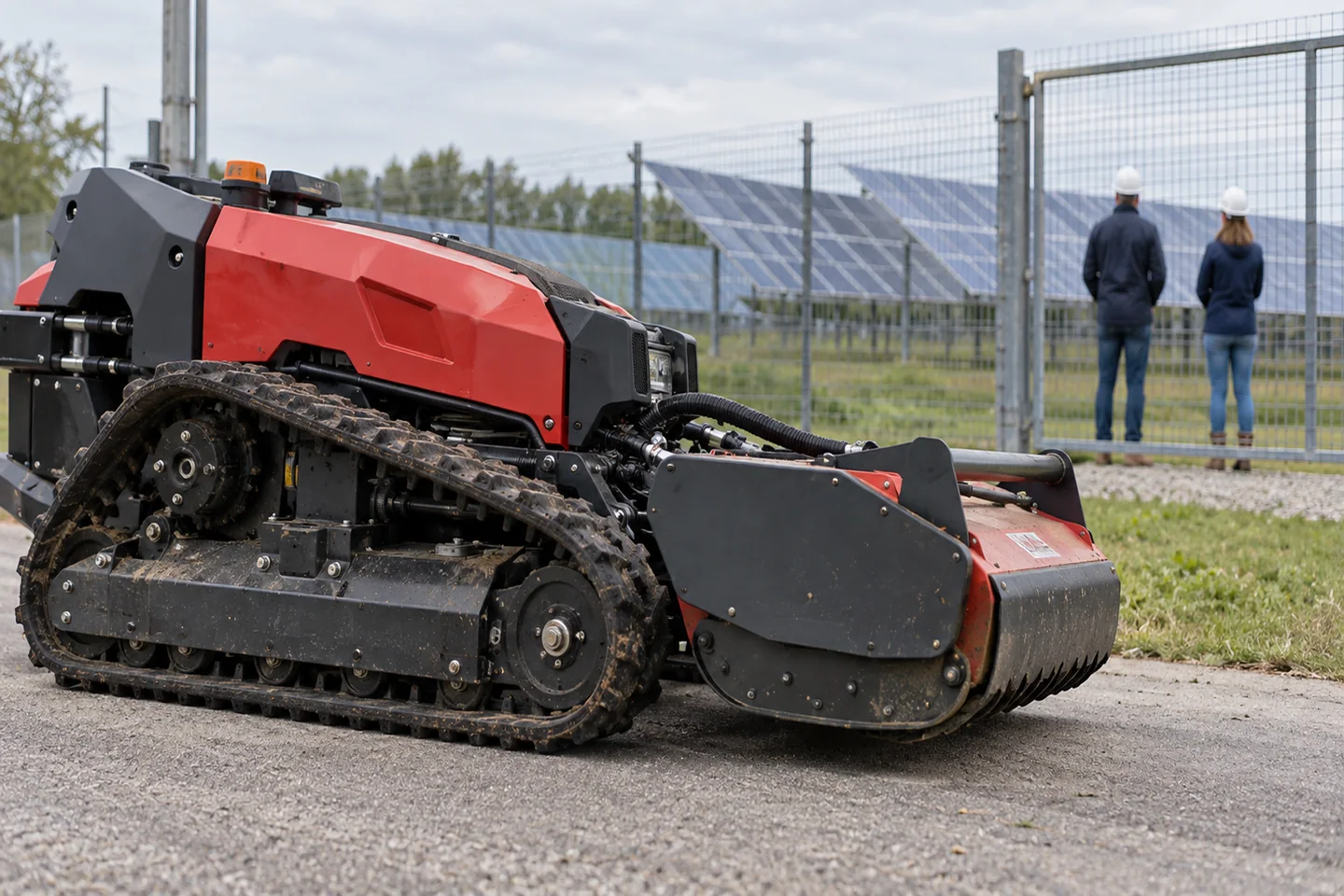
Attach a dated site map and a brief with the measured clearance, row width, turning area, slopes, vegetation specification, known infrastructure, access route, and owner restrictions. Then ask every supplier to return the same information in a comparable format.
| Inquiry outcome | Meaning | Next action |
|---|---|---|
| Documented for further site review | Current model information is available for the proposed scope | Send the evidence to the responsible PV site team for review |
| Supplier clarification required | A dimension, attachment, control, or operating limitation remains unclear | Request written model-specific evidence |
| Owner approval required | The site has not defined a work boundary, access condition, or infrastructure restriction | Route the issue to the PV operator or qualified authority |
| Excluded from proposed mowing scope | A zone is outside the documented work package or cannot be qualified from the available evidence | Keep it out of the equipment quote until separately resolved |
Bottom line: A solar farm remote control mower can be considered as part of a vegetation-maintenance equipment shortlist, but physical clearance, electrical infrastructure, ground conditions, and the approved PV maintenance plan decide what must be reviewed. Treat the remote-control label as a starting point, not proof of under-panel suitability.
For a project-specific comparison, review the Super Mowers remote lawn mower category and contact the equipment team with your site measurements and maintenance requirements. Ask for a written review of the exact mower configuration and identify any information still needed from the PV operator.
Scope note: This article is a purchasing and documentation guide, not an electrical safety procedure, operating approval, or certification of any machine for solar farms. The PV asset owner, qualified operations personnel, applicable requirements, and current model-specific documentation govern site access and equipment use.
Video: Raymo - vegetation management at solar farms
