
 By Anna
Remote control mowers for roadside maintenance should be selected from a documented worksite brief—not from a generic slope rating or a product photograph. For highway vegetation contractors, municipal grounds teams, and equipment distributors, that brief should identify mowing segments, roadside obstacles, ground conditions, traffic exposure, transport access, debris risks, and the authorities responsible for approving the work.
This guide provides a contractor-ready site-input sheet and supplier verification questions. It helps buyers prepare a more useful request for quotation (RFQ), but it does not approve any machine for a roadside location, set an operating distance, prescribe traffic control, or replace a site-specific safety review.
Start with the roadside work envelope—not a mower model
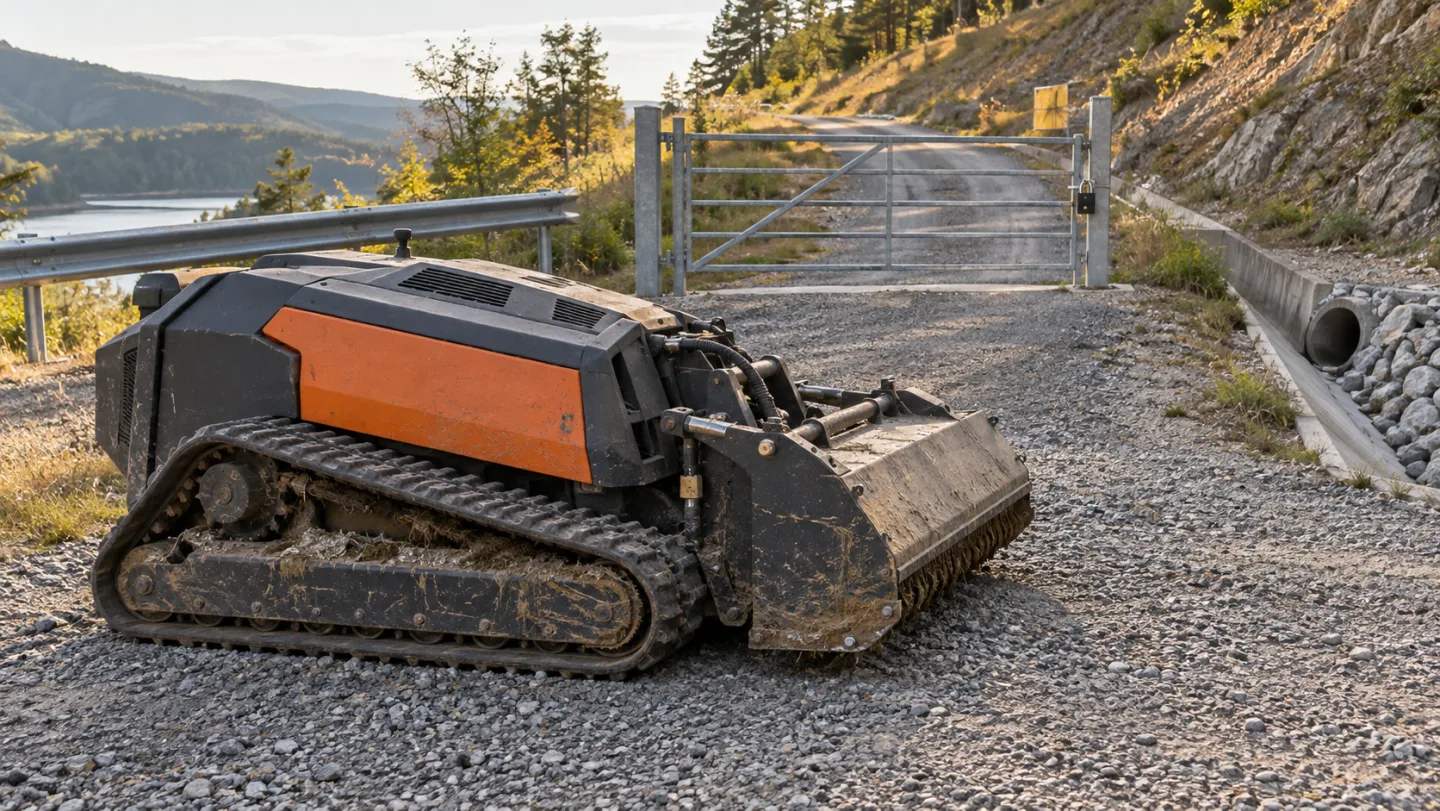
First, define exactly which portions of the road corridor belong to the mowing contract. A roadside work package might cover a shoulder strip, a ditch, an embankment, a median, or several disconnected rights-of-way. These areas can differ in access, vegetation, infrastructure, and permitted work windows.
For each segment, record the location and the practical boundaries of the proposed task. A contract map, route reference, photos, and notes from the road authority are more useful than a broad description such as “steep roadside grass.” The site team—not the mower supplier—must establish any approved work area, traffic-control arrangement, and exclusion requirements.
Segment and terrain inputs
- Segment identification: Road name, route or mile reference, side of road, start and end points, and contract or work-order number.
- Work quantity: Linear distance, approximate area, number of separate segments, and expected mowing frequency.
- Terrain profile: Ditches, shoulder transitions, embankments, drainage channels, medians, and relevant grade changes. Record measured conditions rather than assuming a machine can use them.
- Surface condition: Turf, gravel, exposed soil, loose stone, wet ground, washouts, or mixed surfaces that could affect the selection review.
- Physical access: Narrow gates, barriers, bridges, culverts, turning areas, staging locations, and transport routes.
Vegetation, obstacles, and debris inputs
- Vegetation: Grass height and density, seasonal regrowth, light brush, vines, and any woody material that may fall outside a mowing deck’s approved cutting scope.
- Fixed objects: Guardrail posts, signs, delineators, fences, drainage structures, utility cabinets, poles, guy wires, and landscaping features.
- Loose material: Litter, rocks, tire fragments, metal items, discarded hardware, and material partly hidden by vegetation.
- Environmental restrictions: Owner-identified protected vegetation, invasive-plant controls, drainage protections, seasonal restrictions, or habitat-management requirements.
- Expected result: Contract-defined cut quality, completion records, inspection photos, and the process for recording areas not completed.
Why these details matter: A machine with an appropriate cutting width may still be unsuitable for a segment if its access route is blocked, the debris is outside its approved cutting scope, or a different work crew must handle nearby infrastructure.
Separate mower work from snow, utility, and infrastructure work

Roadside maintenance contracts sometimes combine vegetation control with drainage, tree work, traffic management, and seasonal services. A remote-controlled mower quotation should cover only the specified mowing task and its supporting equipment and service requirements.
- Mechanical mowing: Cutting grass or vegetation within the manufacturer-approved material scope and the owner-approved work package.
- Snow equipment: A separate winter-maintenance category with its own equipment, site, and operating-document review.
- Tracked carriers and other attachments: Separate configurations requiring written manufacturer approval for the specific attachment and intended task.
- Tree, chemical, and infrastructure work: Do not assume tree cutting, herbicide application, culvert work, excavation, or utility-asset maintenance is included in a mower quote.
- Traffic management: Identify the party responsible for the approved traffic-control plan; a remote transmitter does not substitute for work-zone authorization.
The Federal Highway Administration’s roadside vegetation-management guidance also illustrates why a contract’s mowing frequency and treated area may reflect vegetation and habitat objectives, not just the maximum area a machine can cut. Apply the governing road authority’s current plan rather than a generic schedule.
Five questions the contractor must resolve before an inquiry

1. Who owns the work-zone and roadside-access decisions?
Identify the road authority, contracting agency, site supervisor, and organization responsible for reviewing traffic exposure. Record whether the work is adjacent to live traffic, within a restricted area, or subject to a separate access or lane-use arrangement. Do not turn this article into a temporary traffic-control plan.
In the United States, the Federal Highway Administration’s Manual on Uniform Traffic Control Devices (MUTCD) is an important national reference for traffic-control devices. The applicable state and road-authority requirements must still be confirmed for the location and project.
2. What can the crew actually mow?
Define the vegetation types, expected condition at the time of work, and the material the contract excludes. A buyer should not assume that all remote-control mower decks can handle the same brush or debris. Request written cutting-system limits for the exact machine.
3. How will the machine reach and leave each segment?
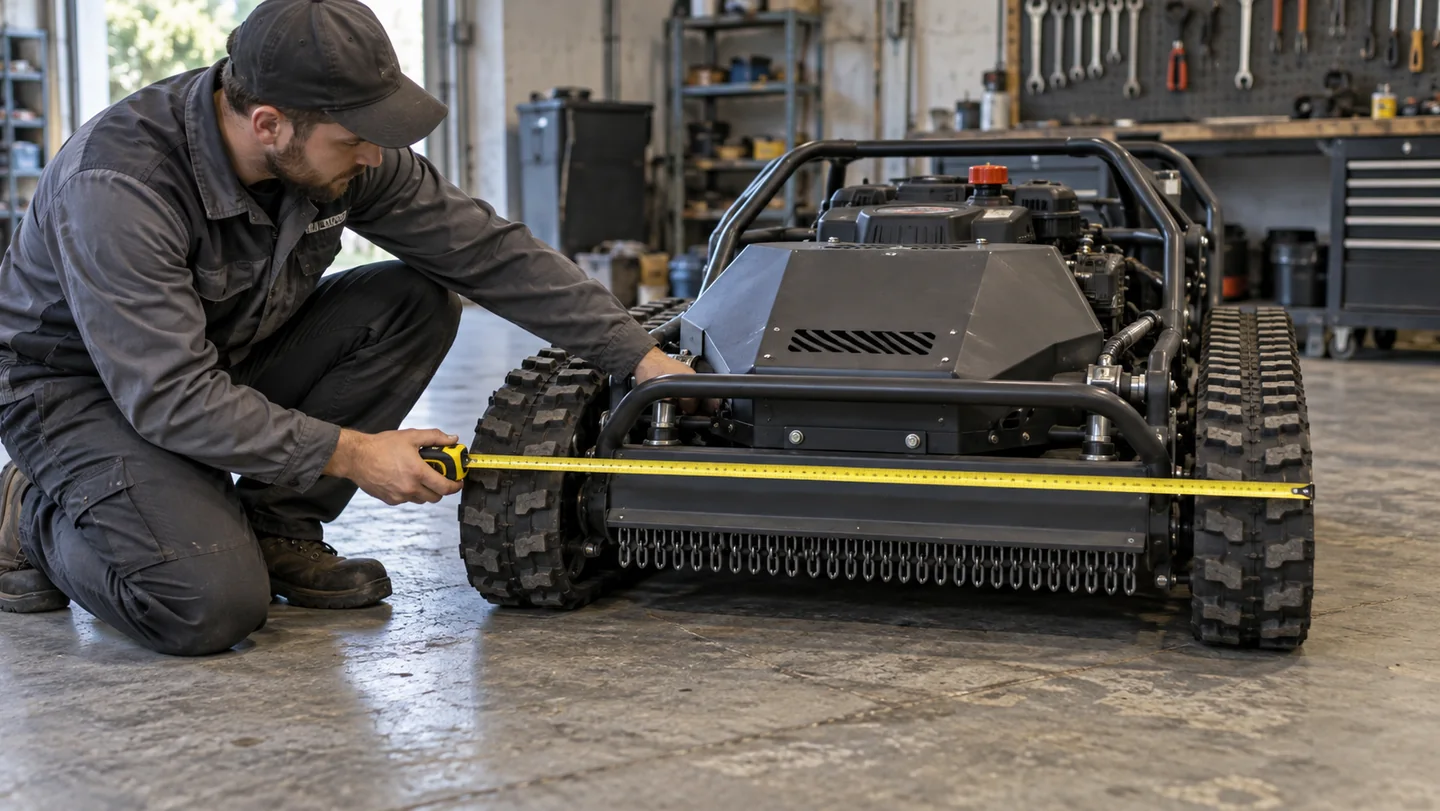
Document the proposed trailer or transport method, access gates, parking and staging constraints, and whether the route is discontinuous. Include transport width, overall dimensions, configured weight, and other measurements the supplier needs to verify equipment fit.
4. How are obstacles, debris, and exceptions handled?
Identify which team reviews road debris, hidden objects, ditch conditions, utility assets, and interrupted work. Specify how an unverified area is flagged and who decides whether a separate crew or scope is needed. Do not assume that mowing equipment can clear every obstacle found during the job.
5. Who provides service and operational support?
Record the destination market, intended fleet size, service coverage, spare-parts requirements, operator training arrangements, and who responds to equipment faults. For a multi-location contractor, service availability can matter as much as the purchase specification.
What a remote mower supplier should verify in writing

Application review
Discuss your mowing application.
Share the working condition, target market, product family and project scope.
The buyer supplies the site conditions. The manufacturer or authorized dealer should identify the product records, limitations, and uncertainties that apply to a proposed configuration. Do not accept an application-page illustration as evidence that a specific mower can work at the site.
- Exact model and configuration: Model or revision, chassis, power system, cutting deck, and any installed options.
- Cutting system: Documented cutting width, vegetation limits, cutting-height settings, and any discharge or debris-related restrictions.
- Machine envelope: Overall working and transport dimensions, weight, and any changes created by guards or attachments.
- Terrain restrictions: Model-specific slope and surface limits, relevant operating conditions, and required accessories or limitations.
- Remote-control behavior: Manual sections covering supervision, visibility, communication loss, stopping functions, and operator requirements.
- Service support: Maintenance intervals, parts lists, warranty coverage, training, dealer support, and response arrangements in the destination market.
- Open questions: Any site condition the supplier cannot verify from the available documents, recorded explicitly as unresolved.
The current Super Mowers Remote Lawn Mowers category provides a starting point for identifying the available product family. Use individual product records and current manufacturer documents for the actual comparison; do not infer universal terrain performance from a category label.
Roadside mowing site-input matrix for the RFQ

Use the table below as the front page of a contractor worksite brief. Copy it into a procurement form, spreadsheet, or project document. The site team fills in the measured or observed conditions; the supplier then attaches its model-specific answer and evidence. A blank supplier field means not yet confirmed, not automatically suitable.
| Input category | What the buyer records | Supplier document or response required |
|---|---|---|
| Project and segment ID | Road, route or mile references, owner, contract, and segment boundaries | Configuration identified for the named segment |
| Work quantity and cycle | Linear distance or area, number of visits, and completion requirements | Documented cutting scope; no unverified productivity promise |
| Vegetation and intended finish | Grass, brush or other plants, density, moisture, and contract cut requirements | Approved deck, cut range, and permitted material limits |
| Slope, ditch, and ground | Measured grade locations, transitions, soil, wet areas, and restrictive surfaces | Model manual sections for relevant surface and terrain limits |
| Fixed obstacles and utilities | Guardrails, signs, culverts, drainage, poles, wires, cabinets, and owner exclusions | Equipment envelope and any specific limitations; owner clearance separately |
| Loose debris | Rocks, trash, tire fragments, hardware, and other observed material | Manufacturer restrictions and unresolved debris questions |
| Access and transport | Gate widths, staging, trailer, turning areas, and route constraints | Working and transport dimensions, weight, loading documentation |
| Traffic and public exposure | Road status, crossing points, adjacent paths, site-control owner | No machine approval in place of the road authority’s work-zone plan |
| Environmental conditions | Seasonal windows, waterways, protected areas, invasive-plant instructions | Equipment limitations where relevant; agency/owner decisions separately |
| Personnel and training | Responsible operator, supervisor, training and handover requirements | Current manual, training scope, and control-system documentation |
| Destination and support | Country/state, service area, required language, projected units | Warranty, spare-parts and dealer-support confirmation |
| Evidence and status | Site map, photographs, measurement date, unresolved conditions | Written answer: verified / conditional / information missing |
Buyer tip: For a contract that spans many different corridors, prepare one base equipment request and separate site-condition attachments for segments with materially different risks or access constraints. This helps prevent a single quote from becoming an unsupported approval for every road in the contract.
Verification gates before the equipment order or deployment
A complete quote does not mean the worksite has been approved. Keep three decisions separate:
- Commercial scope: Does the proposed purchase or rental include the specified mower, attachments, transport needs, training, service, and documentation?
- Technical suitability review: Does the current manual and model-specific supplier evidence address the recorded vegetation, surfaces, access, and equipment limitations?
- Work authorization: Has the responsible road authority or contractor team approved the applicable traffic-control, public-exposure, environmental, and site-specific procedures?
For context, the U.S. Occupational Safety and Health Administration’s highway work-zone resources identify hazards associated with passing traffic and moving equipment. The presence of remote control does not remove the need to assess those hazards within the responsible worksite process.
If any necessary authorization, manual section, or site condition remains unverified, keep the issue open and refer it to the appropriate party. Do not create a universal slope angle, exclusion distance, travel speed, or debris-handling rule in the procurement worksheet.
The Super Mowers Applications page identifies roadside and utility maintenance as an application category. It is useful for starting an inquiry, but it is not a certification of any particular model for a public road or utility right-of-way.
Send a scoped roadside mower inquiry

Once the site-input matrix is complete, submit it with the relevant road segment map, photographs, destination market, and estimated equipment quantity. Ask the distributor or manufacturer to identify the exact configuration and return written answers for all conditional or unresolved fields.
For an initial product discussion, use the Super Mowers inquiry form. Include “roadside remote control mower site brief” in the project description and attach or summarize the terrain, vegetation, access, transport, and document requirements.
Bottom line: The best starting point for remote control mowers for roadside maintenance is a worksite brief that names the work, the limits, the responsible parties, and the evidence a supplier must provide. That produces a more meaningful commercial comparison than asking for a general “best roadside mower” recommendation.
Scope note: This is an equipment procurement and information-handoff framework. It is not a traffic-control plan, roadside work permit, operating procedure, legal compliance checklist, or product certification. Confirm current model documentation and the applicable road-authority requirements before any field work.
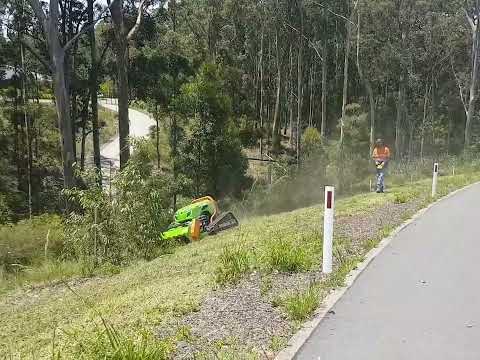
Video: Roadside Mowing: Green Climber in Action — Green Climber Australia (third-party)